Learn More: High-Performance Plastic Sheets
High-Performance Plastics
Terra’s specialty plastics line includes polyvinylchloride (PVC), acrylic, polycarbonate, and polypropylene with key application advantages, including static dissipation, chemical resistance, and fire resistance. Static-dissipative plastics feature durable, solvent-welded dissipative layers that won’t rub off or outgas, making them safe for cleanroom use. Call to discuss fabrication of any Terra product in one of these materials, or for a quotation on single sheets.
PVDF (polyvinylidene fluoride): Flame-Retardant (FM Listed)
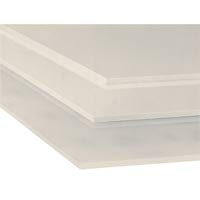
- Approved for semiconductor equipment (FM 4910 listed)
- Sheet withstands high pressures and vacuums
- Maintains mechanical properties; highly flexible and stress crack resistant over a wide range of temperatures
- Stress relieved for close tolerance machining
- Superior chemical resistance; highly resistant to oxidizing agents and halogens; nearly complete resistance to aliphatics, aromatics, alcohols, acids and chlorinated solvents; resistant to most acids, and bases
- Non-flammable; rated UL 94V-O; self-extinguishing
- Resistant to gamma radiation and ultraviolet light
- Fabricate with standard hot gas welding or thermal fusion techniques
CPVC (chlorinated polyvinyl chloride): Corrosion-Resistant, Heat-Resistant
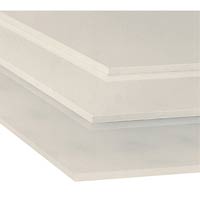
PVC (polyvinyl chloride): Corrosion-Resistant
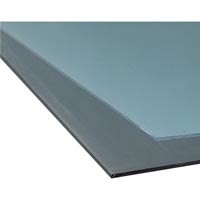
- Excellent corrosion resistance
- Extruded PVC sheet is not as brittle as press-laminated material, and is less likely to break with minor impact
- Highly compatible with other extruded PVC shapes
- PVC sheet is manufactured in dark gray, white high gloss, clear
- Most sheet available in 48" x 120" (1219 mm x 3048 mm) size
PVC-C: Flame-Retardant (FM Listed)
- Offers the strength and corrosion resistance of type I PVC
- FM 4910 approved
PVC: Antistatic
- Prevents build-up of static charge and accumulation of harmful contamination
- Electrostatic decay in less than 0.05 second per Federal Test Standard 101C, Method 4046.1
- Surface resistivity of 106 – 108 ohms per square; provides ESD control without the need for ionization
- Permanence in static dissipation performance
- Humidity independent static charge control
- Uniform surface treatment, no charged "hot spots"
- Superior chemical resistance and flame spread properties
Polypropylene
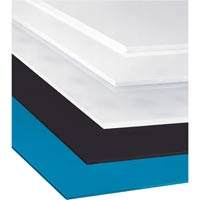
- Excellent chemical resistance to most acids, alkalies and many solvents
- Handles temperatures to 200°F (93.3°C)
- Excellent resistance to chemical stress cracking, abrasion and failure from flexing.
- Easily cut and shaped with common hand tools.
- Joining methods by thermal fusion or hot gas welding (cannot be glued or solvent cemented).
- Colors are white, natural, black and blue.
Polypropylene: Flame-Retardant
- ULV-O listed
- Excellent chemical resistance to most acids, alkalies and many solvents
- Handles temperatures to 200°F (93.3°C)
- Excellent resistance to chemical stress cracking, abrasion and failure from flexing
- Easily cut and shaped with common hand tools
- Joining methods by thermal fusion or hot gas welding (cannot be glued or solvent cemented)
- Colors are white, natural, black and blue
Polycarbonate: Antistatic
- Prevents build-up of static charge and accumulation of harmful contamination
- Electrostatic decay in less than 0.05 second per Federal Test Standard 101C, Method 4046.1
- Surface resistivity of 106 – 108 ohms per square; provides ESD control without the need for ionization
- Permanence in static dissipation performance
- Humidity independent static charge control
- Uniform surface treatment, no charged "hot spots"
- Provides exceptional shatter resistance for safety
- Superior flame spread properties for additional equipment protection in a fire
- Superior chemical resistance
- Excellent clarity
