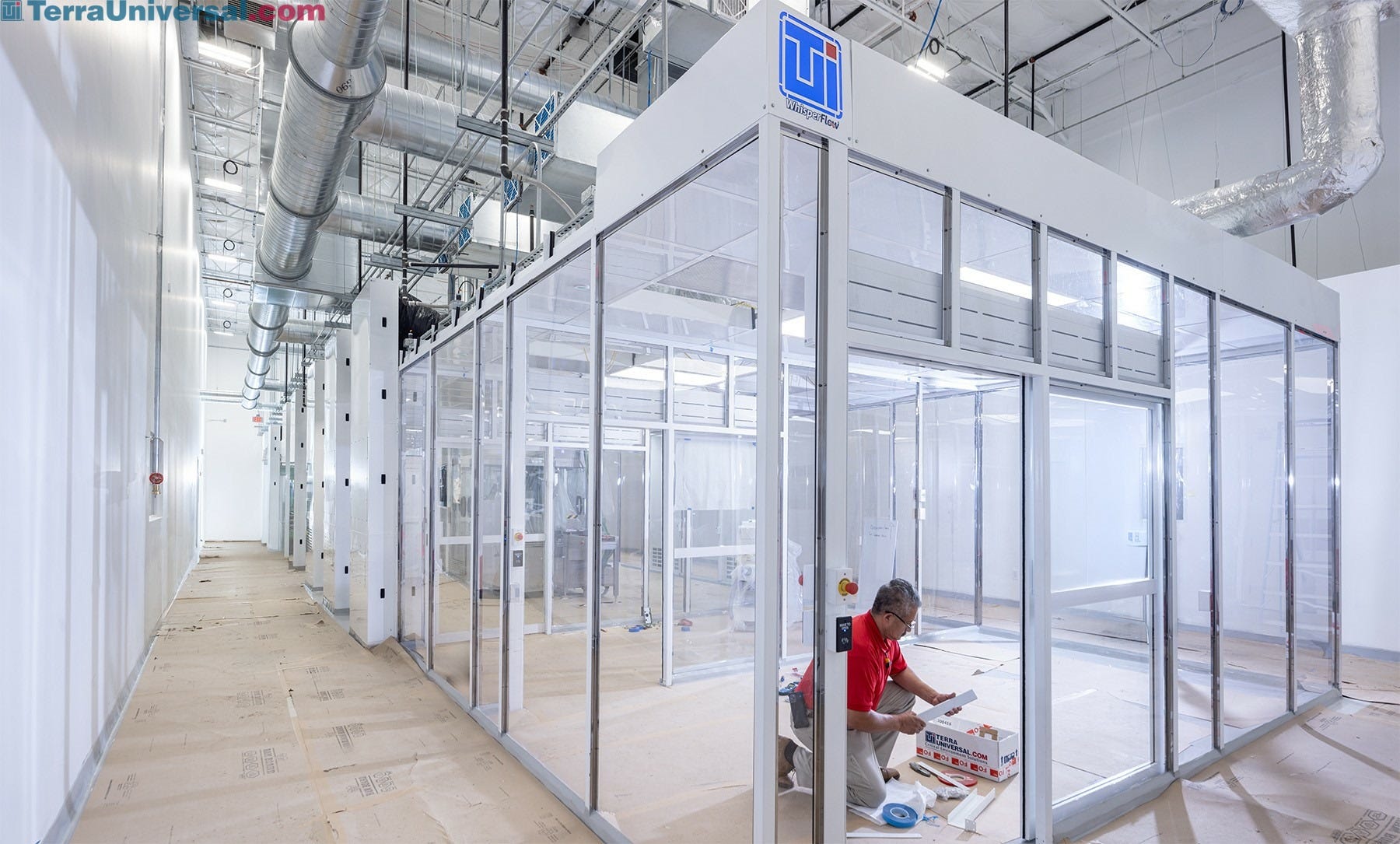
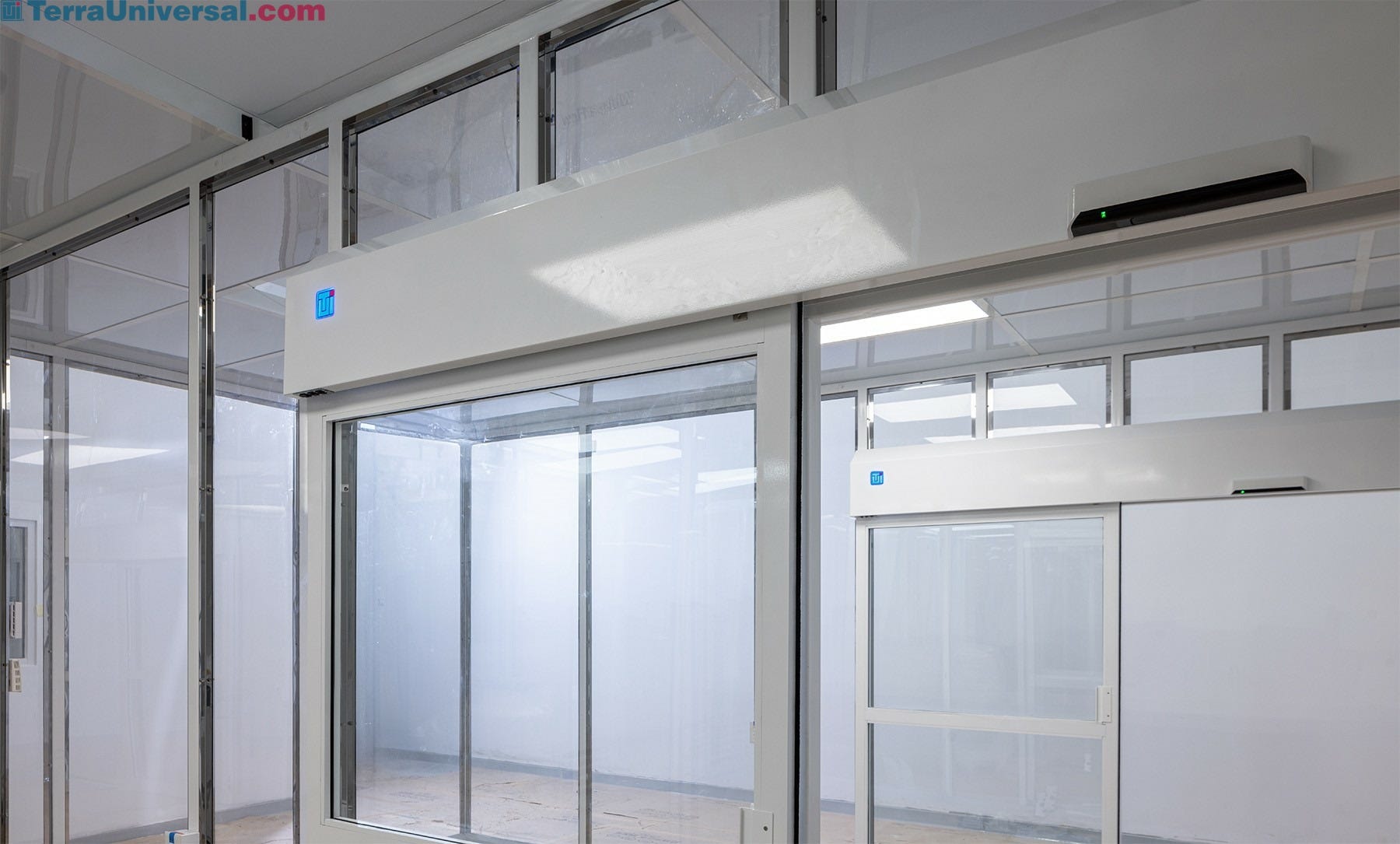
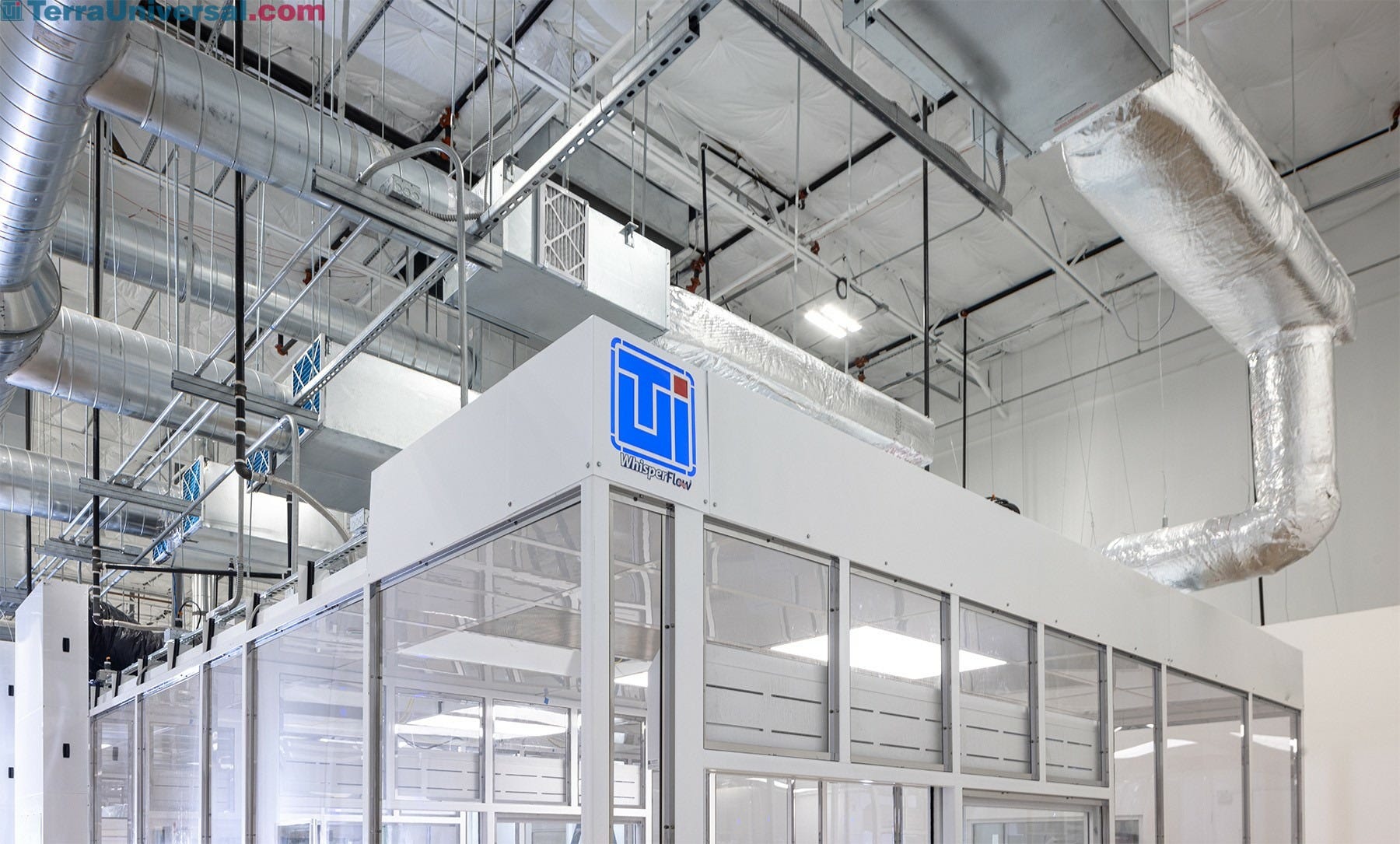
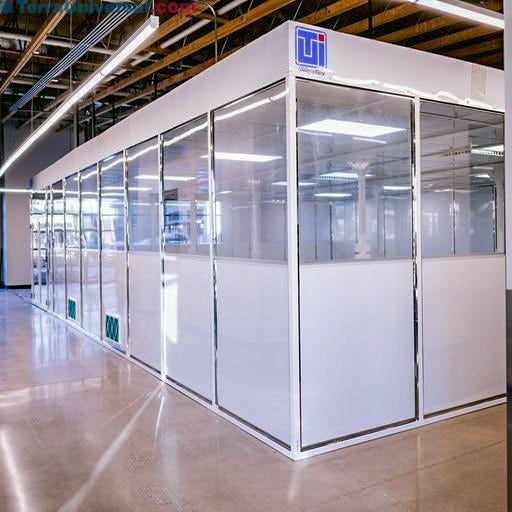
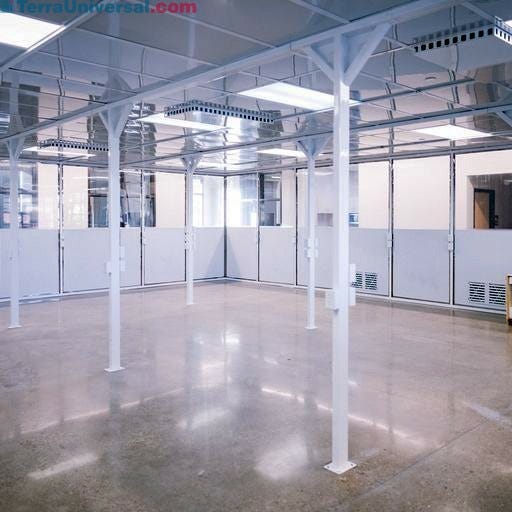
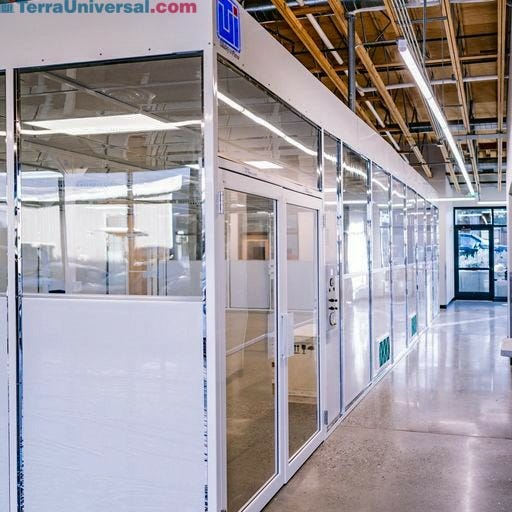
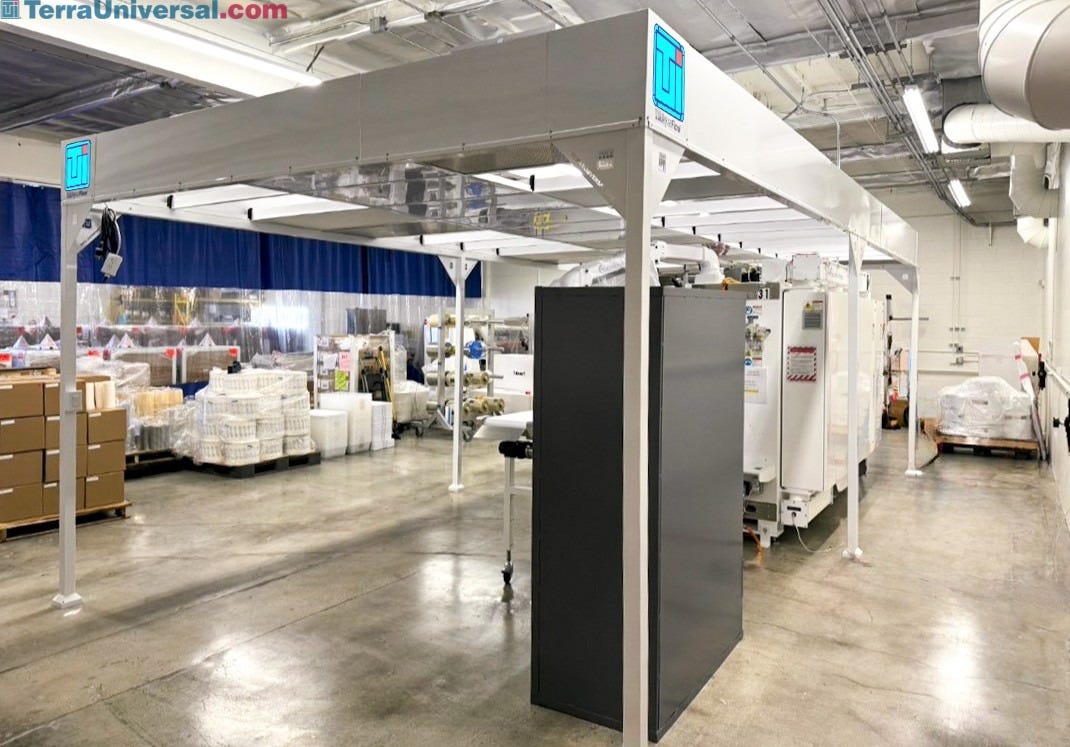
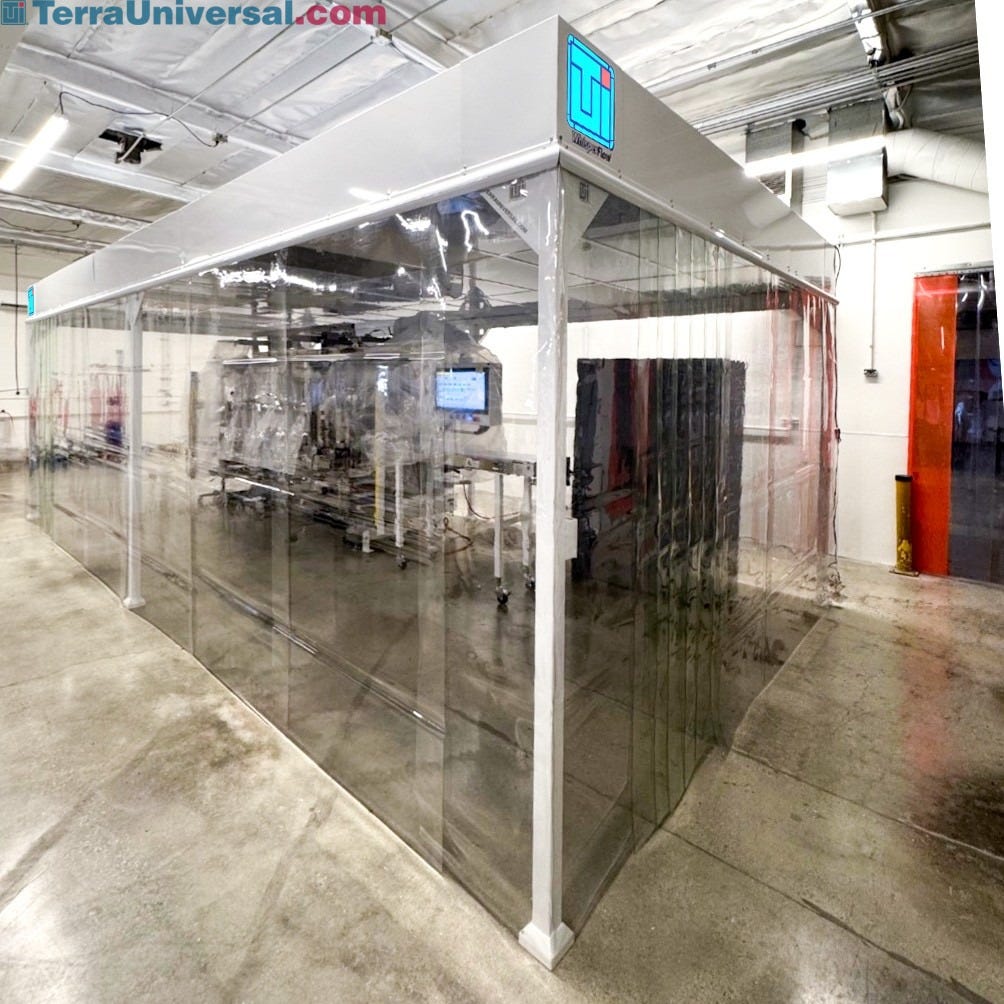
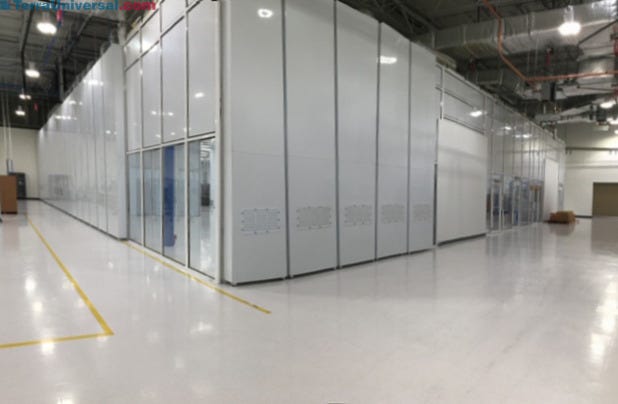
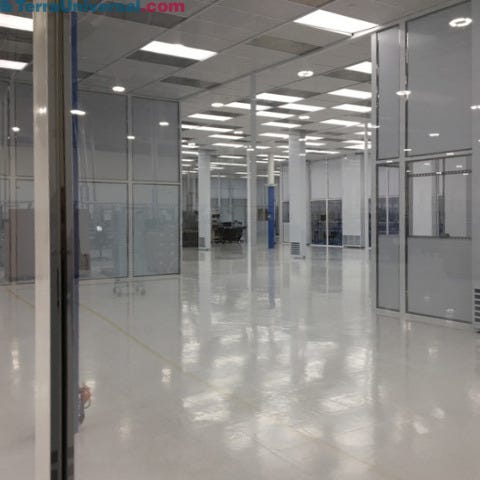
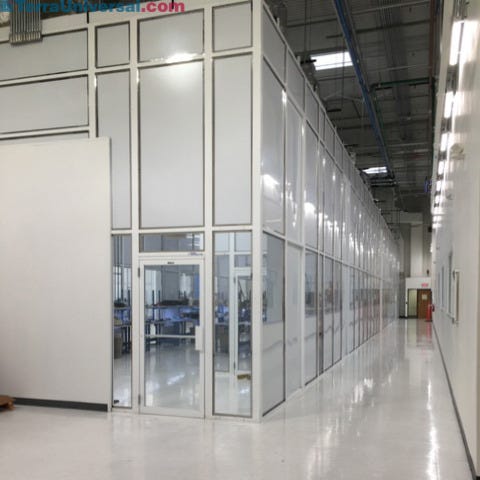
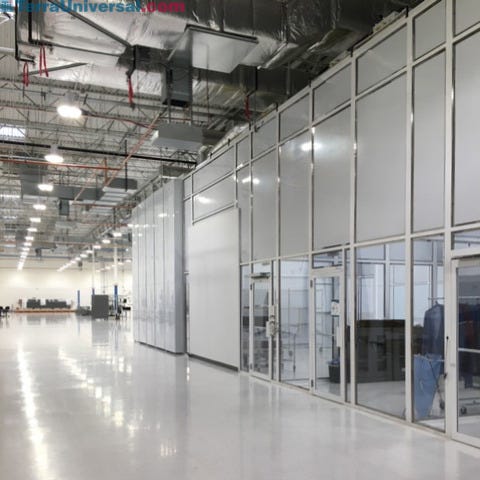
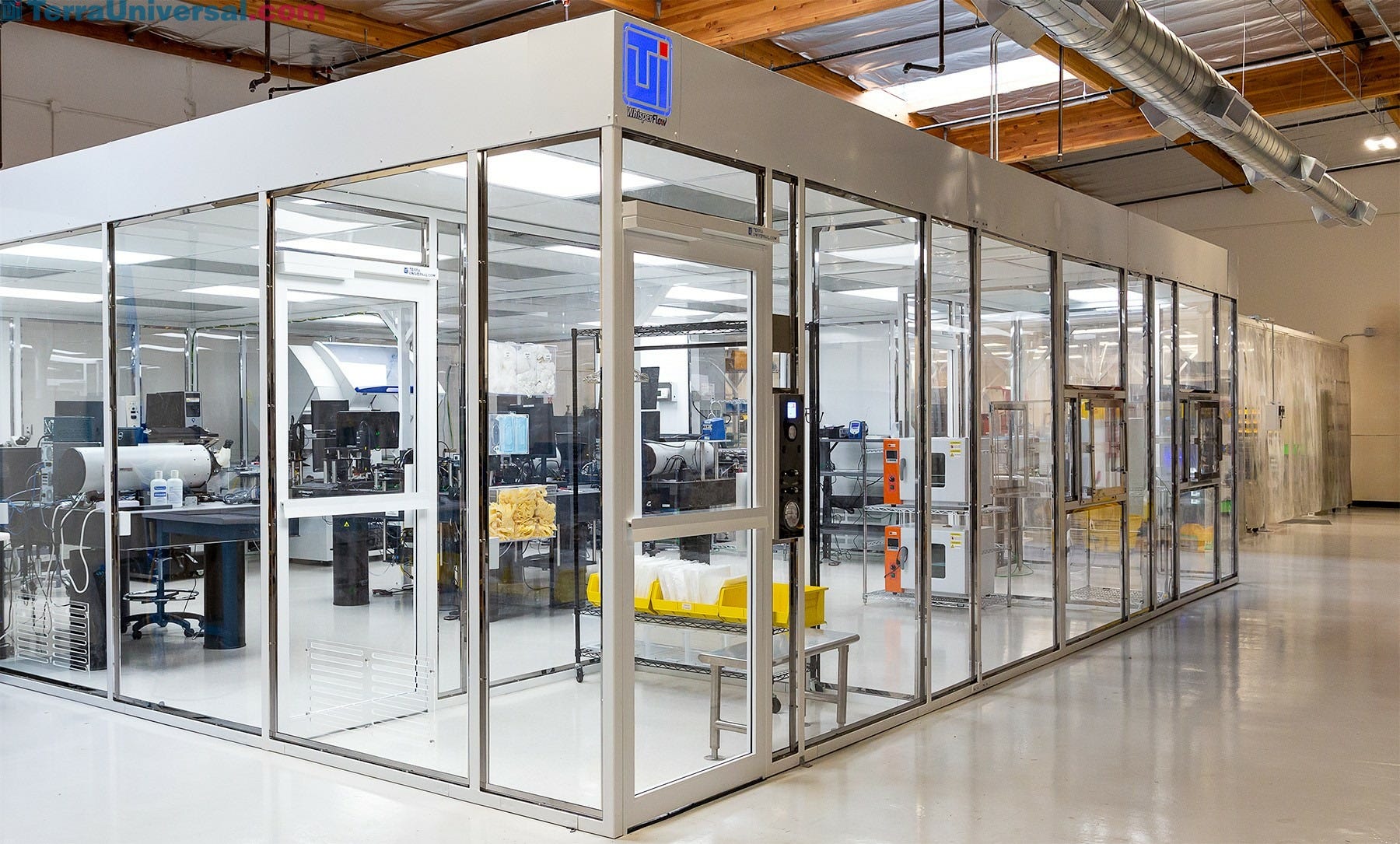
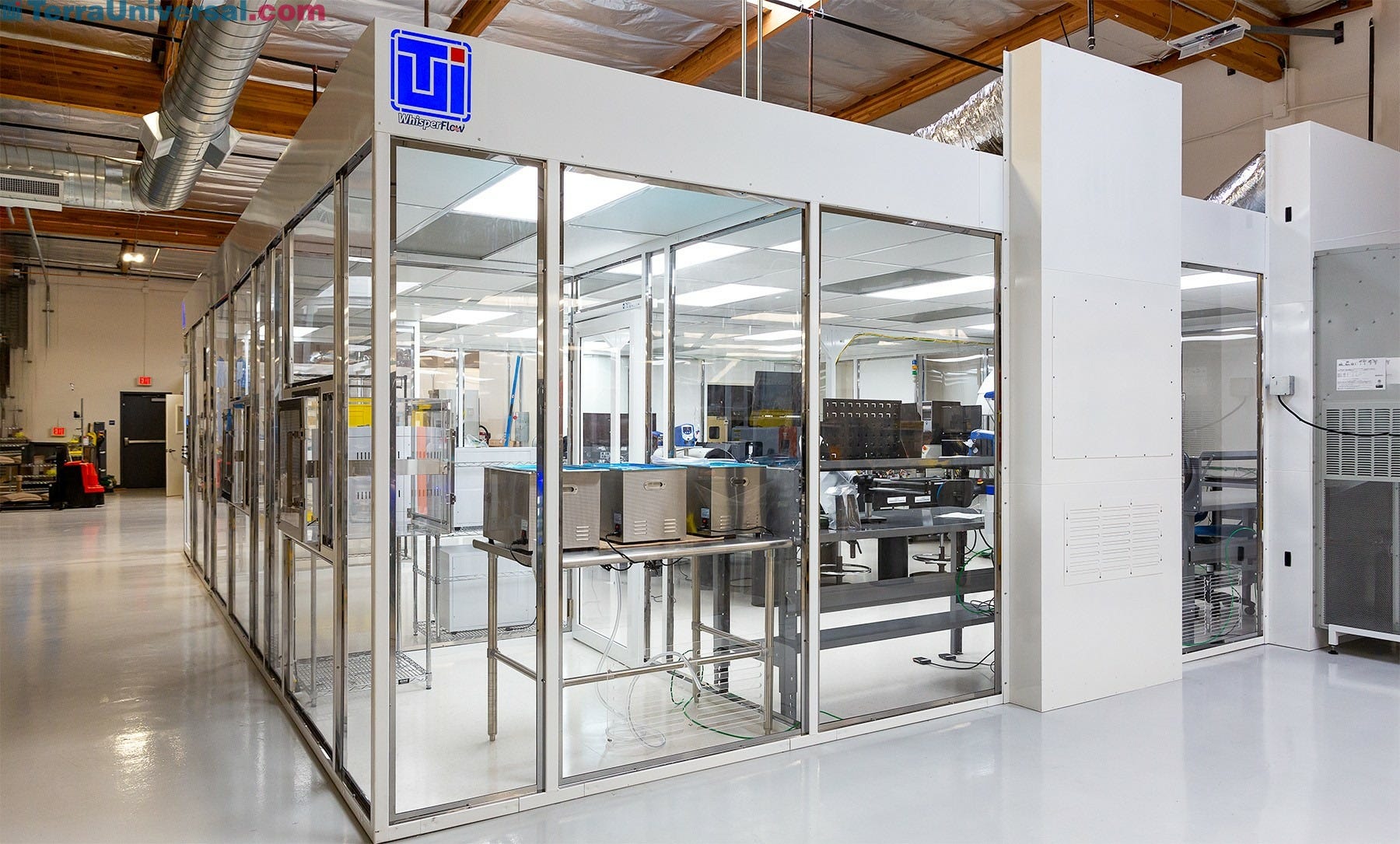
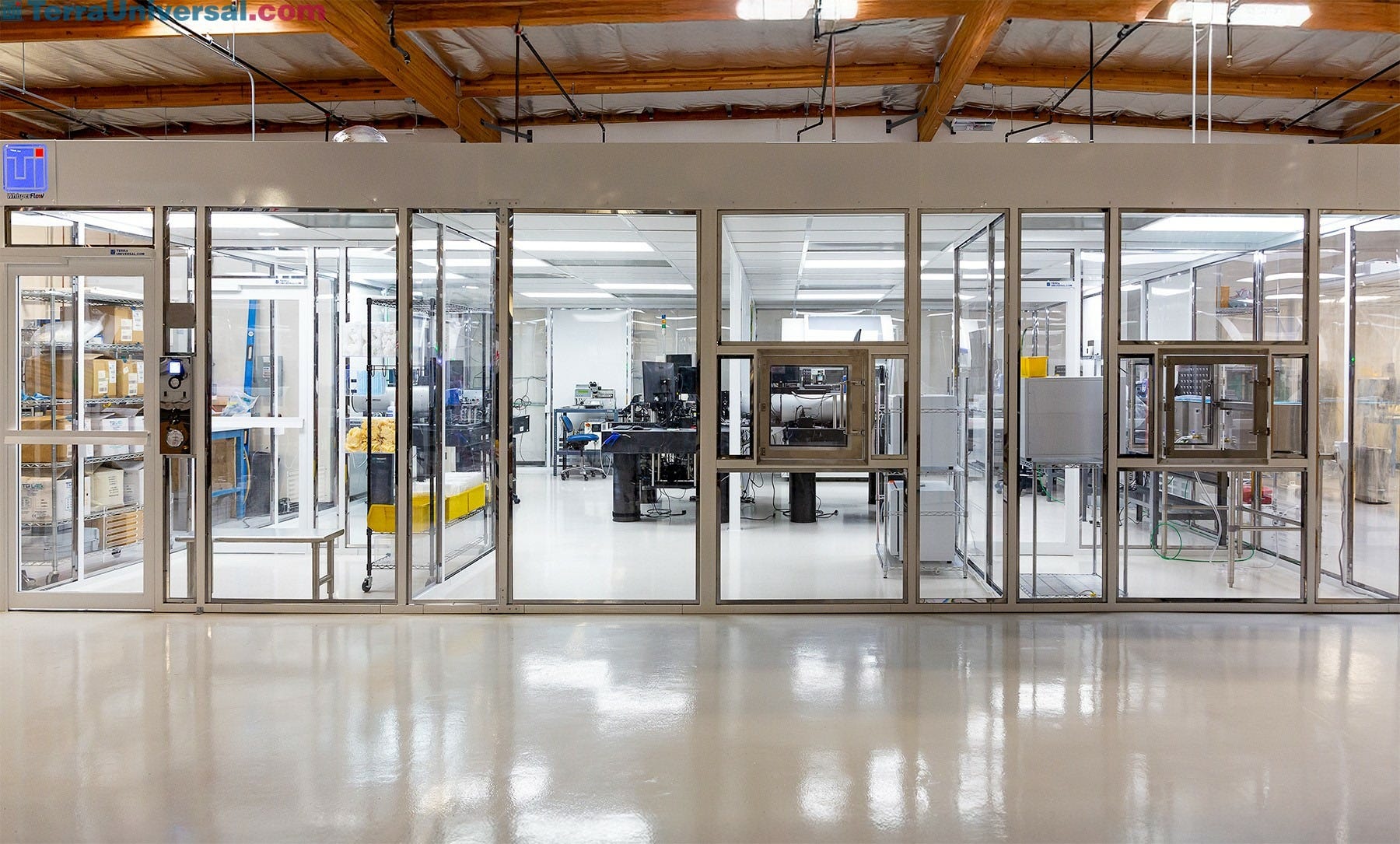
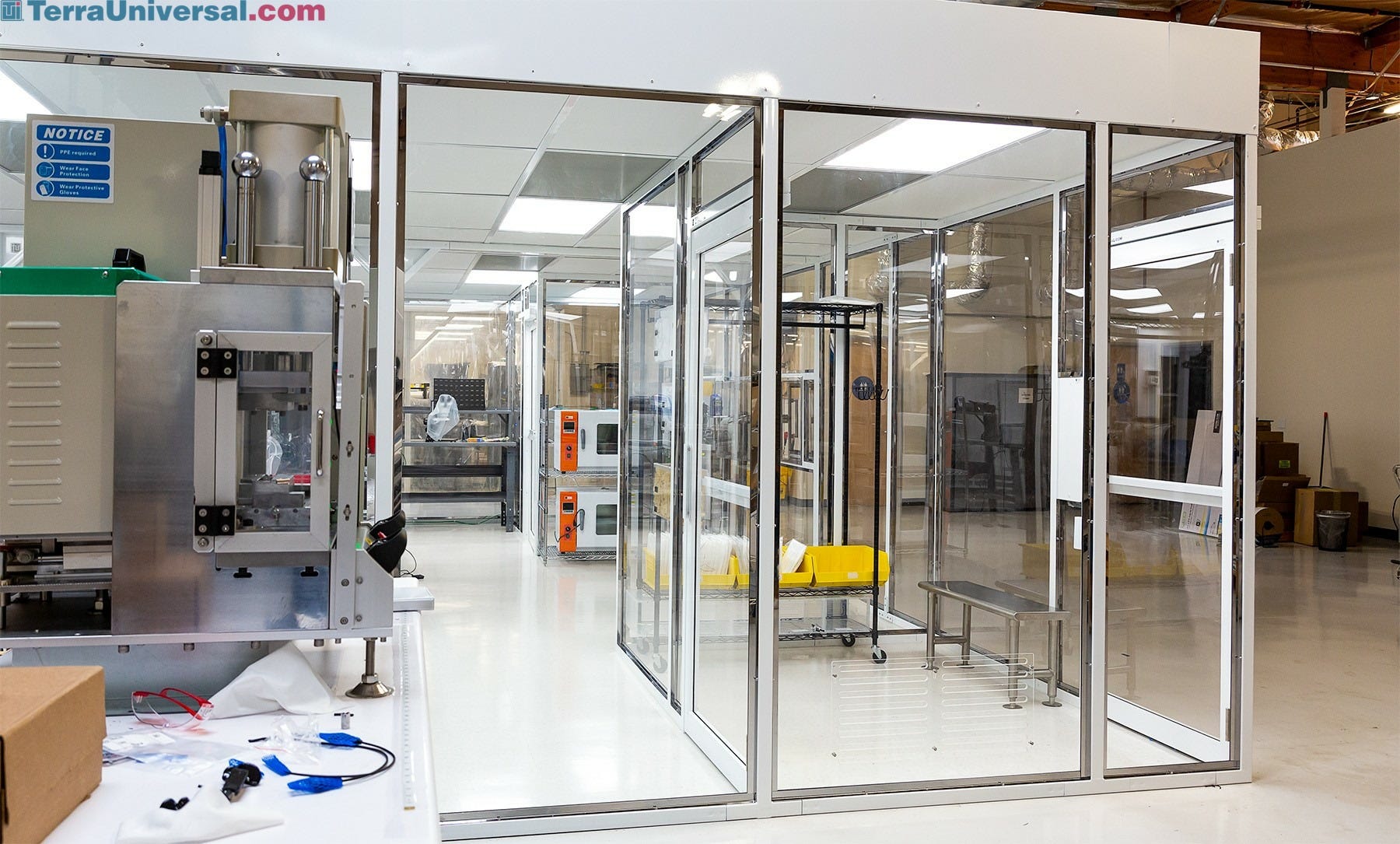
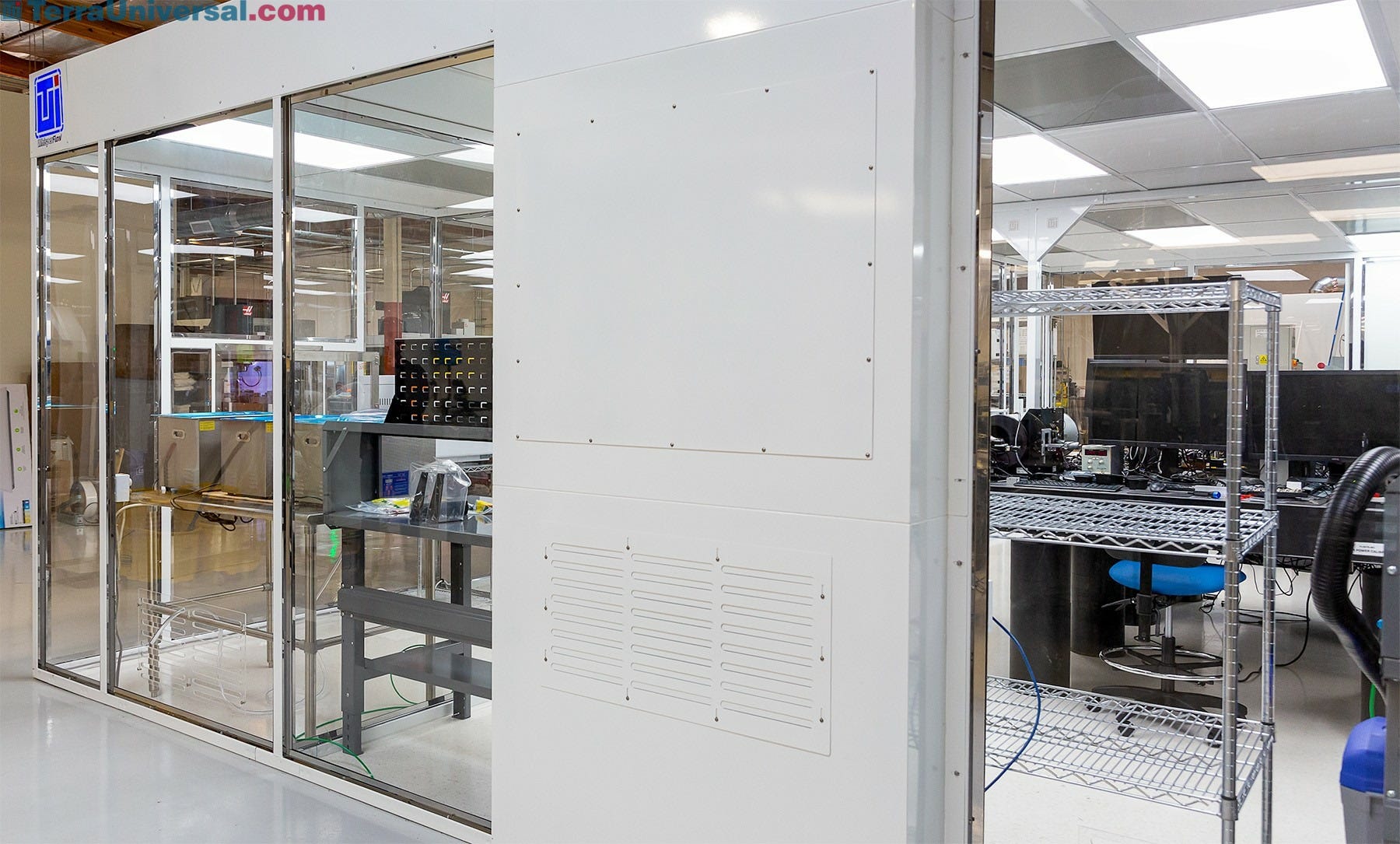
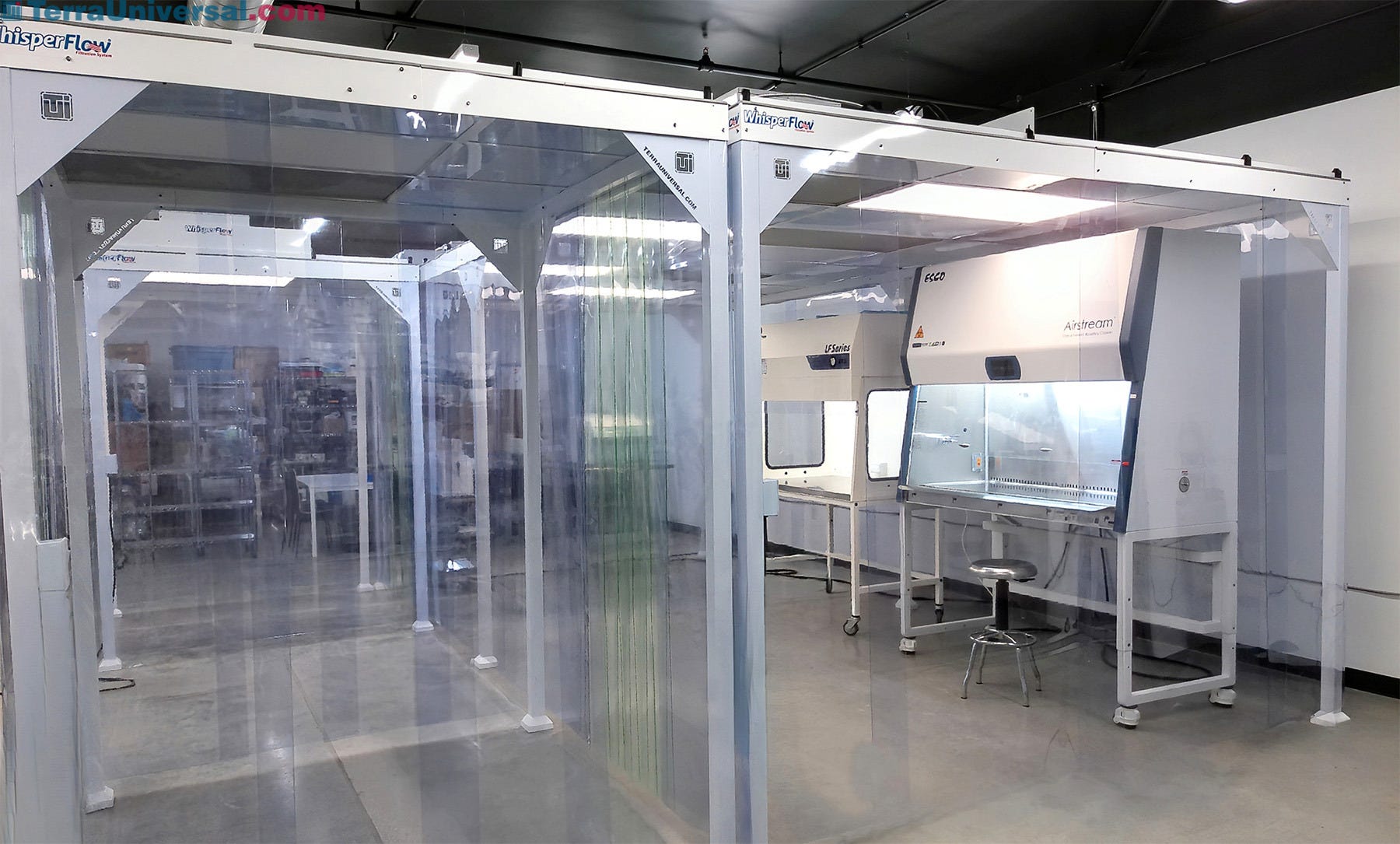
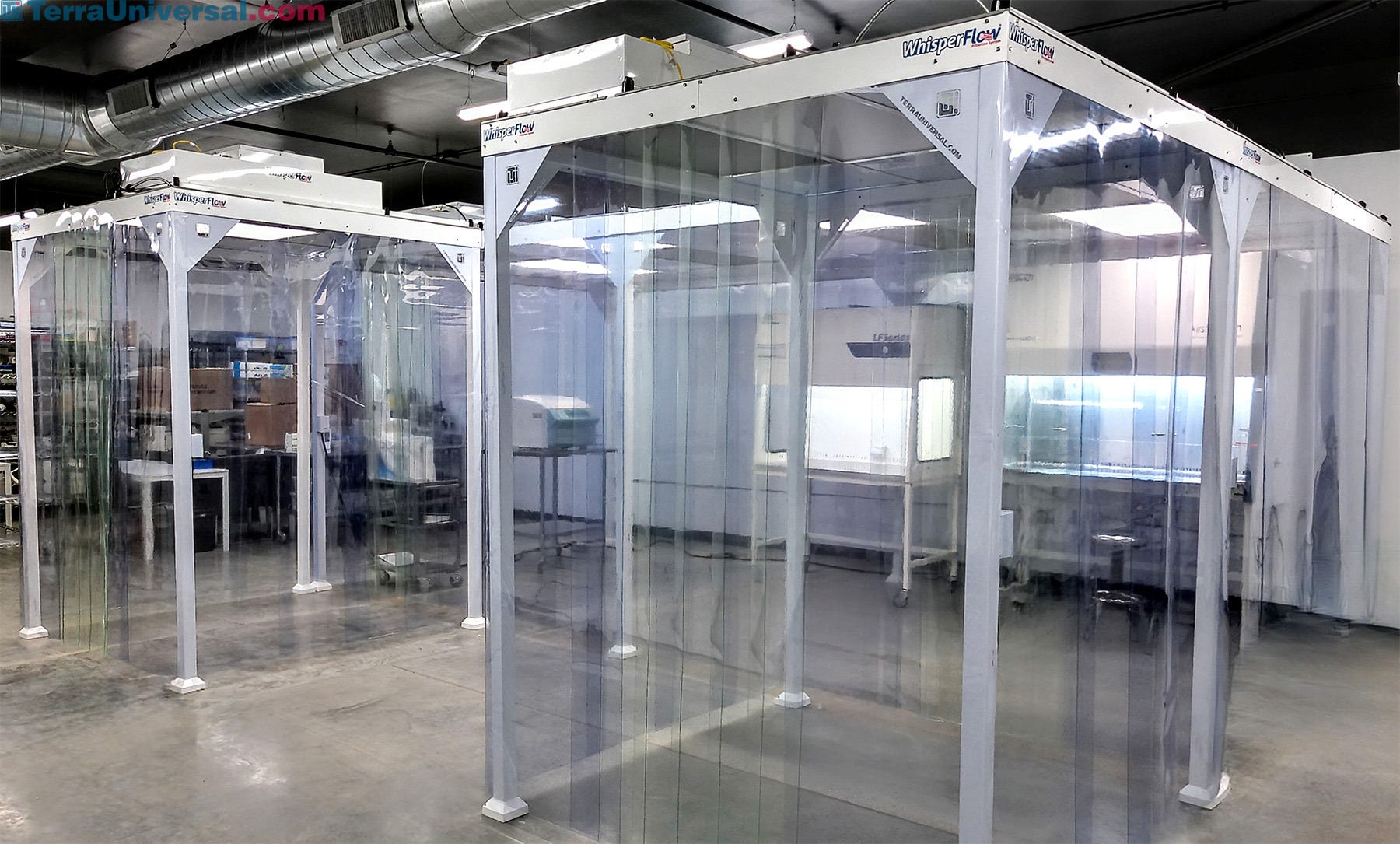
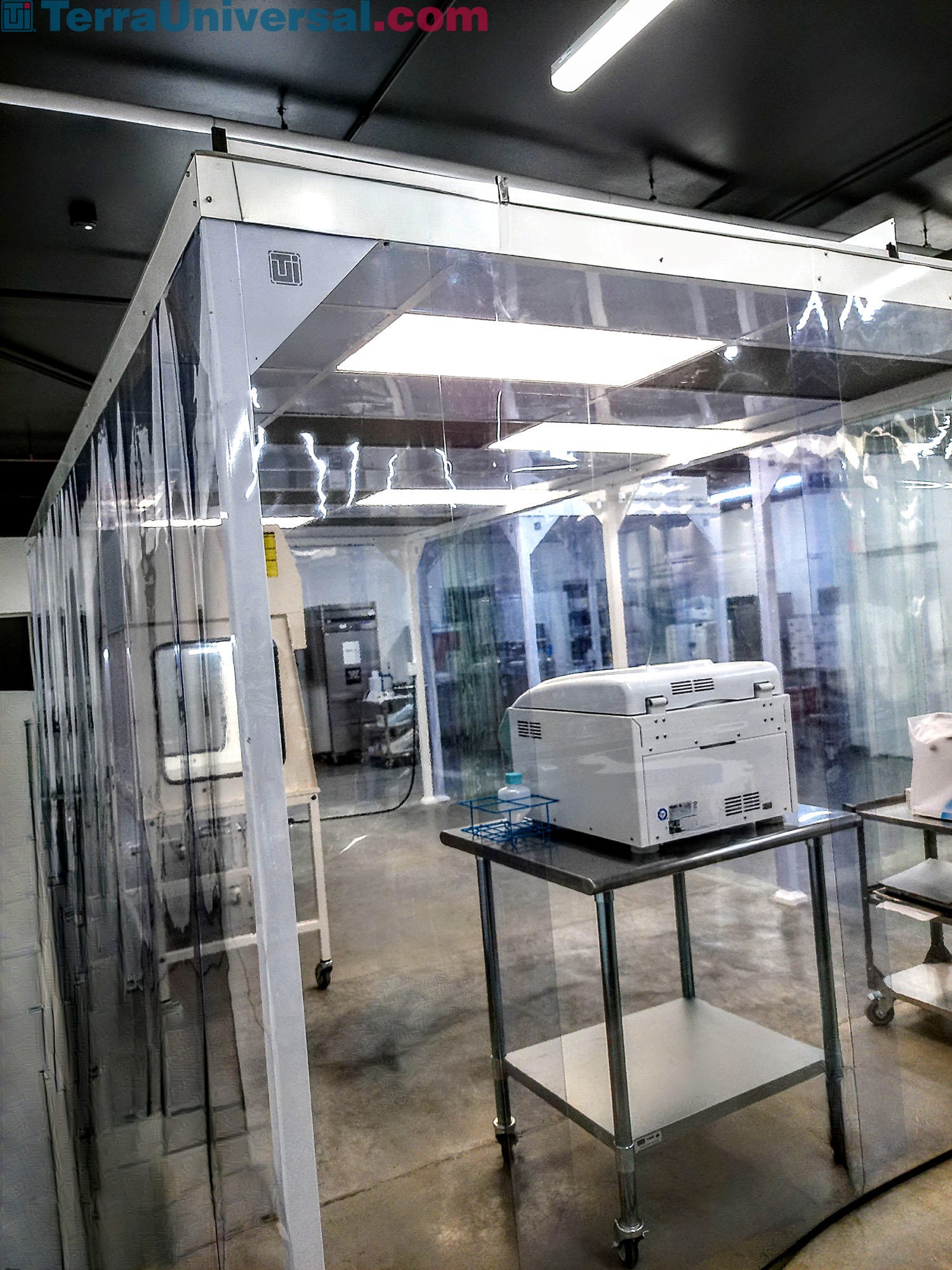
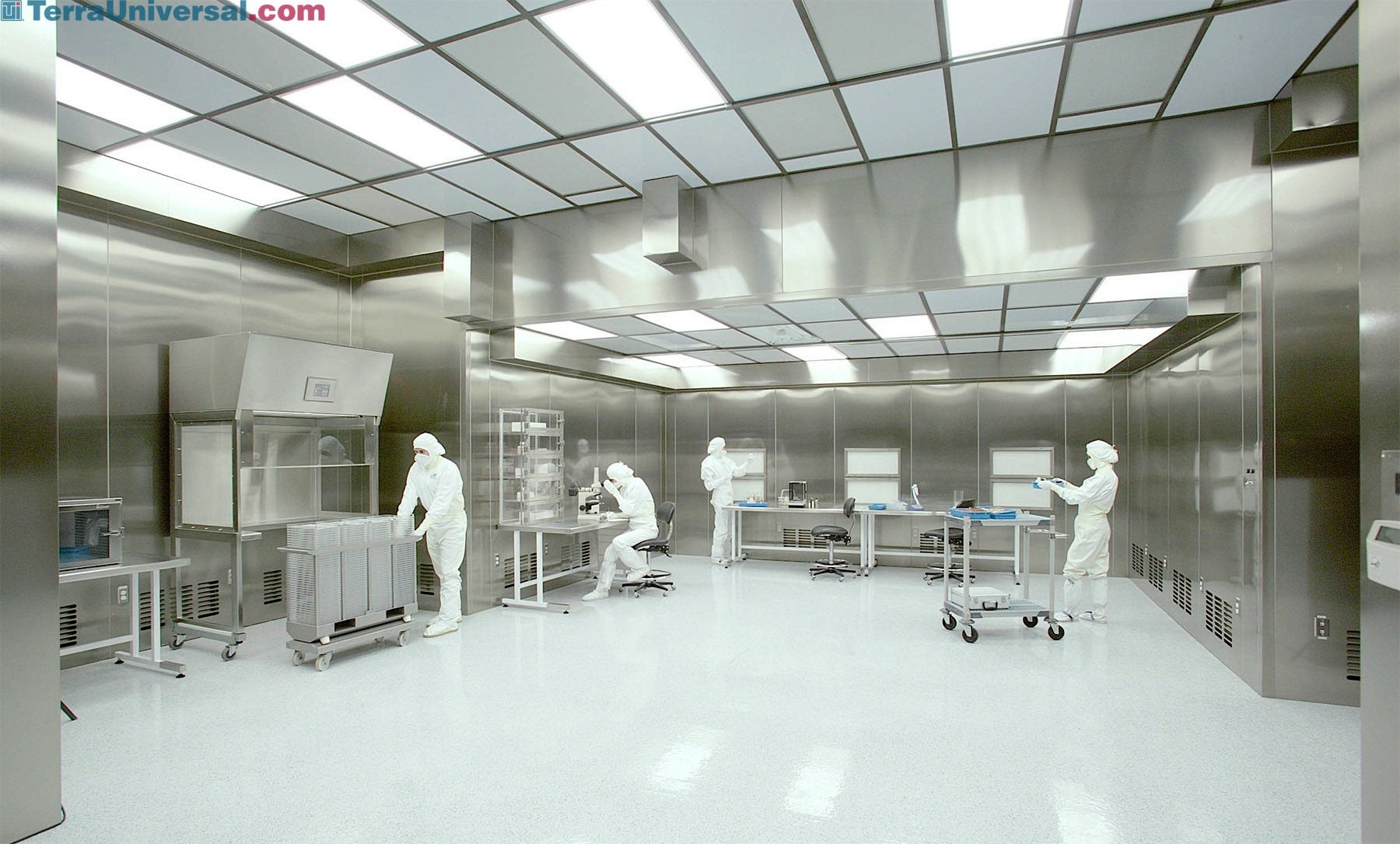
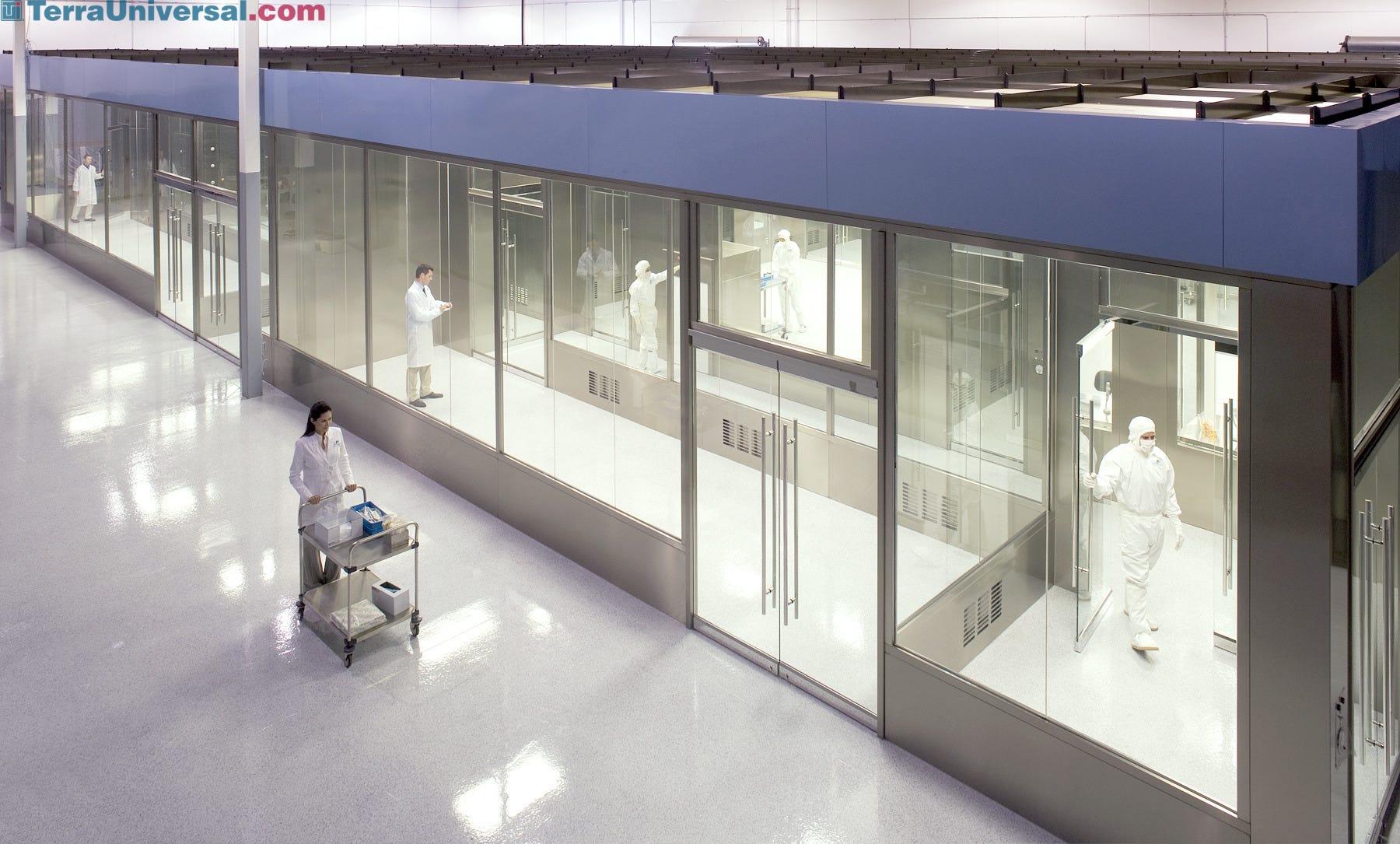
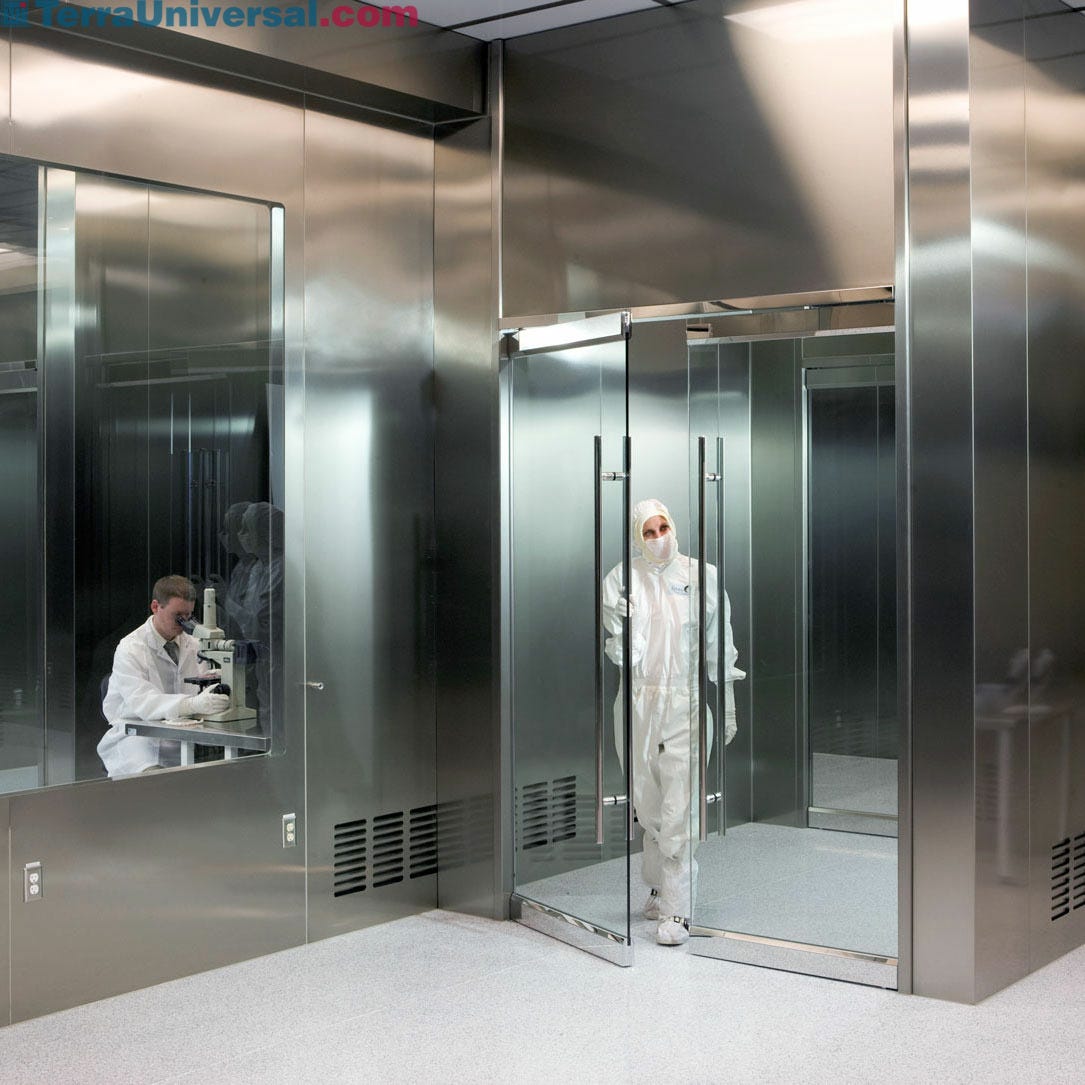
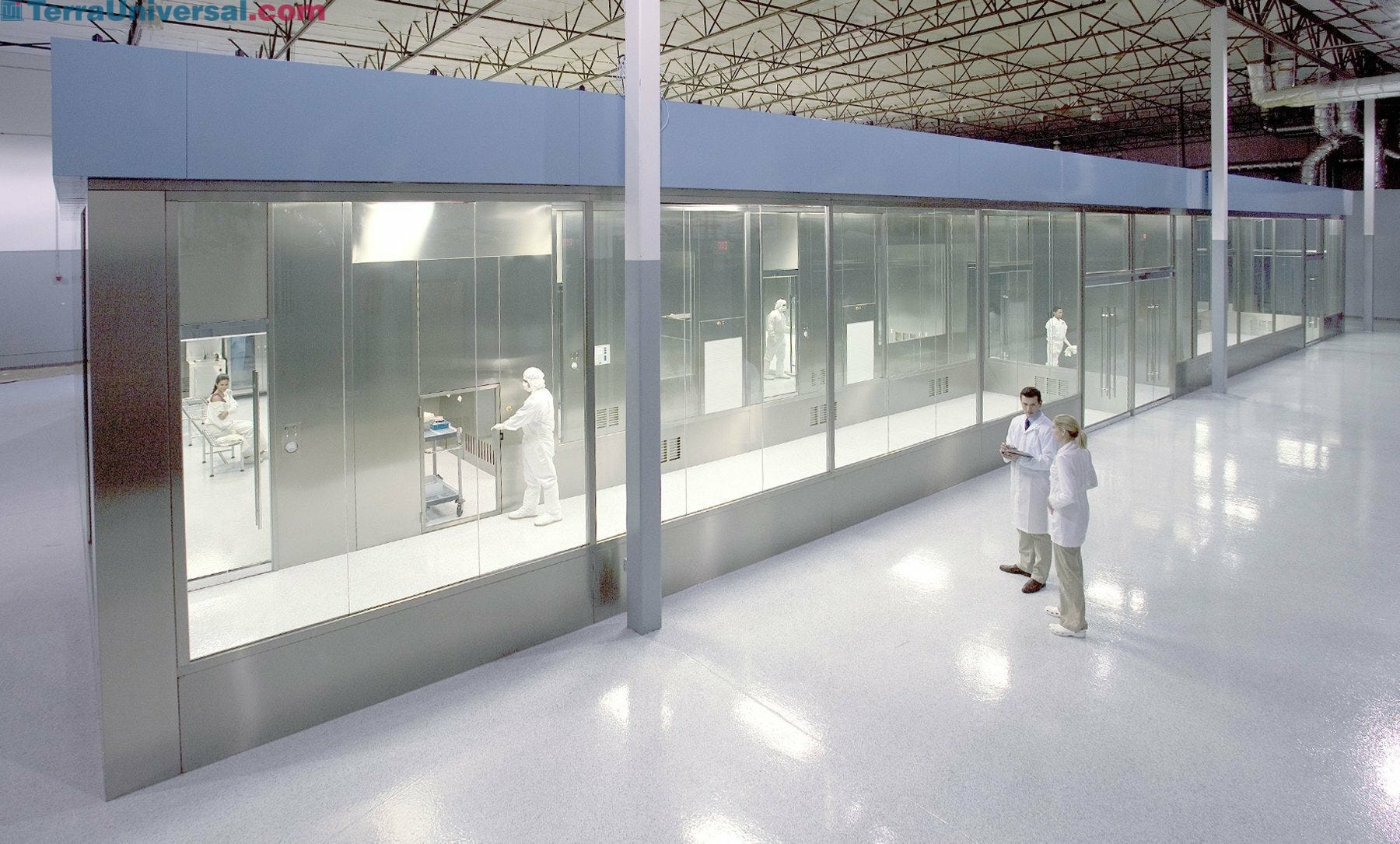
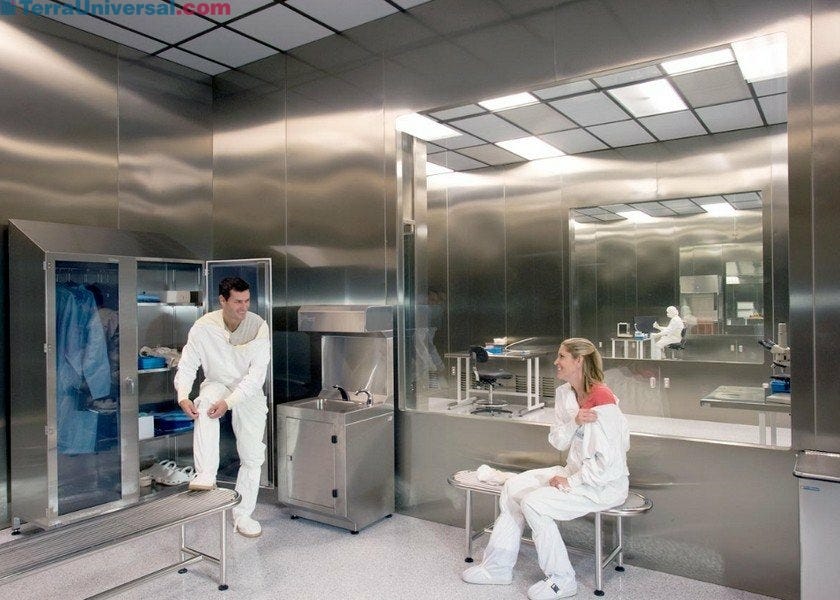
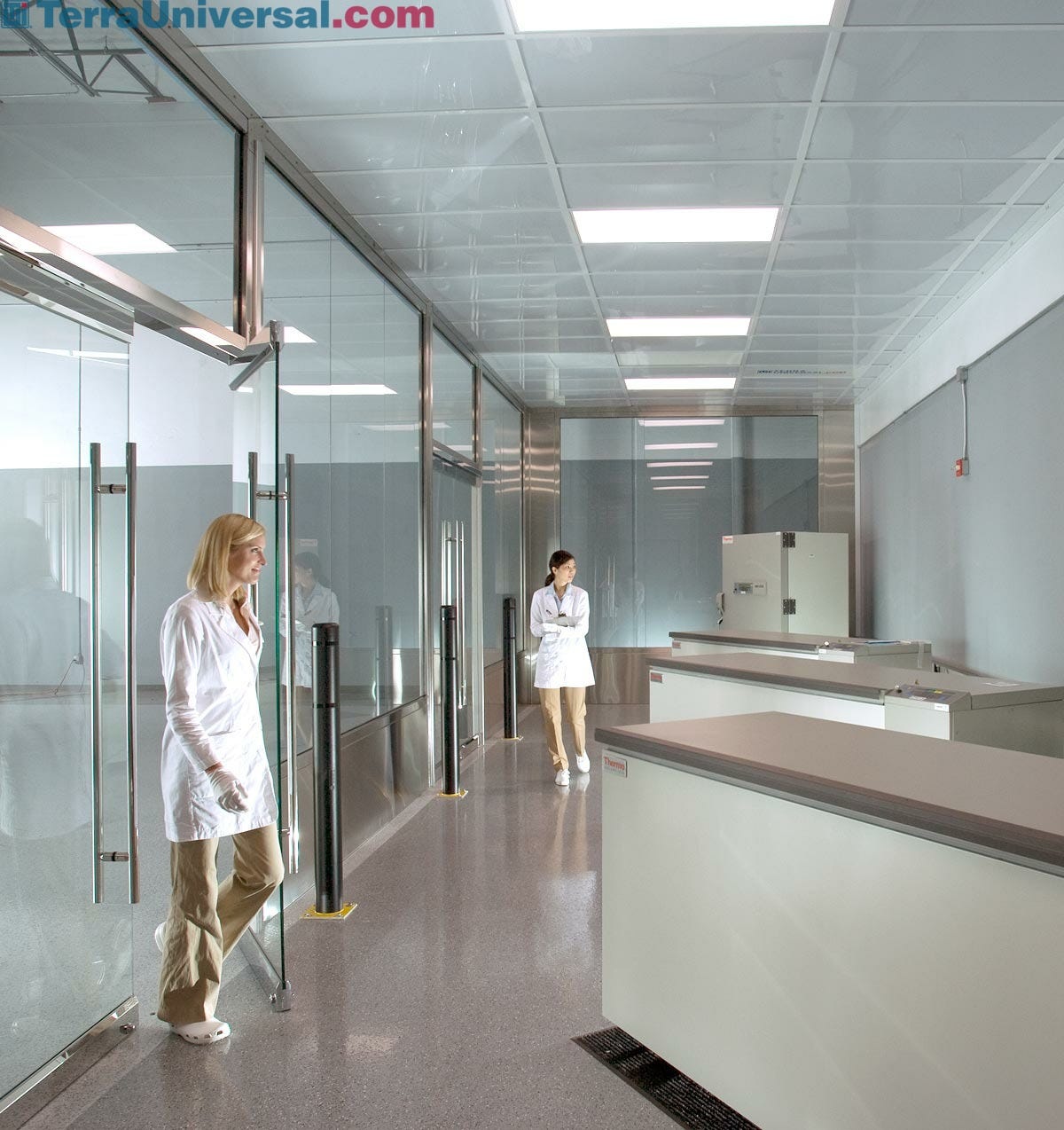
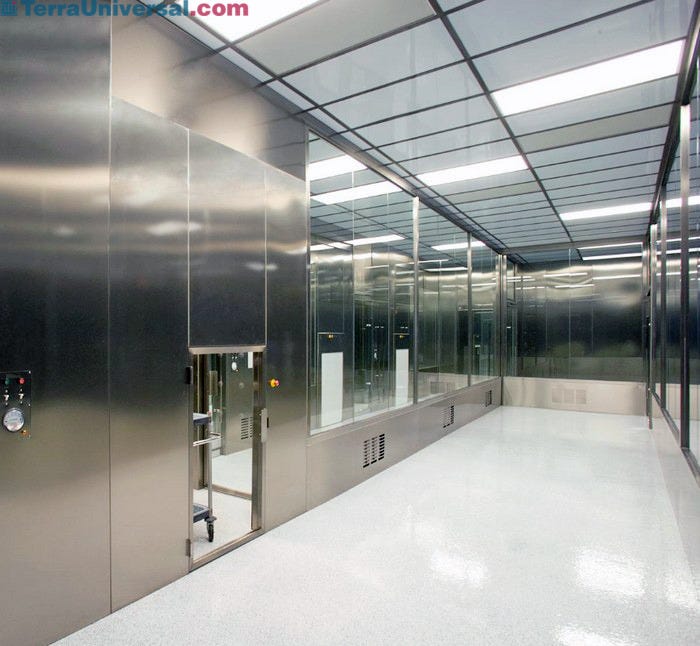
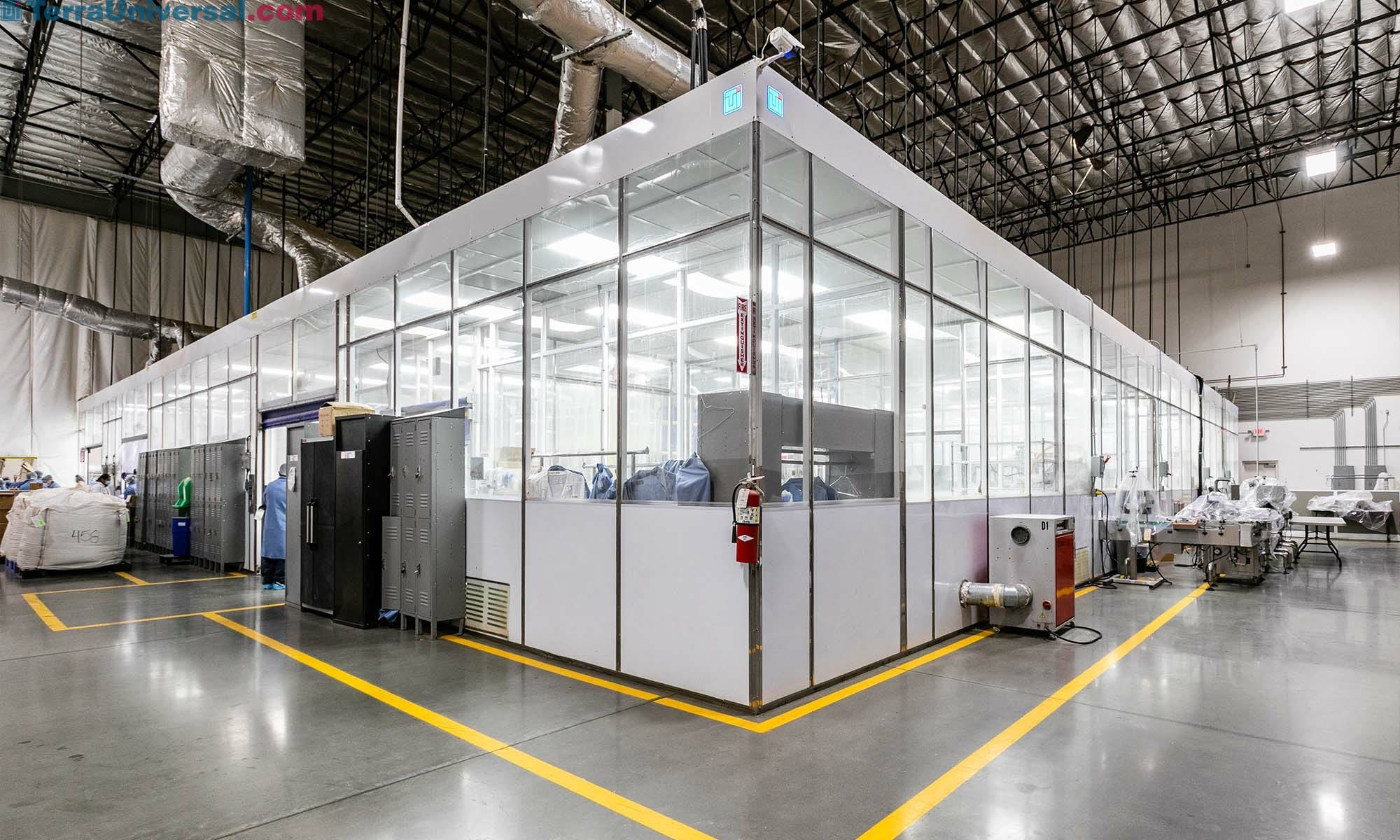
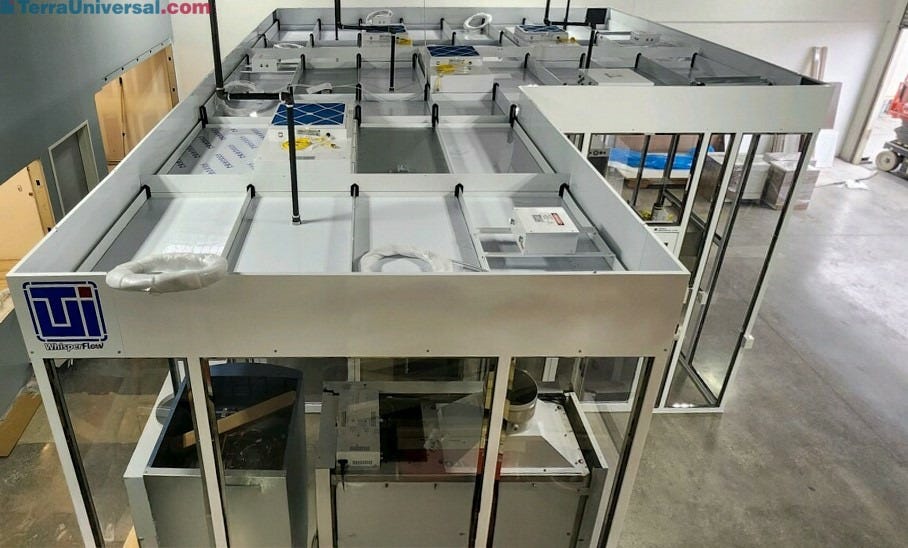
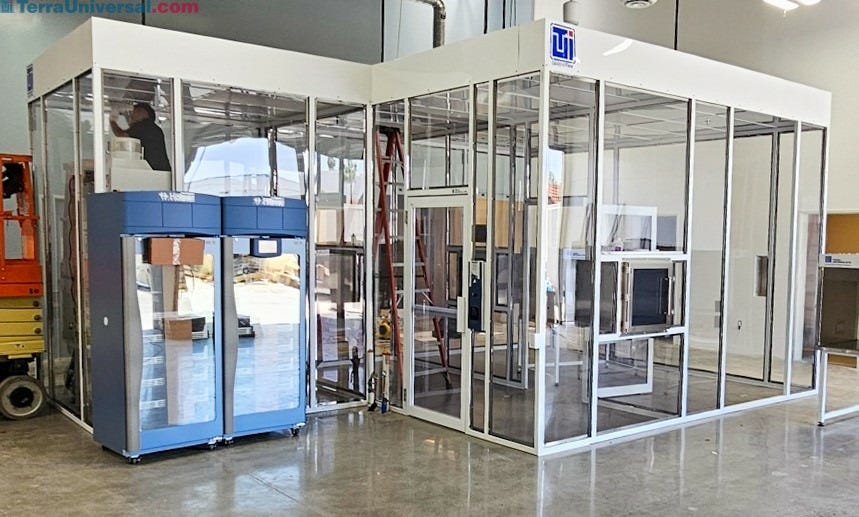
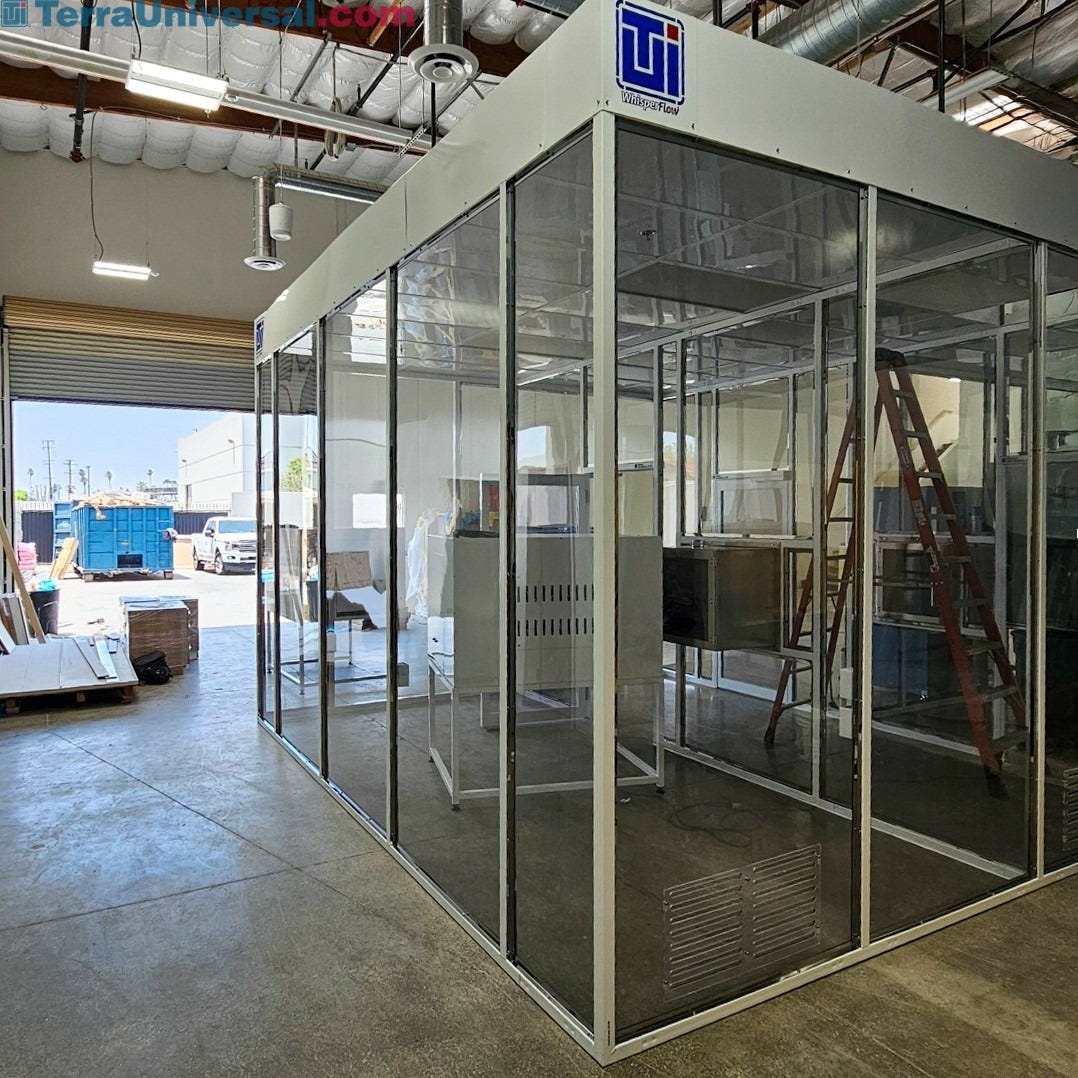
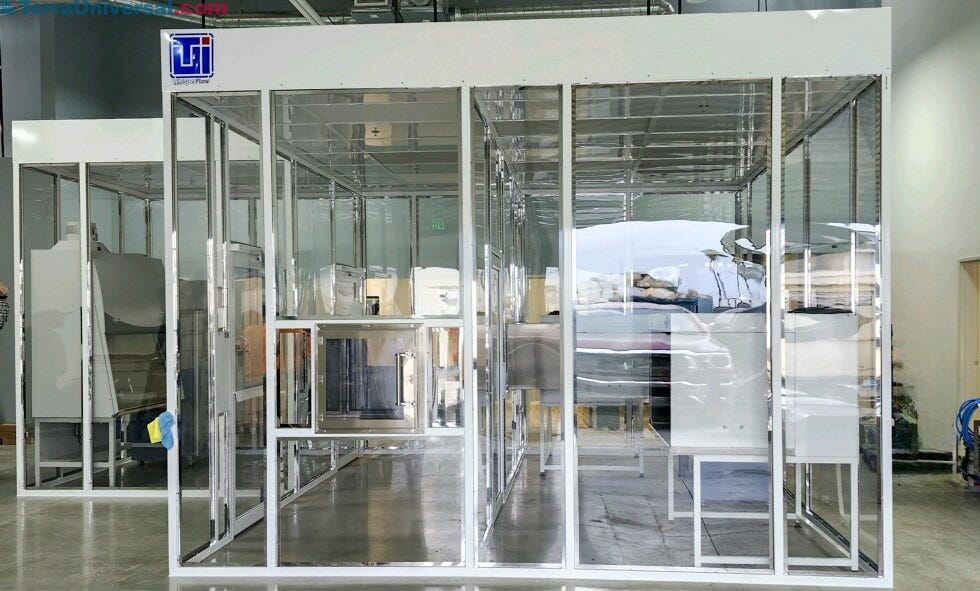
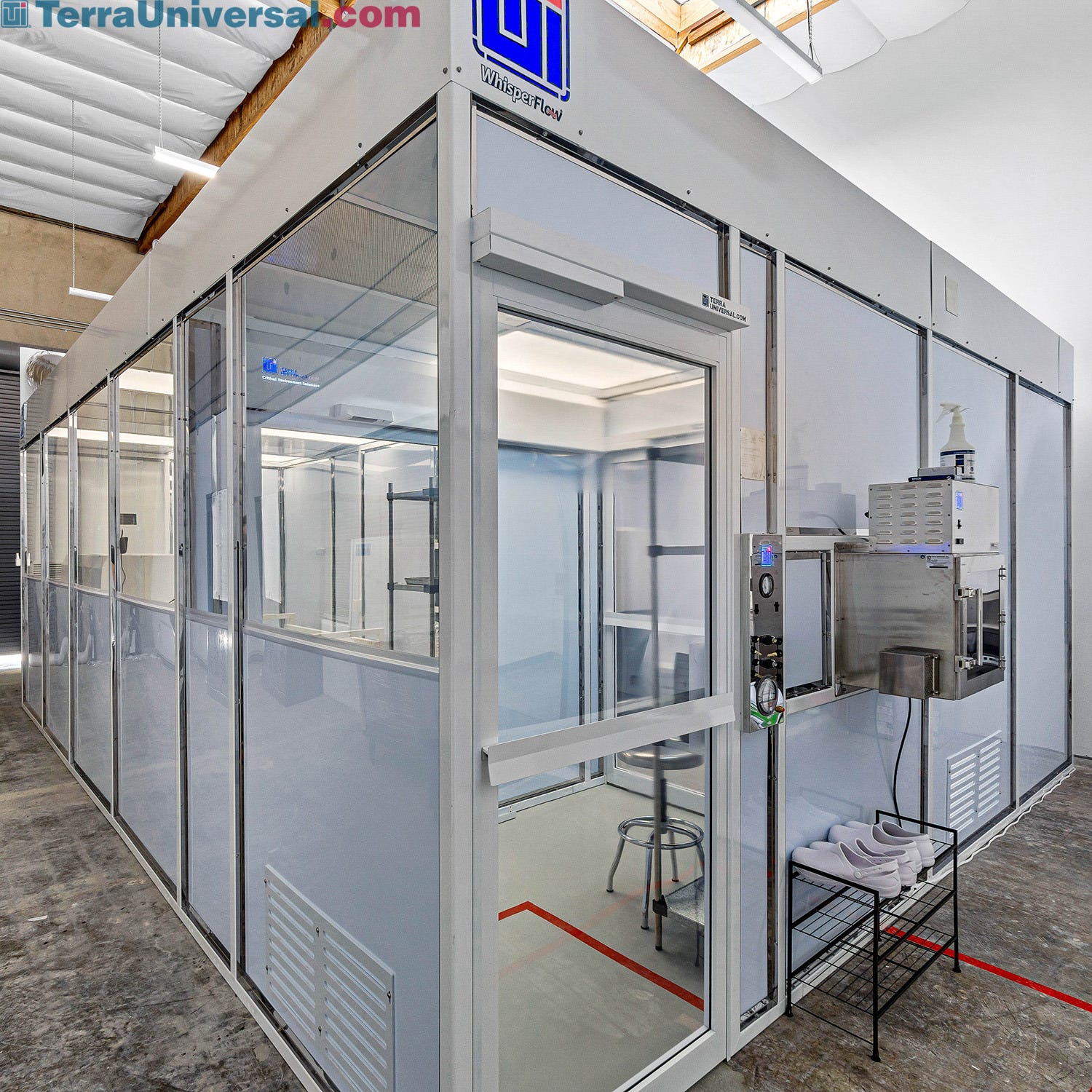
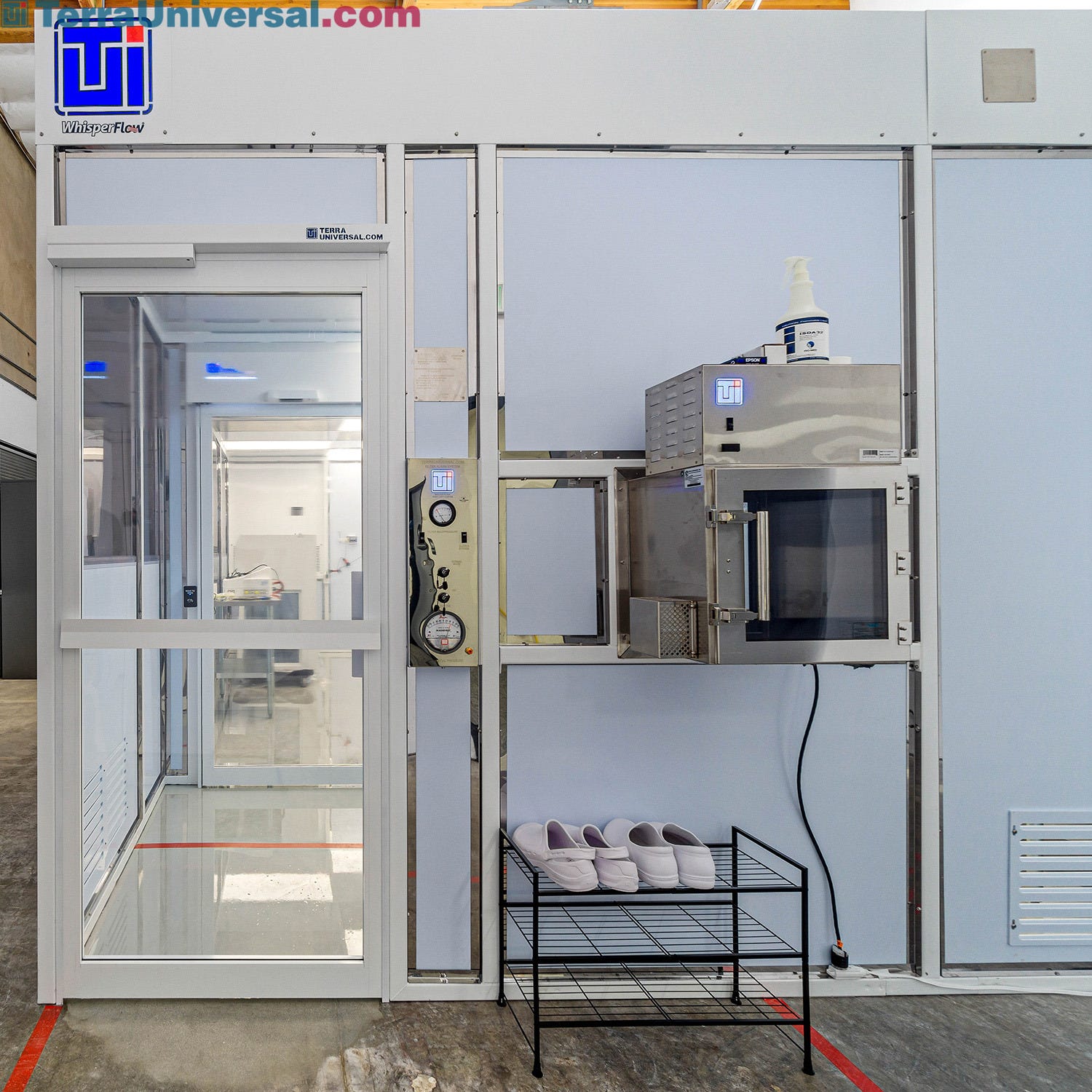
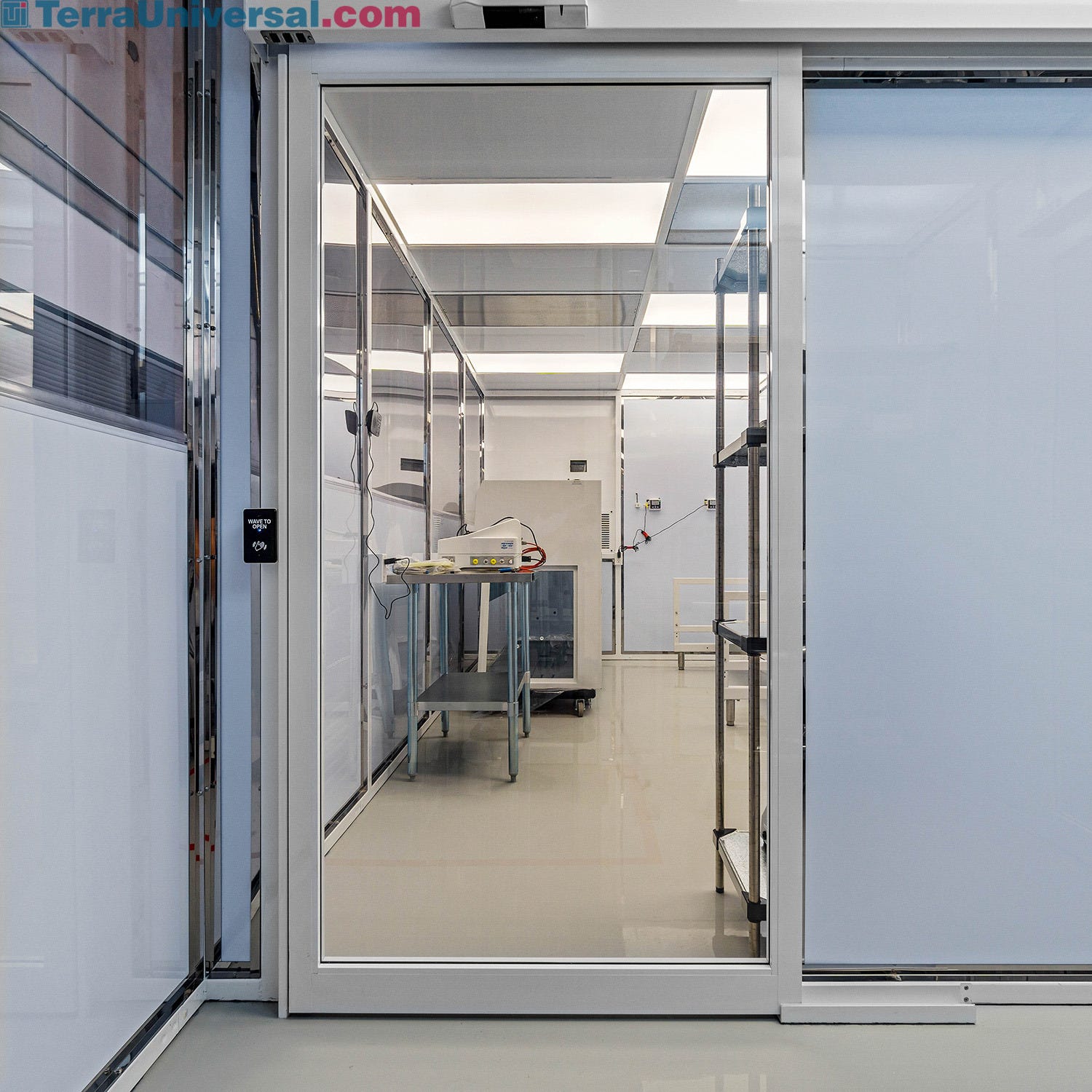
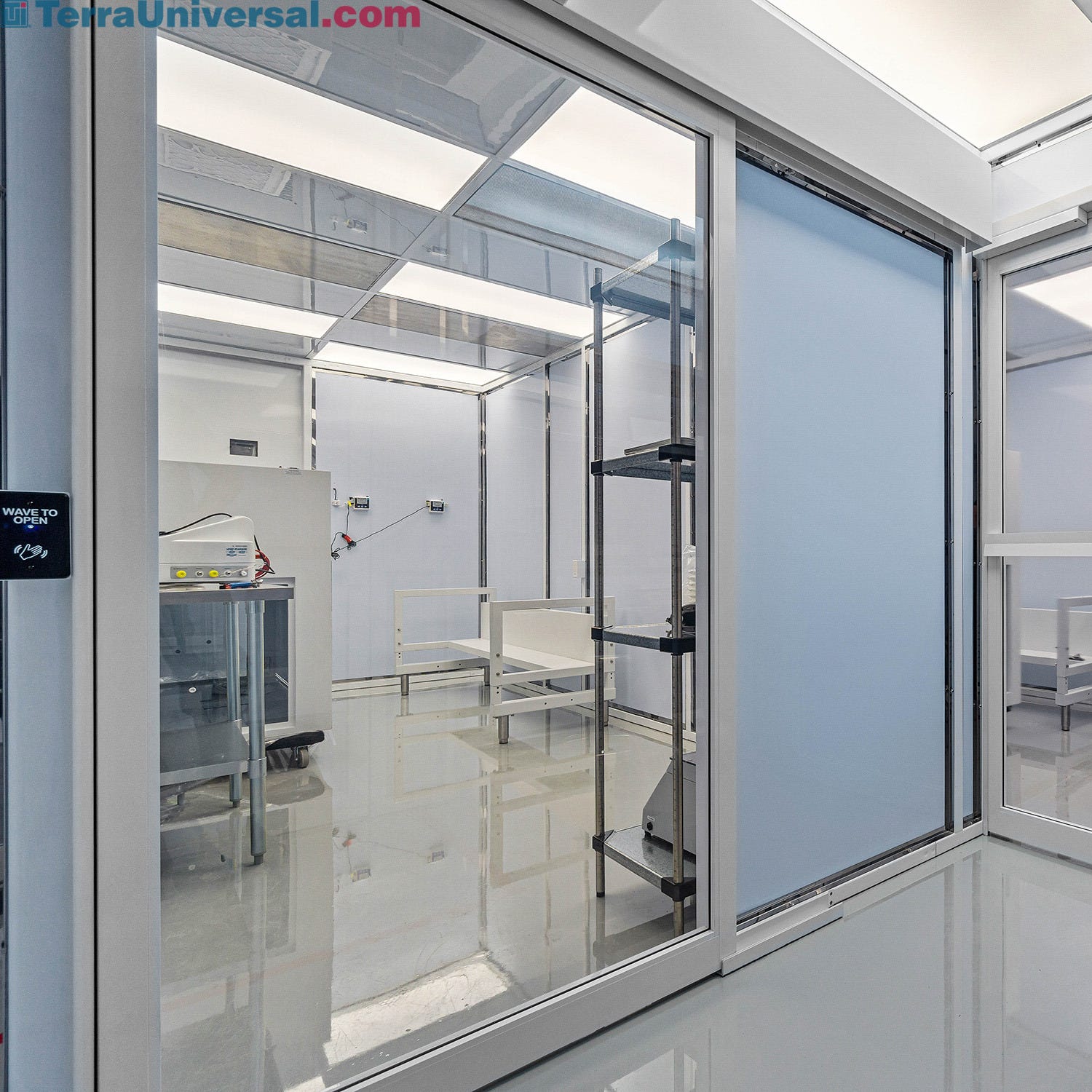
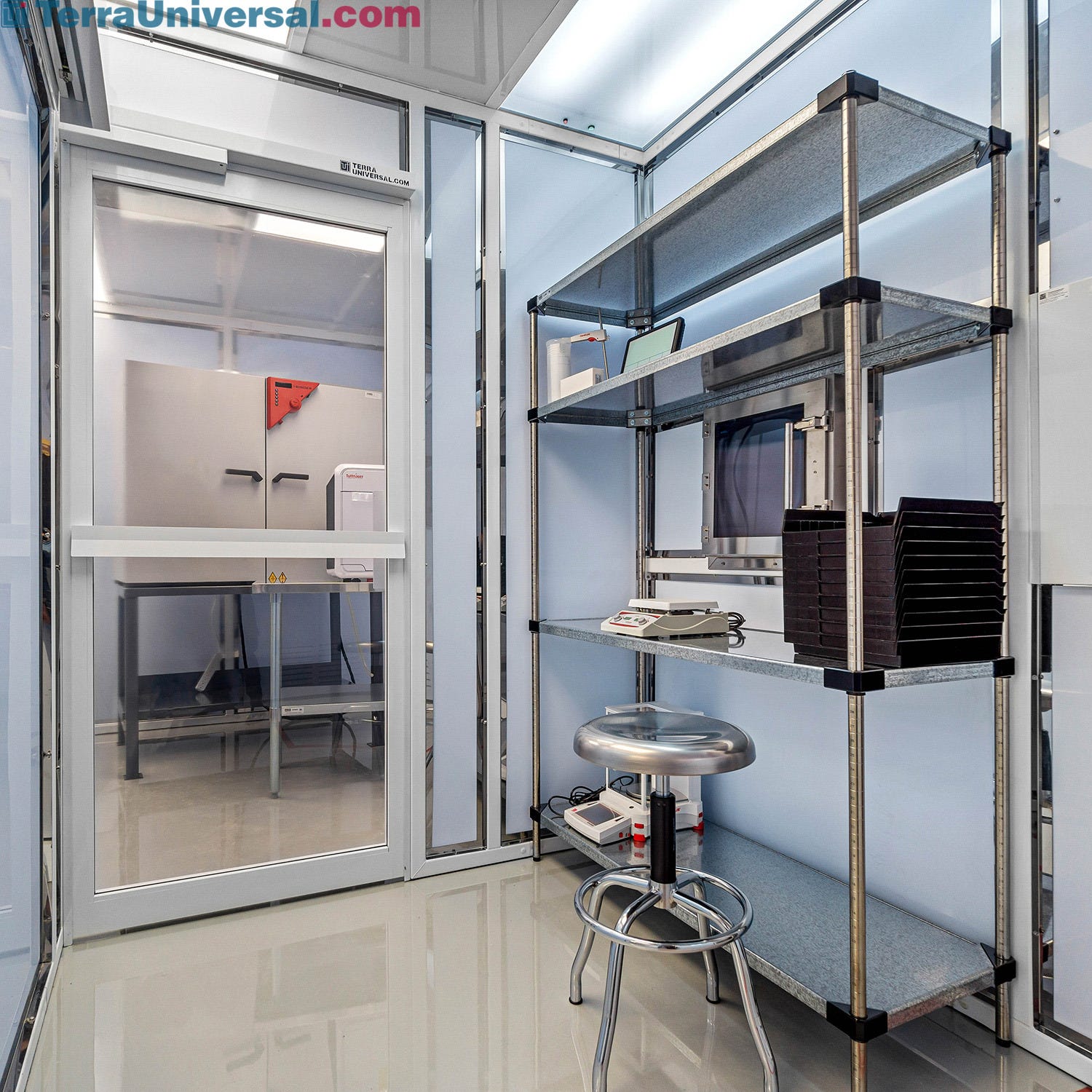
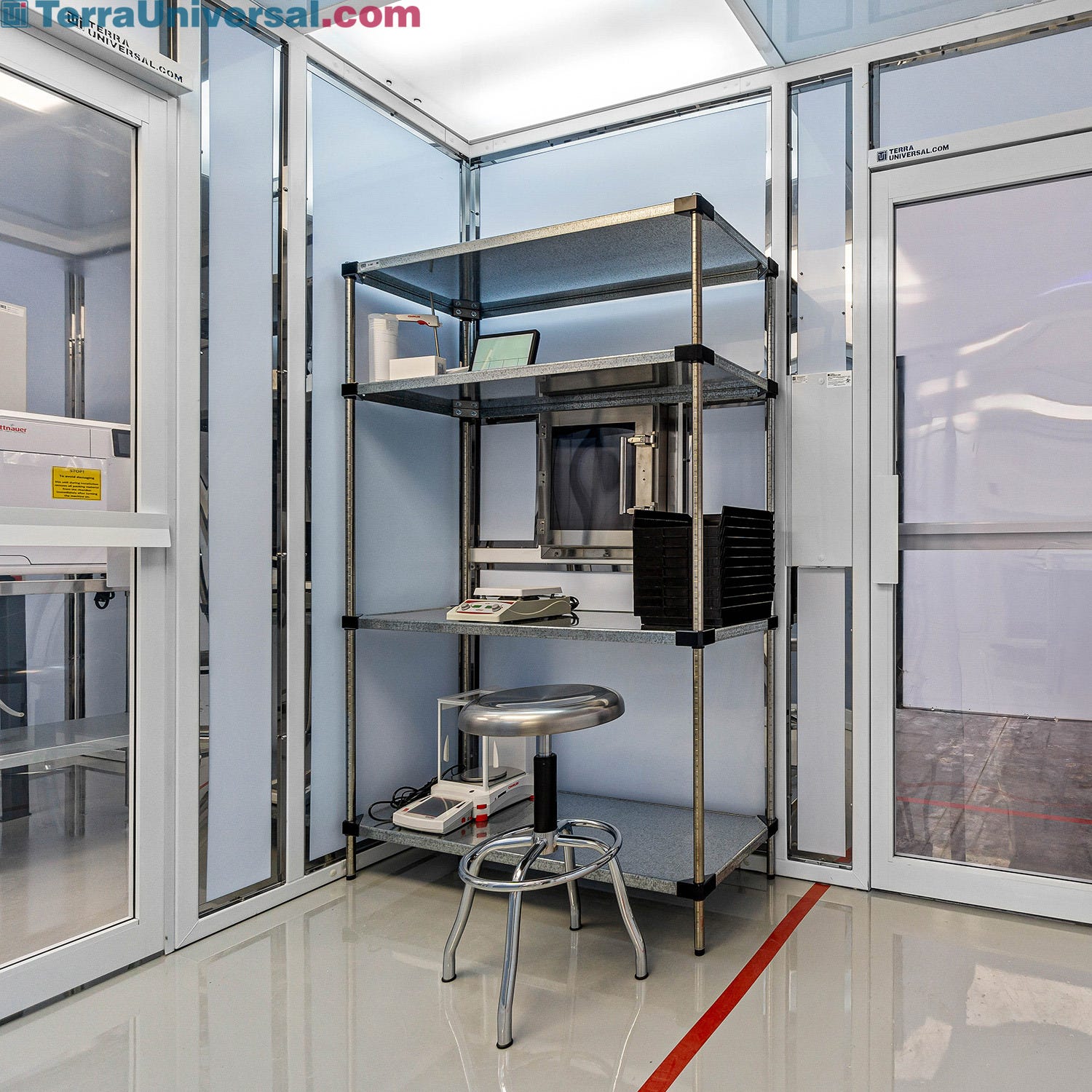
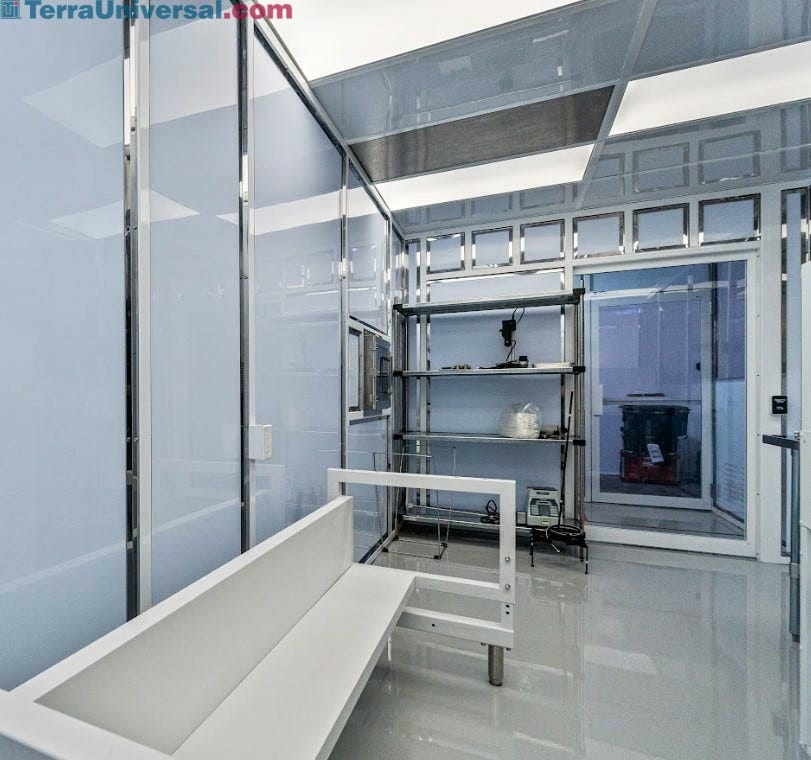
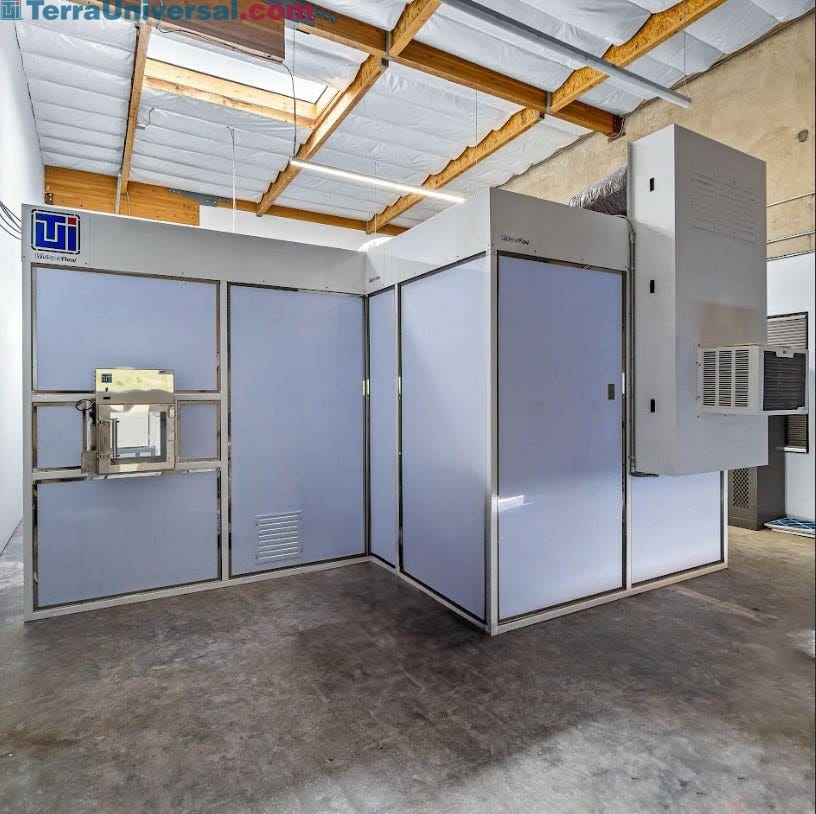
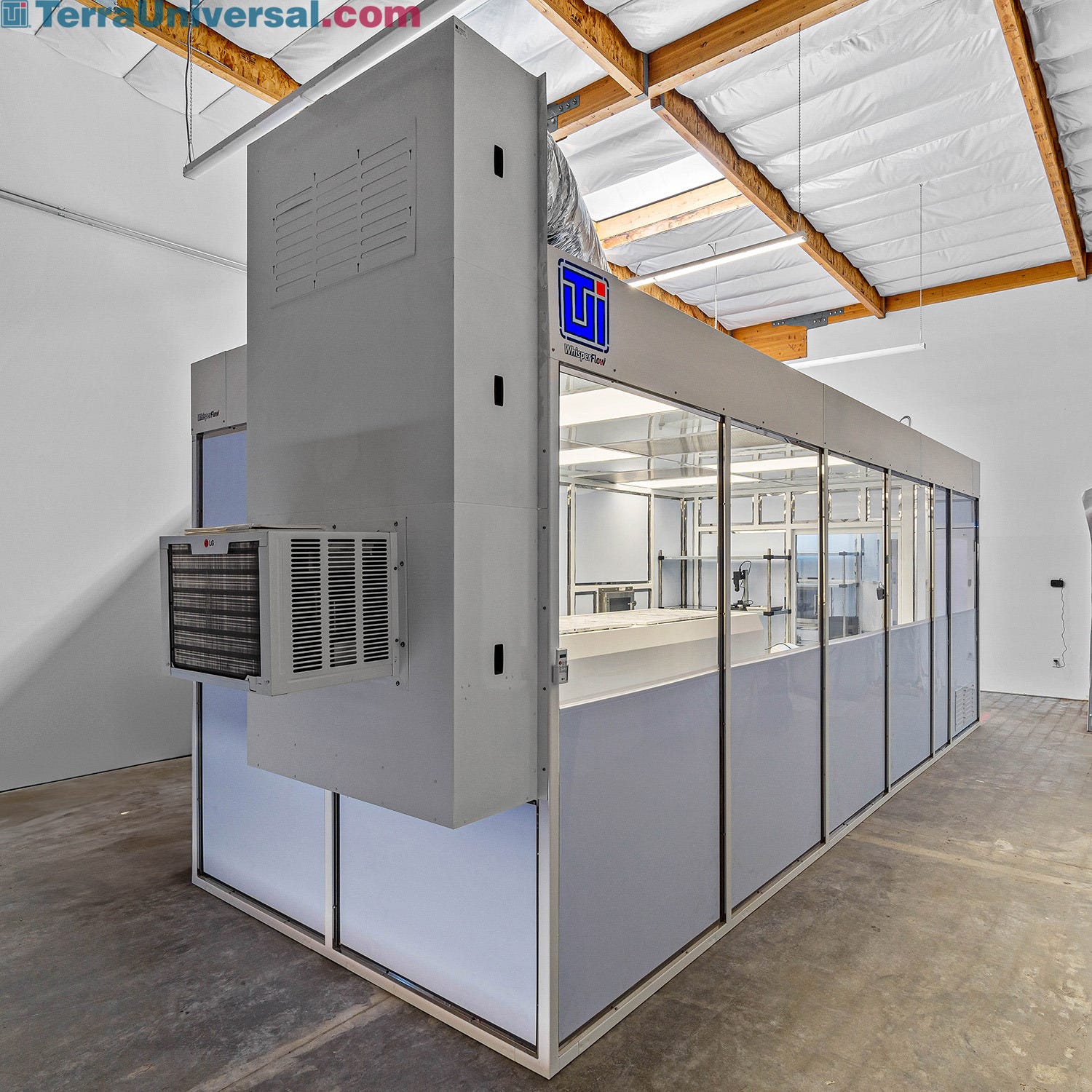
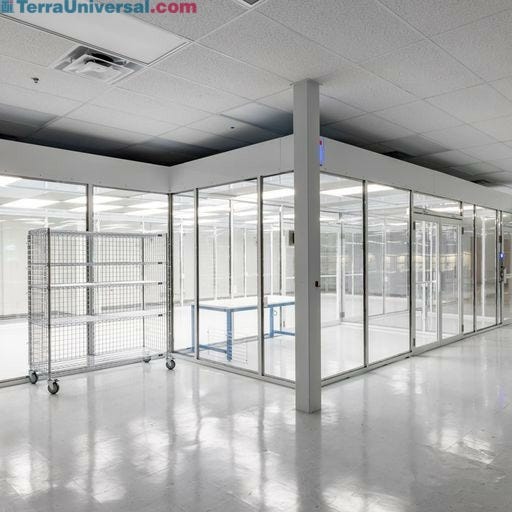
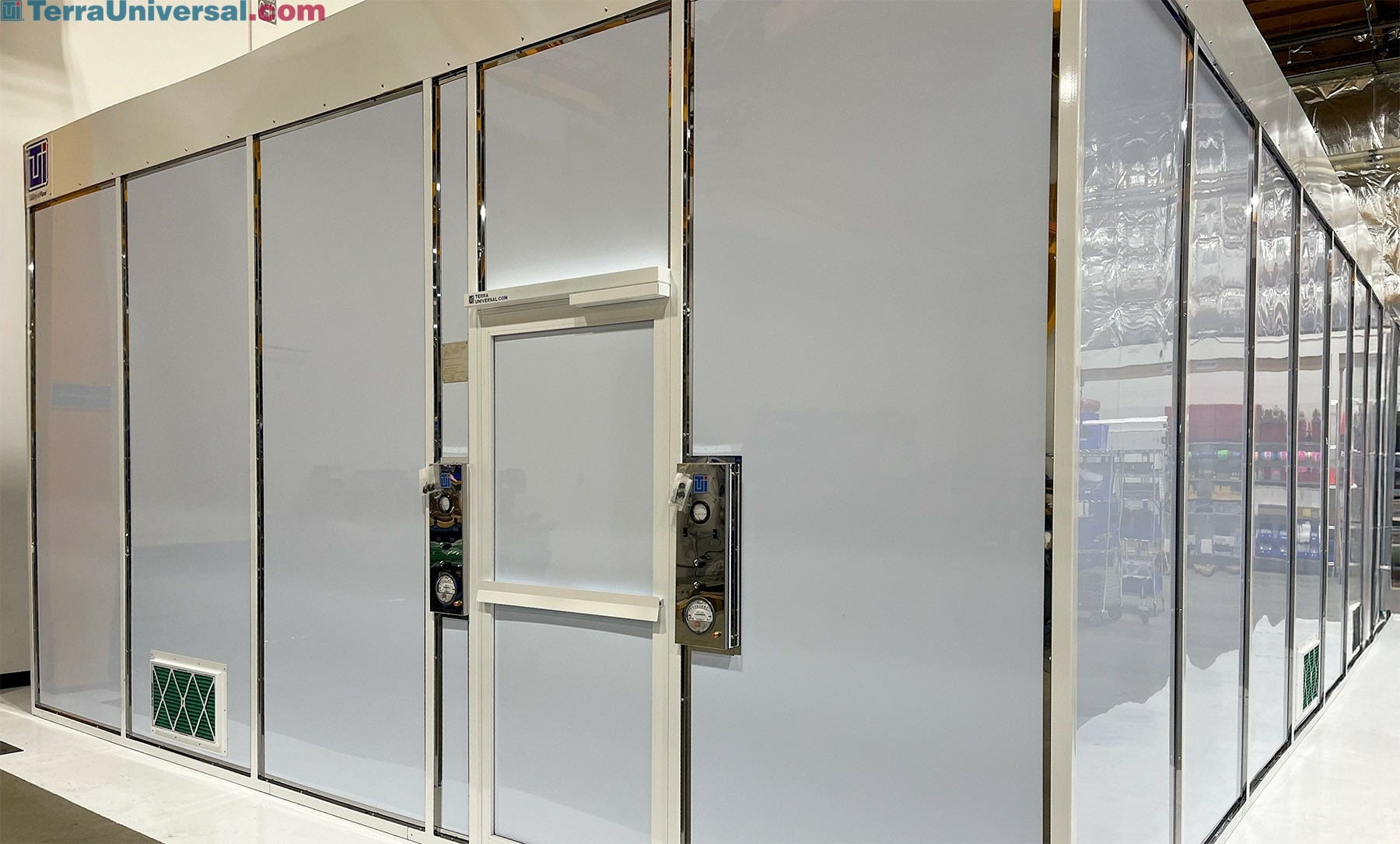
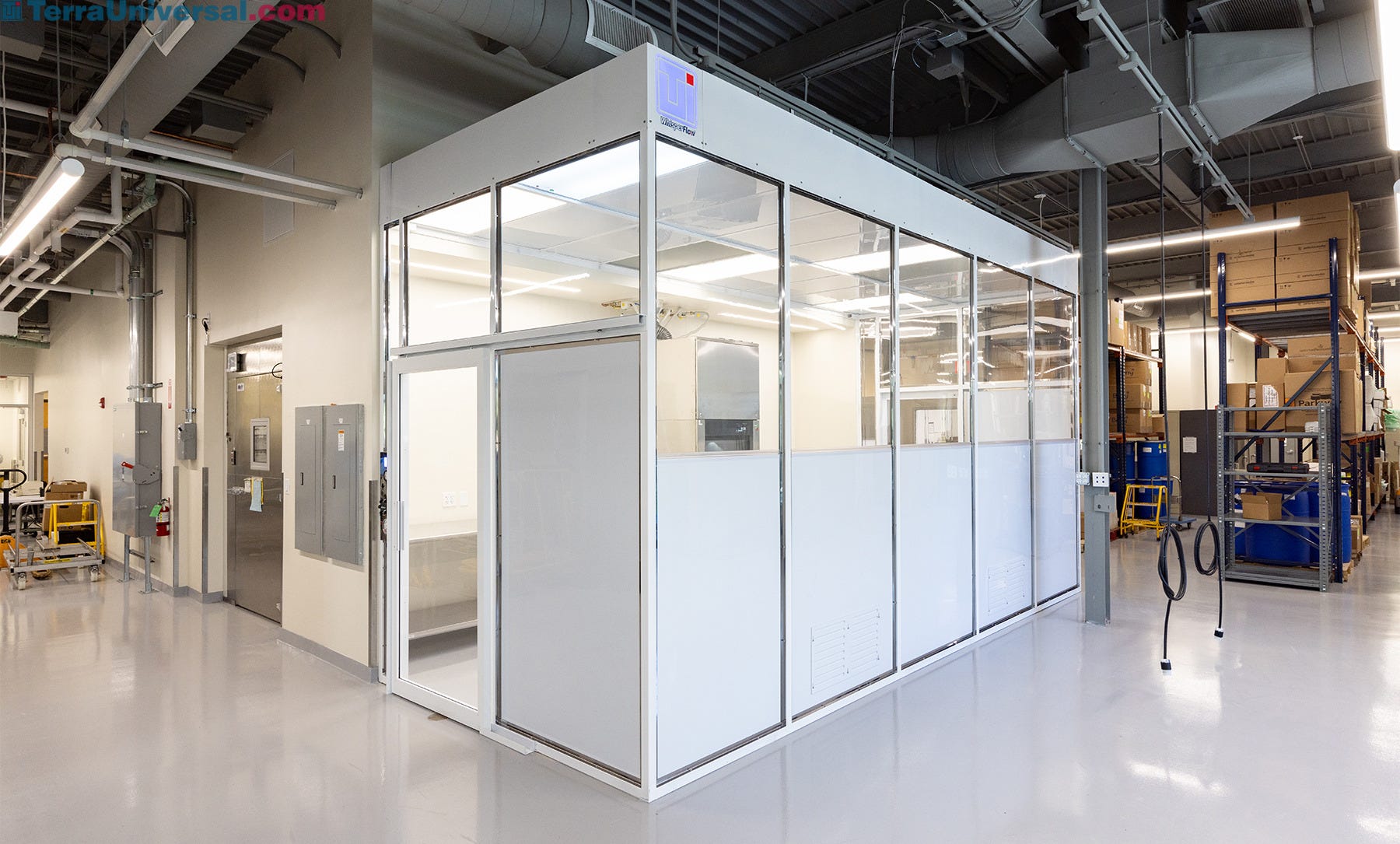
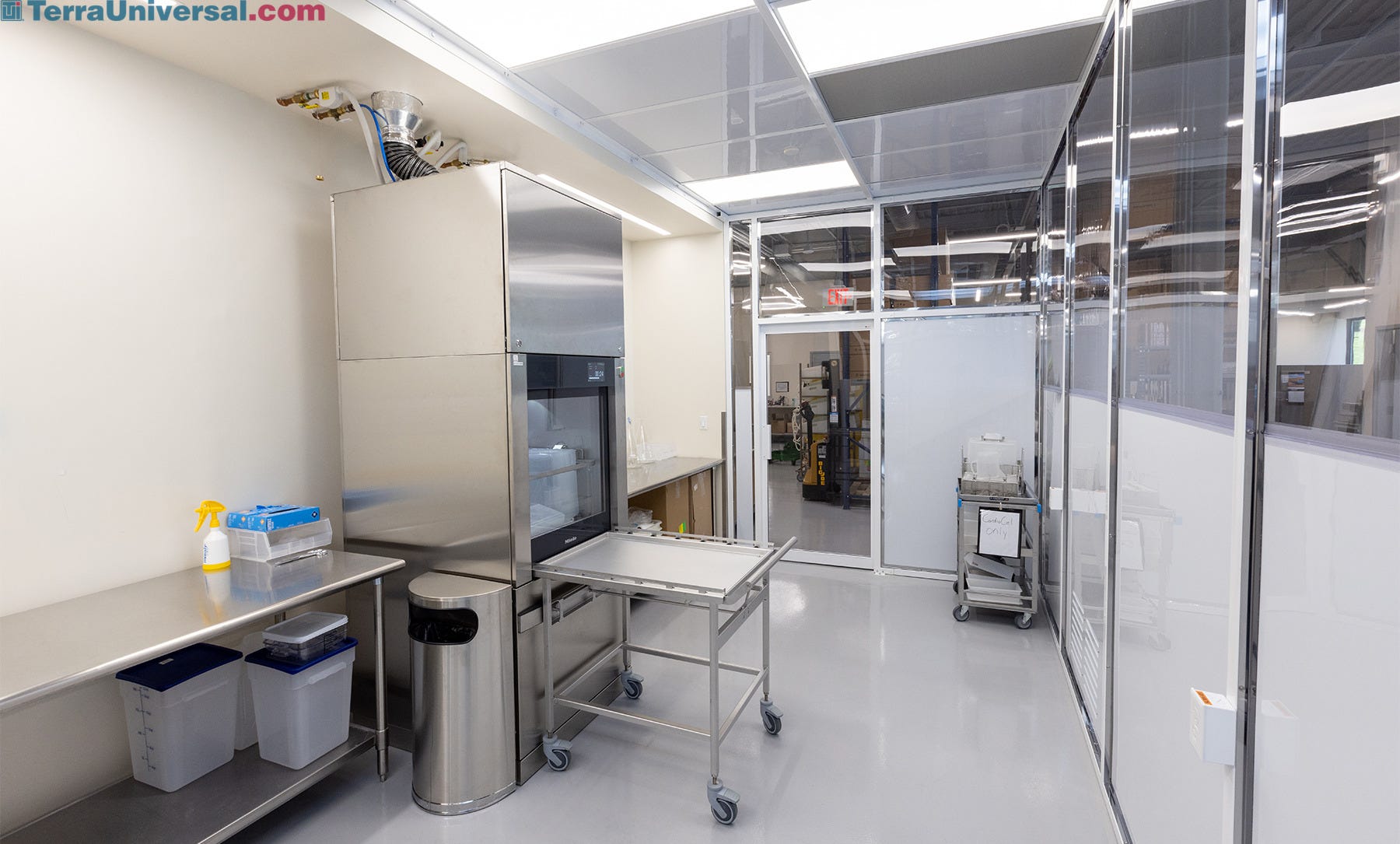
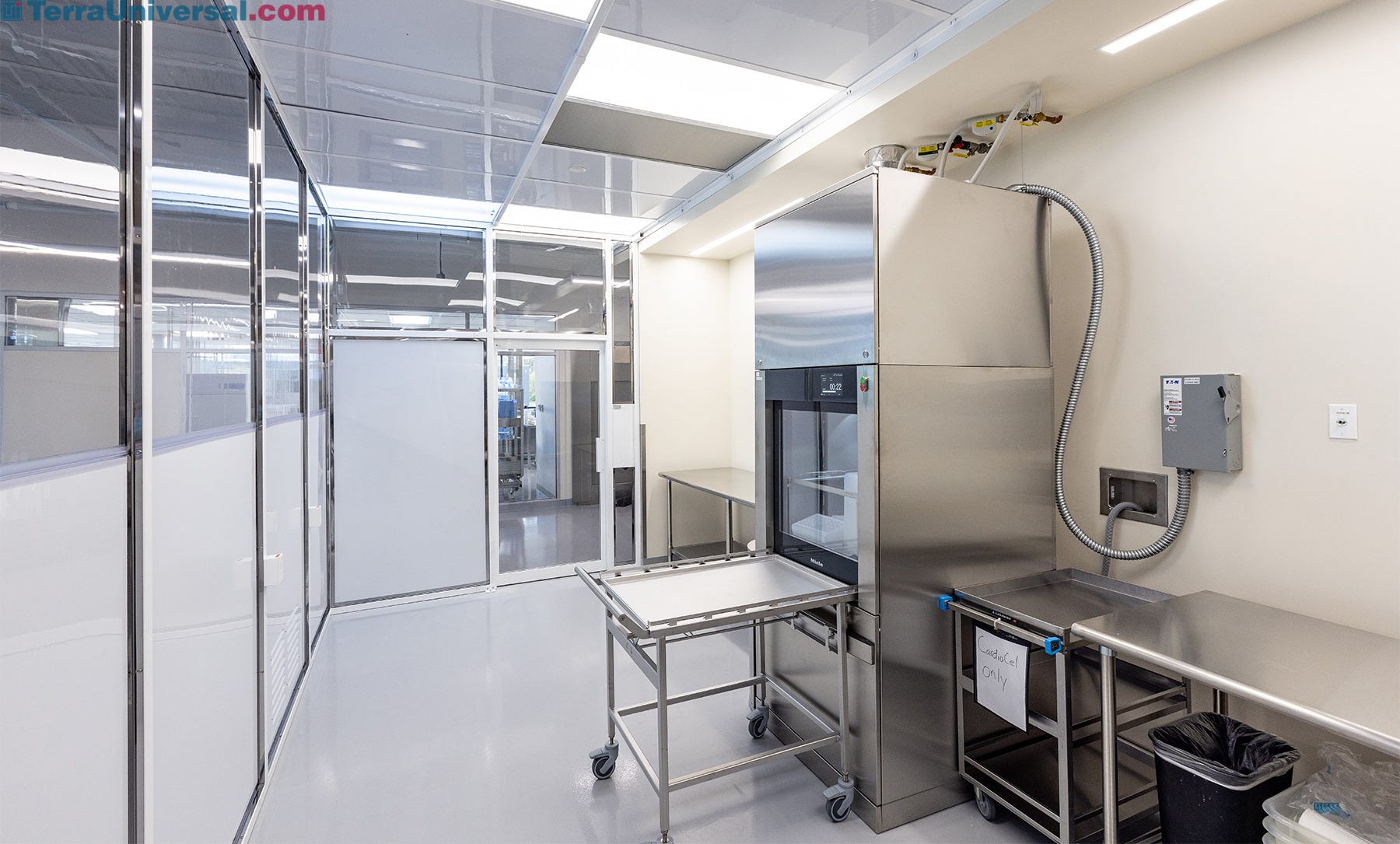
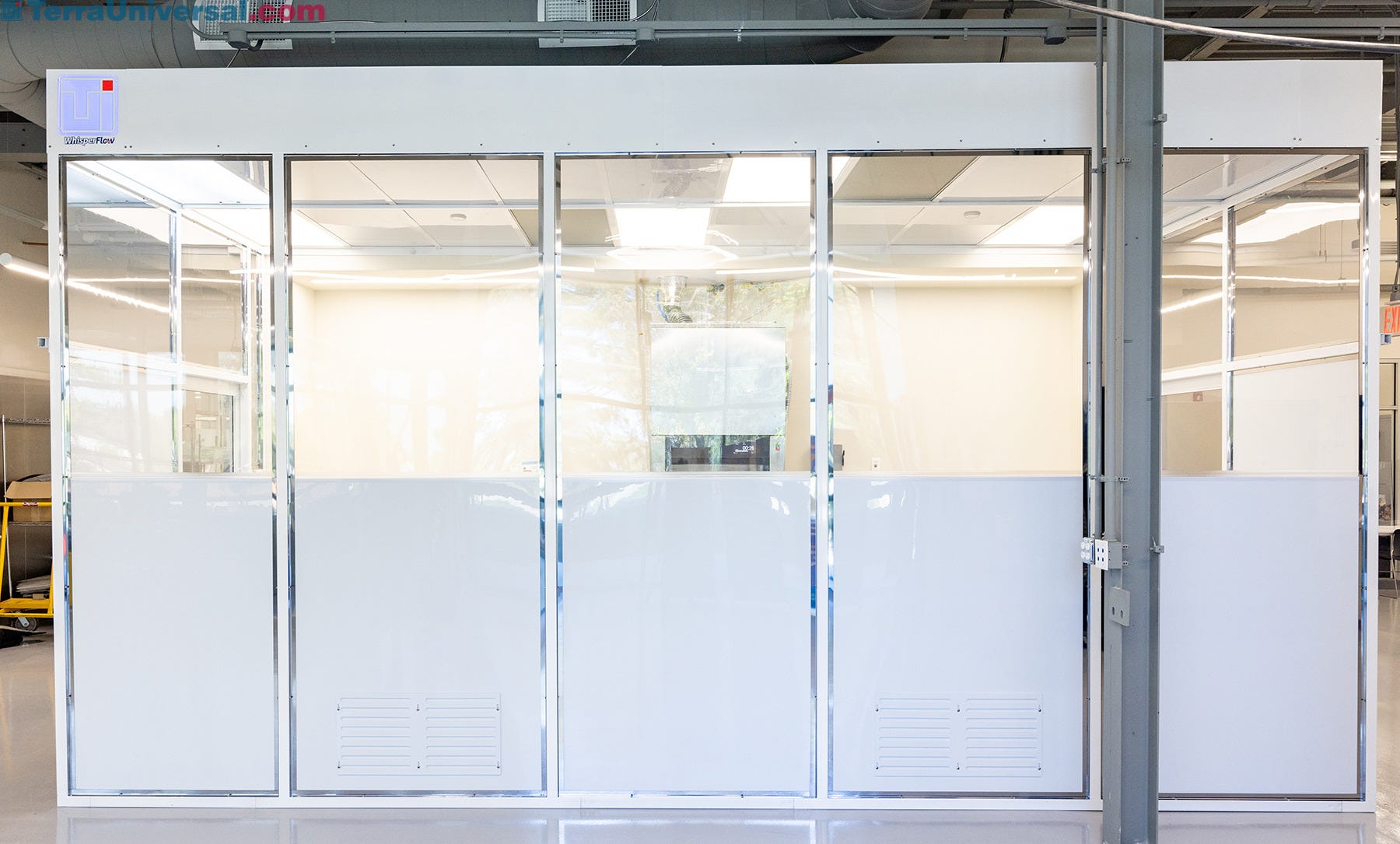
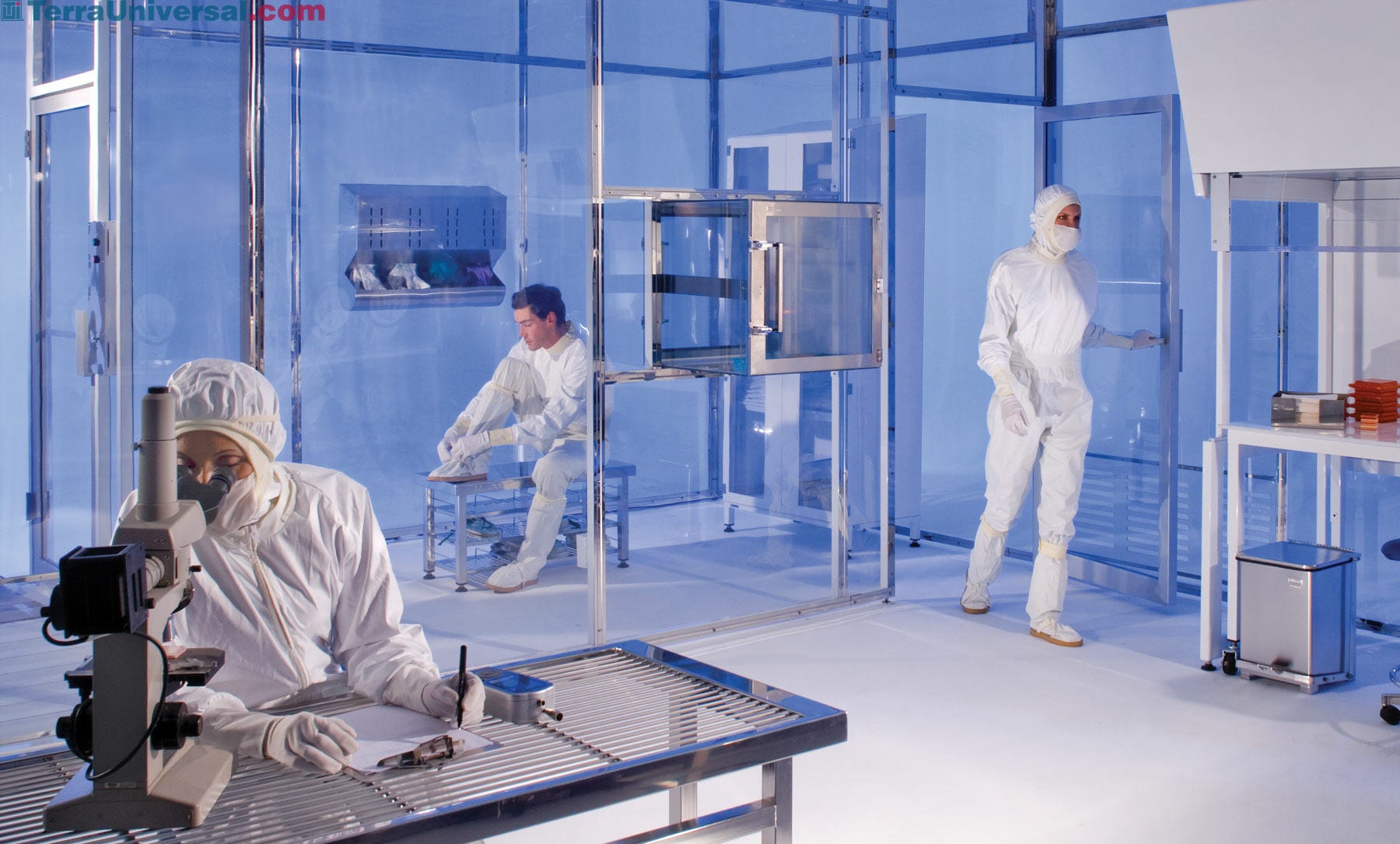
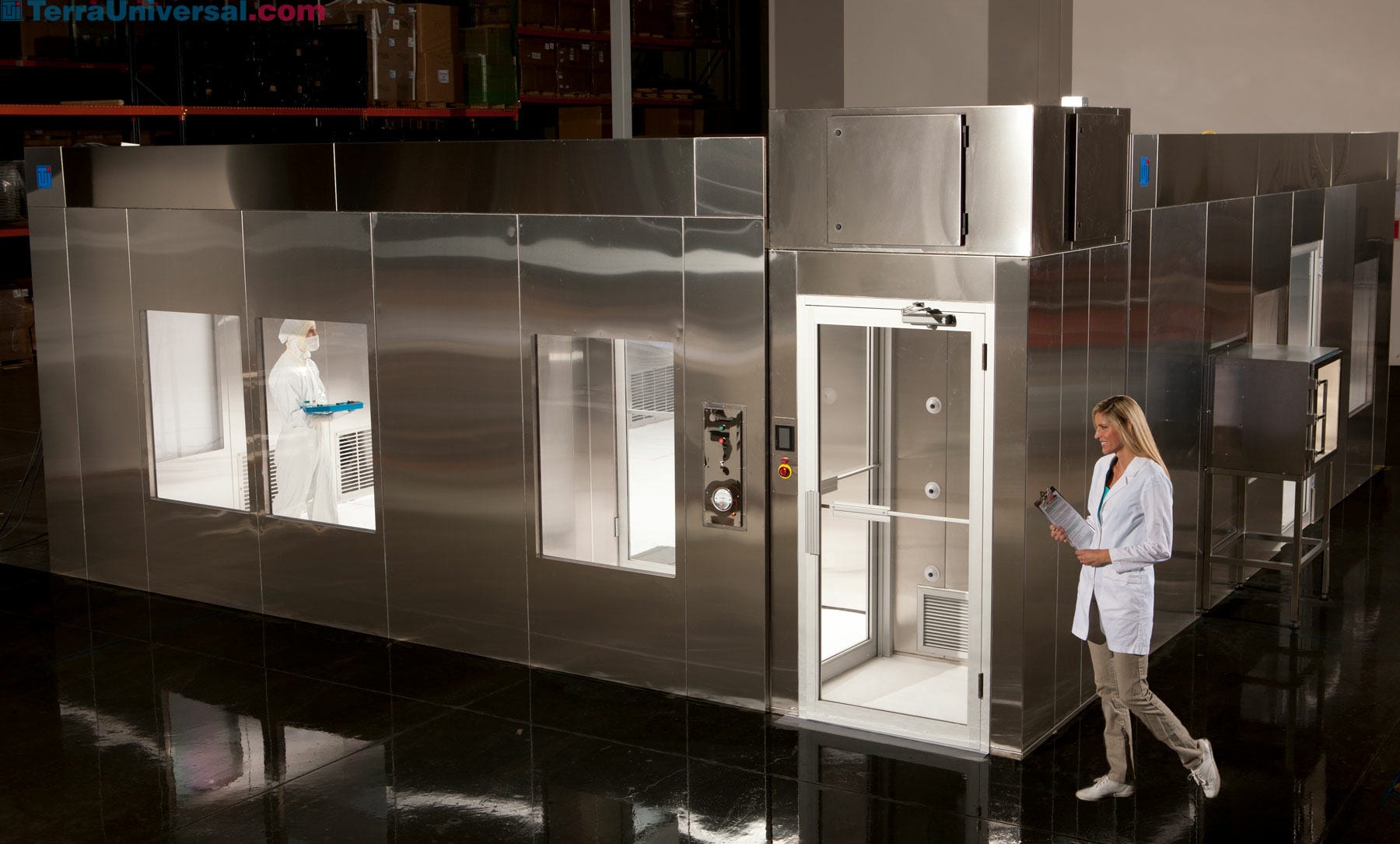
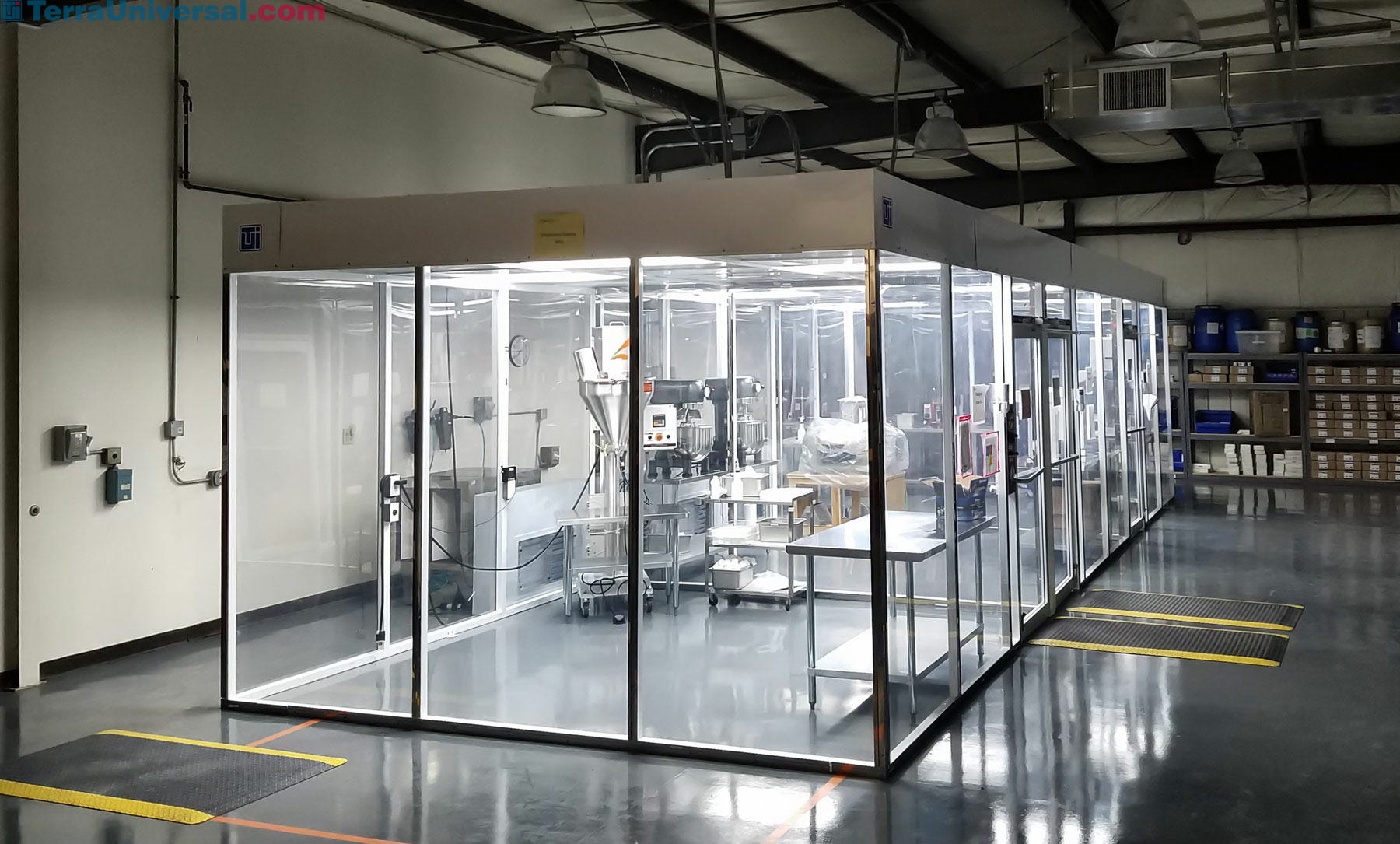
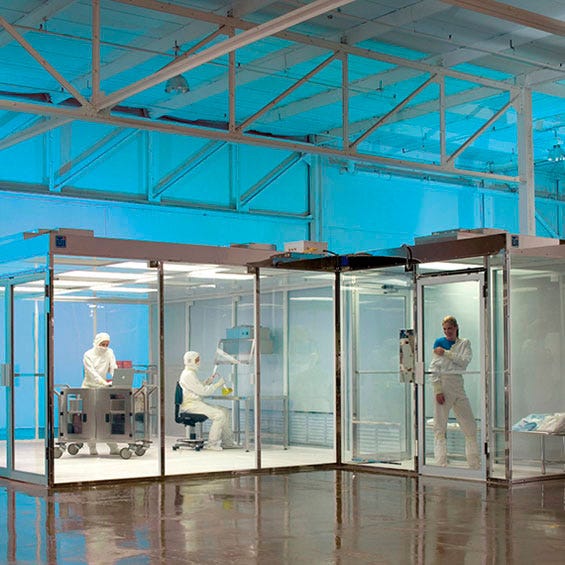
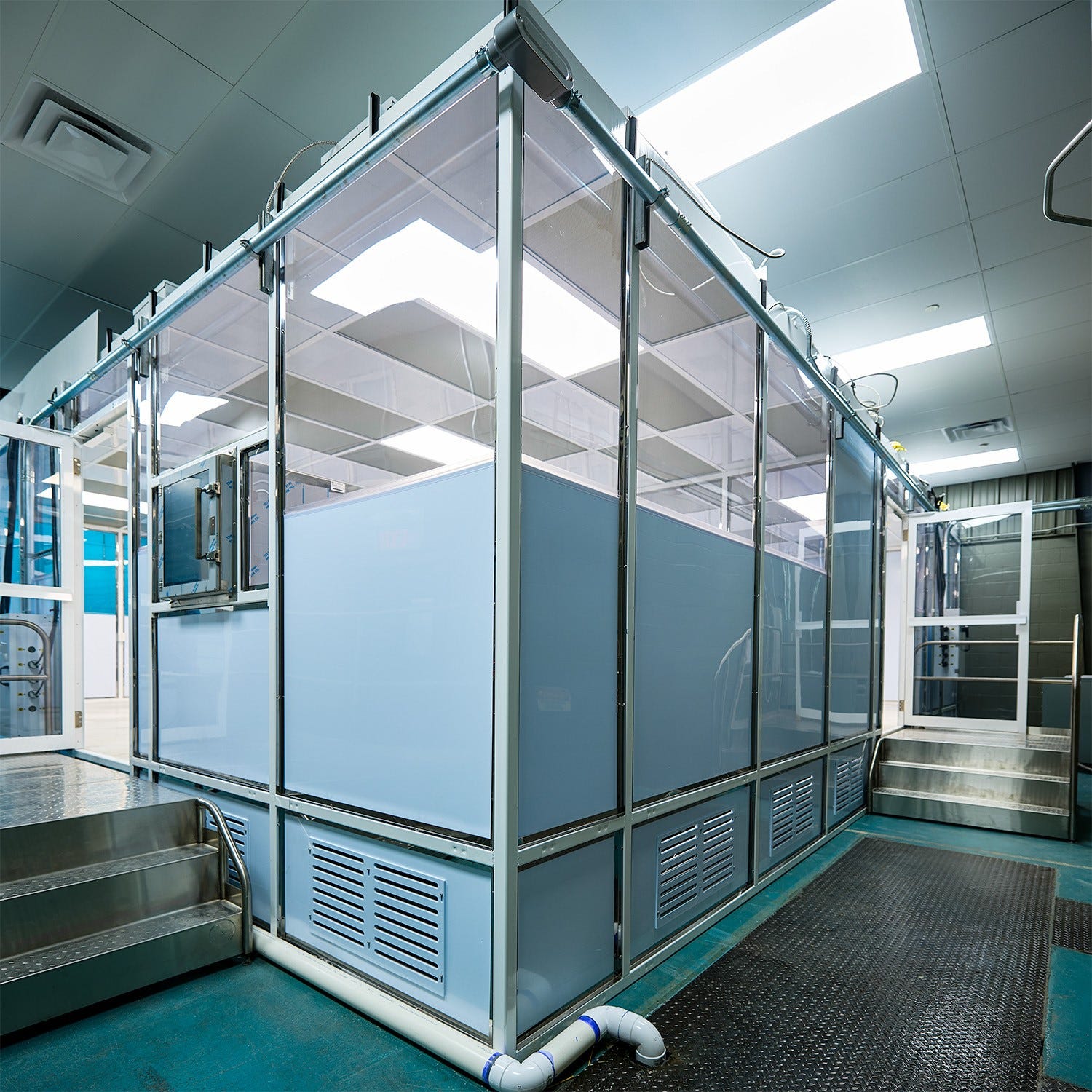
A cleanroom is a specially designed environment where airborne particles, contaminants, and pollutants are controlled to extremely low levels. These facilities are essential in industries where even microscopic contamination can ruin products or processes. The goal is creating an environment where sensitive processes can occur without contamination that could cause defects, safety issues, or product failures.
How Does a Cleanroom Work?
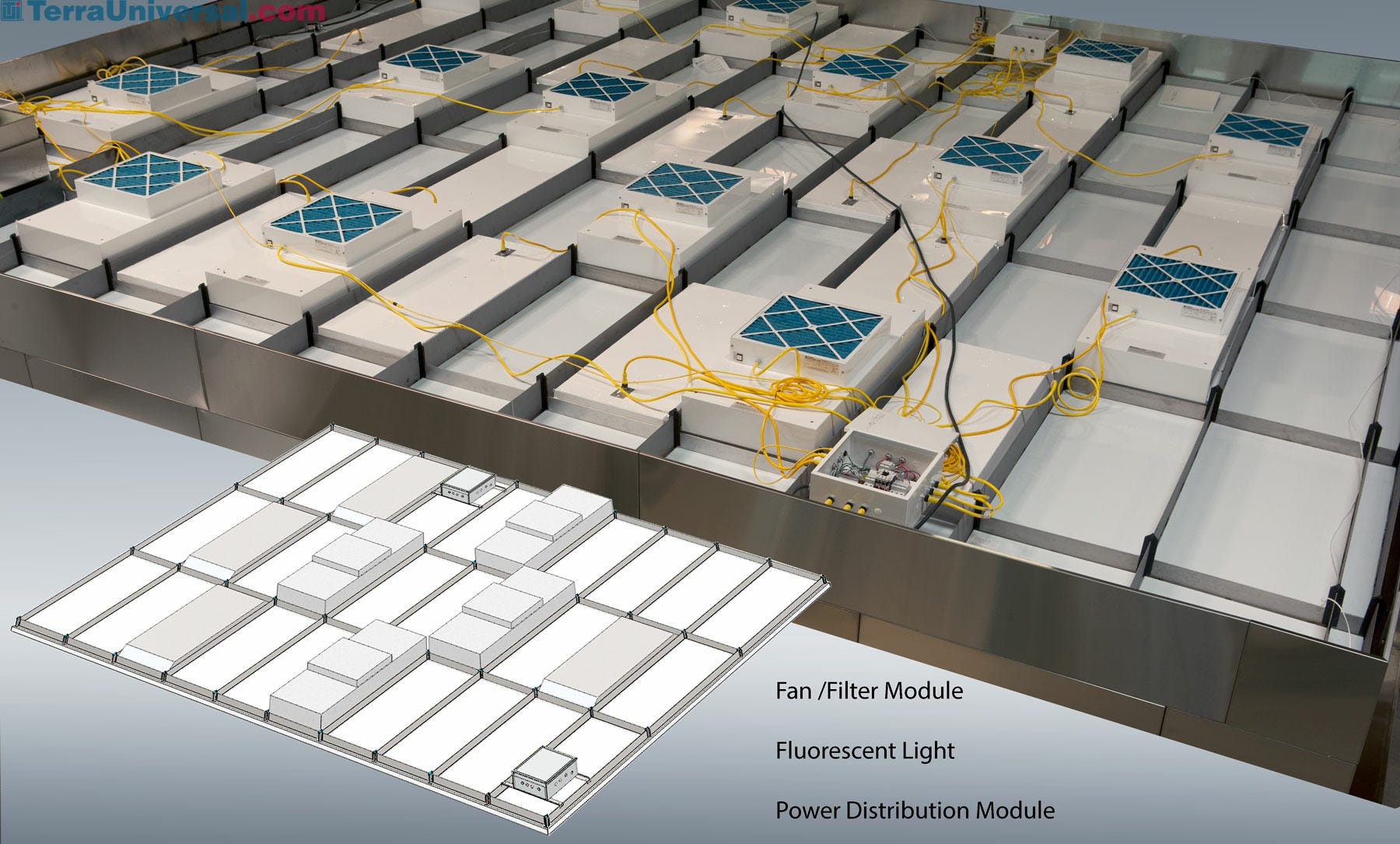
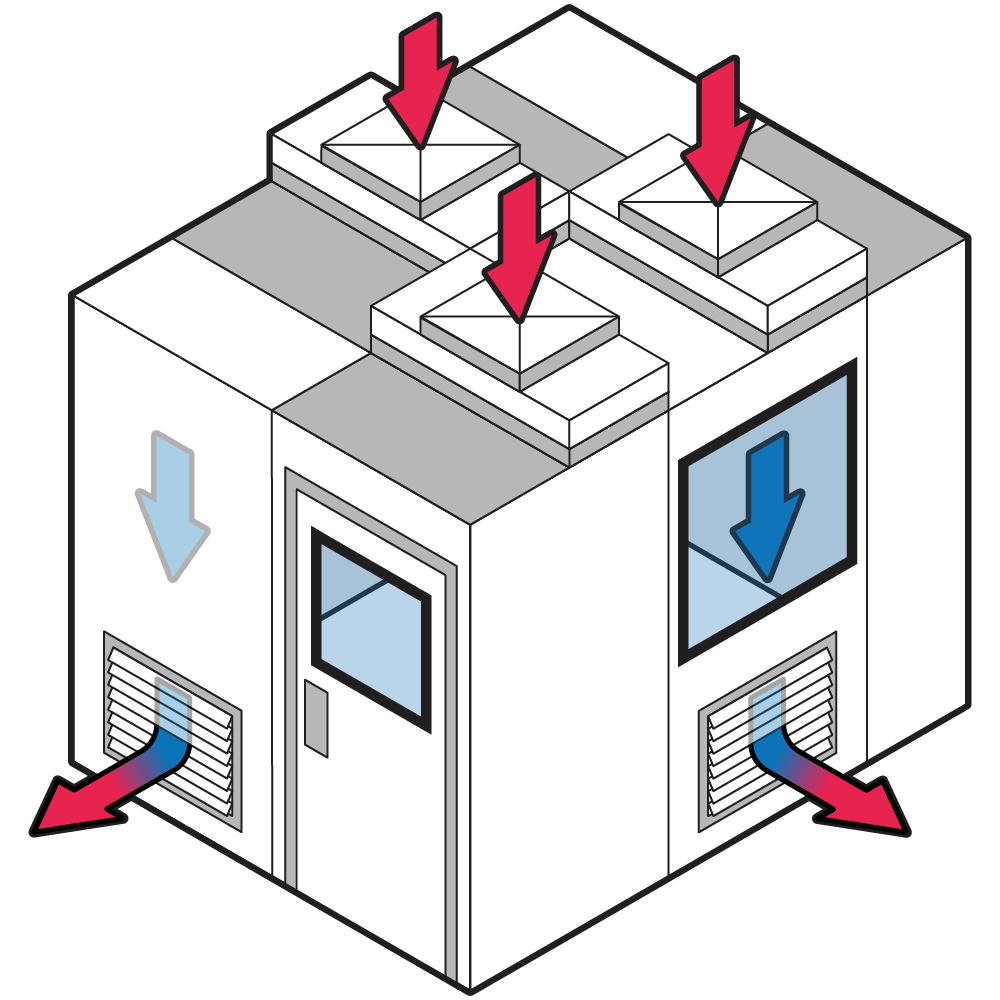
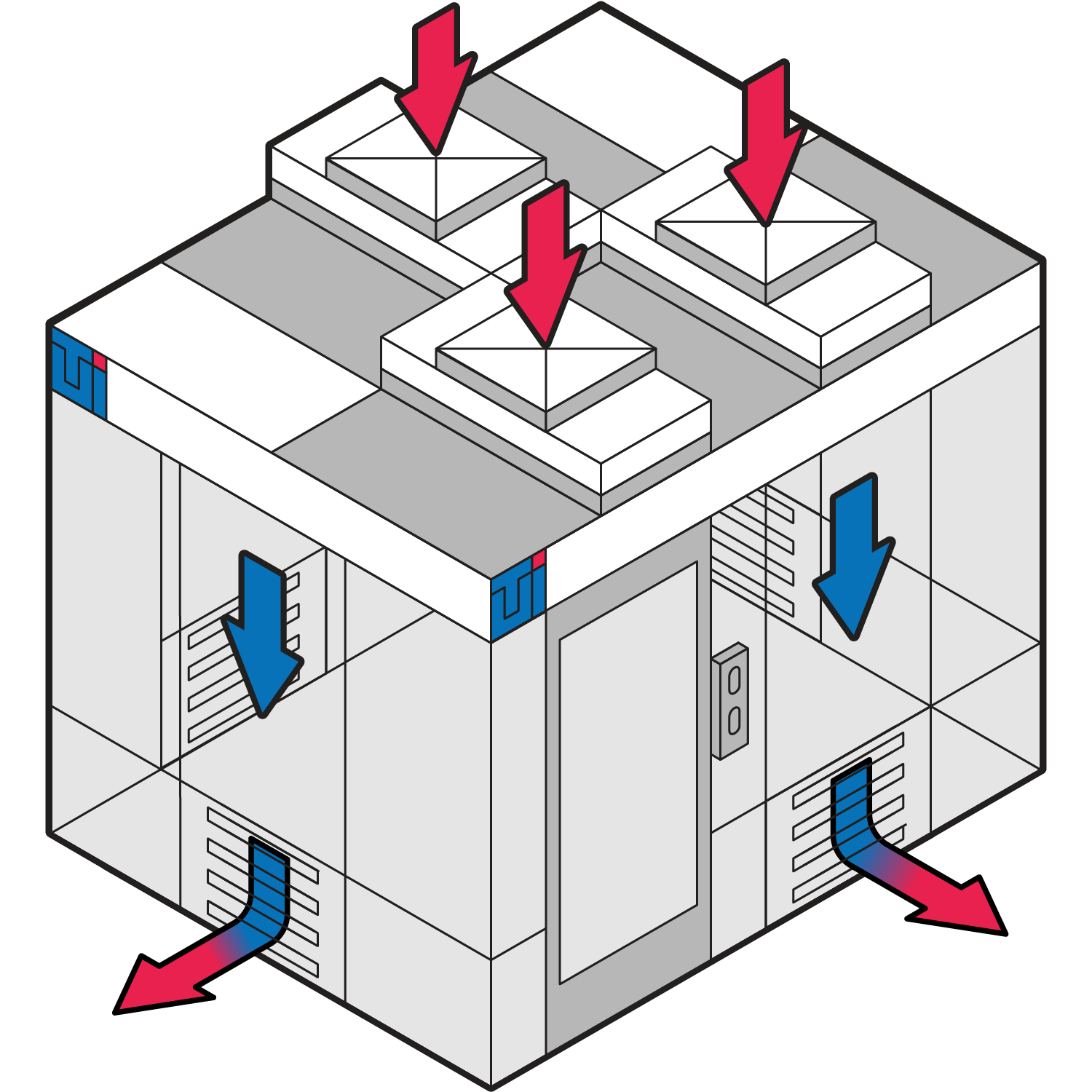
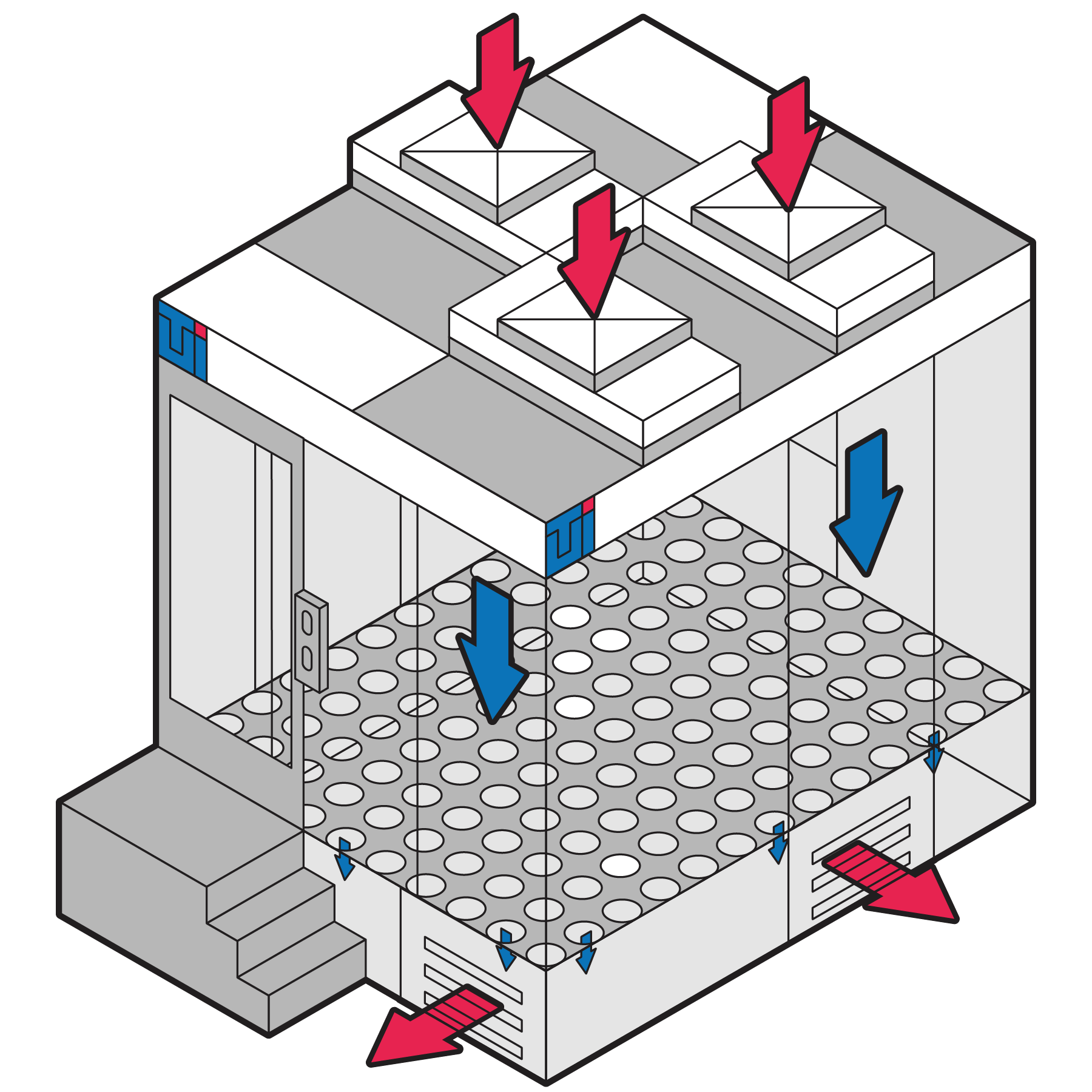
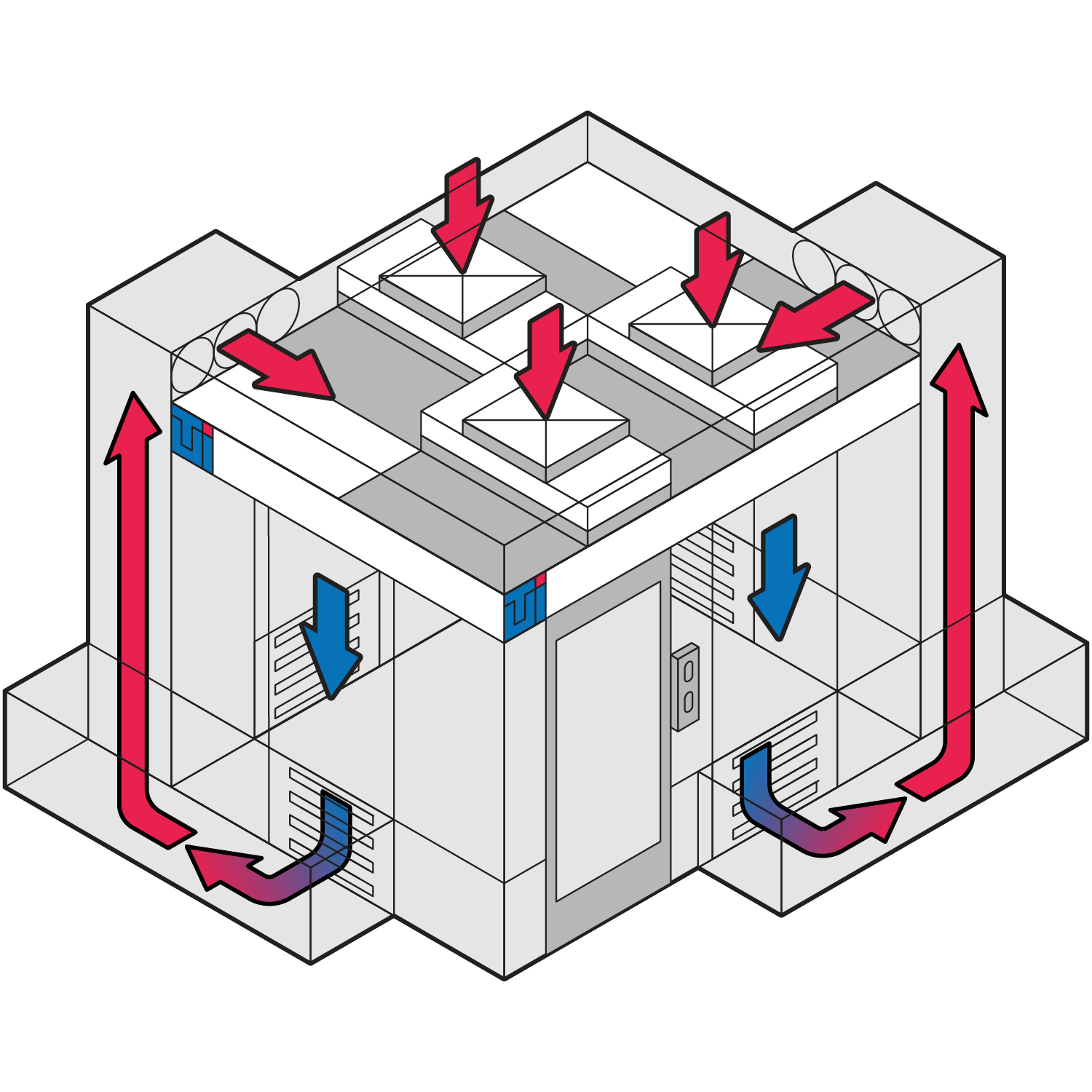
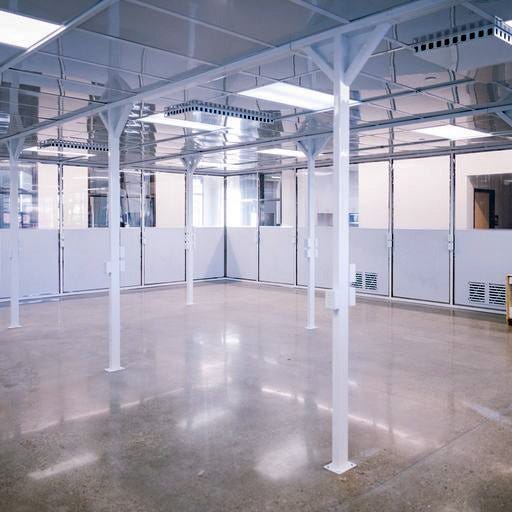
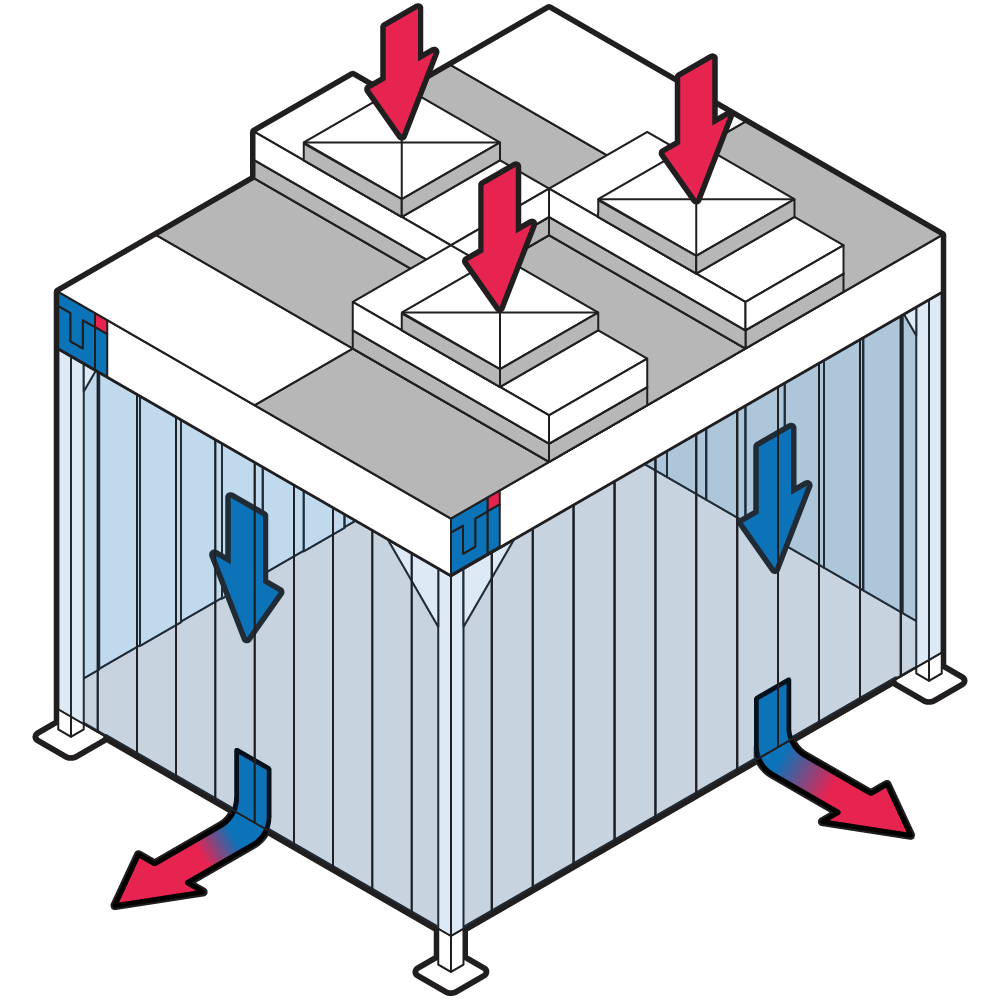
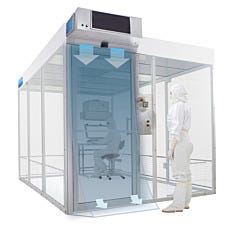
The space uses sophisticated air filtration systems, typically with HEPA or ULPA filters, that continuously circulate and clean the air. Air flows in controlled patterns (often from ceiling to floor) to sweep contaminants away. Special materials, lighting, and surfaces are used to minimize particle generation and allow for regular disinfection and sterilization procedures.
Key Characteristics of a Cleanroom
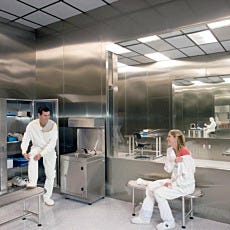
Cleanrooms maintain strict control over particle counts in the air, typically measured by particles per cubic foot or cubic meter. They're classified by cleanliness levels - for example, a Class 100 cleanroom allows no more than 100 particles (0.5 micrometers or larger) per cubic foot of air. The surfaces, walls, floors, and equipment are typically built from non-porous, smooth materials like stainless steel that can be easily cleaned and sterilized to control microbes and other contaminants.
Additional Cleanroom Controls:
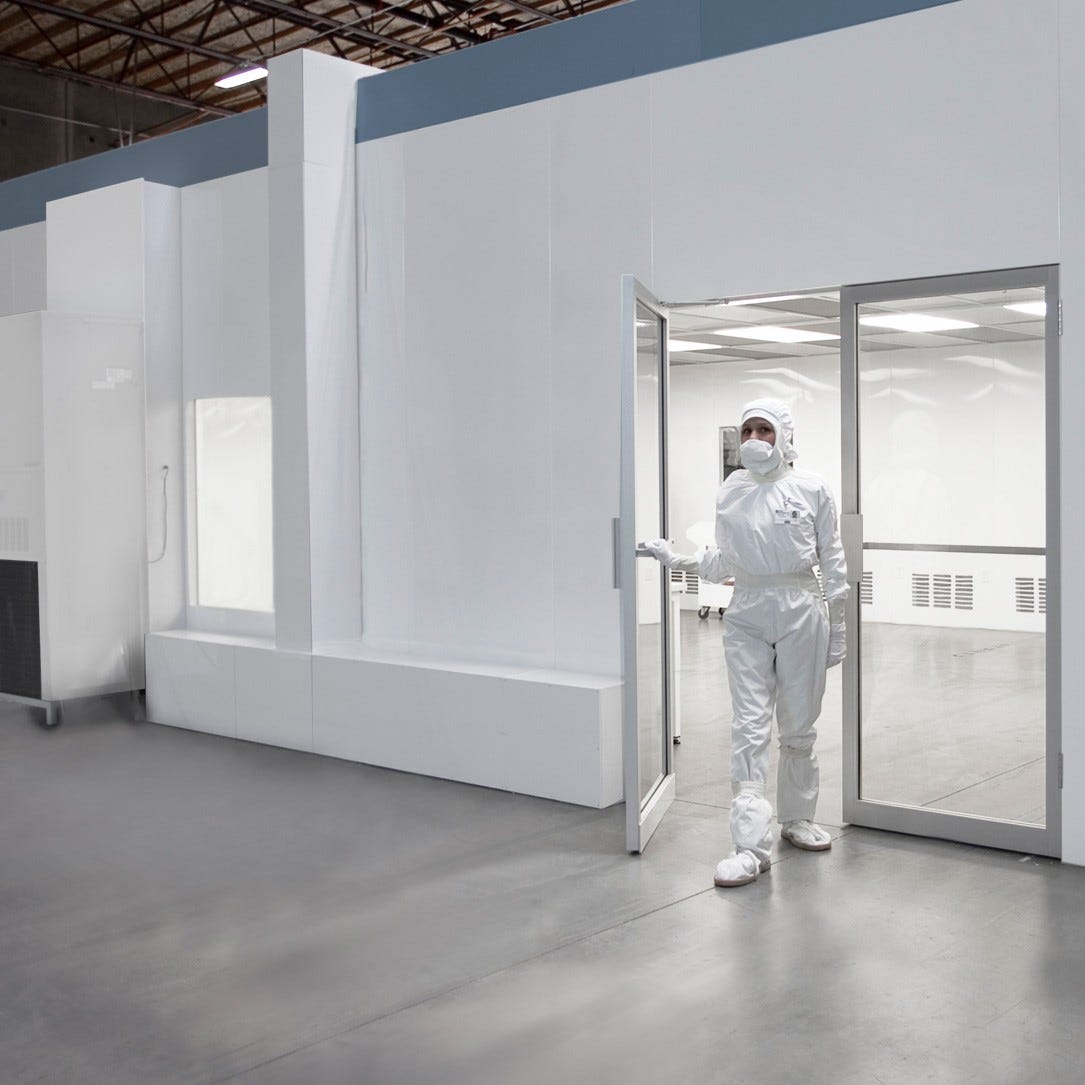
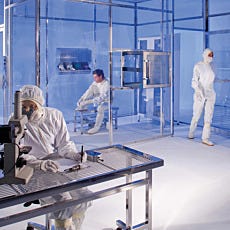
Beyond air quality, cleanrooms often regulate temperature, humidity, and pressure. Personnel must wear special clothing (bunny suits, gloves, shoe covers) and follow strict protocols when entering and working inside. Regular cleaning and sterilization schedules ensure microbial contamination remains controlled.
Cleanroom Classifications
Class ISO 14644-1 (Federal Standard 209E)
Maximum Particle Concentration Per M3 .1µm|.2µm|.3µm|.5µm|1µm|5µm
Average Airflow Velocity m/s (ft/min)
Air Changes Per Hour
Ceiling Coverage
Application
Terra Cleanroom Design
ISO 8 (Class 100,000)
c|c|c|3,520,000|832,000|29,300
0.005 – 0.041(1 – 8)
5 – 48
5 – 15%
Automotive Environmental Research Food Manufacturing
Concentration limits are not applicable in this region of the table due to very high particle concentration.
Sampling and statistical limitations for particles in low concentrations make classification inappropriate.
Sample collection limitations for both particles in low concentrations and sizes greater than 1µm make classification at this particle size inappropriate, due to potential losses in the sampling system.
In order to specify at this particle size in association with ISO Class 5, the macroparticle descriptor M may be adapted and used in conjunction with at least one other particle size.
Modular Cleanroom Selection Guide
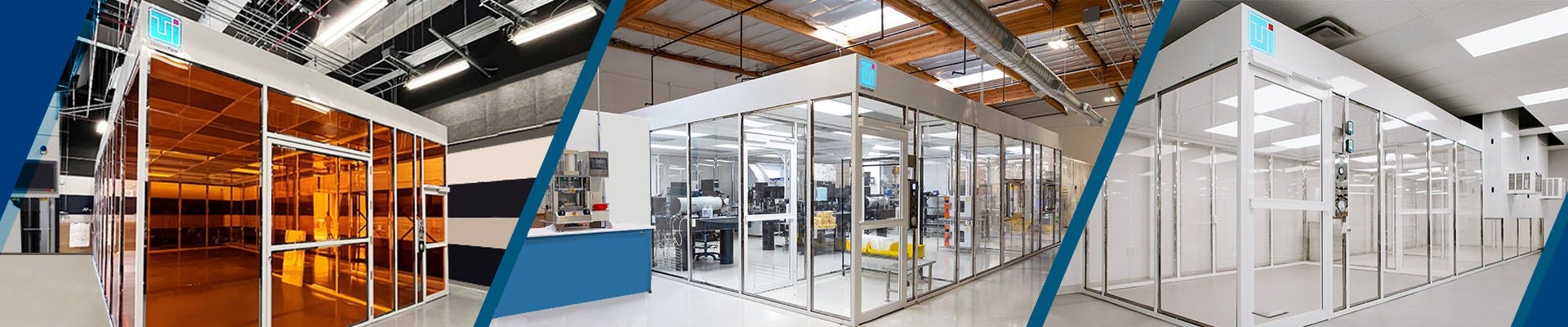
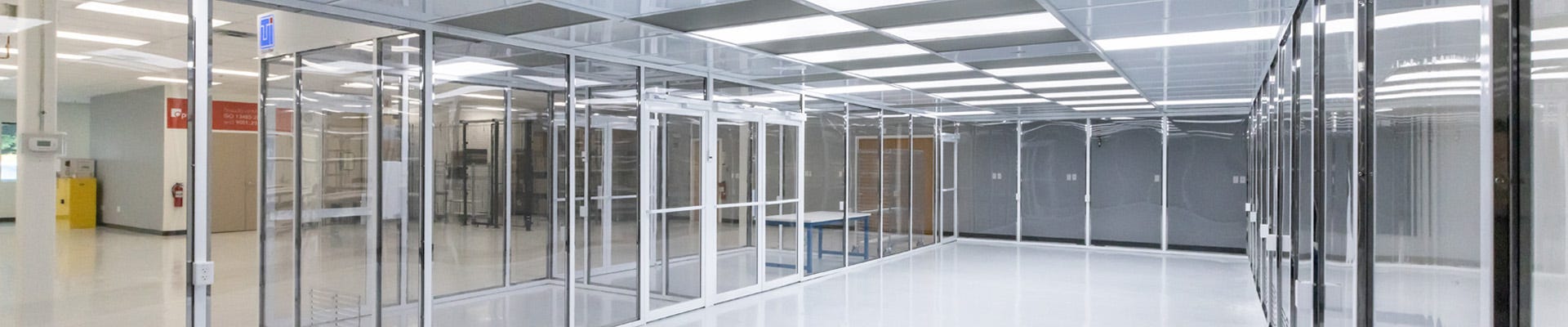
Terra Universal designs, builds, and installs modular cleanrooms for every application. Unique in the industry, we offer a vast selection of prefabricated and in-stock modular cleanrooms, available to ship from our California manufacturing facilities within 1 to 3 business days.
Because they can be built and installed in a fraction of the time associated with brick-and-mortar clean rooms, modular cleanrooms are ideal for fast ramp-up projects or short production cycles that may not merit the expense and delay of a conventional room.
The most effective design for bio-tech and pharmaceutical applications.
ISO 3 – 8 aseptic design for biomedical and pharma applications.
Compliant with ISO-14644, GLP, ASTM, IEST, and cGMP grades A, B, C, and D requirements.
Seamless wall panel system. Fully monolithic and flush-mount connecting wall panel system (not a panel-post system with gaps and ledges). Eliminates crevices where microbes colonize.
Sealed joints with cold welded seams.
Core Material: Aluminum honeycomb or foam.
Shell Material: uPVC, 316 stainless steel or powder-coated steel walls.
Configure as a positive- or negative-pressure room, with A/C and humidity control.
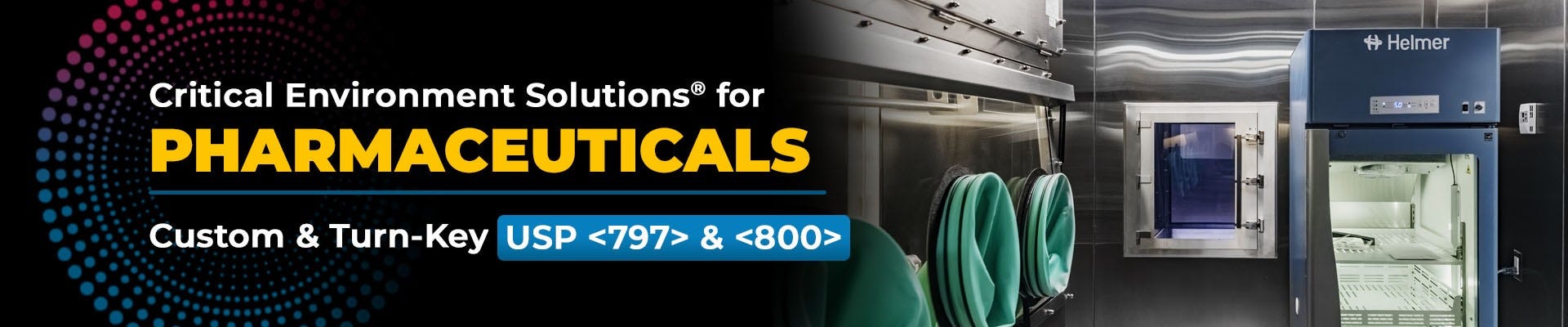
USP 797/800 Sterile Compounding Cleanrooms
Designed for USP 797 Sterile drug compounding and USP 800 hazardous drug compounding.
Turnkey USP 797/800 compliant configurations with pre-designed components. ISO upgrades meet more rigorous DQSA 503(b) requirements.
USP 797 sterile compounding cleanrooms feature positive-pressure ISO 8 anteroom that opens to a positive-pressure ISO 7 sterile compounding room.
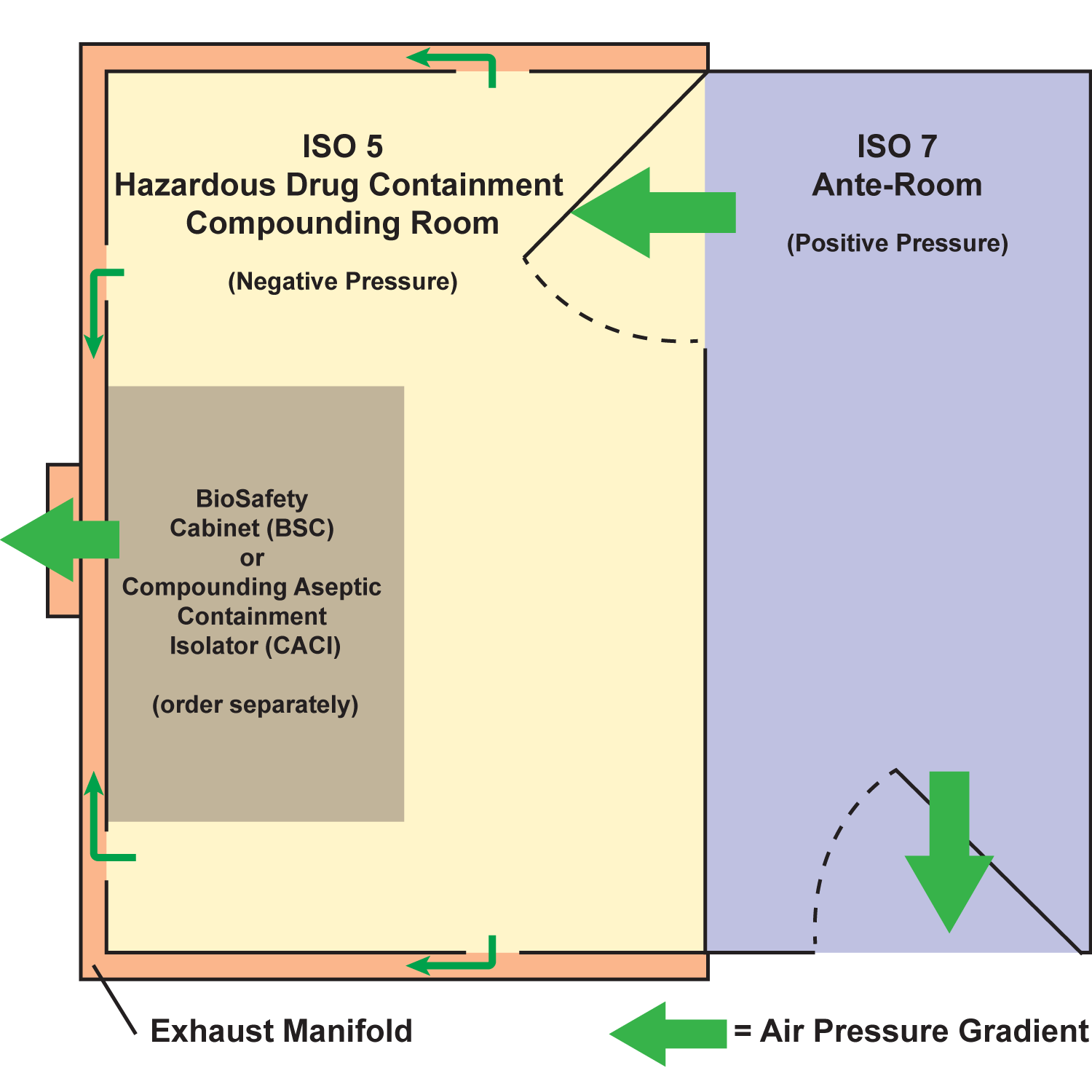
USP 800 cleanrooms feature positive-pressure ISO 7 anteroom that opens to a negative pressure ISO 5 hazardous compounding room.
Stainless steel or plastic walls.
Hardwall Cleanrooms — Full-View Plastic Panel
ISO 5 – 8. Ideal for Aerospace, Semiconductor, USP797/800 Pharmaceutical compounding.
Pre-fabricated frame, wall panels, and ceiling system.
Pre-configured cleanrooms in-stock and ready to ship within 1-3 days.
All-steel support frame for strength and easy installation - requires no external bracing.
Interchangeable wall panels: Select transparent acrylic, static-dissipative PVC, polycarbonate, chemical resistant polypropylene, fire-resistant FM 4910 panels.
Configure as a positive- or negative-pressure room, with A/C and humidity control.·
Explosion-proof cleanroom designs meet NEC requirements for Class I, Division 1 hazardous locations.
Raised-floor Cleanrooms
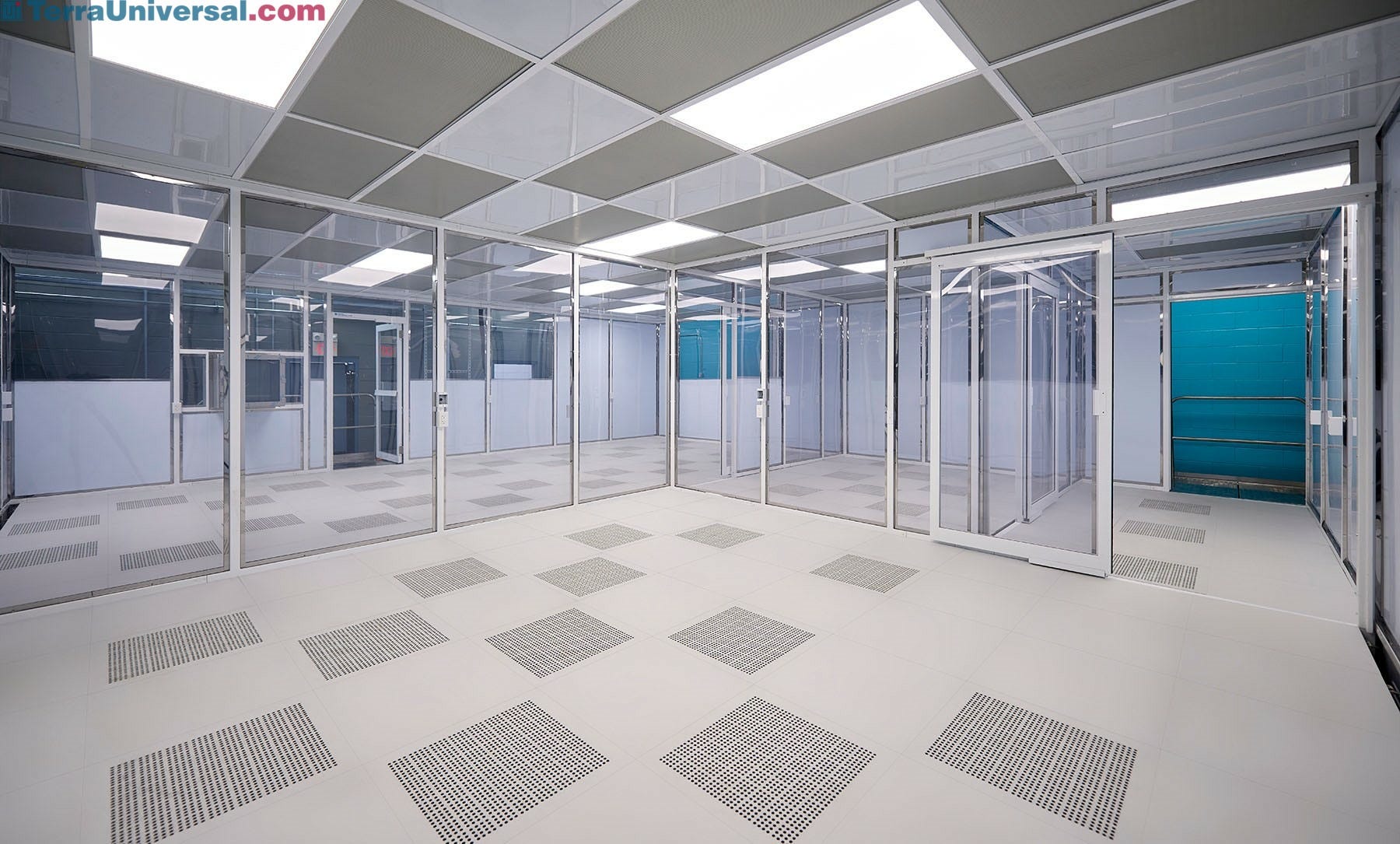
Ideal for applications that require raised flooring for true laminar flow. Double-wall structure allows air to circulate through the inter-wall plenum, increasing filtration and A/C efficiency.
Recirculating Cleanrooms
Recirculating cleanrooms improve efficiency by cycling pre-cleaned air through HEPA filters, which further reduces airborne contaminants and prolongs lifespan of the HEPA filters. This also makes it possible to achieve stricter cleanliness classifications, such as ISO 5, while maintaining consistent environmental control.
Negative-Pressure and Ventilation Cleanrooms
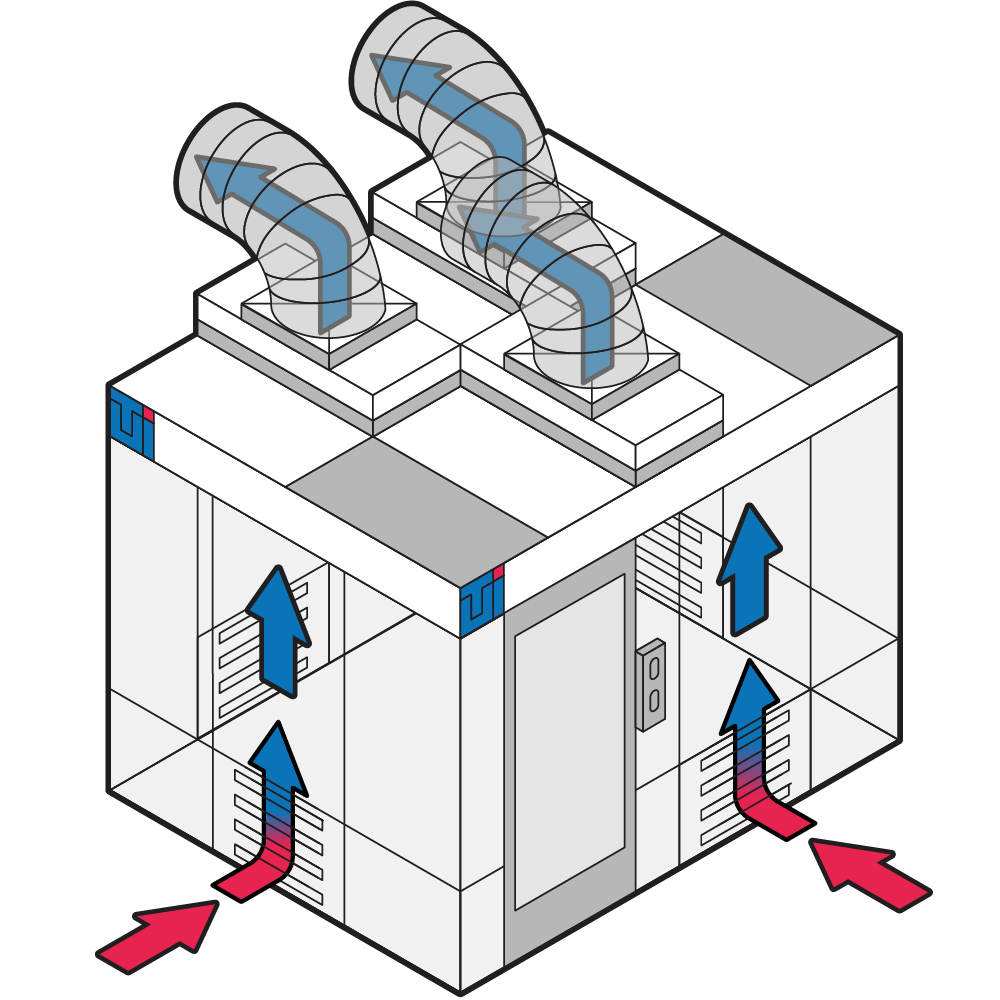
Ideal for safe removal of fine powders or chemical vapors. Ceiling exhaust fans draw air through HEPA filters on the ceiling. Inlet filters ensure a clean working environment. Horizontal and vertical exhaust airflow designs available.
Softwall Cleanrooms
ISO 7 – 8.
Lowest cost cleanroom design.
Pre-fabricated frame, curtain panels, and ceiling system.
Pre-configured cleanrooms in-stock and ready to ship within 1-3 days.
All-steel support frame for strength and easy installation - requires no external bracing.
Explosion-proof cleanroom designs meet NEC requirements for Class I, Division 1 hazardous locations.
Terra Universal's Value Advantage
Facility Optimization — Create the production environment you require without the expense or disruption of a major fab upgrade! Expand or reconfigure as your requirements change.
Unsurpassed Cleanliness — Filtration and ventilation efficiency required to meet the most rigorous cleanliness standards. Independently certified Class 1.
Hardwall, Softwall, and Hybrid Designs — A style for every requirement, schedule, and budget!
Comprehensive Environmental Controls — Over particulates, humidity, temperature, and ESD (electrostatic discharge)
Industry-leading Quality — Over 50 years of engineering and manufacturing experience provide standardized quality you can count on.
Certified Designs and Fabrication Techniques — Terra Universal has received independent certification as a Cleanroom Manufacturing Specialist.
Delivered to Your Production Schedule — Terra Universal understands the critical importance of timely delivery and works closely with you to accommodate tight schedules. Expanded QuickShip configurations provide a wide variety of "need it now!" cleanrooms.
Turnkey Purchasing: Terra Universal's Value Advantage
Terra Universal designs, builds, and installs cleanrooms tailored to a wide range of applications. Each cleanroom is specifically engineered to meet unique user requirements, including ISO rating and environmental control, for industries such as medical devices, semiconductors, defense, pharmaceuticals, biotechnology, and aerospace. As a pioneer in the critical environment industry, Terra Universal has developed and manufactured innovative solutions for over 45 years. Combining high-throughput, automated fabrication equipment with a robust, active stock of raw material, Terra is capable of producing cleanrooms of any design, size, scope and complexity at industry-leading build times. We have built and installed over 2,000 cleanrooms in the past 6 years.
Browse and shop the Universal® online store for the largest selection of modular cleanrooms that are in-stock and ready to ship. Not sure what you need? Contact us via phone, web chat, or email for help finding the perfect solution for your unique application.
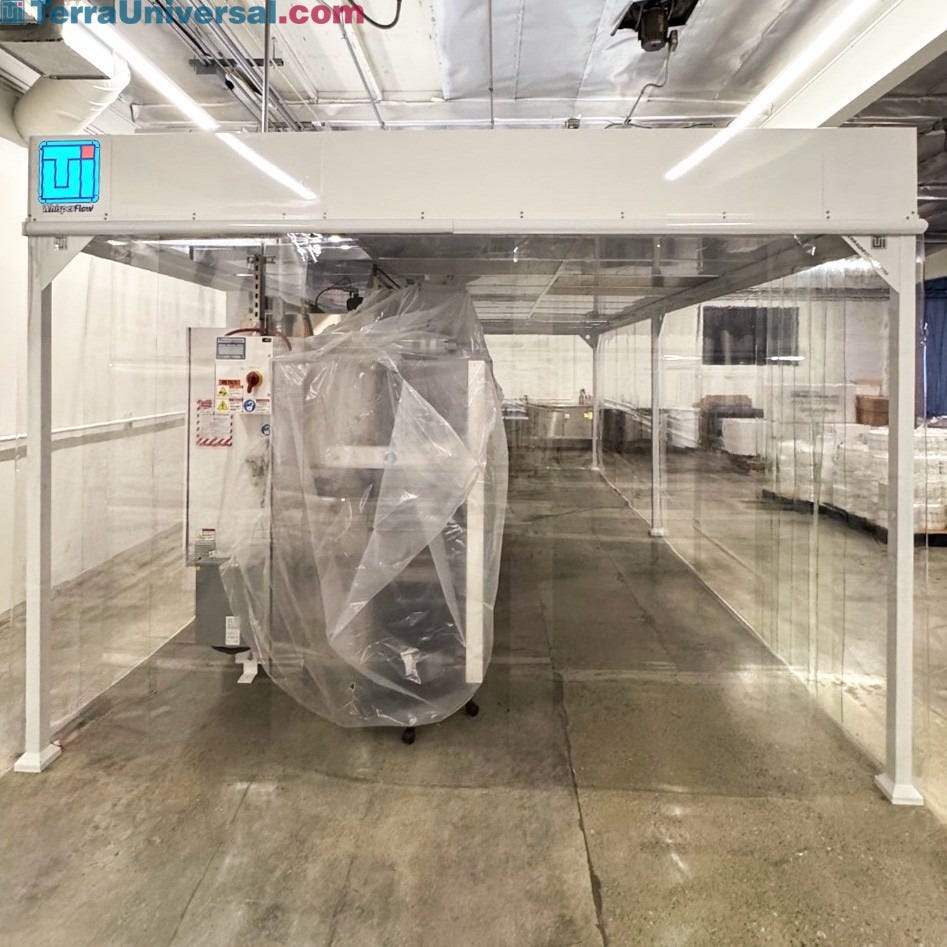
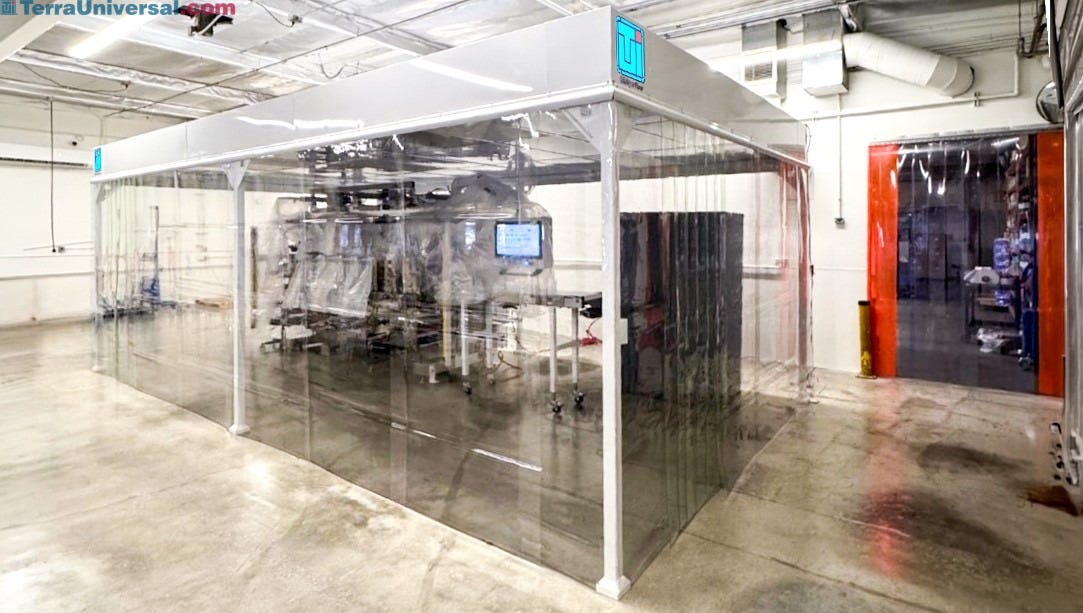
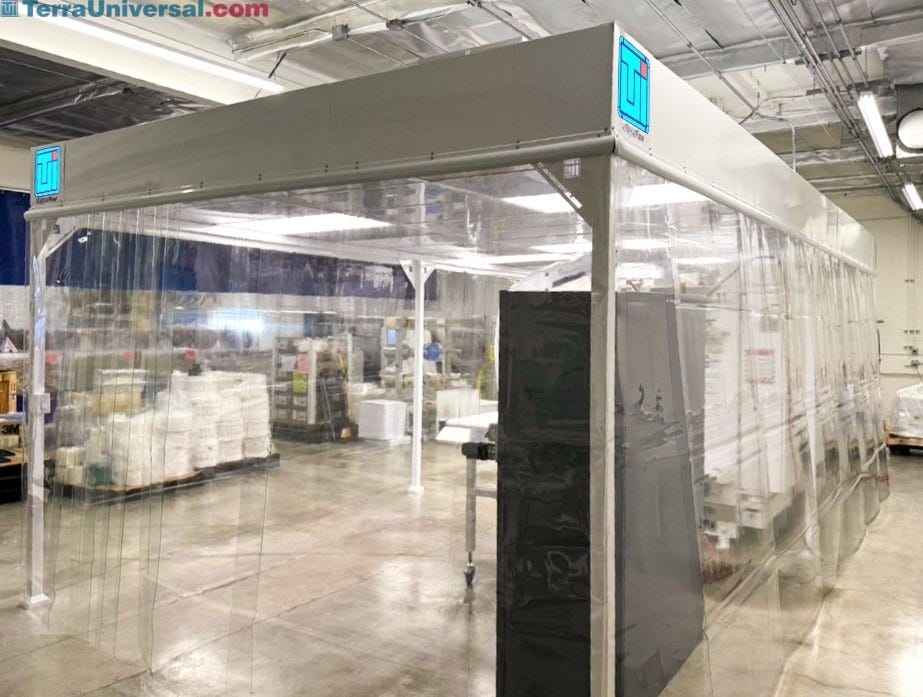
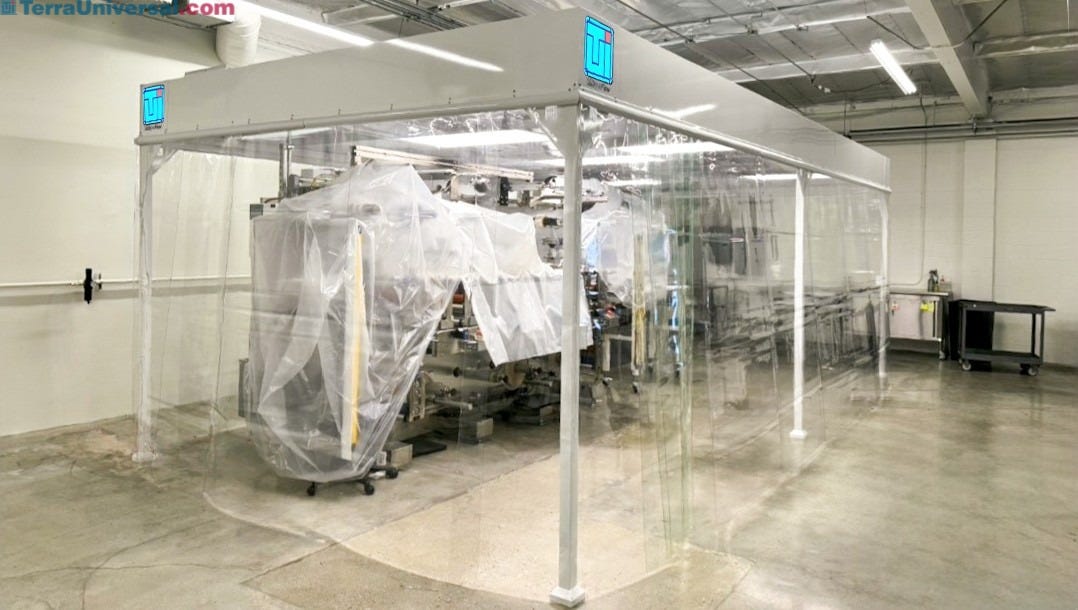
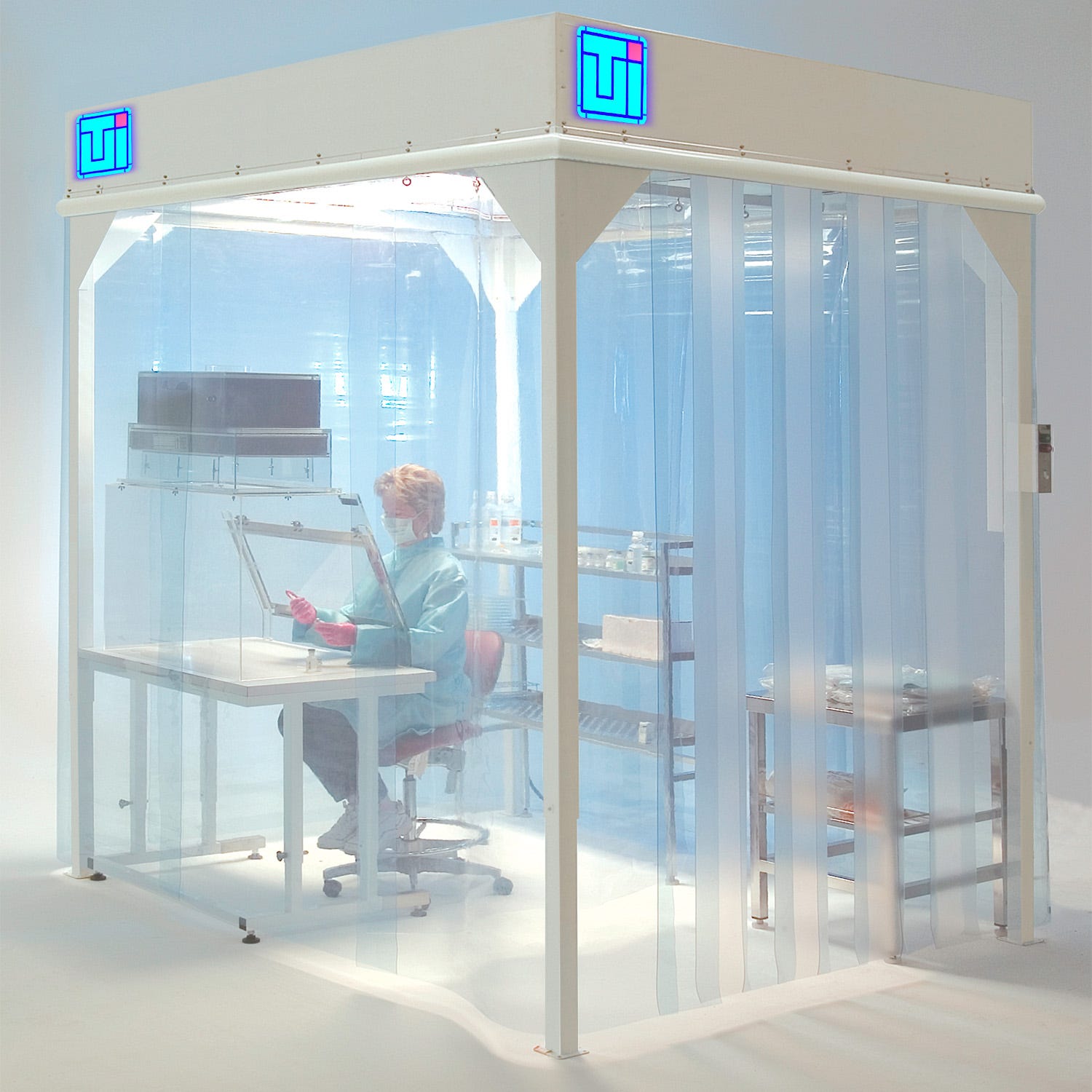
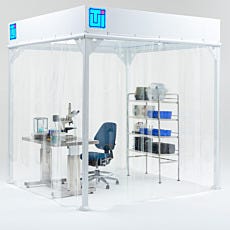
Softwall cleanrooms use free-standing steel frames with cleanroom-grade vinyl panels. Stocked models ship next day!Softwall Cleanroom Features Overview
BioSafe® cleanrooms meet ISO 4 - 8 requirements for a sterile processing environment. Designs for single-pass, recirculating, or negative-pressure containment airflow.BioSafe® Cleanroom Features Overview
Compounding cleanrooms feature ISO-rated anterooms to comply with USP 797 and 800 requirements for sterile drug preparationsPharmacy Compounding Cleanroom Features Overview
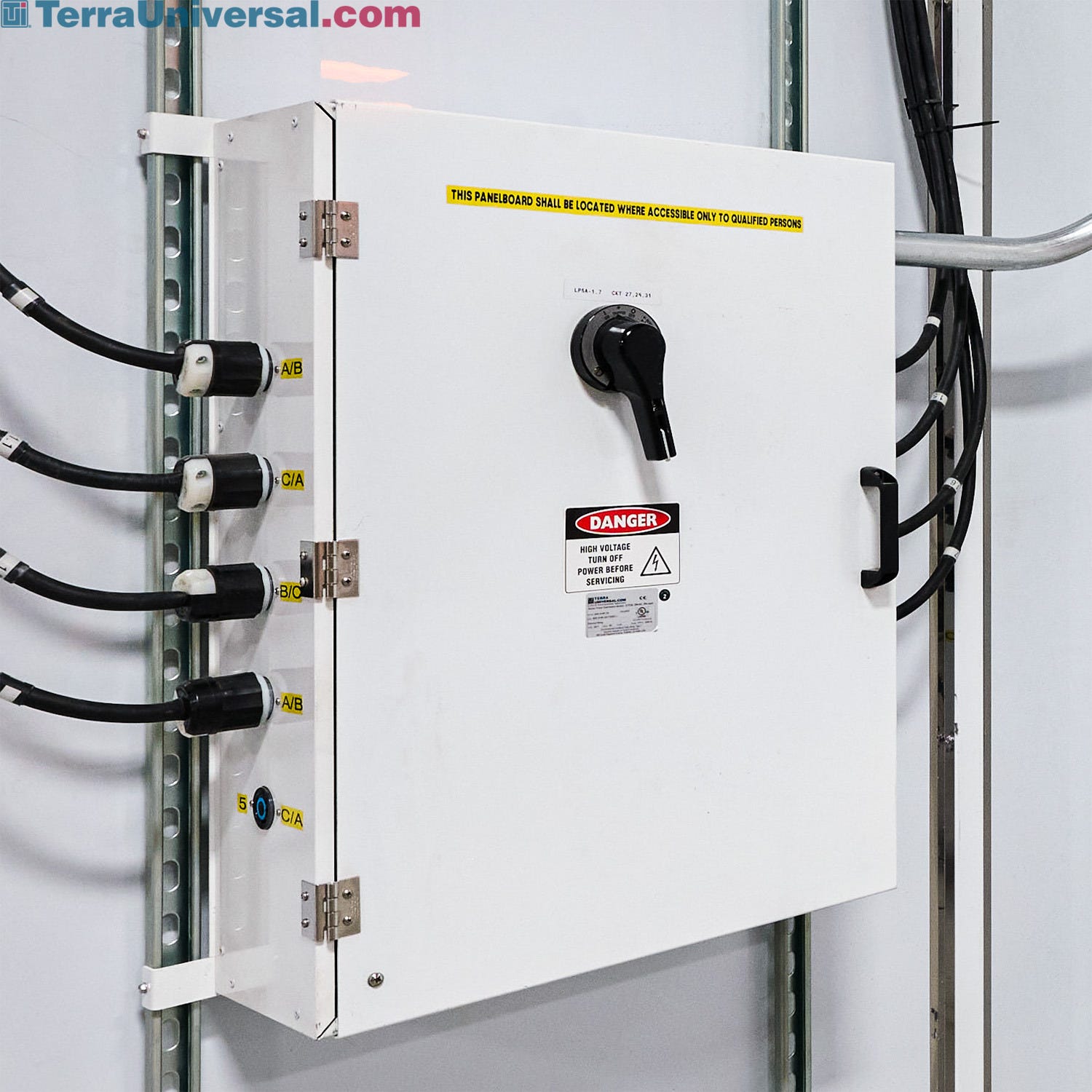
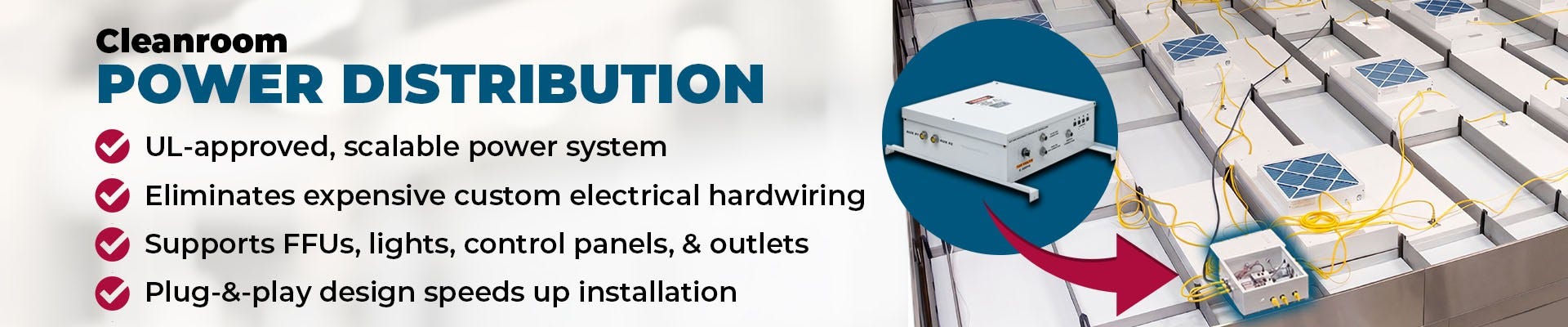
Cleanroom control panels with fan speed controls, night mode settings and other system enhancements. Upgrade-ready Power Distribution Modules speed up cleanroom installation and protect critical power circuits.
Transform any space - warehouse, lab, office, production area - into an ISO-rated cleanroom with Terra's cleanroom construction componentsCleanroom Conversion Features Overview
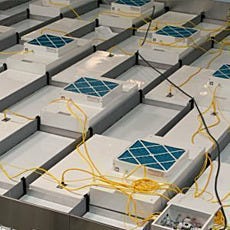
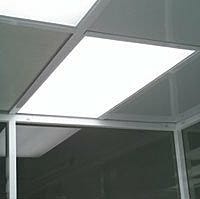
Ceiling grid systems support HEPA/ULPA filter units and lighting in cleanrooms, ensuring ISO compliance and modular flexibility. Ideal for pharmaceutical, semiconductor, and biotech applications
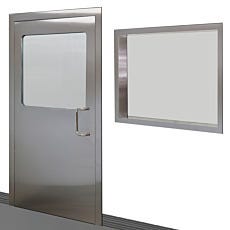
Windows and doors composed of cleanroom-rated and laboratory-grade materials compatible with operating rooms, surgical suites, research labs and cGMP spaces
Quickly create inexpensive ISO 4-8 work areas in existing spaces. Hard and softwall. Many stocked to ship now. Also Cleanroom components: fan-filter units, pass-throughs, doors, windows. Cleanroom furniture: tables, workstations, storage cabinets, dispensers.
Terra stocks these products to ship now at guaranteed world-wide prices.
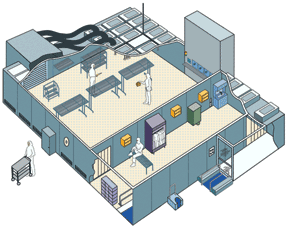
Terra's modular designs allow versatile configurations using standard components, whether you need a small equipment enclosure or a multi-suite processing facility
Versatile plug-and-play Power Distribution Modules allow addition of ceiling fan/filter units and lights to meet any cleanliness requirement or to upgrade ISO levels or lighting levels after installation
Modular frame and panel designs, in several application-specific materials, adapt to any floor plan requirement
Automated fan controls simplify pressure balancing, Building Management System (BMS) integration, and certification of large, multi-suite facilities
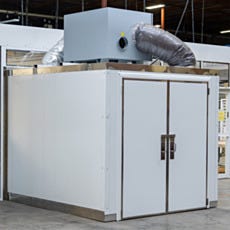
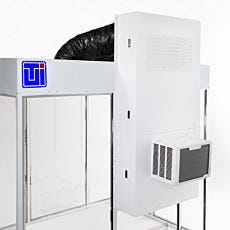
Stand-alone A/C modules or integration with existing air handling system
Consultation services available to meet industry-specific regulations, such as USP 797/800 compounding requirements
Terra’s full engineering services adapt designs to accommodate unique equipment or facility integration challenges
Call or submit a QuickQuote Form for assistance with a modular cleanroom tailor-made to your application!
Critical Environment Solutions
Terra's mission is to help customers in highly regulated industries transform the world with critical environment solutions that improve health, safety, performance, and yields. These environments may comply with stringent UL, ISO, IEST, ASTM and OSHA standards and local requirements.
Custom Work is Standard!
Modular designs allow versatile configurations tailored to your requirements. Terra's design and fabrication capabilities accommodate unique facility challenges.
Seismic Safe Cleanroom Design
Terra’s modular cleanrooms are designed with seismic safety in mind. Rigid steel frames and ceiling grids are designed with sufficient factors of safety to provide vertical and lateral strength recommended by professional engineers. Both hardwall and softwall designs can be installed to adhere to local seismic codes. Optional seismic and structural calculations can be drafted and stamped by a licensed PE to help meet municipal permitting requirements.
Pre-Fabricated Cleanrooms and Cleanroom Construction
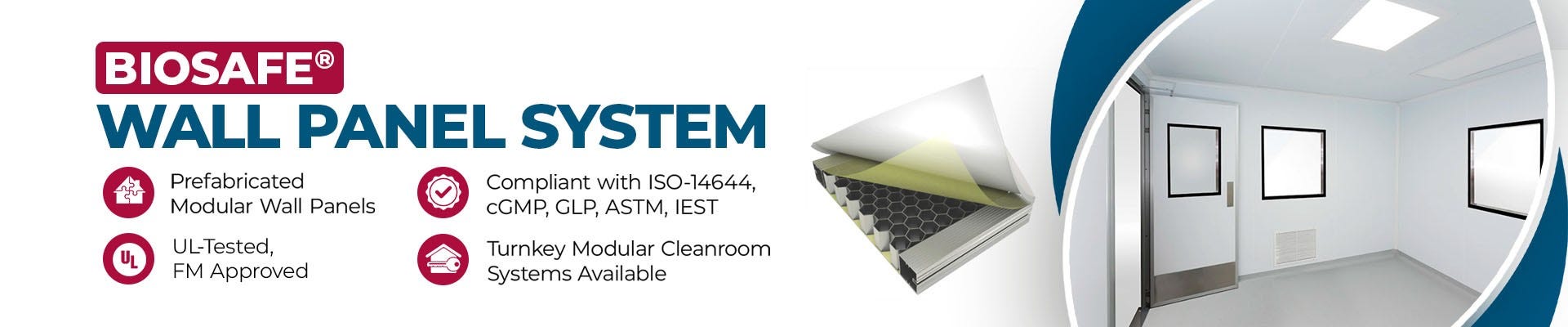
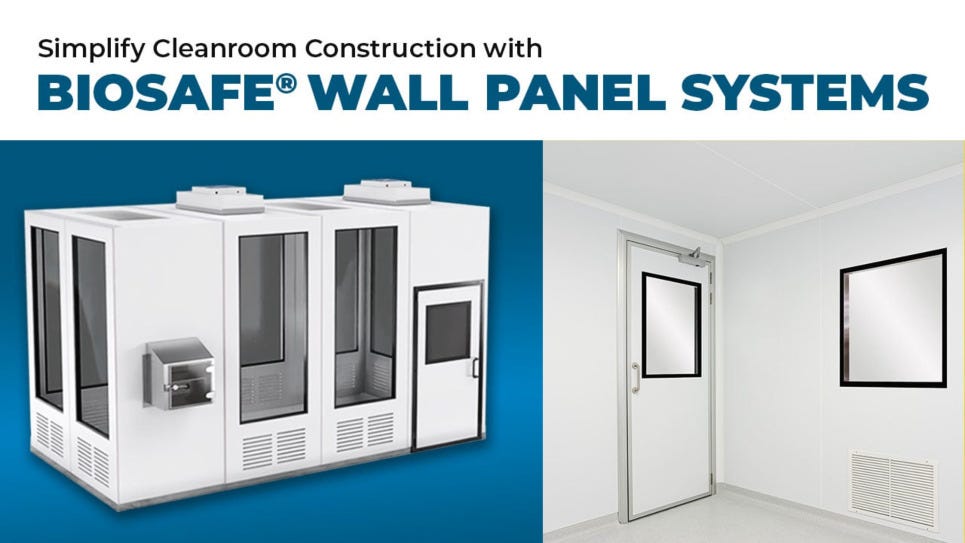
Simplify Cleanroom Construction with BioSafe® Wall Panel System
Custom Hardwall Modular Cleanroom for Healthcare Applications
Combo USP 797 and 800 Cleanroom Installation for Sterile Compounding Compliance
Softwall Cleanroom Installation Timelapse
Custom Hardwall Modular Cleanroom for Pharmaceutical Applications
Custom Stainless Steel BioSafe® Cleanroom for Pharmaceutical Compounding
ValuLine® Hardwall Cleanroom Build
Infrared Imaging Systems Cleanroom
Installed Modular Hardwall Cleanroom With Acrylic Panels & Steel Frame
Hardwall Modular Cleanroom for Technological Industry
Custom Hardwall Modular Cleanroom for Semiconductor Industry
Hardwall Cleanroom Installation for Pharmaceutical Applications
ValuLine® Hardwall Cleanroom for Technological Industry
Custom Cleanroom: Polypropylene Ceiling Panels and Fan Filter Units
Installed ValuLine® Softwall Cleanroom with Top Trim
Extra Tall Class 1,000 Modular Cleanroom for Electronics Assembly
PCB Manufacturing Amber Acrylic Modular Cleanroom
Custom Hardwall Modular Cleanroom for Military Applications
ValuLine® Softwall Cleanroom Installation with Gowning Room
BioSafe Stainless Steel Cleanroom
Extended Height Nutraceutical Cleanroom Suite
Custom Hardwall Modular Cleanroom for Medical Applications
USP 797 Compounding Cleanroom with ULPA Filtered Passthrough
Custom Hardwall Modular Cleanroom
Custom Hardwall Modular Cleanroom for Aerospace Applications
Custom 3-Wall Cleanroom for Medical Device Manufacturing
ISO-Rated Hardwall Cleanroom with Acrylic Wall Panels
BioSafe Stainless Steel Cleanroom – Integrated Air Shower
Modular Hardwall Cleanroom for Injection and Extrusion Blow Molding
Affordable Customization Cleanrooms
ISO 6 Amber Cleanroom for Laser Testing, 32' x 18' x 10'H
BioSafe® Wall Panel System cGMP compliant, 304 and 316 stainless steel or pre-coated uPVC steelSimplify Cleanroom Construction with BioSafe® Wall Panel SystemBuild faster and cleaner with Terra Universal’s BioSafe® Wall Panel System. Ideal for ISO Class 4 and cGMP facilities, the seamless monolithic design ensures superior cleanliness and durability.
These modular panels simplify installation, reduce costs, and allow quick reconfiguration.
Custom Hardwall Modular Cleanroom for Healthcare Applications
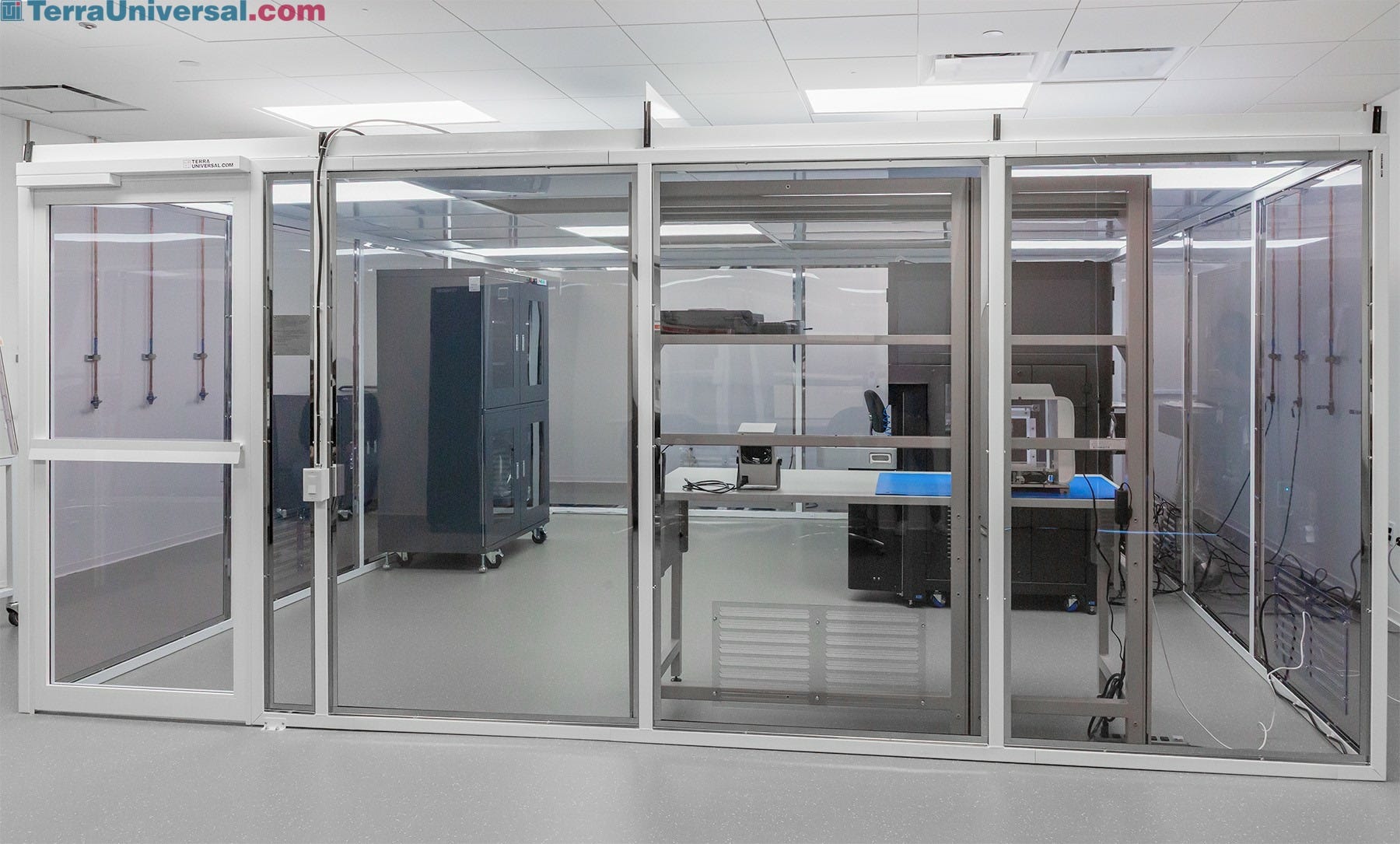
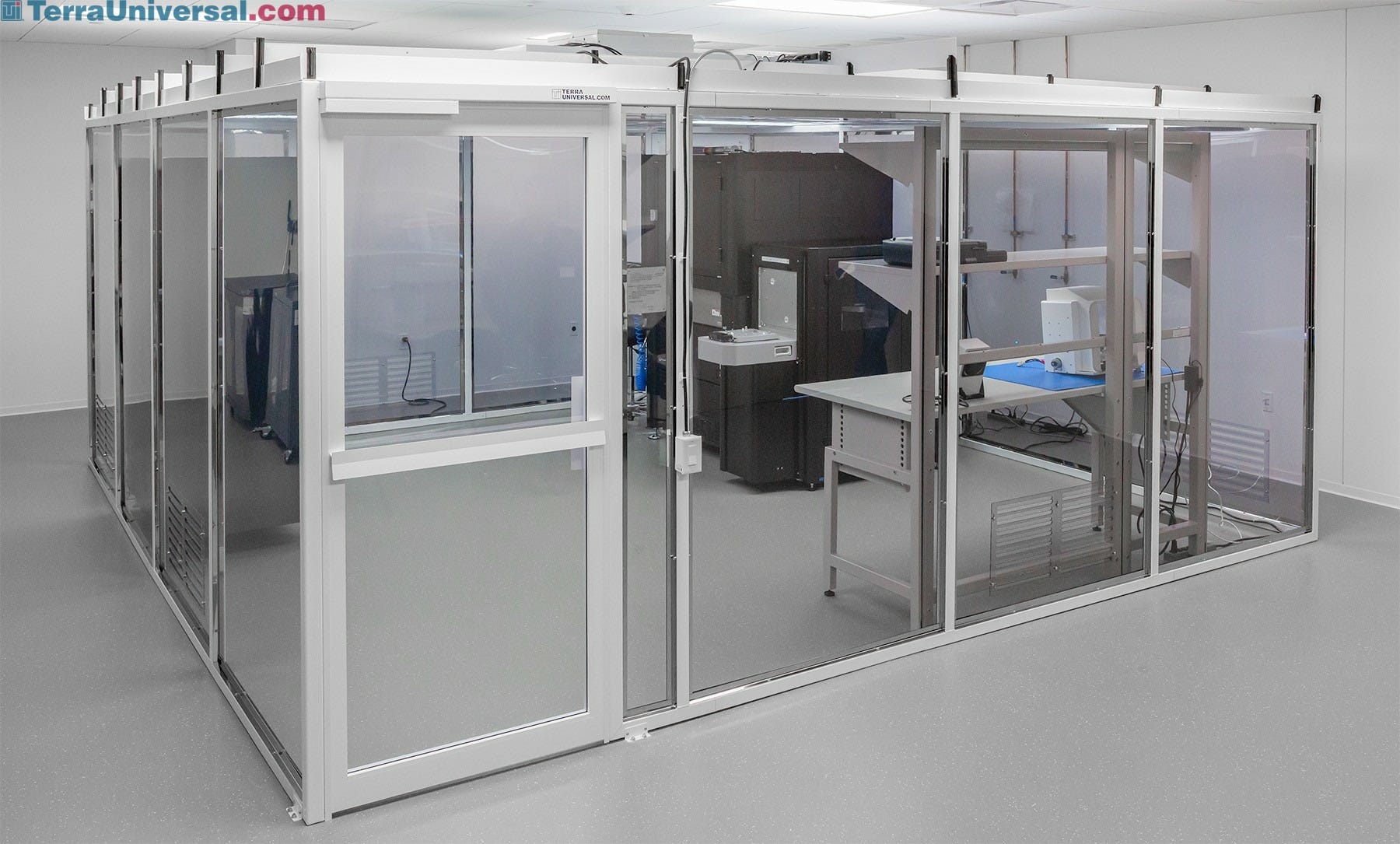
Modular hardwall cleanroom features clear acrylic panels and a powder-coated steel frame, providing full visibility and long-lasting durability. Ideal for ISO 5-8 environments, it offers easy customization to meet your specific cleanroom requirements.
Custom Hardwall Modular Cleanroom for Healthcare Applications
Modular cleanroom is available in ISO 5-8 certified designs, ensuring compliance with industry cleanliness standards. The custom-configured layout provides flexibility to accommodate various applications, while the durable steel frame ensures stability and longevity.
Custom Hardwall Modular Cleanroom for Healthcare Applications
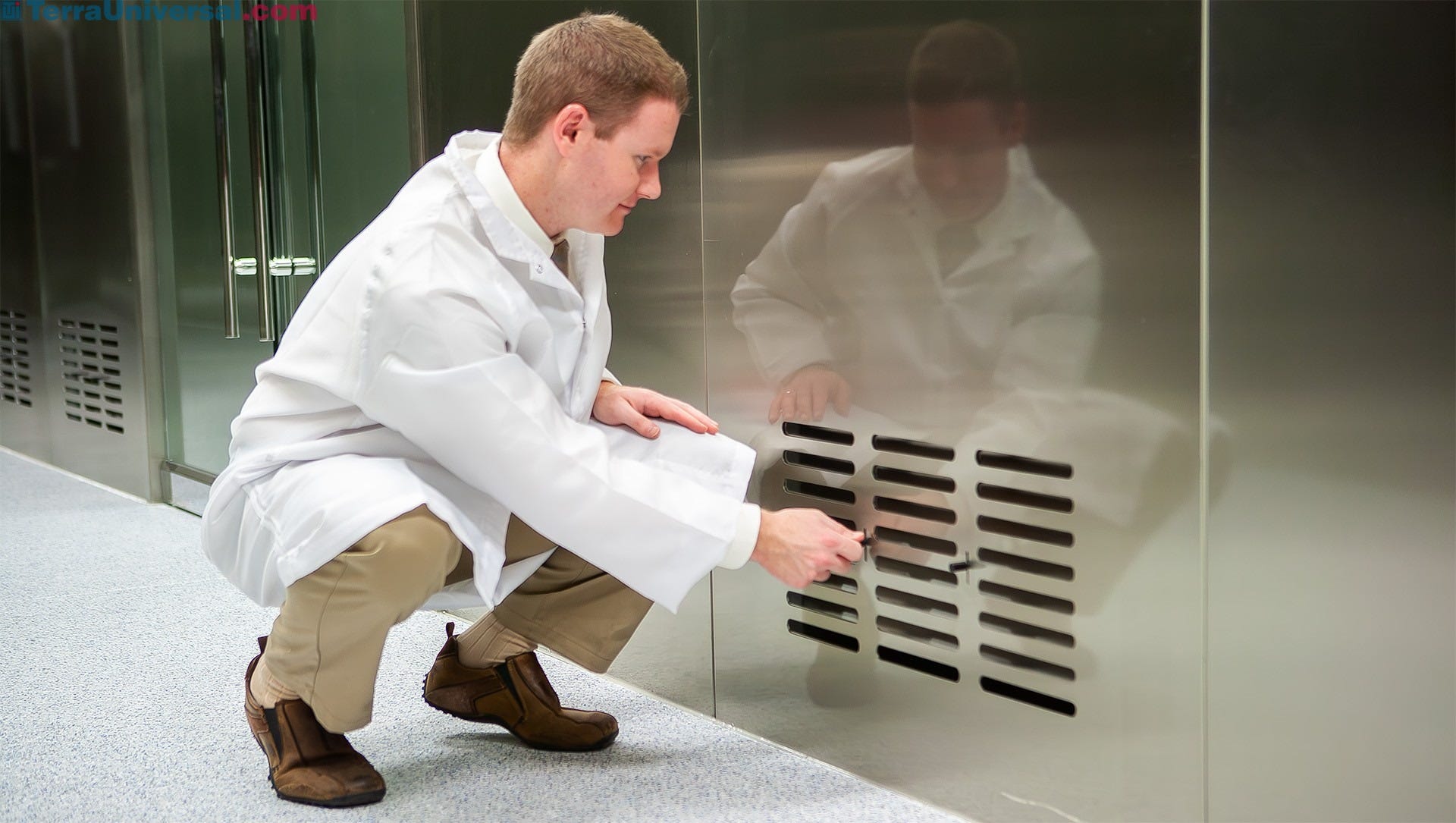
Designed for critical applications, this cleanroom includes adjustable exhaust vents, allowing precise control over differential room pressure. The modular design supports quick panel installation and seamless scalability for future modifications.
Custom Hardwall Modular Cleanroom for Healthcare Applications
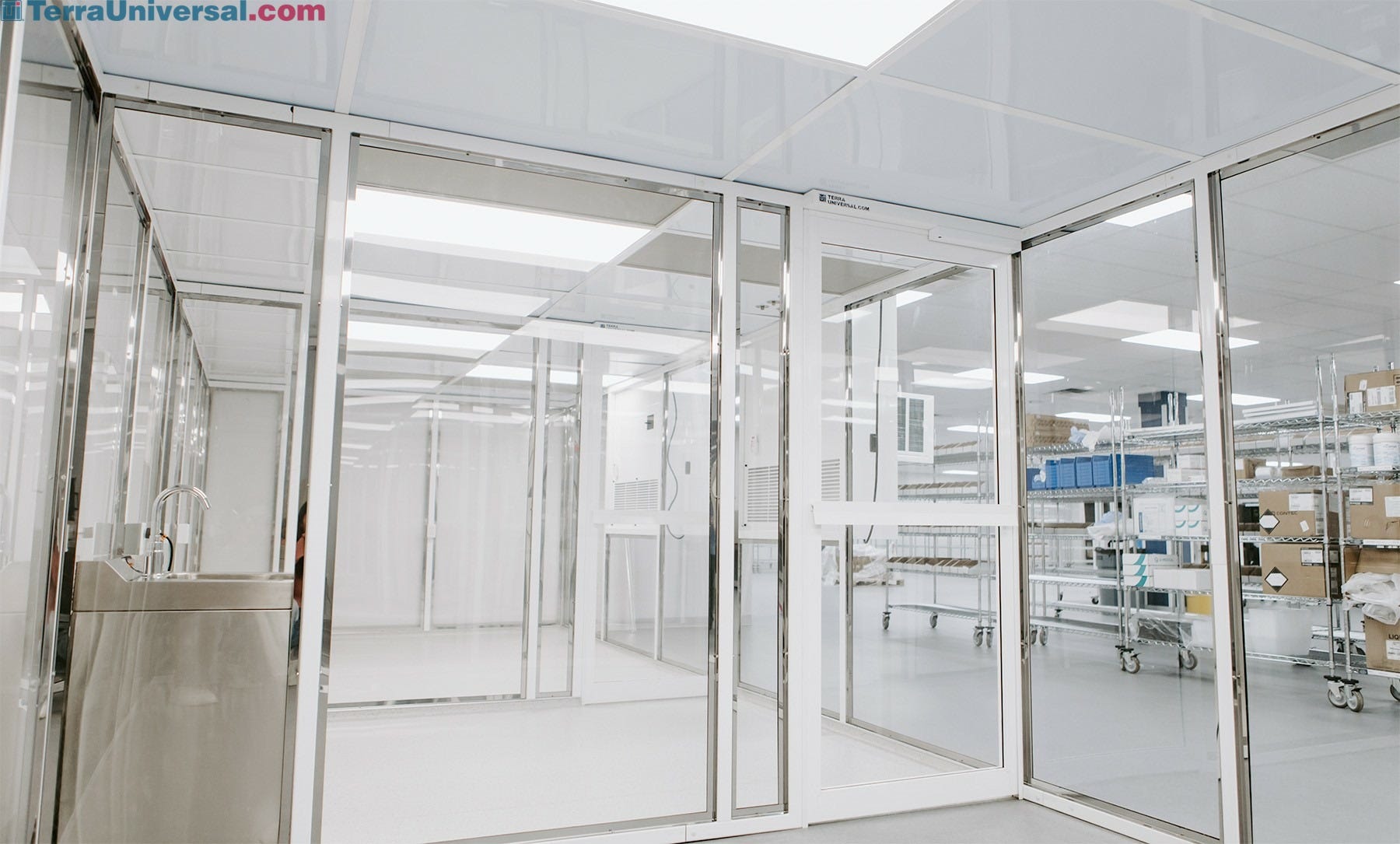
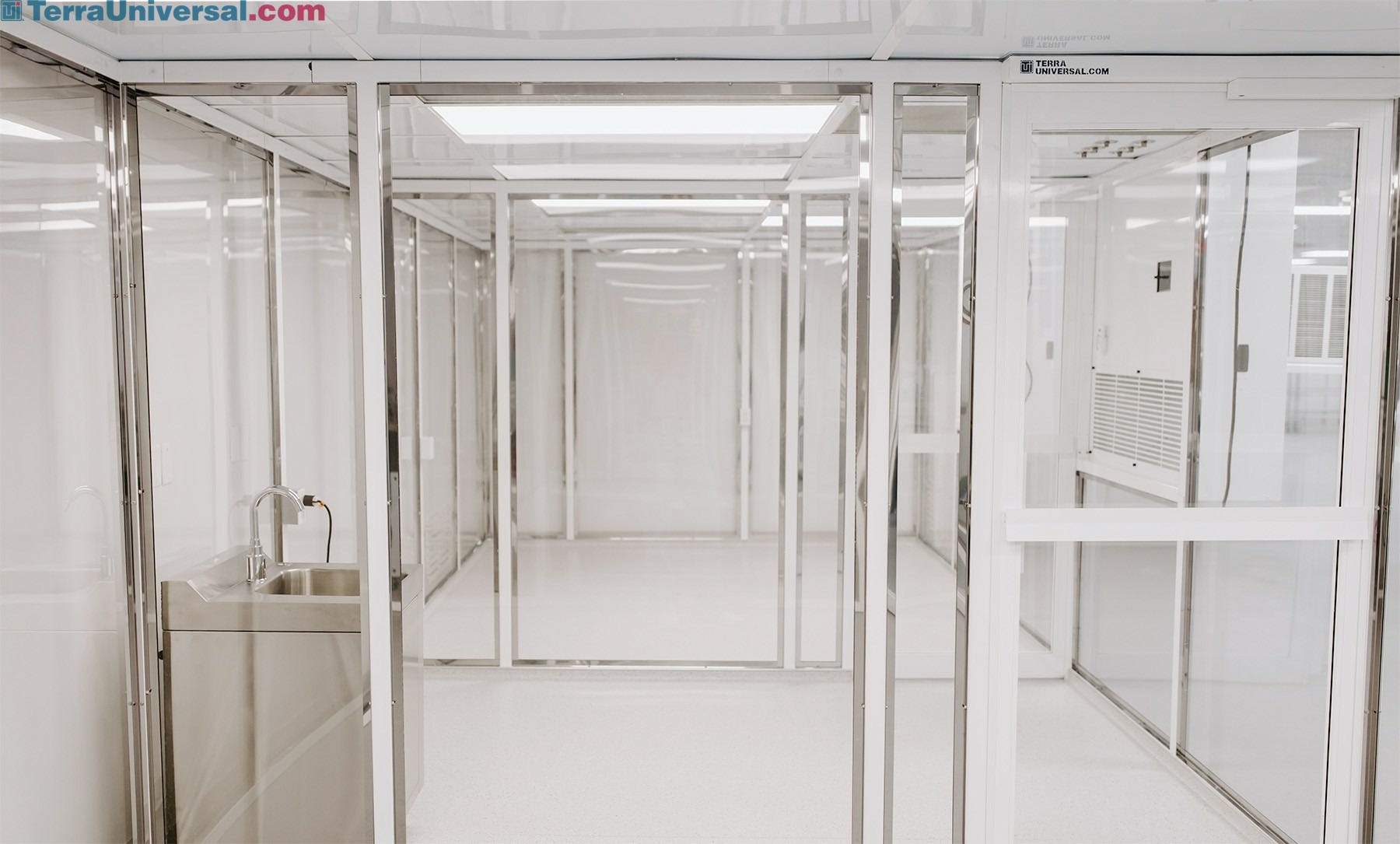
This modular hardwall cleanroom includes mirror-finish stainless steel trim strips, creating a sleek, easy-to-clean exterior. The clear acrylic panels offer full visibility, while the powder-coated steel frame resists corrosion for long-term performance.
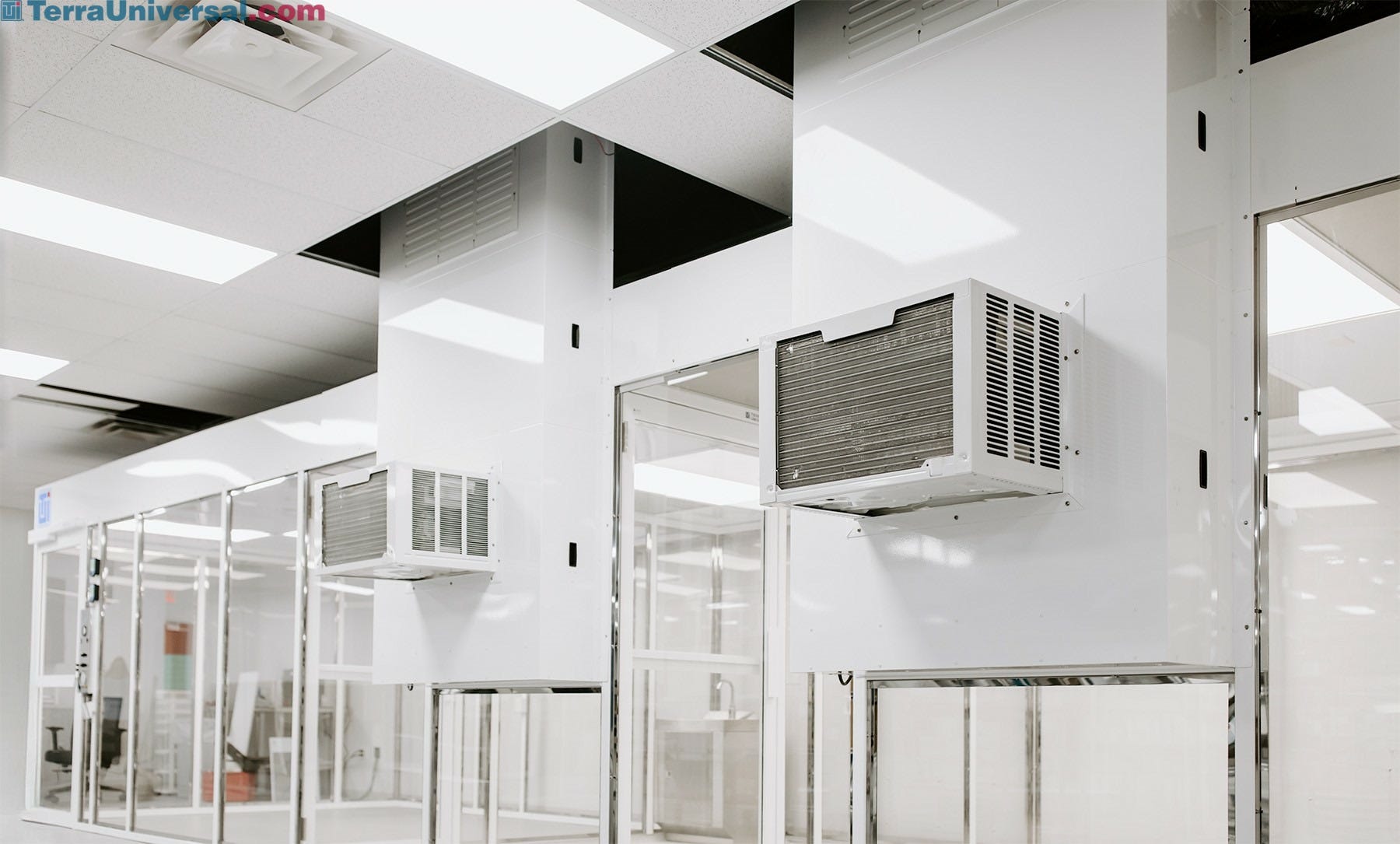
Wall-mounted cleanroom air conditioner provides efficient cooling while maintaining cleanroom integrity. Its compact design saves space and ensures optimal airflow distribution.
Custom Hardwall Modular Cleanroom for Healthcare Applications
Modular cleanroom offers fully customizable dimensions to meet your facility’s needs. Optional features such as airflow controls, pressure gauges, and raised flooring help optimize environmental conditions for enhanced contamination control.
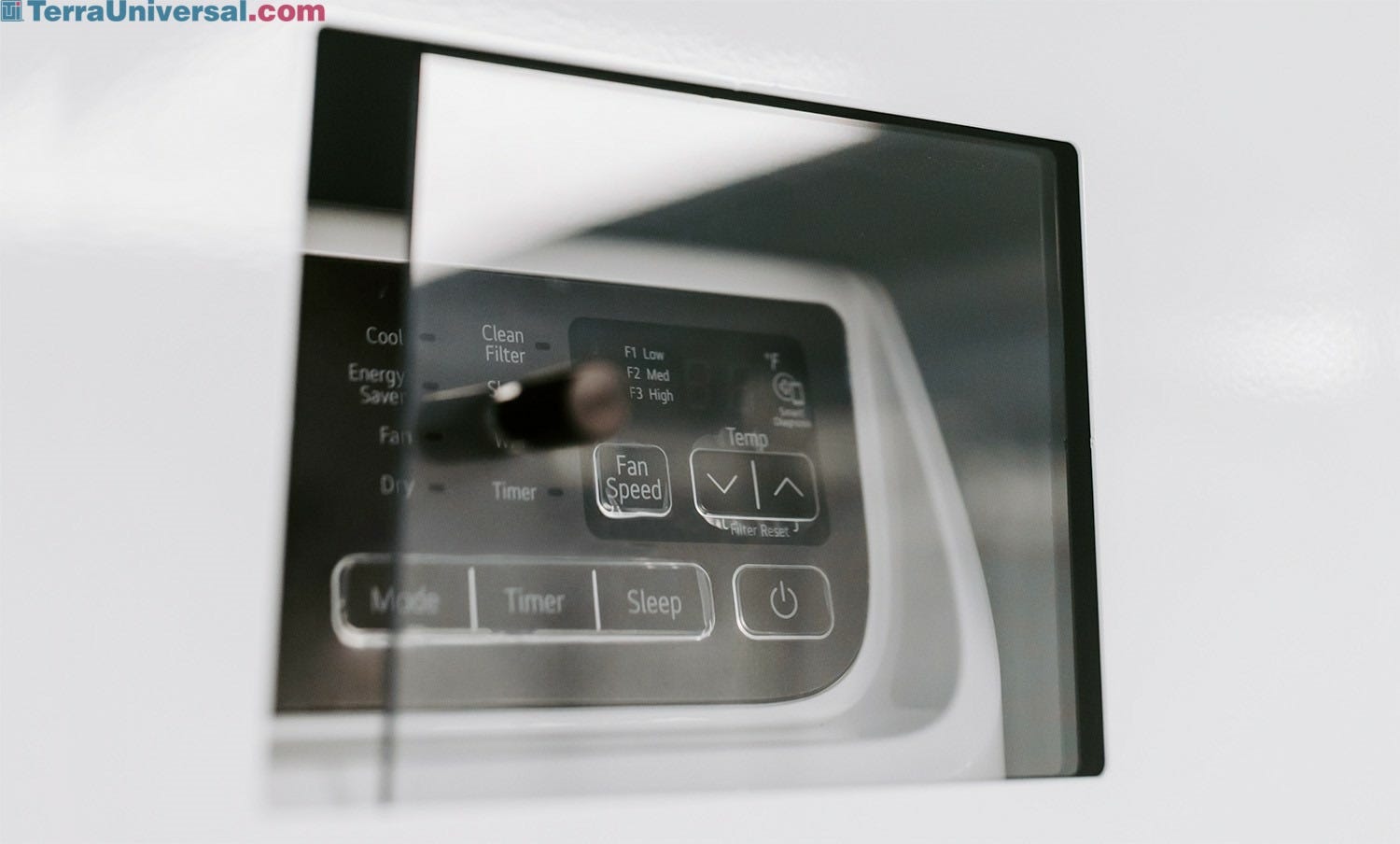
Digital control panel offers precise temperature and fan speed adjustments for cleanroom air conditioning. Enhances user convenience with easy-to-read settings and simple operation.
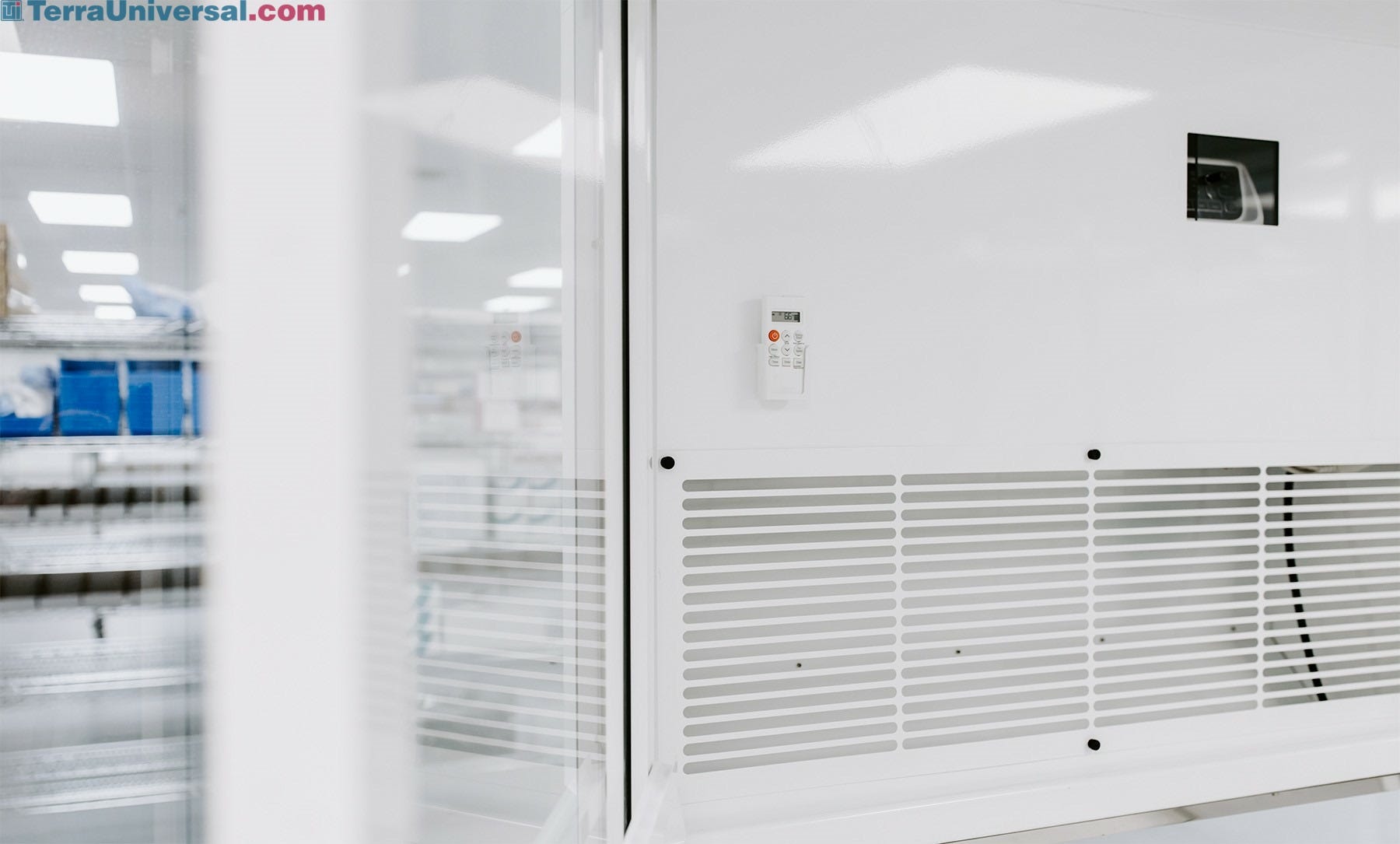
Cleanroom air conditioner with remote control ensures convenient operation and consistent temperature regulation. Vented airflow panel promotes even air distribution for a stable environment.
USP Compounding Cleanroom with Polypro Wall Panels and Pass-through
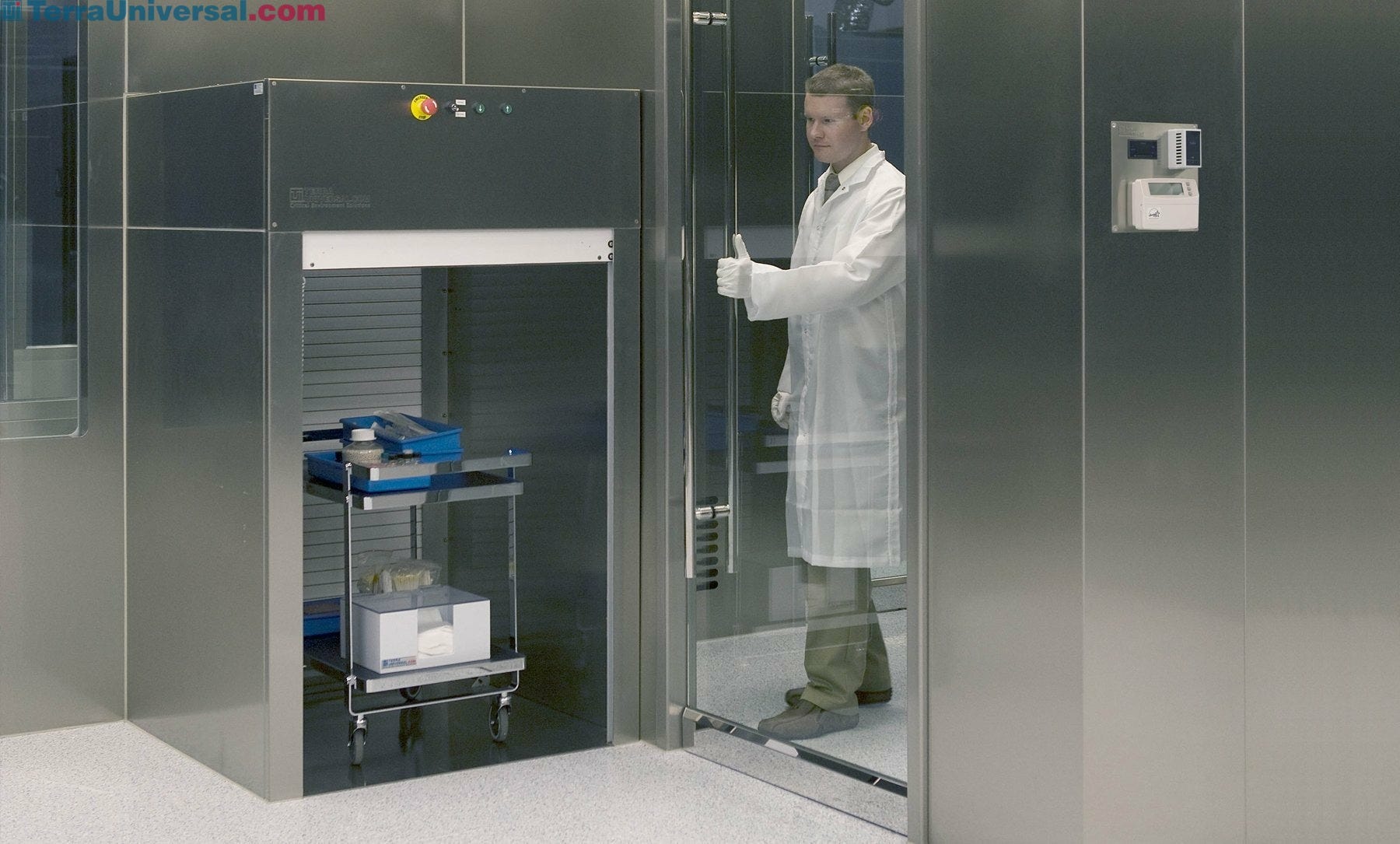
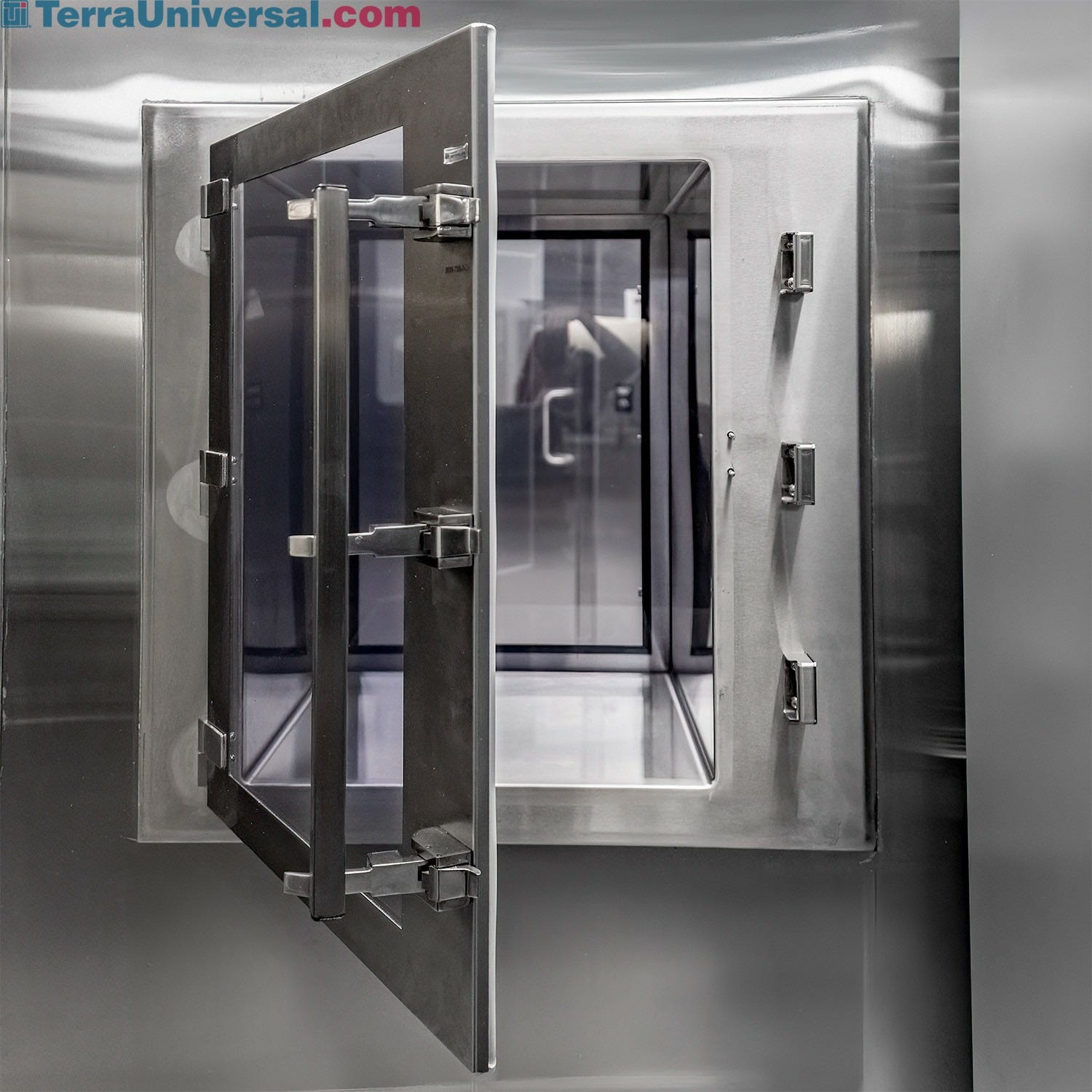
This USP compounding cleanroom features smooth polypropylene wall panels that resist chemical damage and allow easy cleaning, paired with a stainless steel pass-through chamber to minimize contamination during material transfer.
Combo USP 797 and 800 Cleanroom Installation for Sterile Compounding Compliance
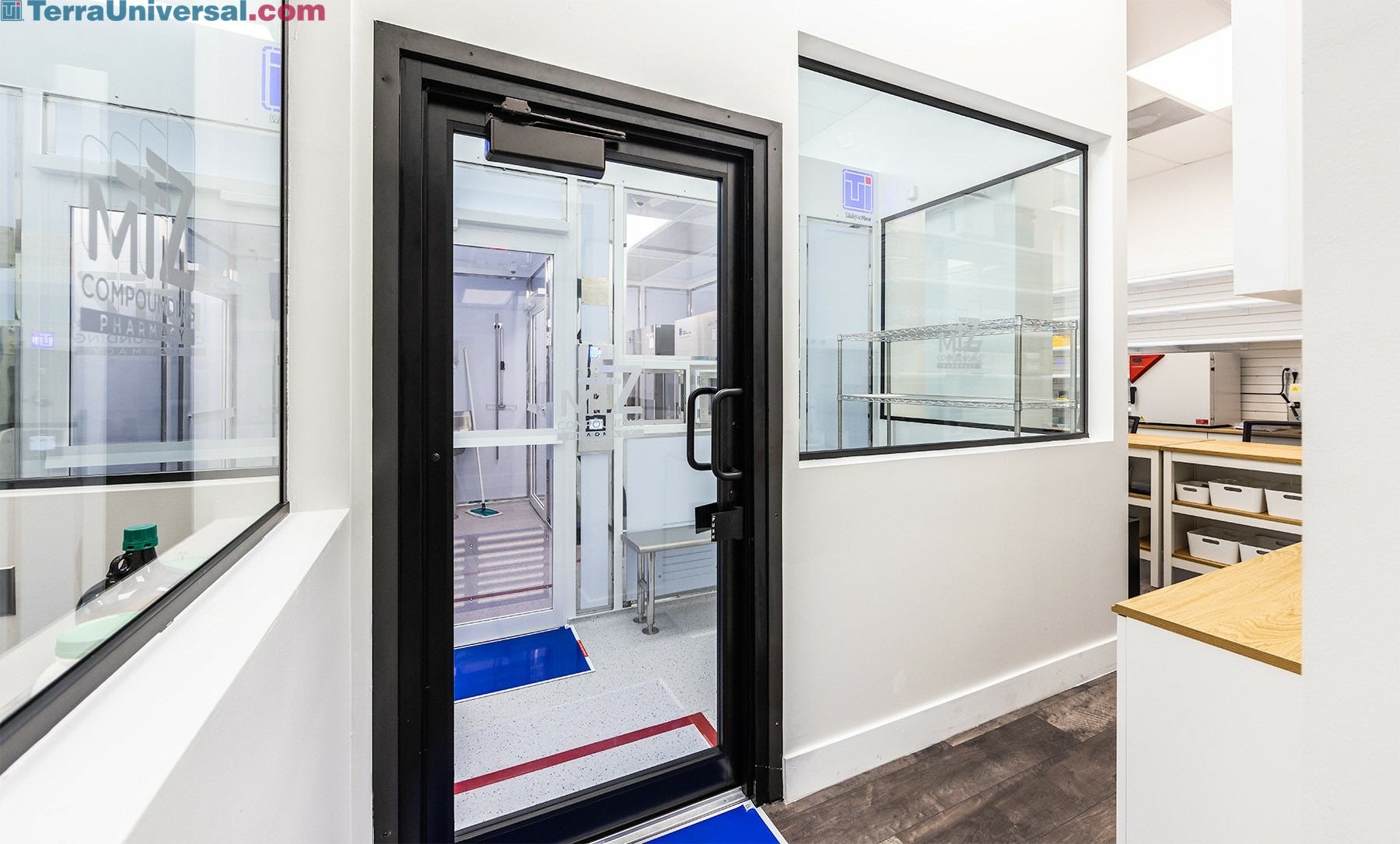
Two modular cleanrooms installed side by side to support USP 797 and 800 sterile compounding workflows. Each room maintains distinct environmental controls, allowing facilities to meet regulatory requirements for separate processes.
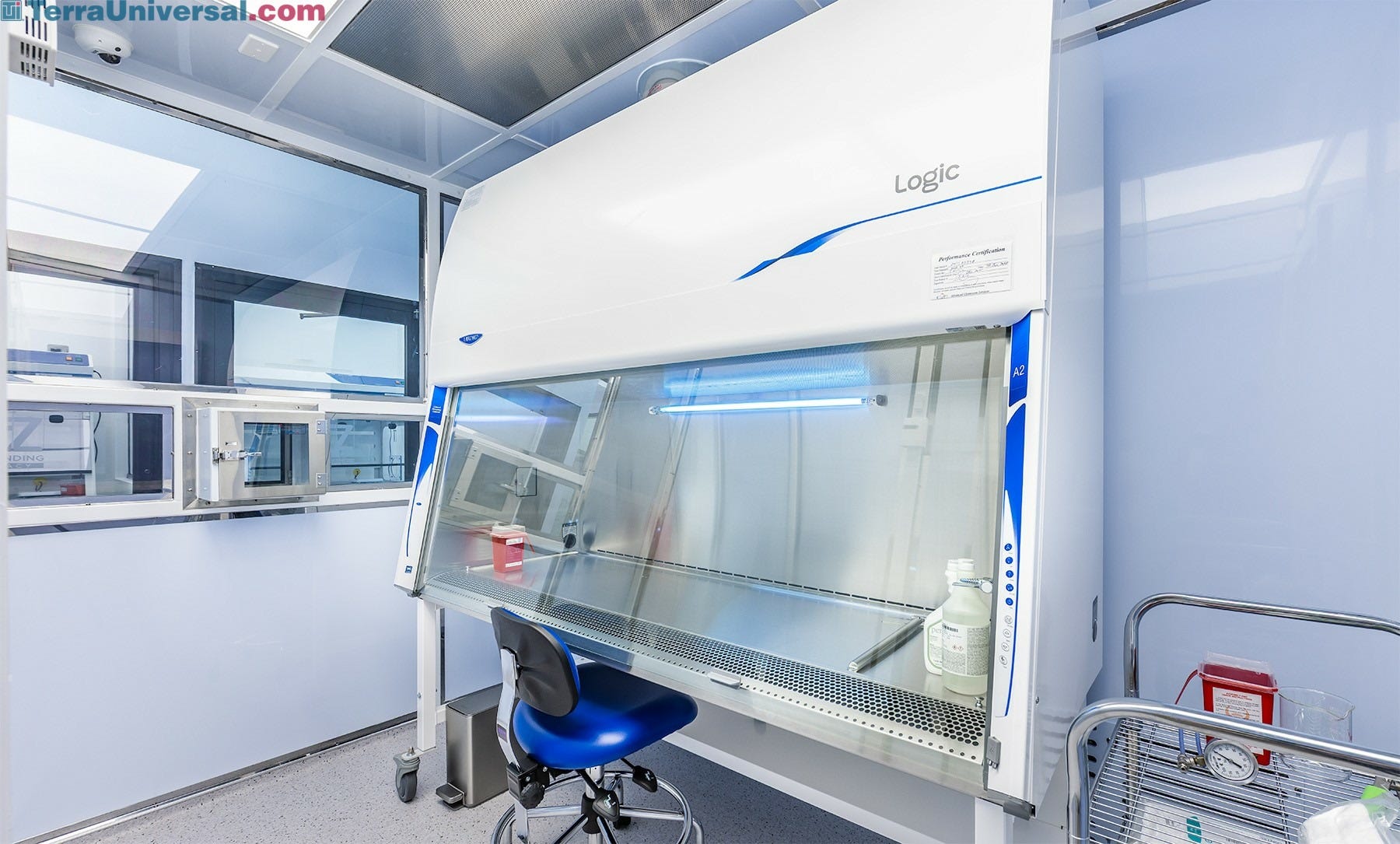
Safety Cabinet Integrated in Cleanroom for Biological Containment
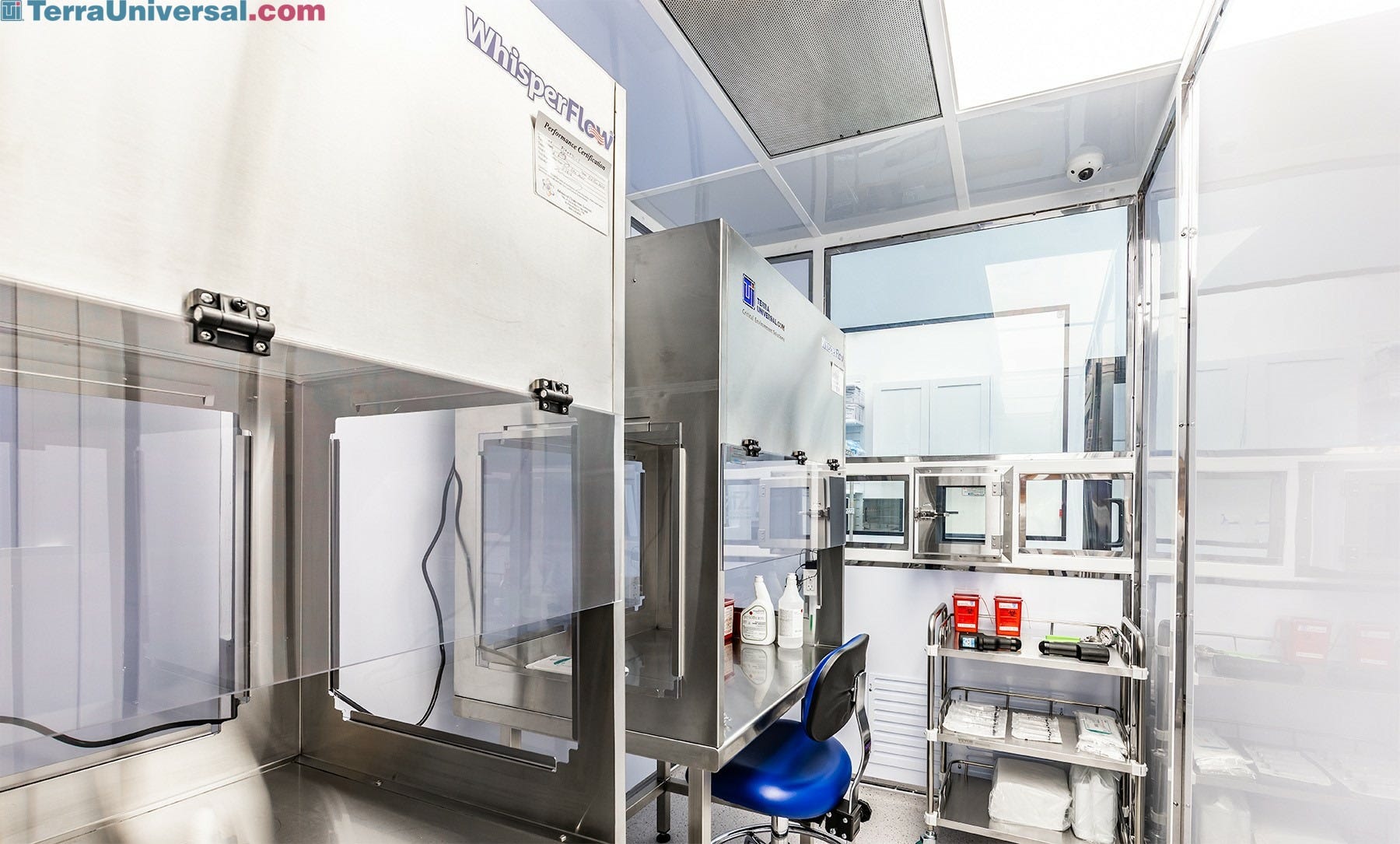
Installed in a cleanroom, this safety cabinet maintains cleanliness and containment through filtered airflow, enabling safe handling of sensitive biological materials.
Cleanroom Interior with Safety Cabinet and Stainless Steel Pass-Through
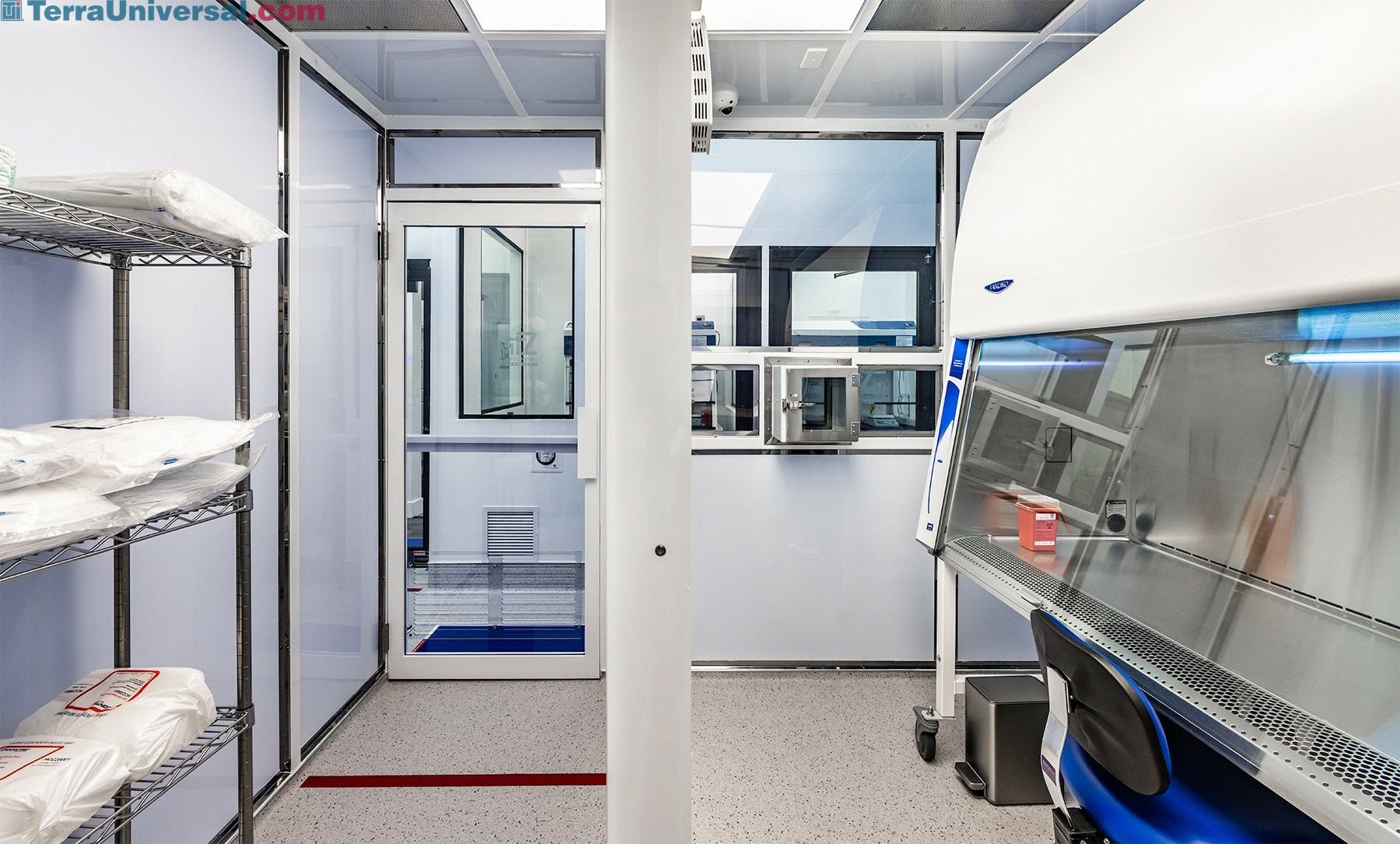
This cleanroom interior features a safety cabinet for personnel and product protection, along with a stainless steel pass-through chamber to maintain sterility during material transfers in USP compounding environments.
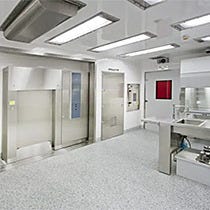
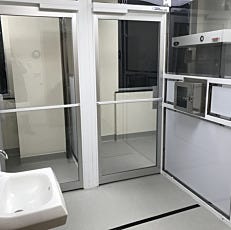
Cleanroom Area with Pass-Through, Sink and Environmental Control Panel
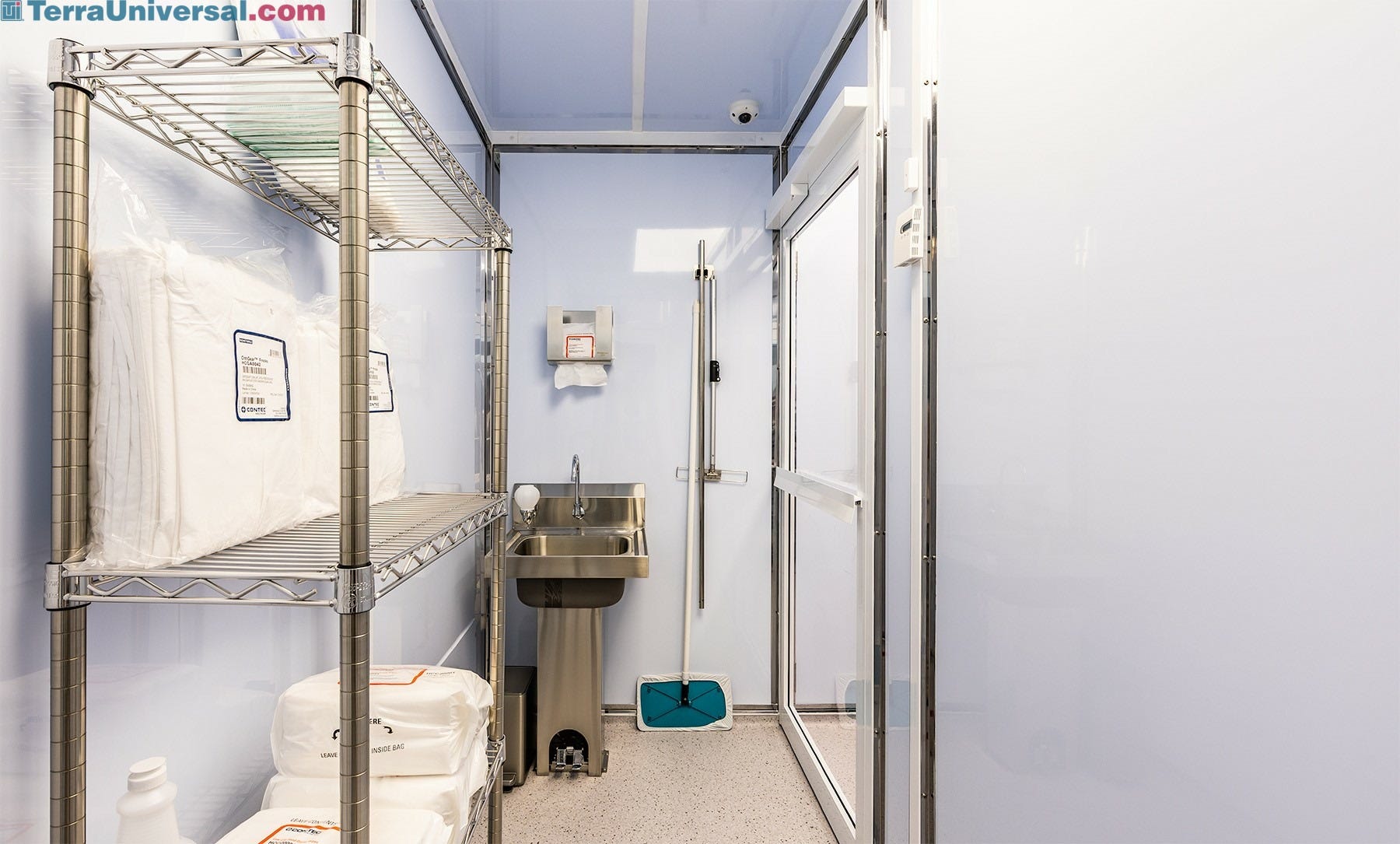
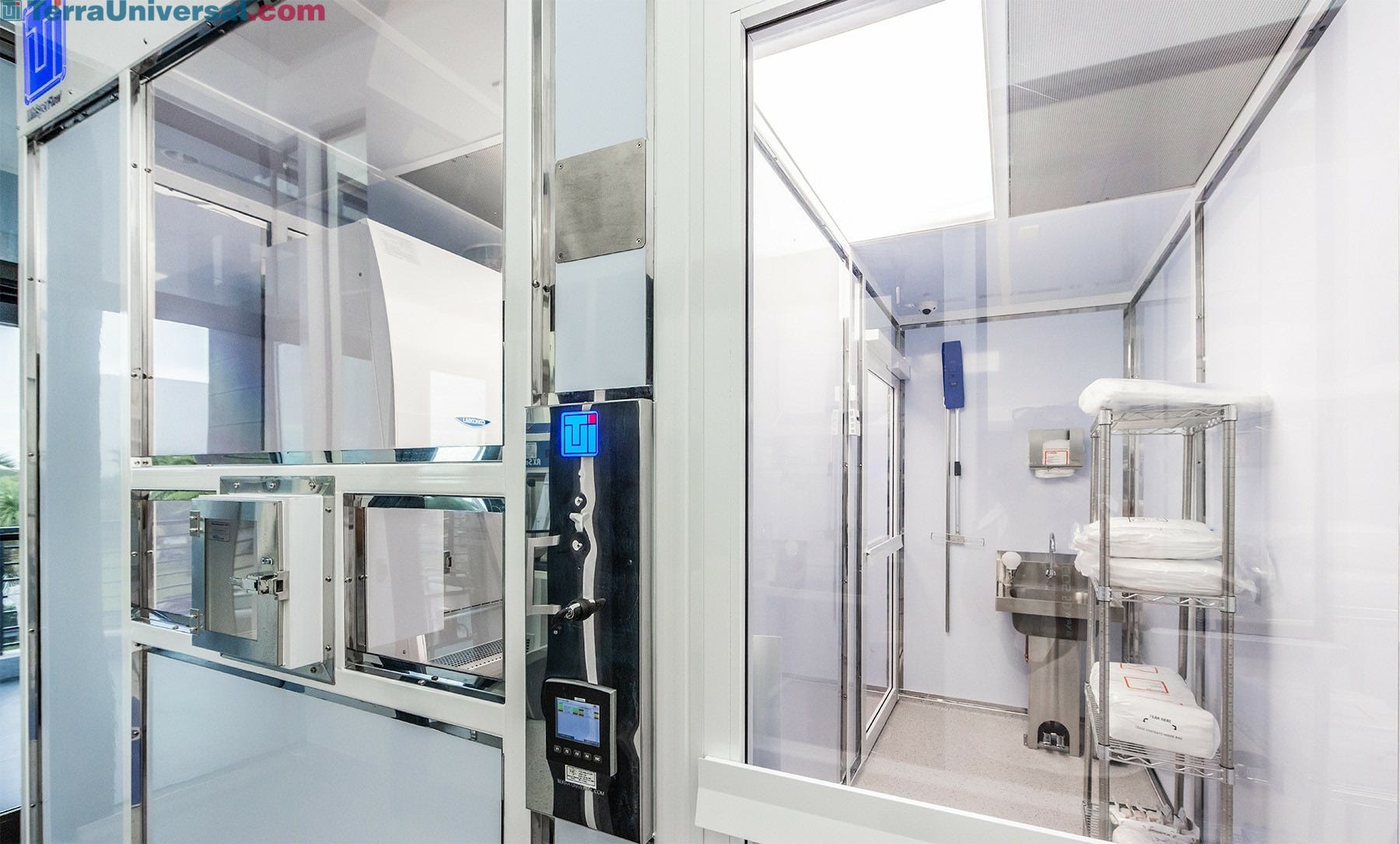
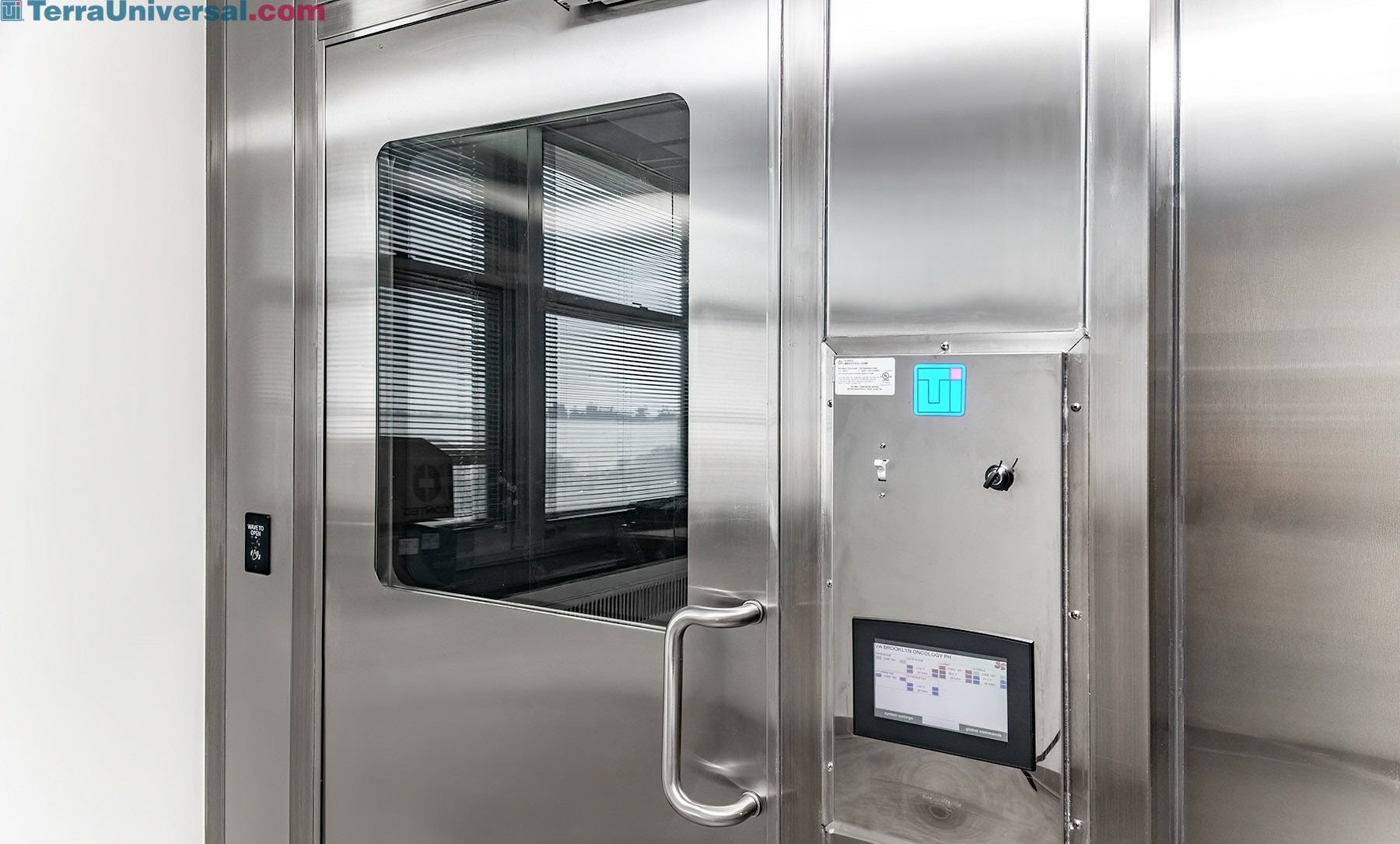
As part of the cleanroom, the pass-through, stainless steel sink, and control panel work together to support sterile material handling and maintain environmental controls.
Modular Cleanroom System Installs Easily Within Existing Workspaces
This modular cleanroom system is engineered for seamless integration into existing facilities. Its prefabricated design allows for flexible installation in a variety of workspaces while maintaining cleanroom performance standards.
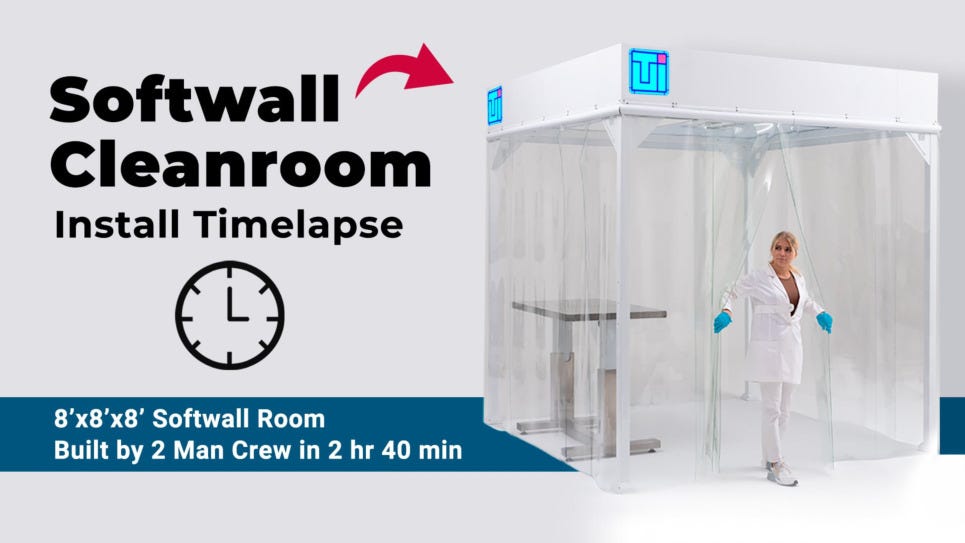
Terra's ValuLine® Softwall Modular Cleanrooms offer an affordable, quick install solution for conversion of any area into a compliant ISO-grade cleanroom | 6600-PP-07 displayedSoftwall Cleanroom Installation TimelapseTerra's ValuLine® Softwall Modular Cleanrooms offer an affordable, quick install solution for conversion of any area into a compliant ISO-grade cleanroom. We design, build, stock, and install cleanrooms for every application.
Custom Hardwall Modular Cleanroom for Pharmaceutical Applications
Custom hardwall modular cleanroom with a mirror-finish stainless steel control panel that provides on/off switches for FFU's lifts, and other system options
Custom Hardwall Modular Cleanroom for Pharmaceutical Applications
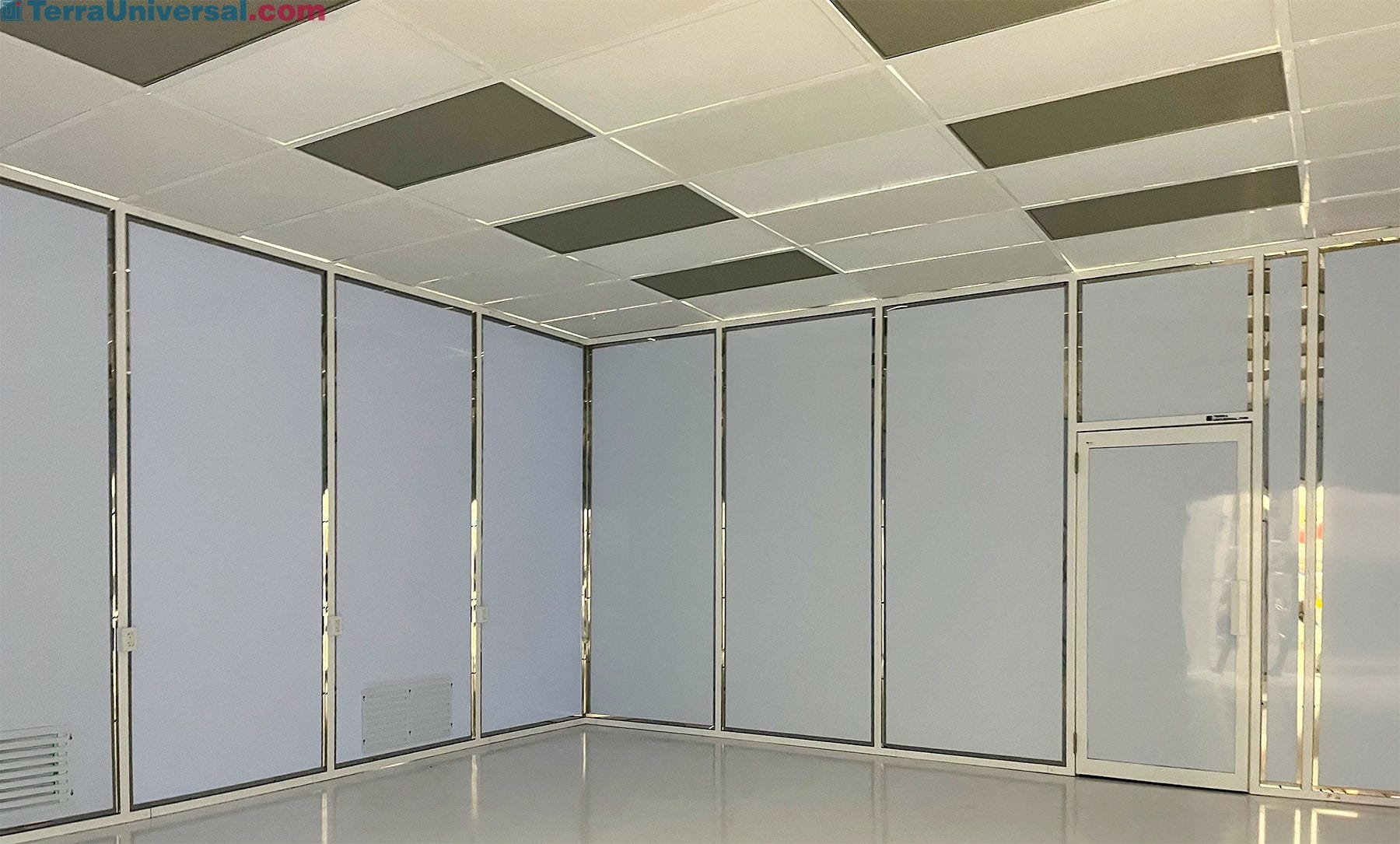
Custom hardwall modular cleanroom includes powder-coated steel ceiling grid that forams 2' X 4' bays for filter/fans, lights or blank panels (order ceiling modules separately).
Custom Hardwall Modular Cleanroom for Pharmaceutical Applications
Custom hardwall modular cleanroom are designed with rigid steel frames and ceiling grids supplying sufficient factors of safety to provide vertical and lateral strength recommended by professional engineers.
Custom Hardwall Modular Cleanroom for Pharmaceutical Applications
Custom hardwall modular cleanroom with SDPVC panels for the most contamination-sensitive applications because of their ability to control particles along with static charges.
Custom Stainless Steel BioSafe® Cleanroom for Pharmaceutical Compounding
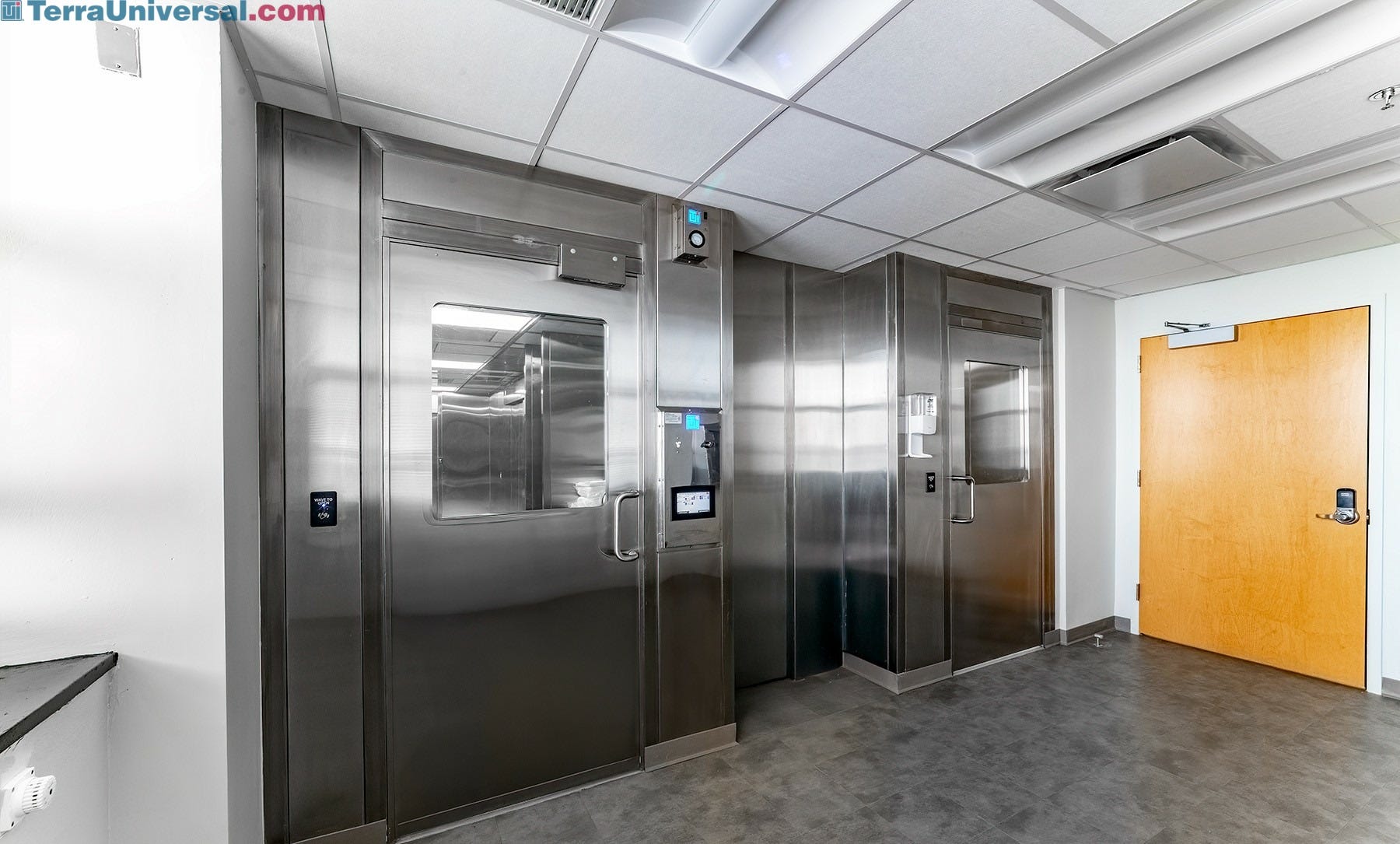
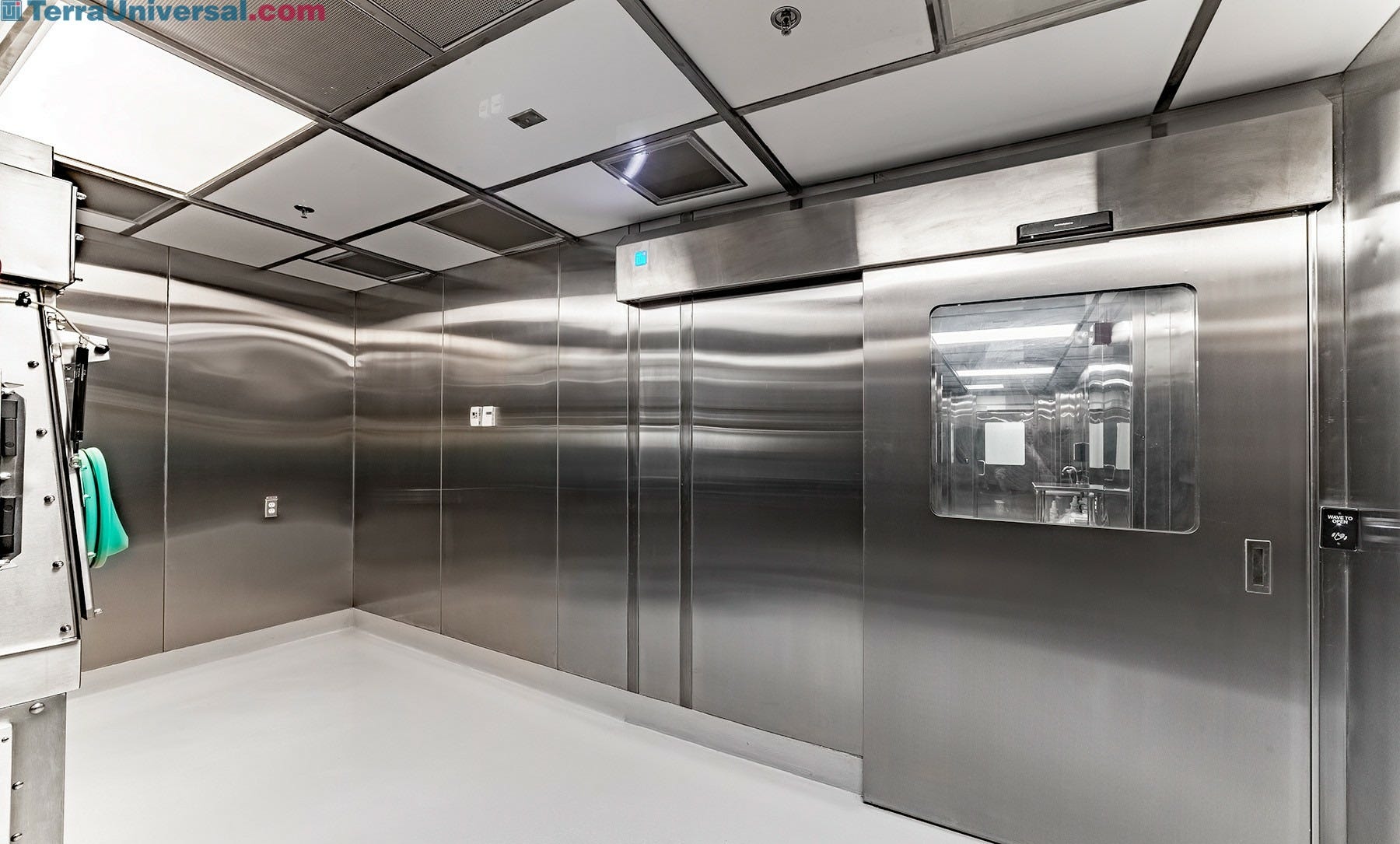
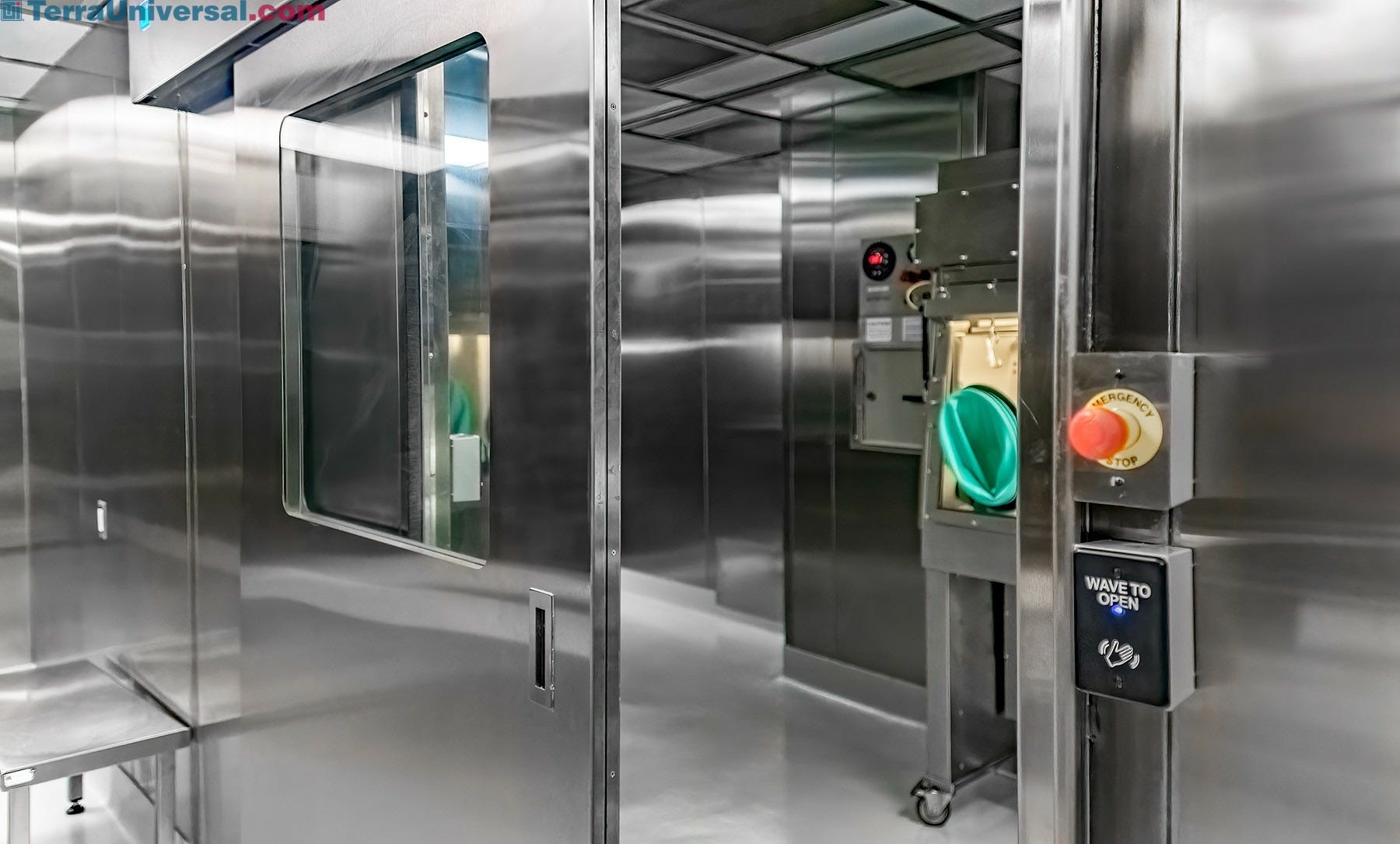
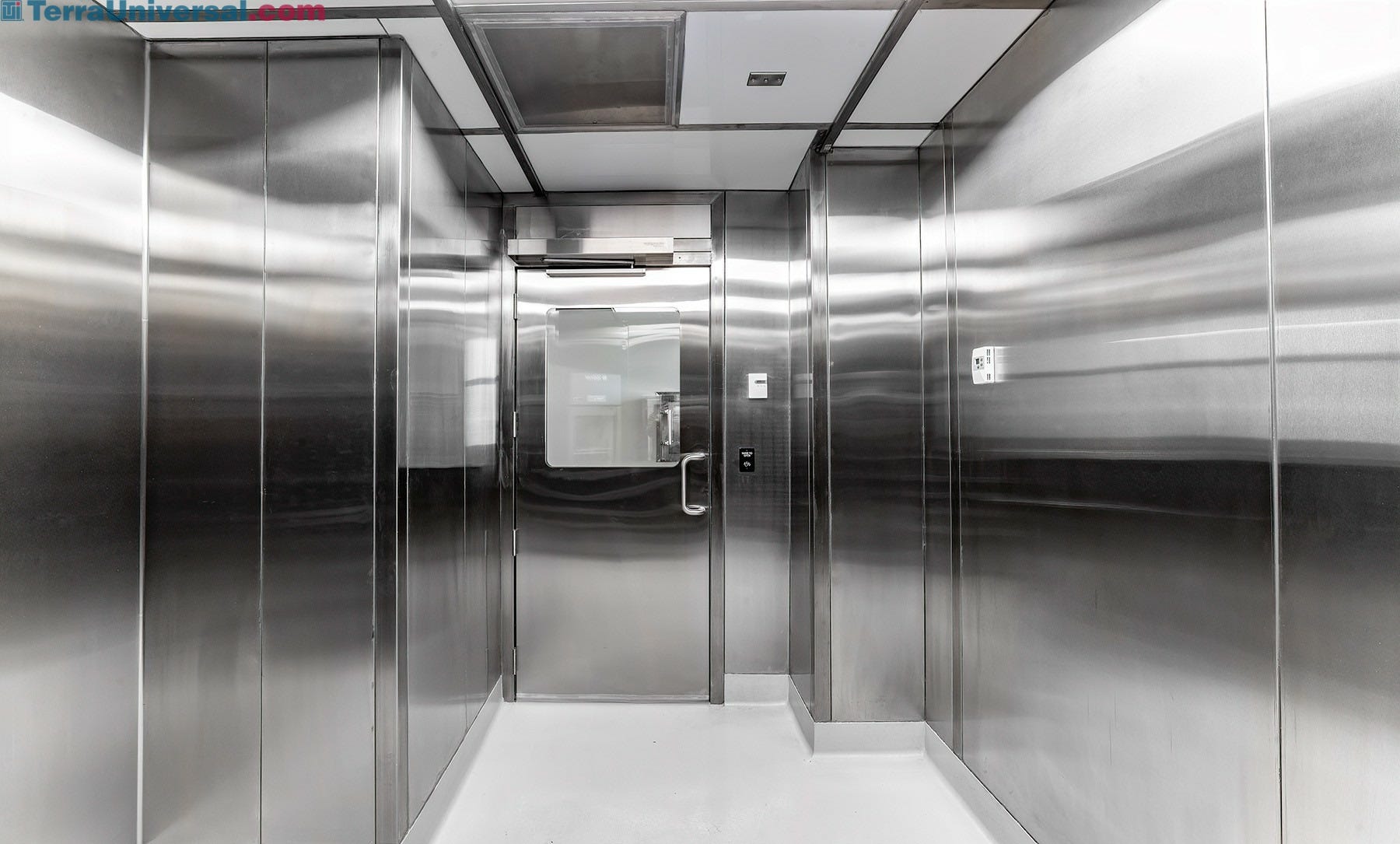
This image captures the outer transition area to a cleanroom, equipped with secure stainless steel doors, environmental monitoring systems, and keycard access. The cleanroom's glass windows offer a view into the sterile environment beyond
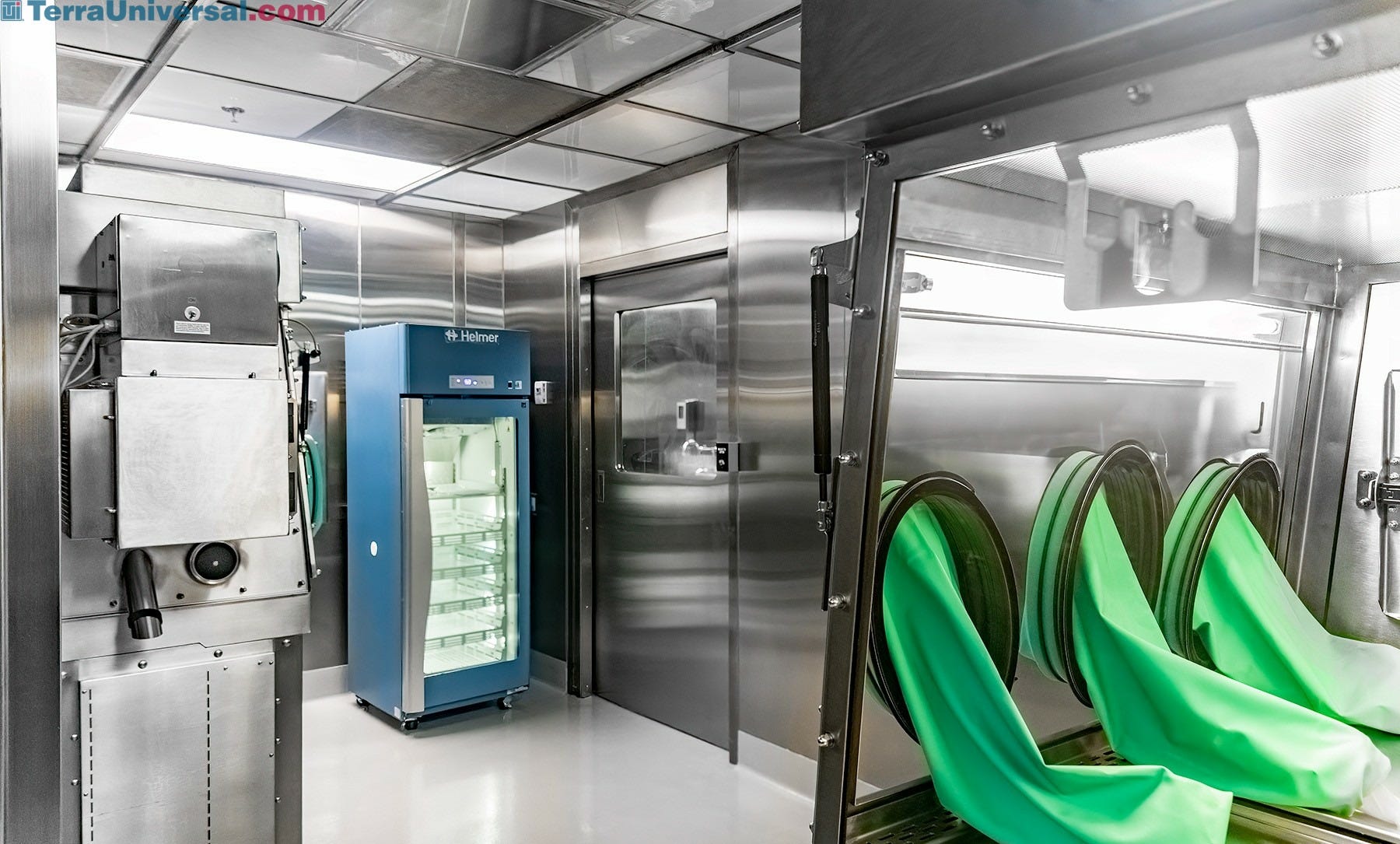
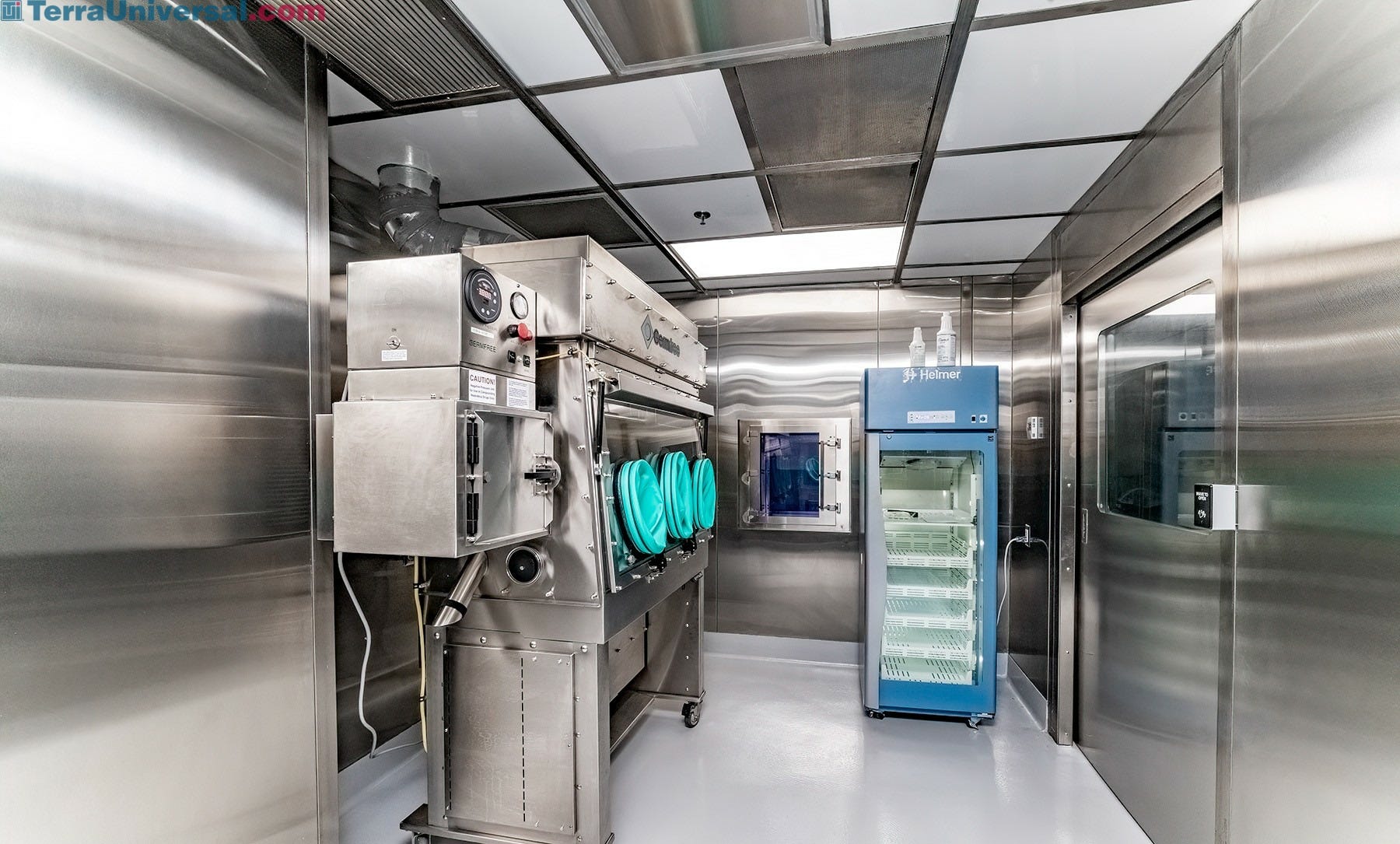
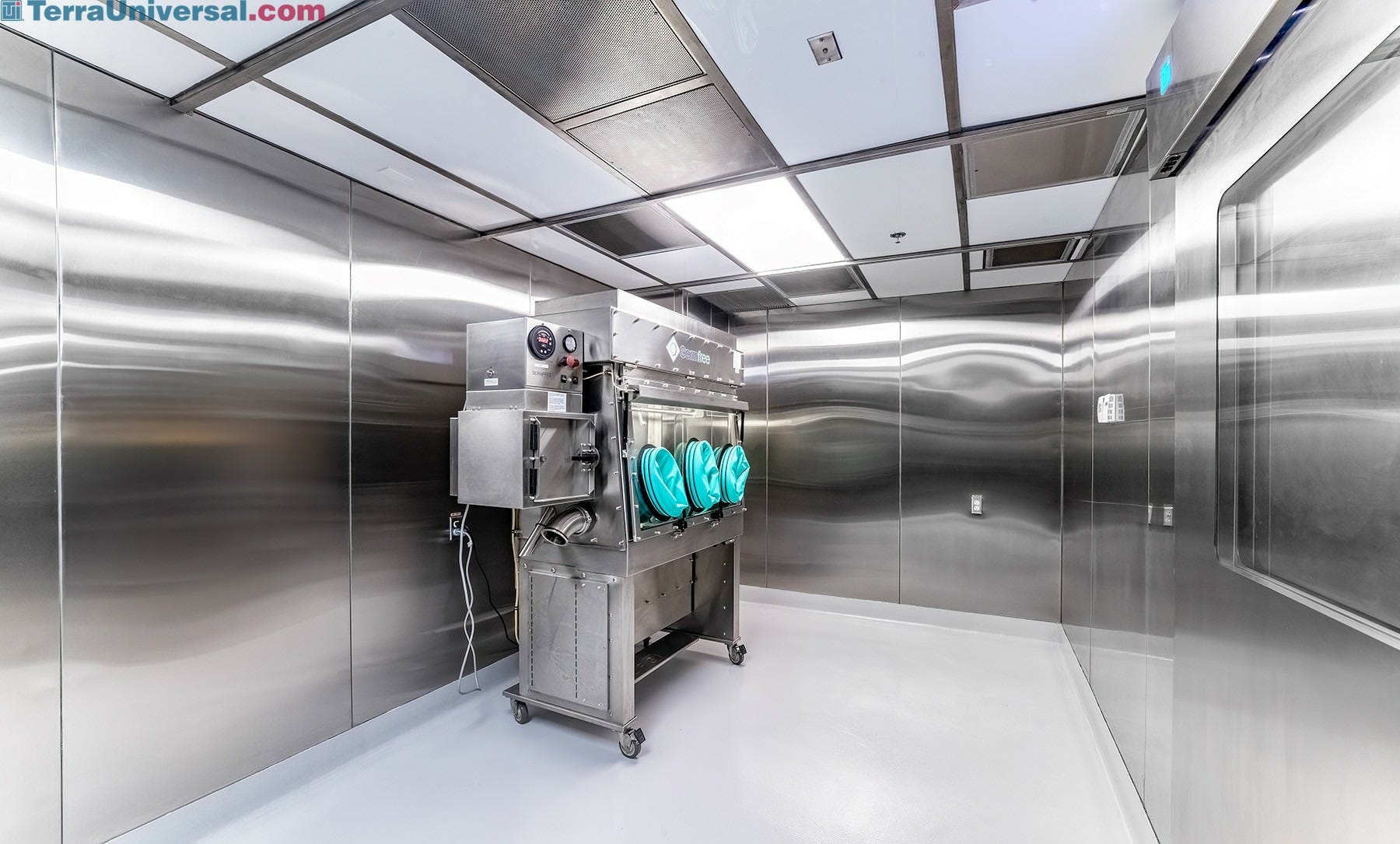
Cleanroom Hazardous Compounding Room with Isolator, Refrigerator, and Pass-Through
A modern stainless steel cleanroom equipped with a Germfree glovebox isolator, a pass-through chamber, and a Helmer medical refrigerator. The setup ensures sterile handling and controlled transfer of materials.
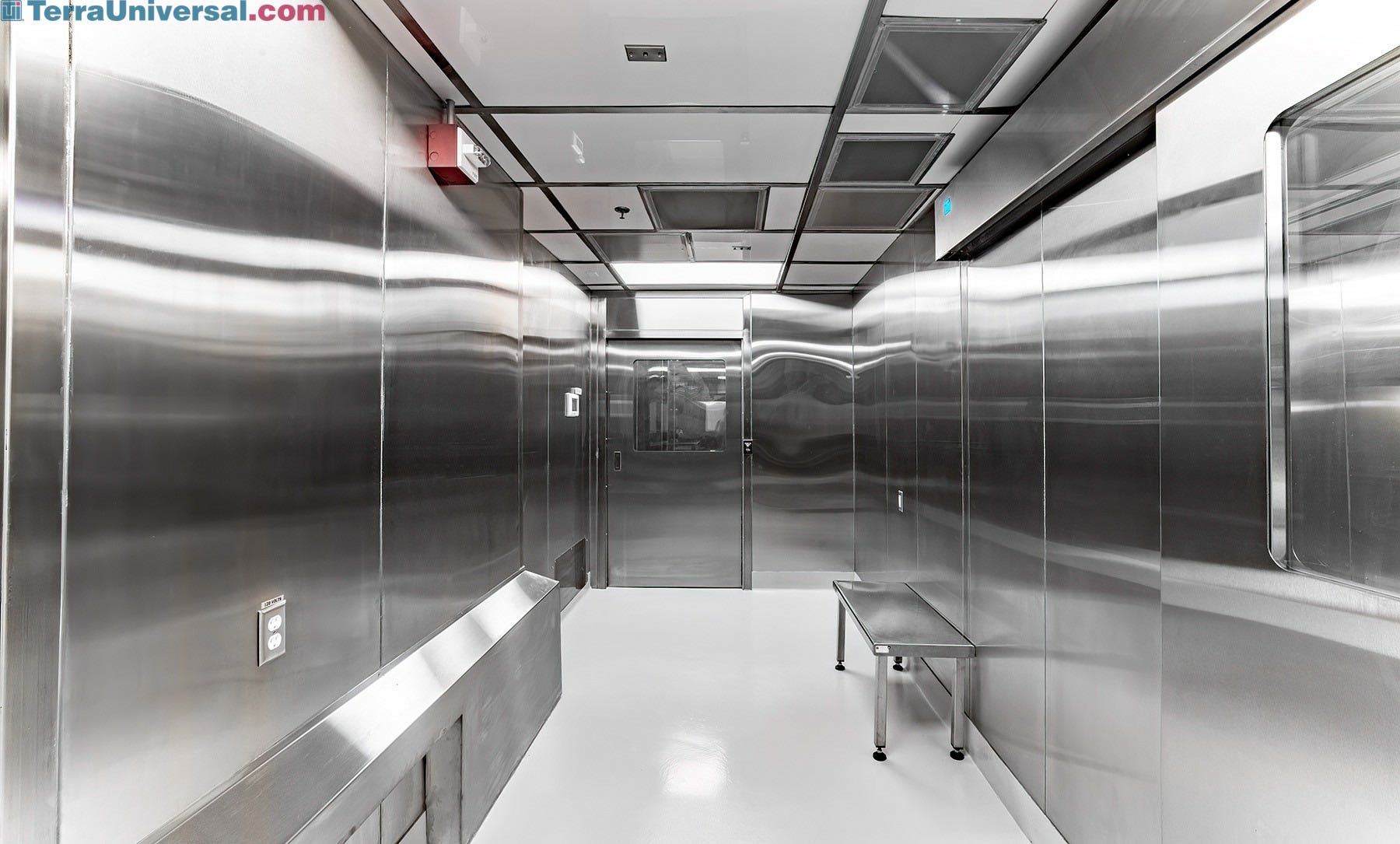
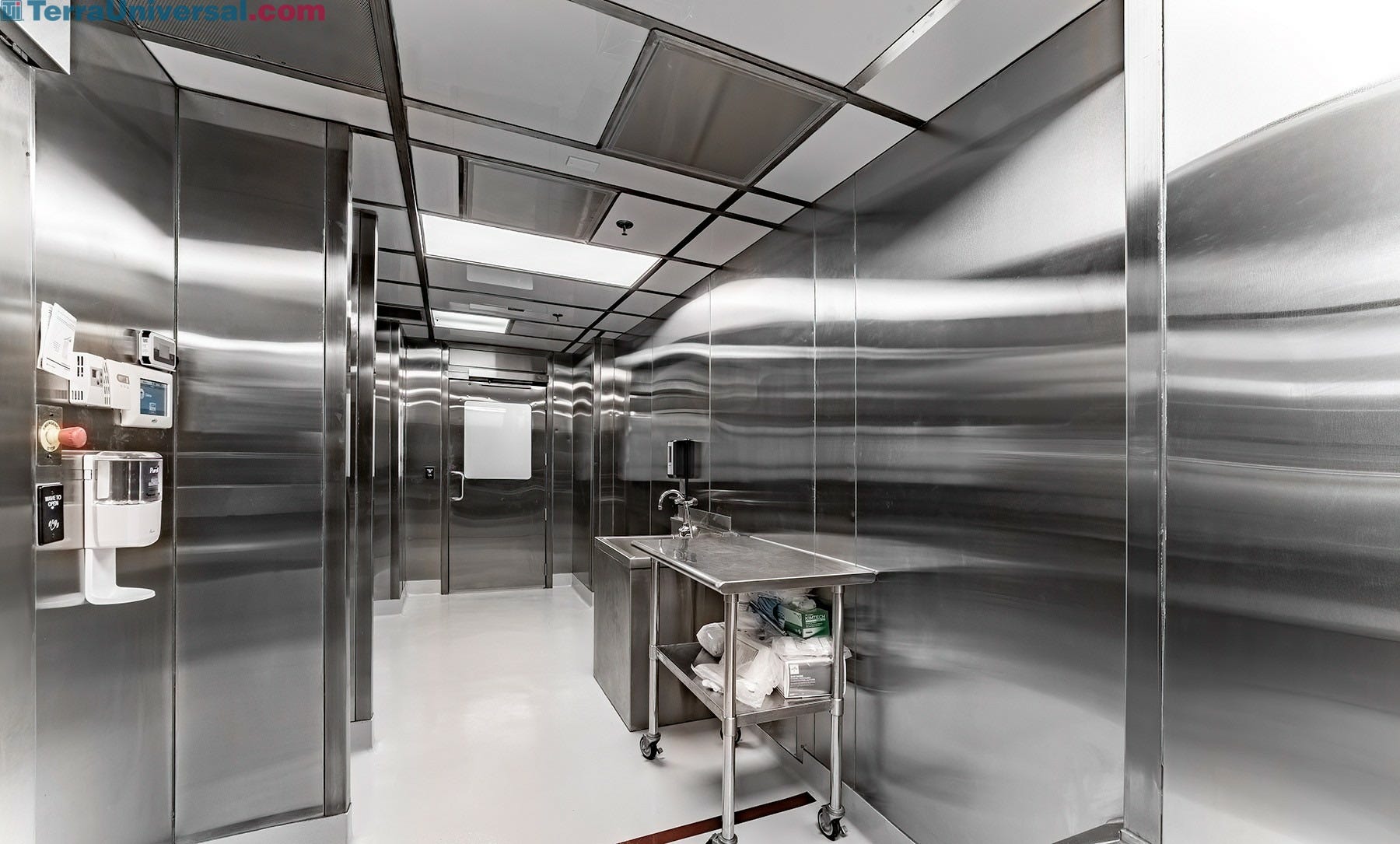
A modern cleanroom corridor constructed with stainless steel panels, seamless flooring, and a sealed door with viewing window for maintaining sterile conditions.
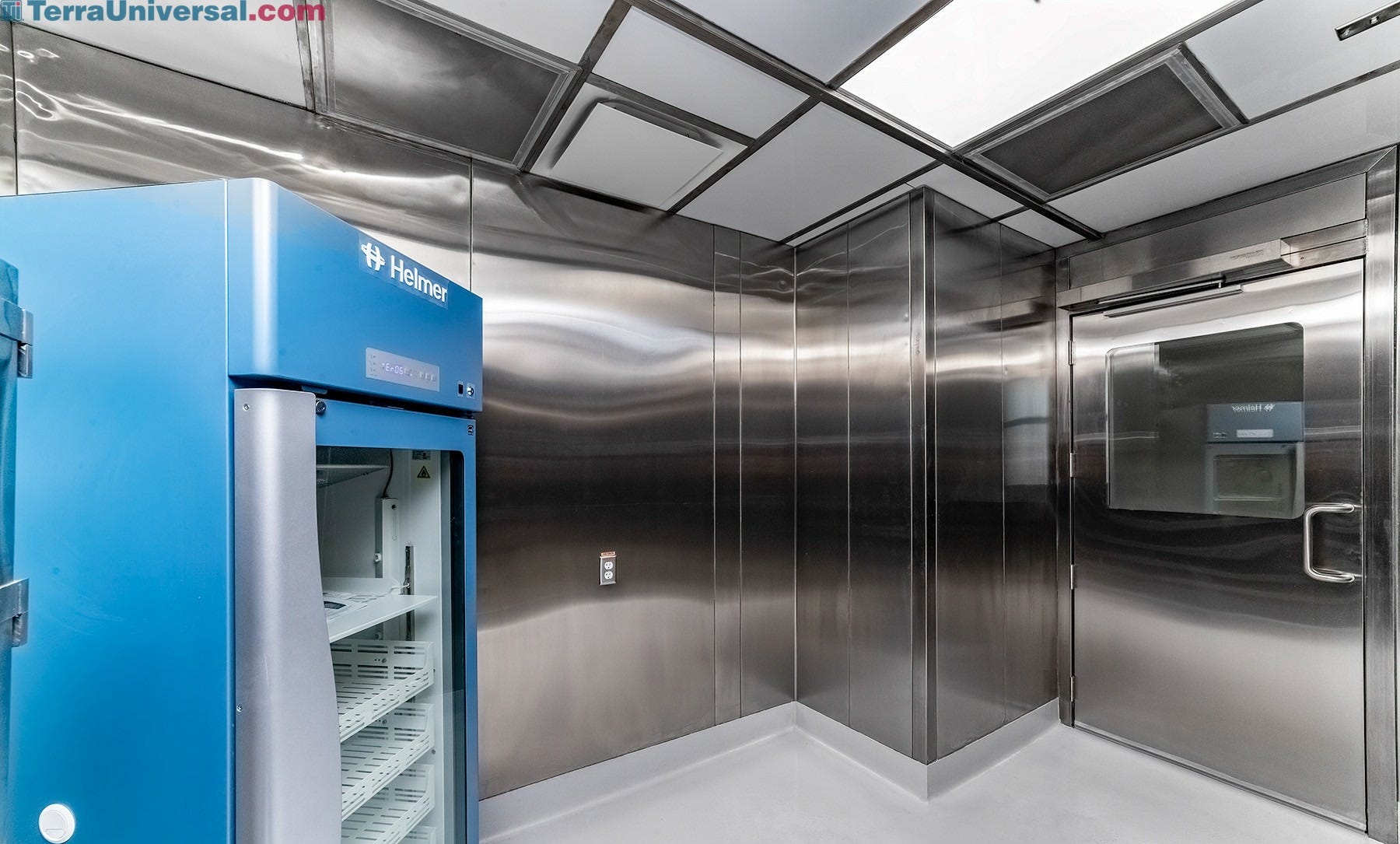
A cleanroom interior equipped with a blue Helmer medical refrigerator, stainless steel walls, seamless flooring, and a sealed door with a glass window for sterile operations.
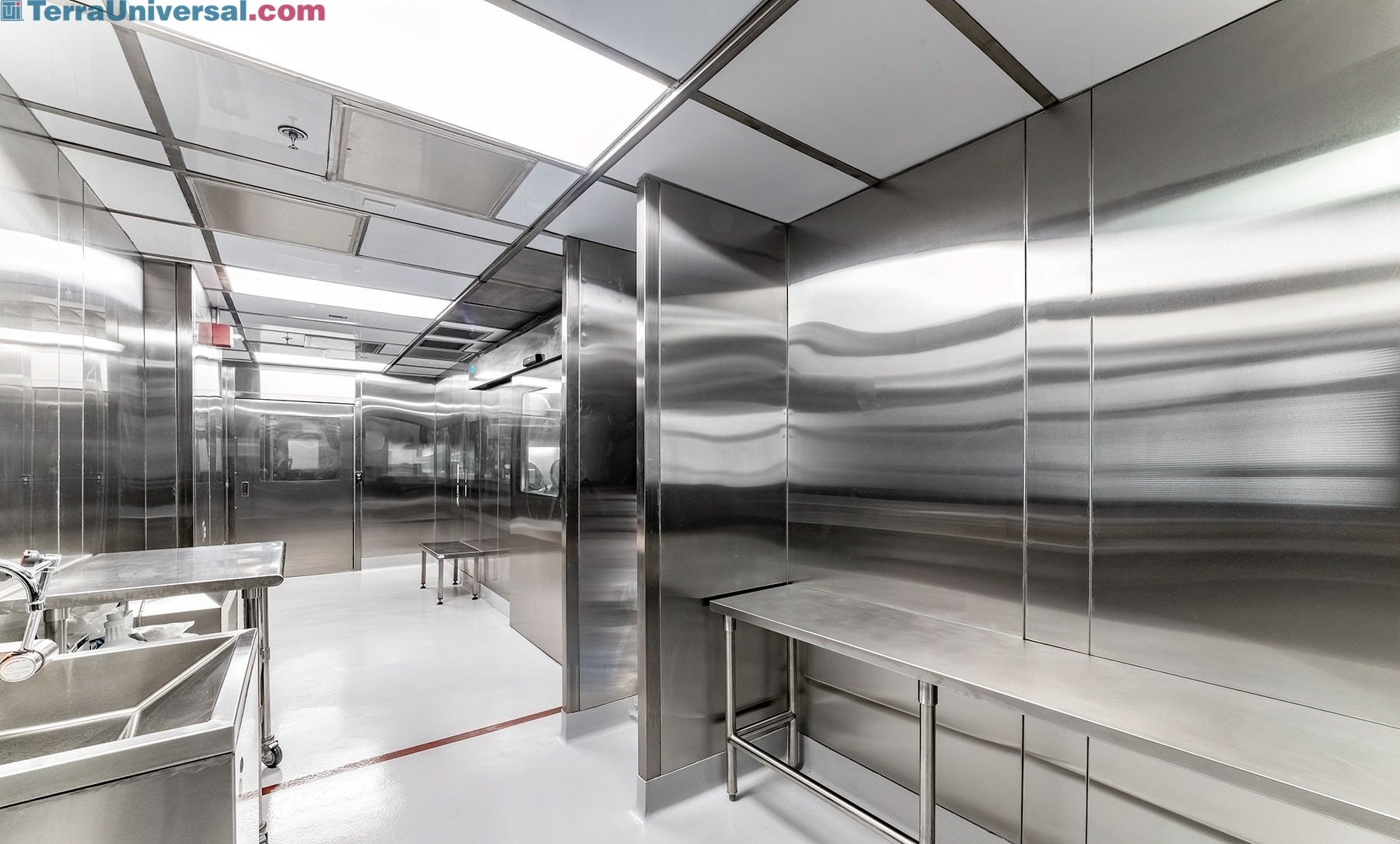
Cleanroom Workspace and Preparation Area with Sink and Benches
This image highlights a cleanroom workspace equipped with stainless steel benches, a handwashing sink, and seamless walls and flooring designed for sterile operations. The well-lit room provides a controlled, contamination-free environment for laboratory or pharmaceutical tasks
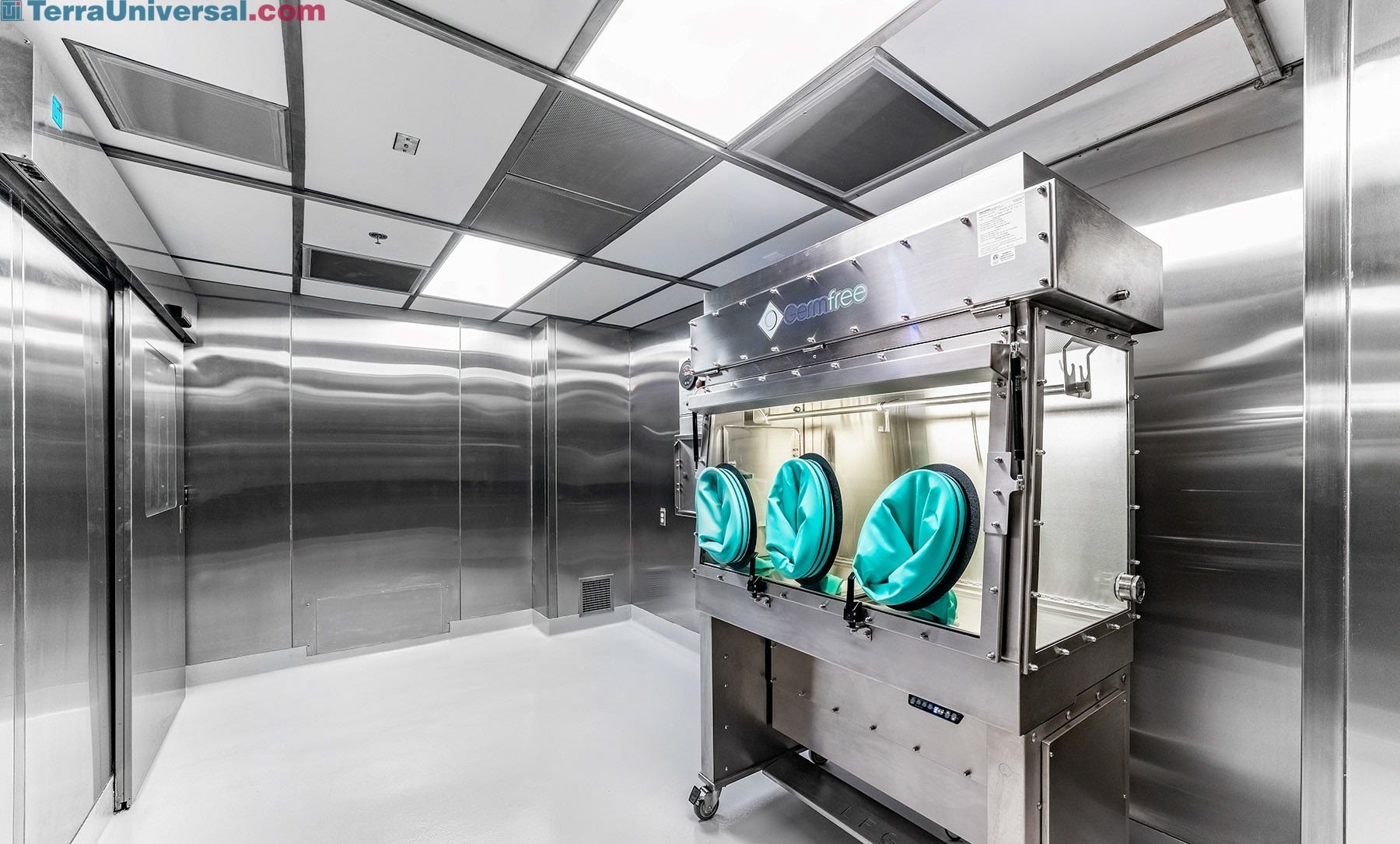
Cleanroom Hazardous Compounding Area with Isolator Unit
This cleanroom setup with a Germfree isolator unit, equipped with glove ports for handling materials safely. The room has seamless stainless steel walls, a smooth floor, and controlled lighting to maintain a sterile, contamination-free environment
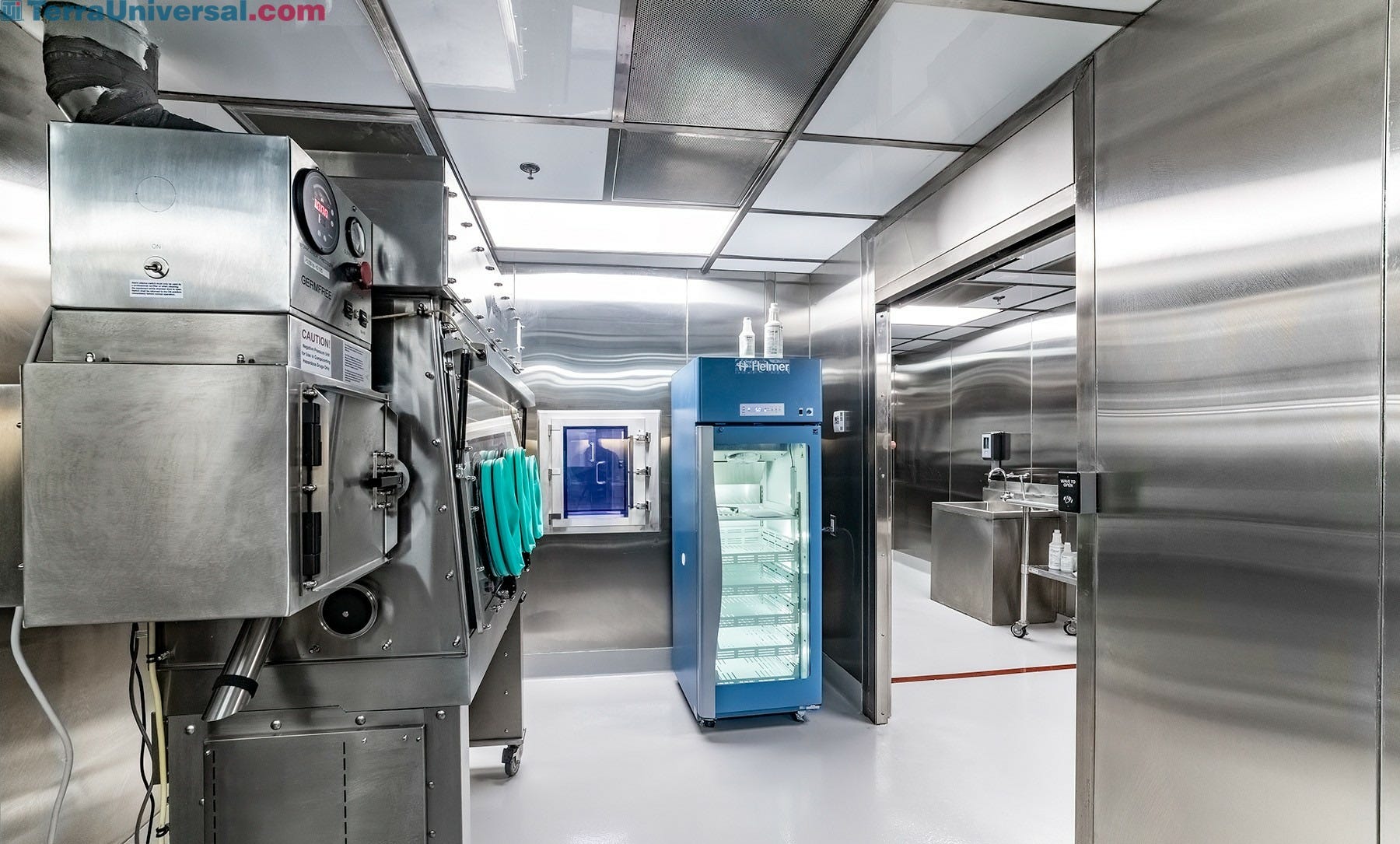
Cleanroom Hazardous Compounding Area with Isolator, Refrigerator, and Sink
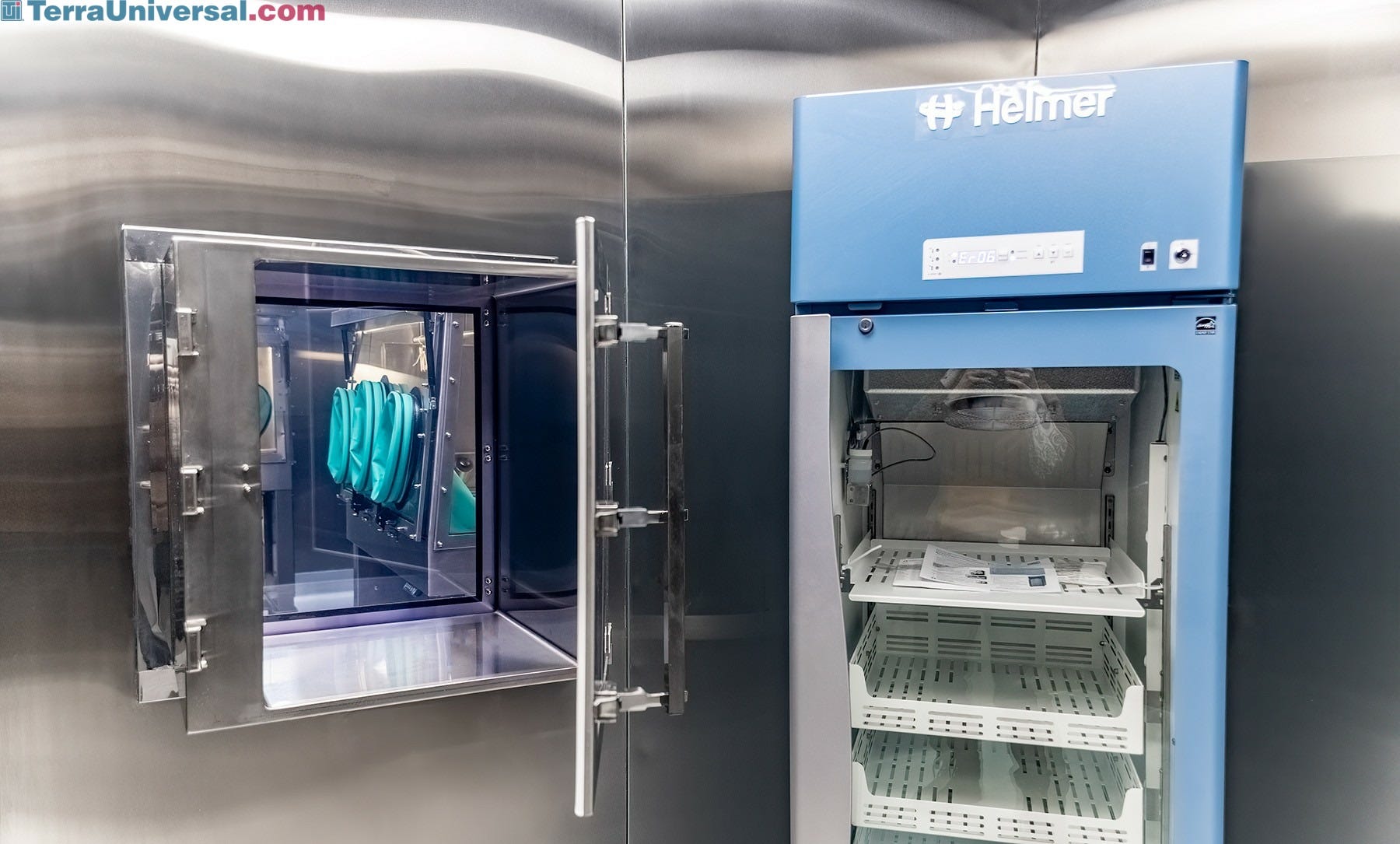
This cleanroom features stainless steel walls, a Germfree isolator unit with glove ports, a pass-through chamber with a blue-tinted door for contamination control, and a Helmer laboratory refrigerator. The adjoining room is visible through an open doorway, revealing additional stainless steel workspace
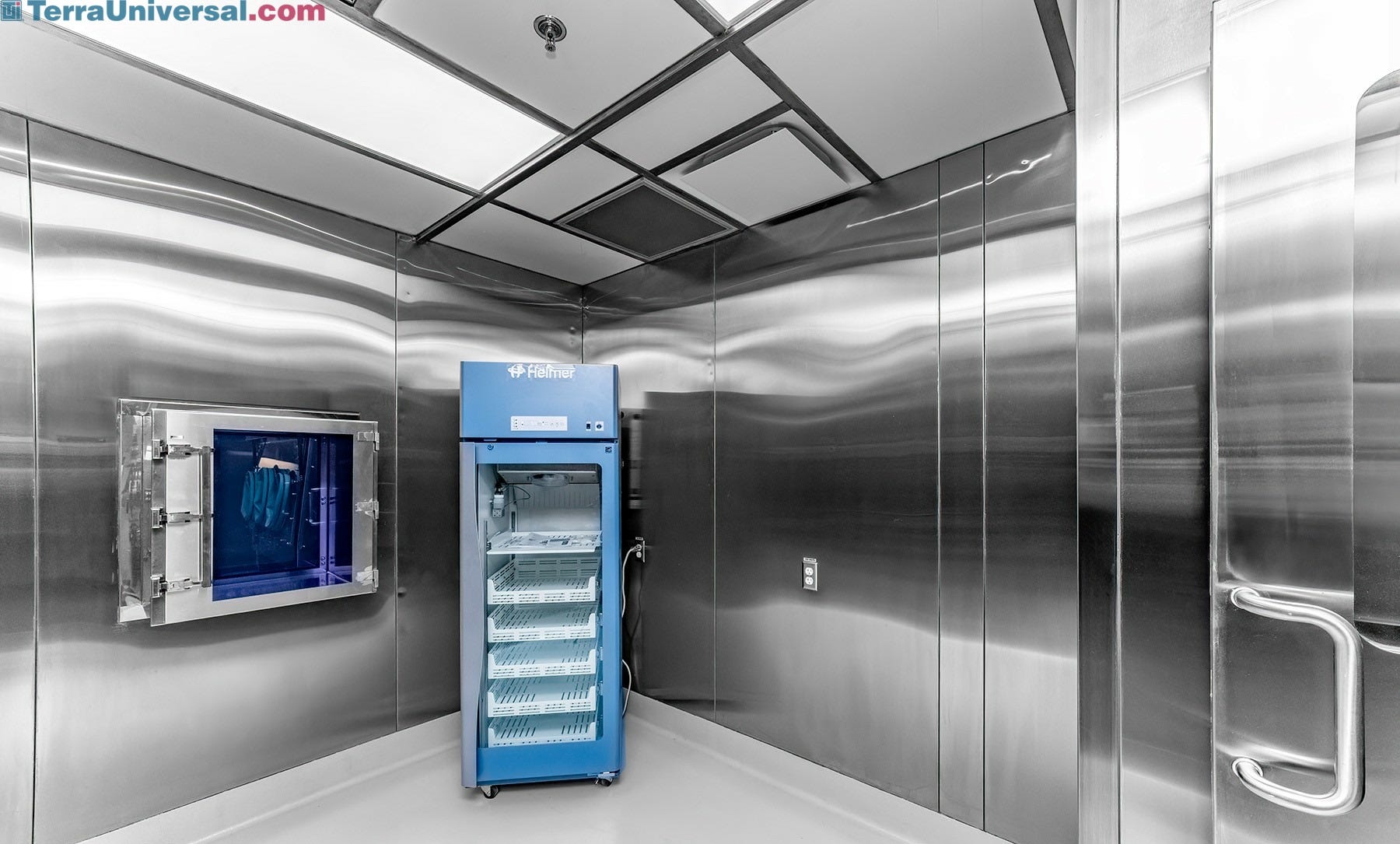
Cleanroom Storage Area with Pass-Through Chamber and Refrigerator
This cleanroom features stainless steel walls and a clean white floor. On the left is a pass-through chamber with a blue-tinted door for contamination control. The room is designed to maintain sterility and controlled conditions for sensitive materials.
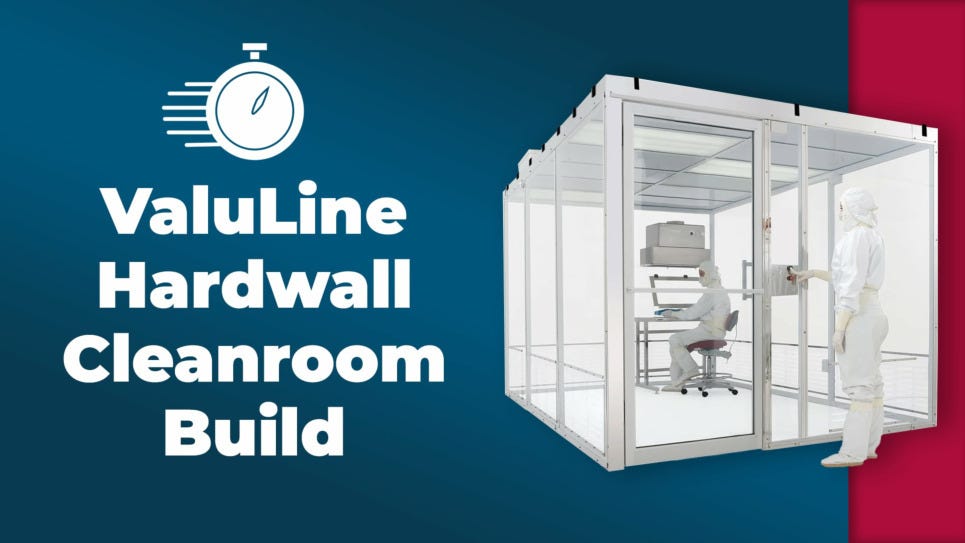
Terra's ValuLine® Hardwall Cleanrooms offer an affordable, quick install solution for conversion of any area into a compliant ISO-grade cleanroom | 6600-PP-11 displayedValuLine® Hardwall Cleanroom BuildTerra's ValuLine® Hardwall Cleanrooms offer an affordable, quick install solution for conversion of any area into a compliant ISO-grade cleanroom. Our prefabricated modular cleanroom designs enable complete installation of the ceiling grid, wall panels, lighting, fan/filter units, and power supply in only a few hours.
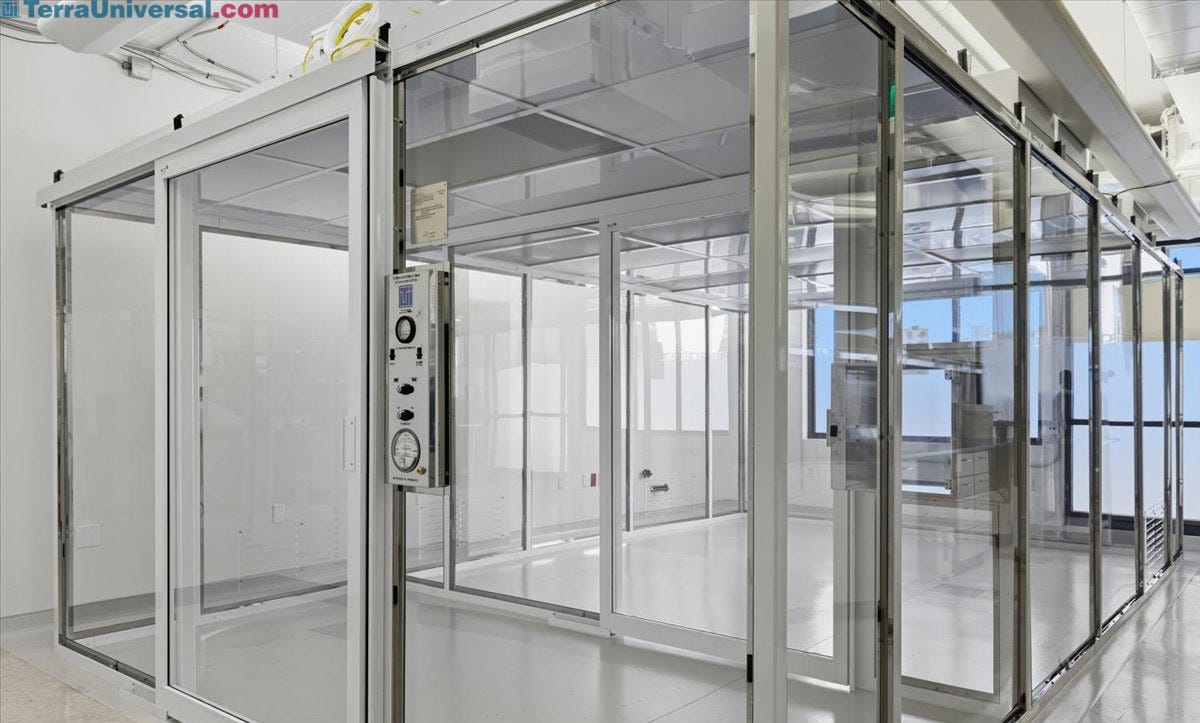
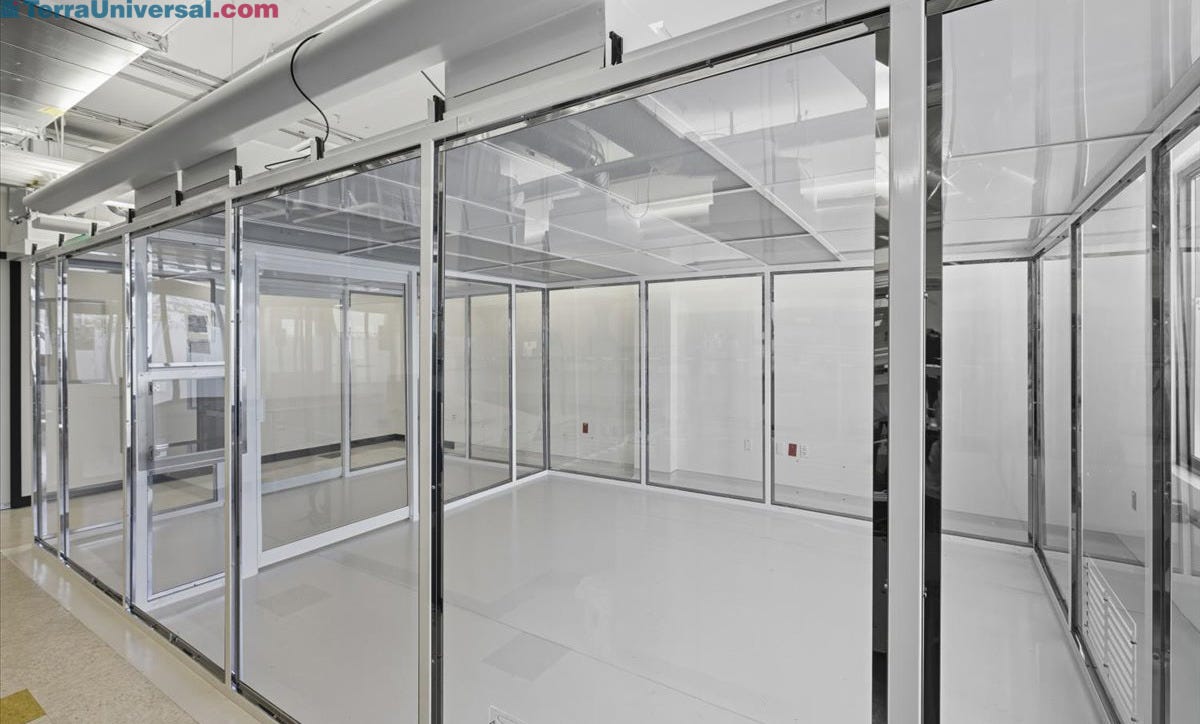
Installed Modular Hardwall Cleanroom With Acrylic Panels & Steel Frame
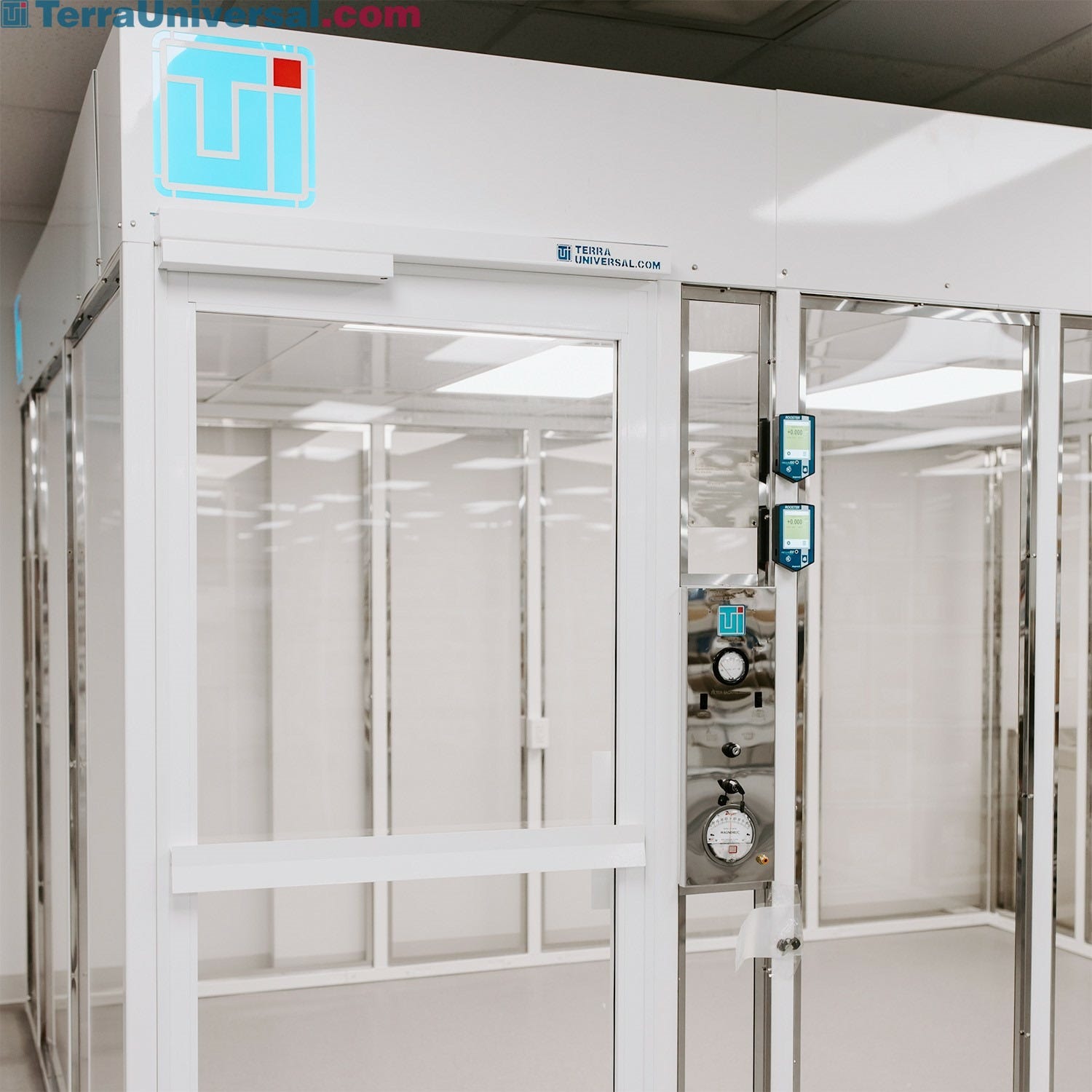
Installed modular hardwall cleanroom features clear acrylic wall panels and a powder-coated steel frame for long-term durability. Includes an integrated control panel with filter alarm and night switch to streamline cleanroom management and reduce energy costs.
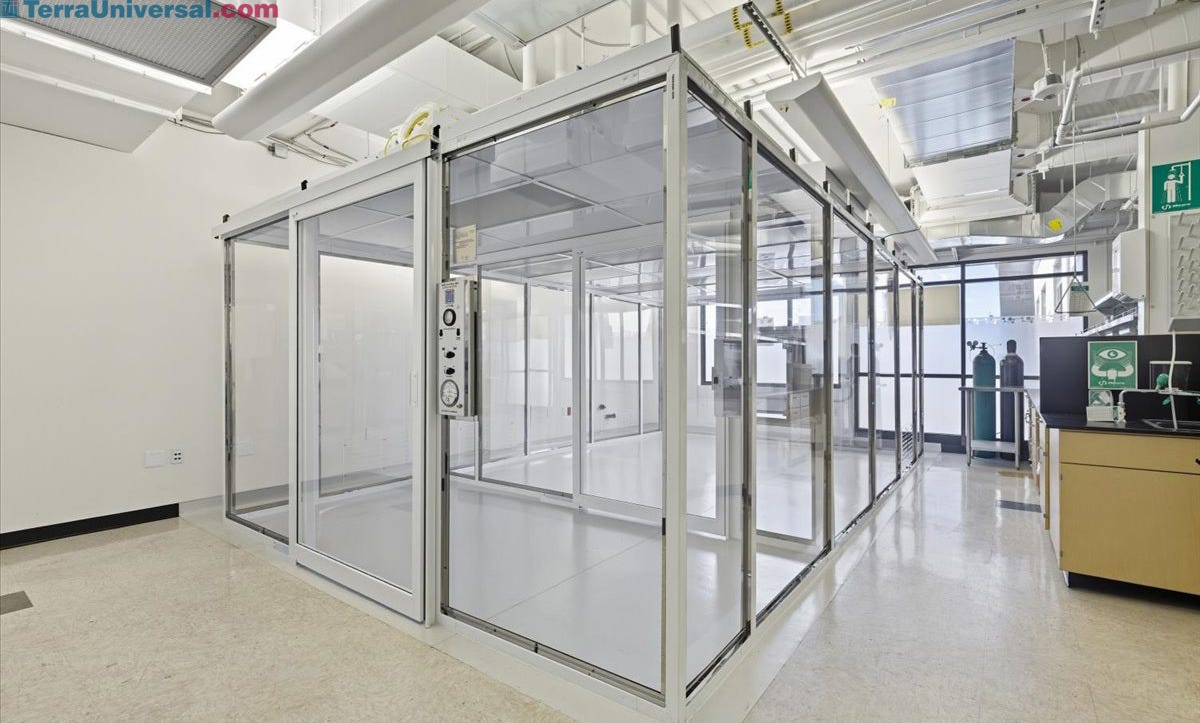
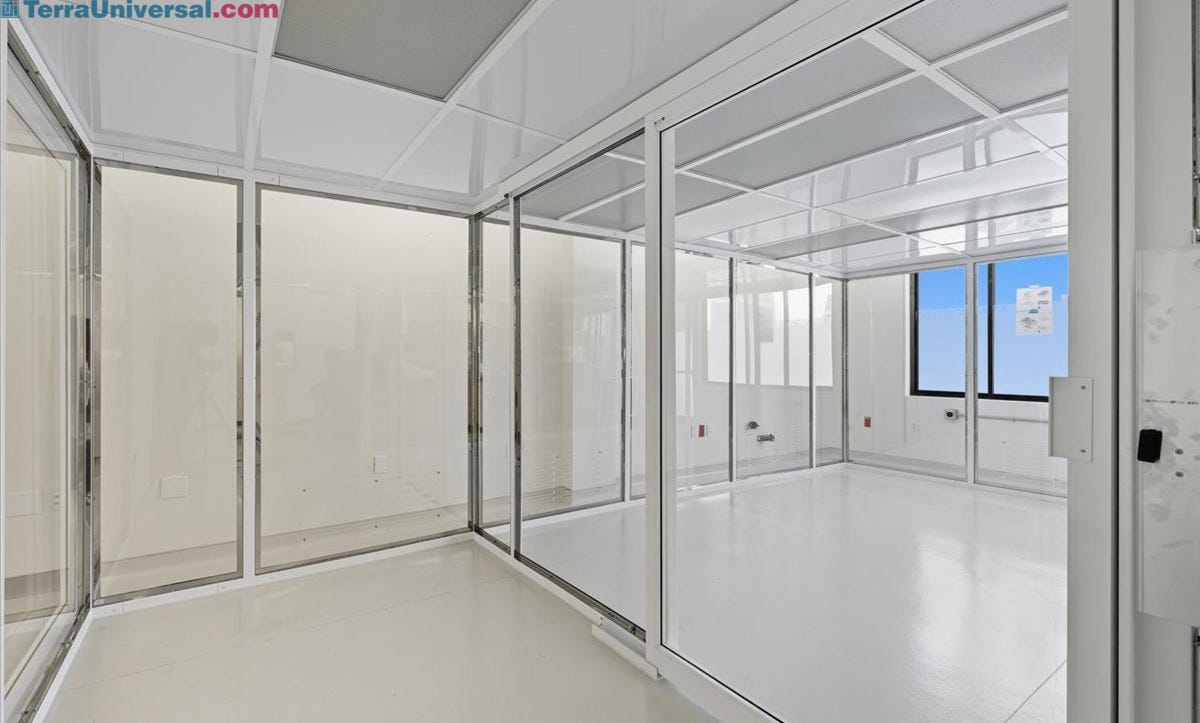
Modular Cleanroom Installed to Prevent Cross-Contamination in Lab Spaces
Modular cleanroom acts as a contamination barrier between lab zones. Clear acrylic walls support visibility while sealed seams and airflow control help maintain clean conditions and prevent cross-contamination.
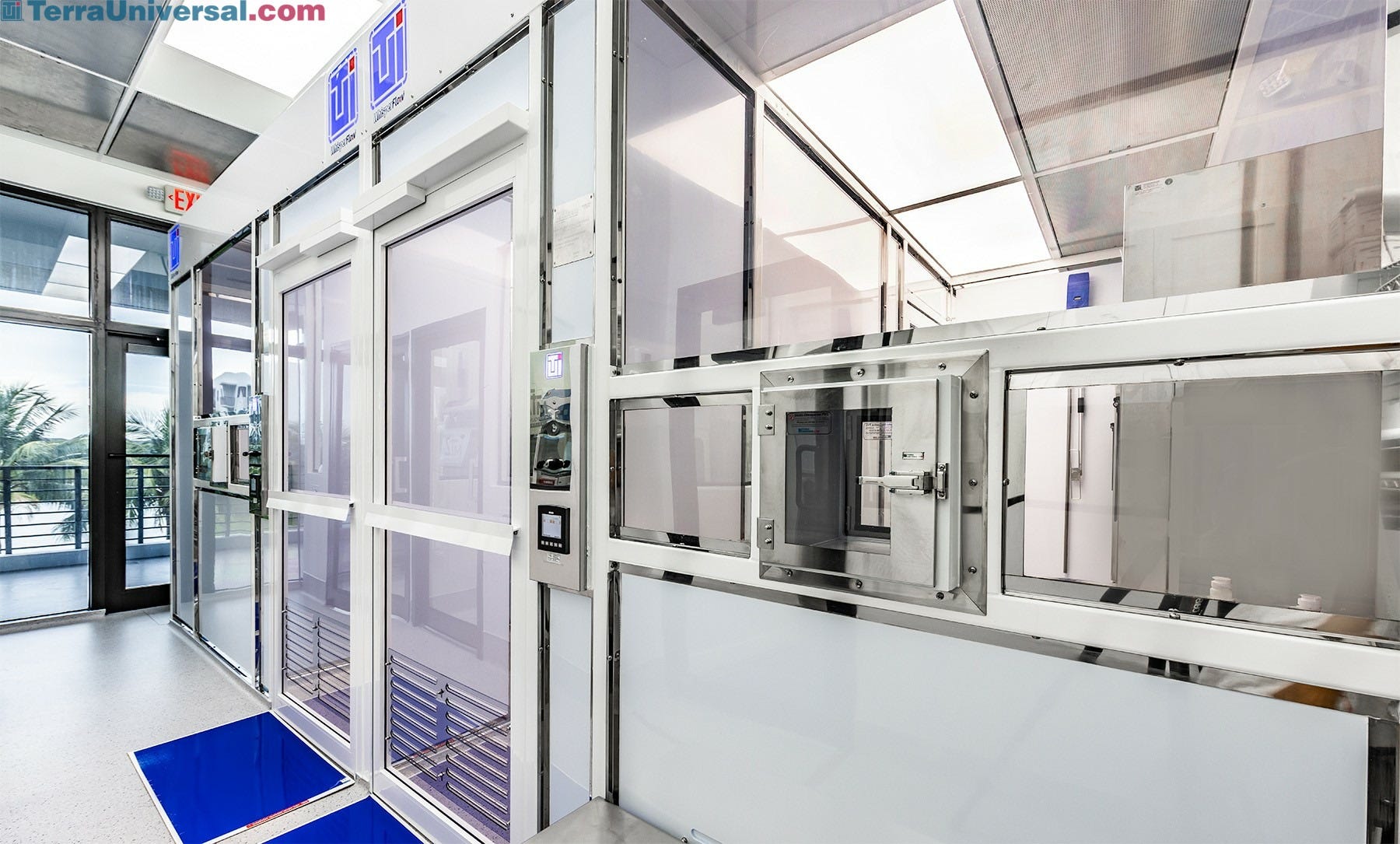
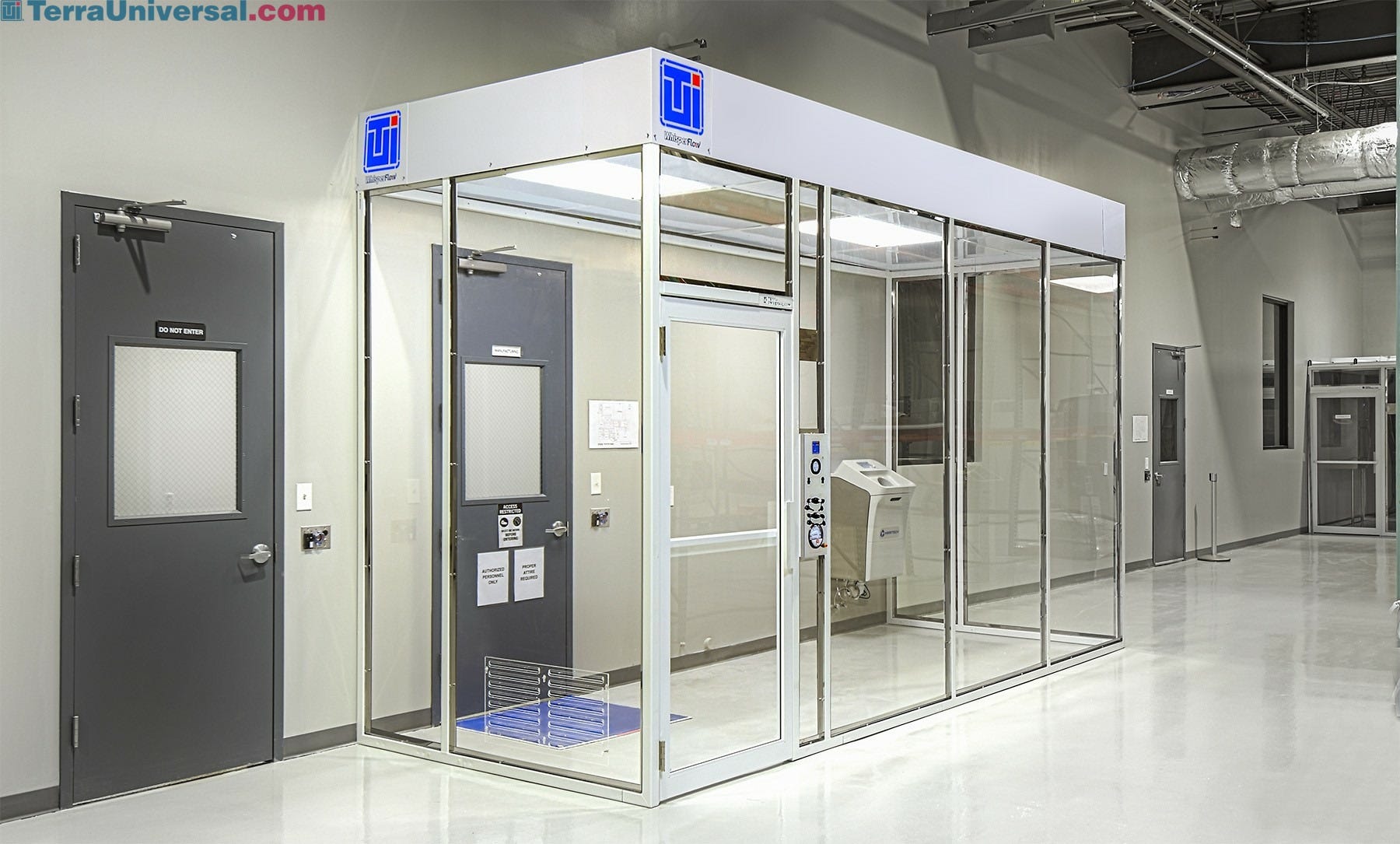
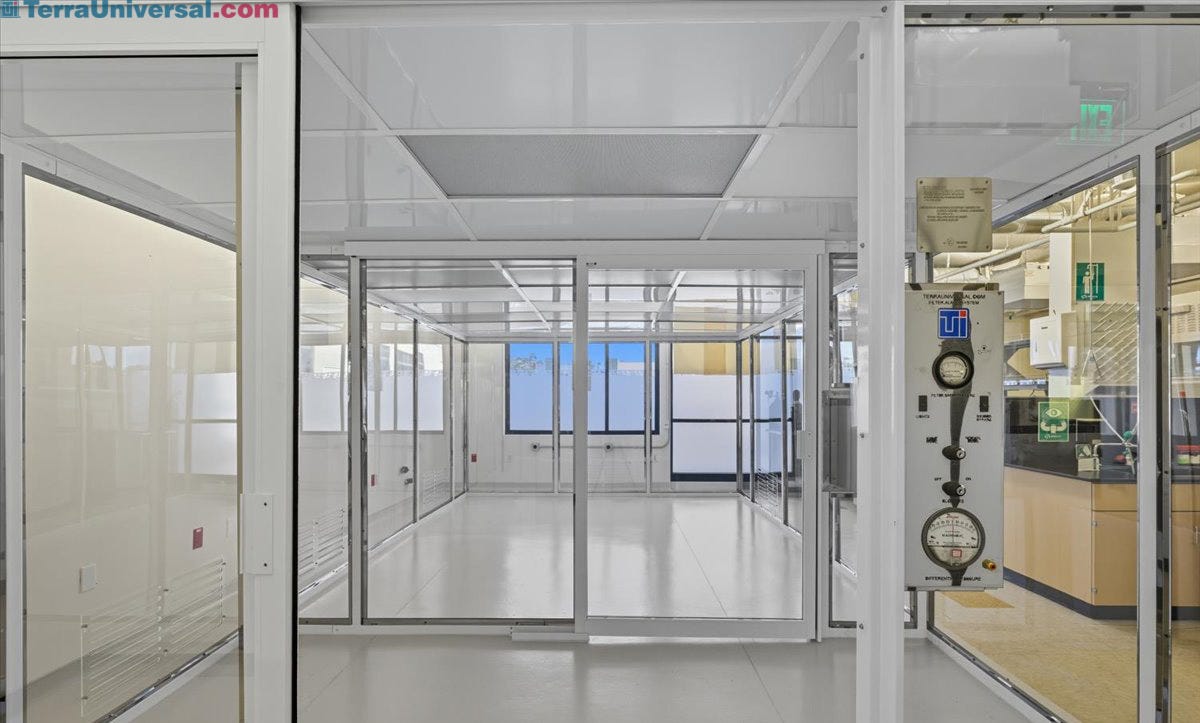
Modular Cleanroom With Clear Panels, Double Door Entry & Control Panel
Modular cleanroom features clear acrylic panels for visibility, double-door entry for easy access, and an integrated control panel for managing airflow and lighting. Designed to isolate critical operations and reduce contamination risks.
Hardwall Modular Cleanroom for Technological Industry
Clear panel steel frame modular hardwall cleanroom includes a Mirror-finish stainless steel trim that installs flush to the interior cleanroom wall for an attractive and easy-to-clean finish.
Hardwall Modular Cleanroom for Technological Industry
Clear acrylic panel modular hardwall cleanroom includes a powder-coated steel ceiling grid that forms 2' x 4' bays for filter/fans, lights or blank panels.
Custom Hardwall Modular Cleanroom for Semiconductor Industry
The cleanroom’s transparent static-dissipative PVC panels provide excellent visibility, enhancing workflow monitoring. These panels also minimize particle buildup and static discharge, ensuring a clean, controlled environment.
Custom Hardwall Modular Cleanroom for Semiconductor Industry
Built with a robust steel frame coated in chemical-resistant powder, this cleanroom withstands harsh cleaning agents and continuous use. The durable construction ensures longevity, even in high-traffic or sterile environments.
Custom Hardwall Modular Cleanroom for Semiconductor Industry
Designed for flexibility, this cleanroom allows for seamless expansion by adding modular wall panels. This scalability accommodates growing operational needs without requiring a full structural overhaul.
Custom Hardwall Modular Cleanroom for Semiconductor Industry
Engineered to meet ISO cleanliness standards, this cleanroom offers customizable airflow configurations. Laminar or turbulent airflow patterns effectively control airborne contaminants, making it suitable for sensitive processes.
Custom Hardwall Modular Cleanroom for Semiconductor Industry
The powder-coated steel frame provides robust structural support, enhancing durability and extending the cleanroom's service life, even under rigorous operational conditions.
Hardwall Cleanroom Installation for Pharmaceutical Applications
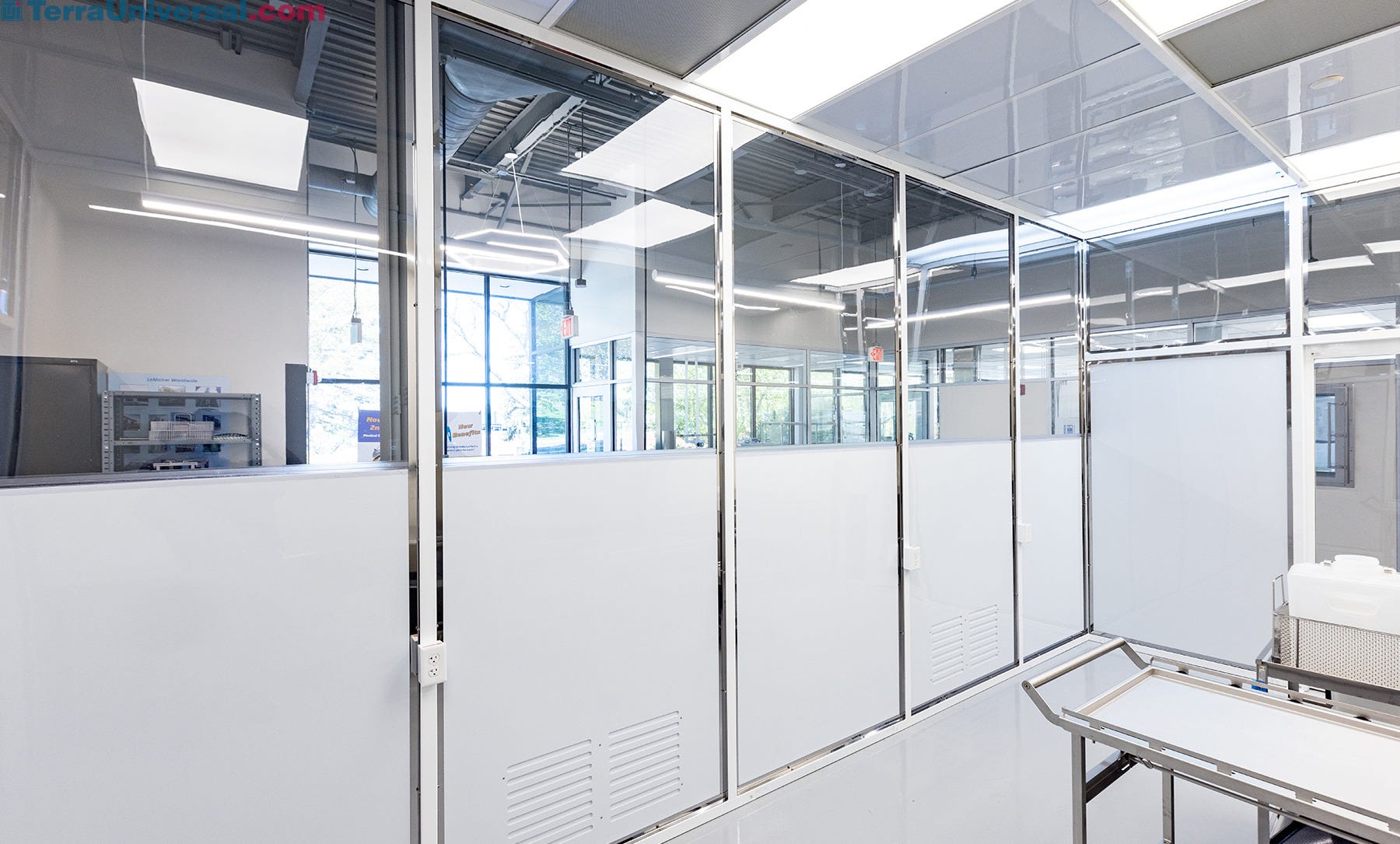
Custom hardwall cleanrooms allow for the doors, frames, and panels to all be made out of the same materials for a consisently level of cleaniness throughout all aspects of the cleanroom.
Hardwall Cleanroom Installation for Pharmaceutical Applications
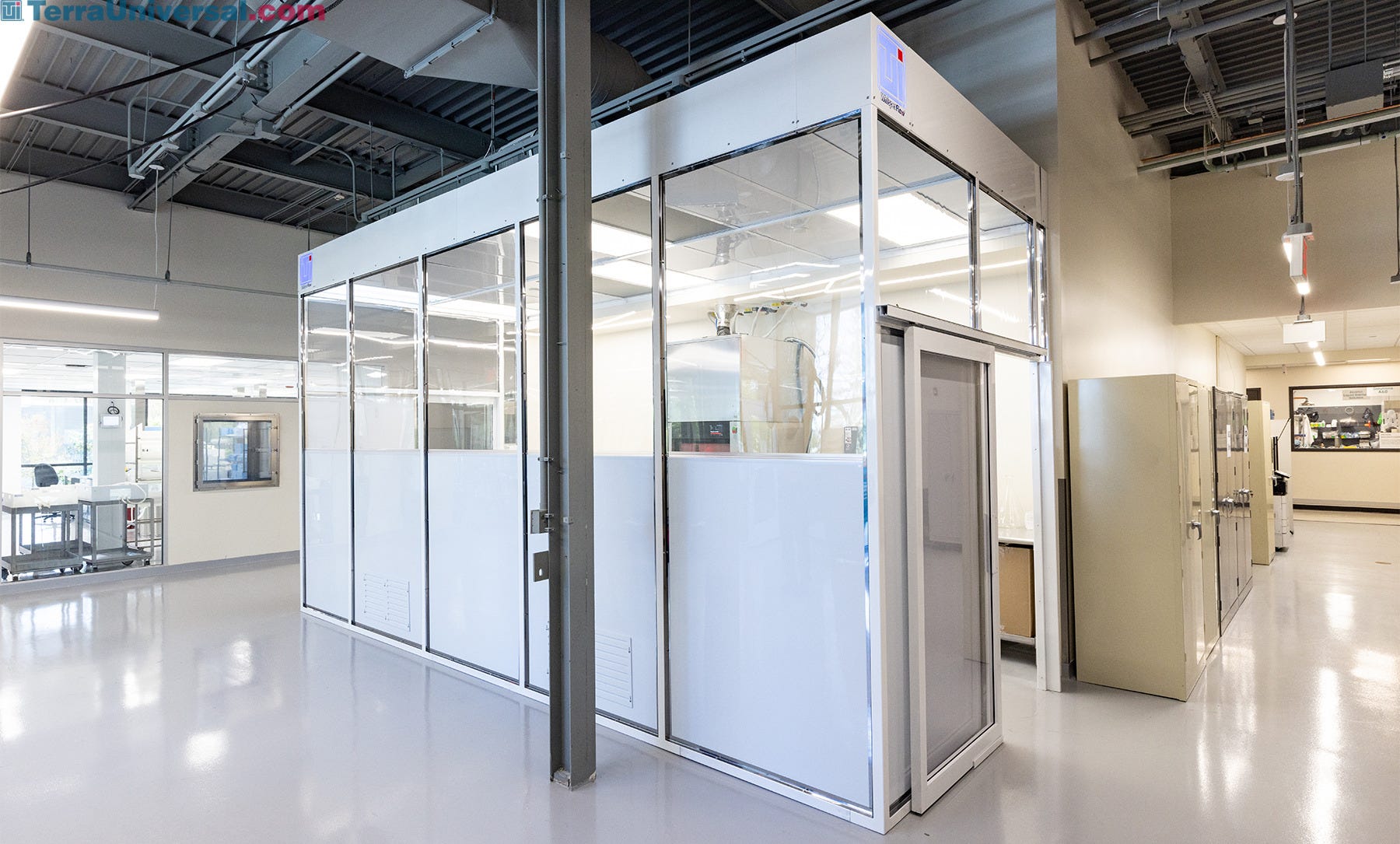
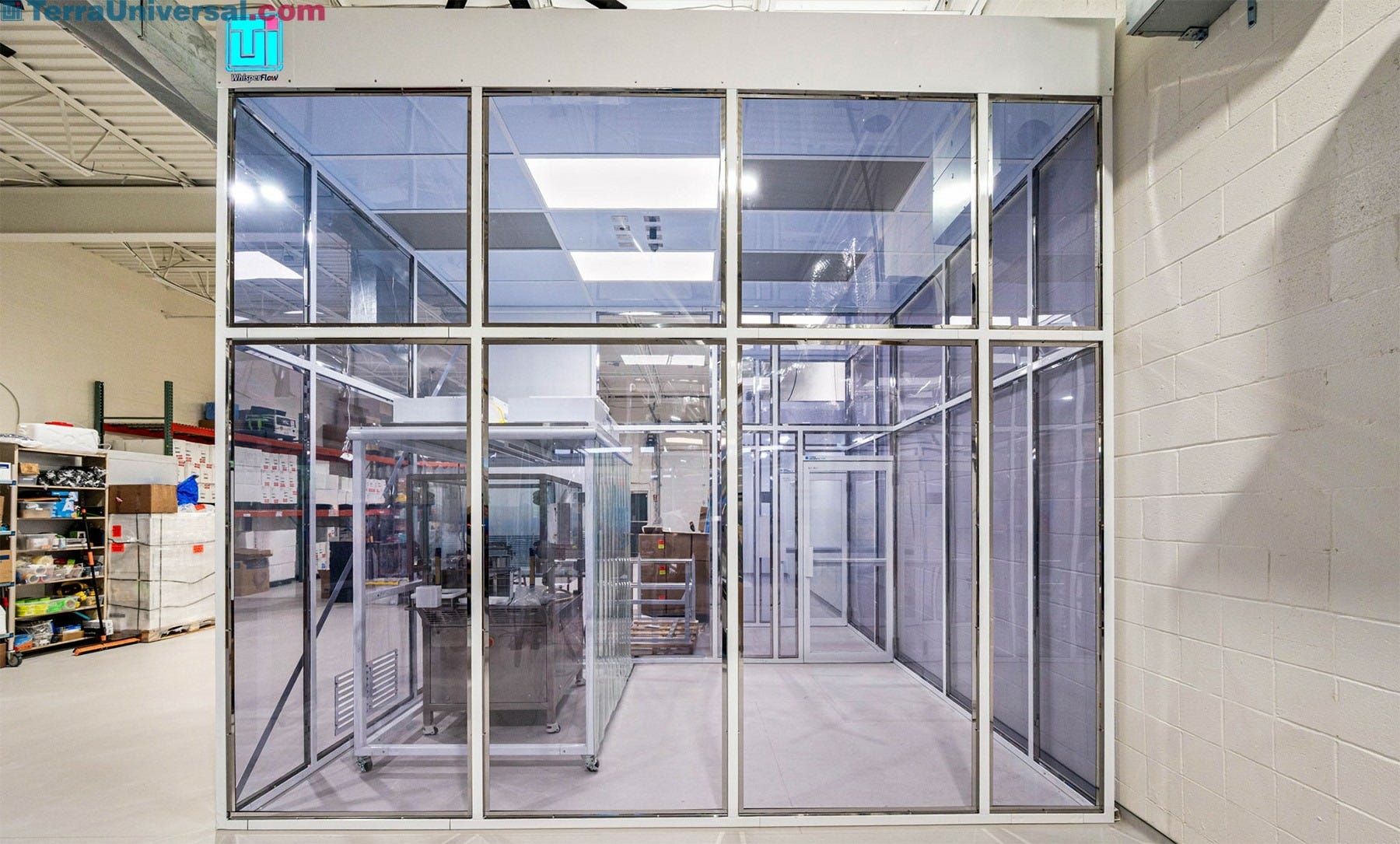
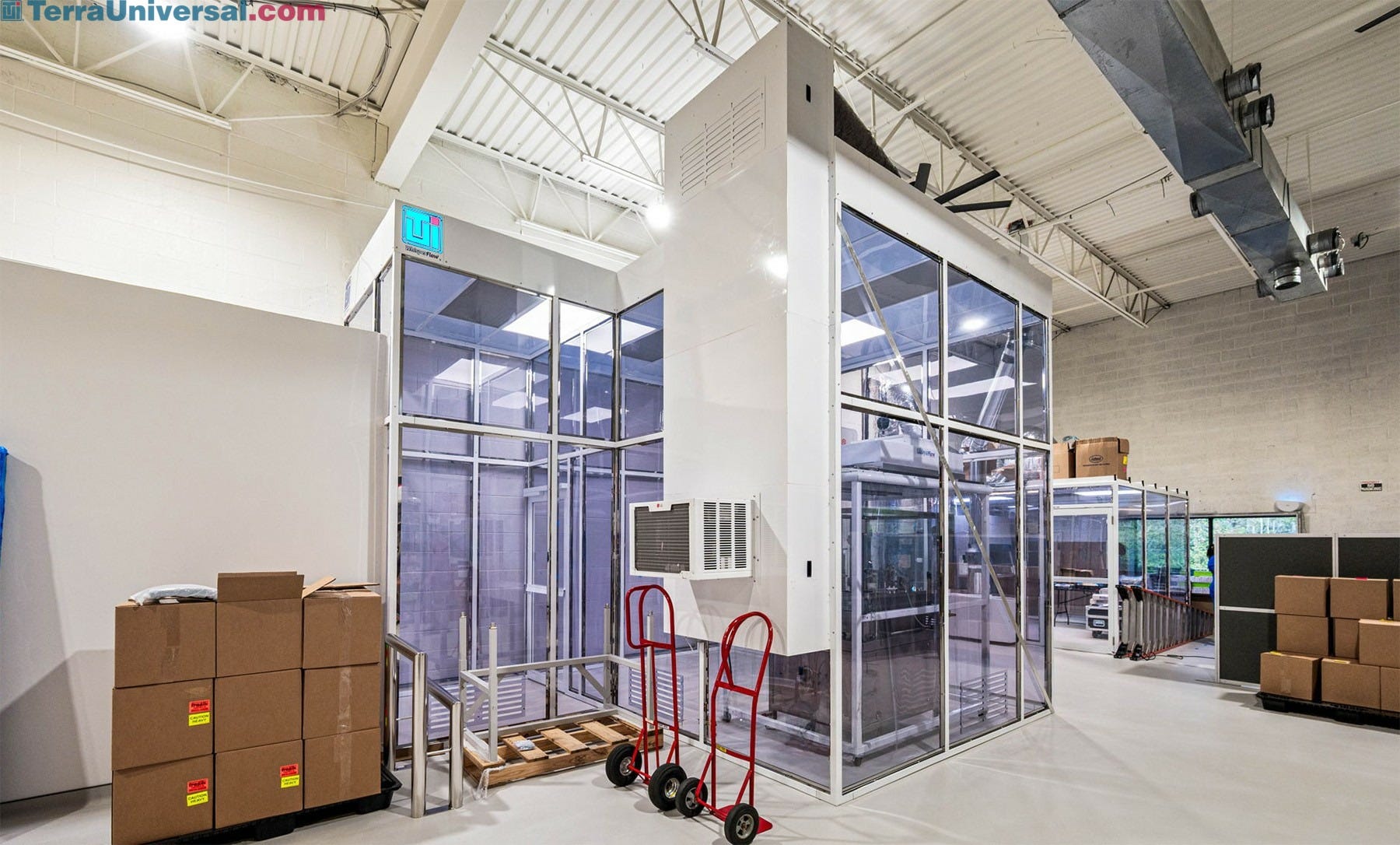
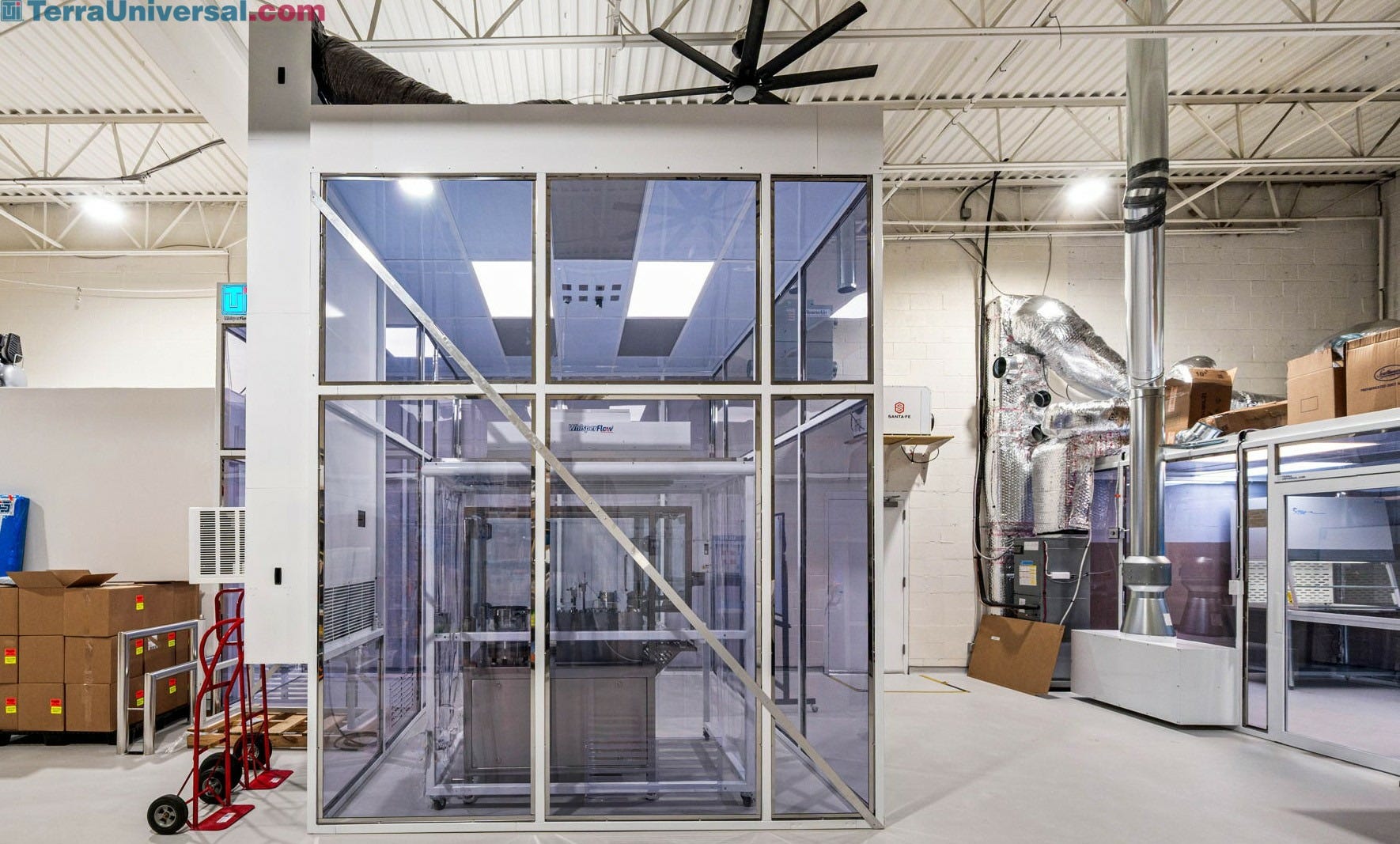
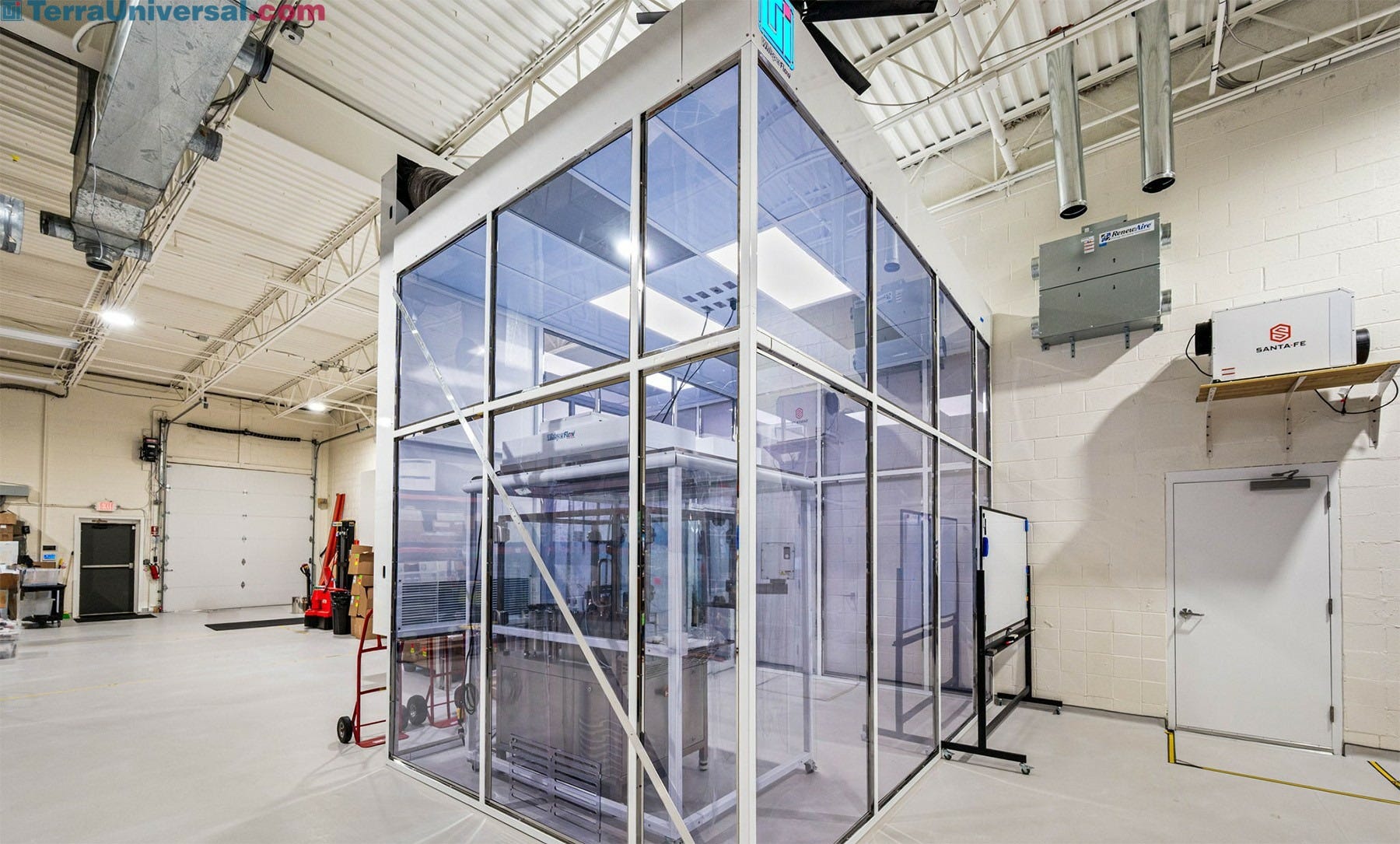
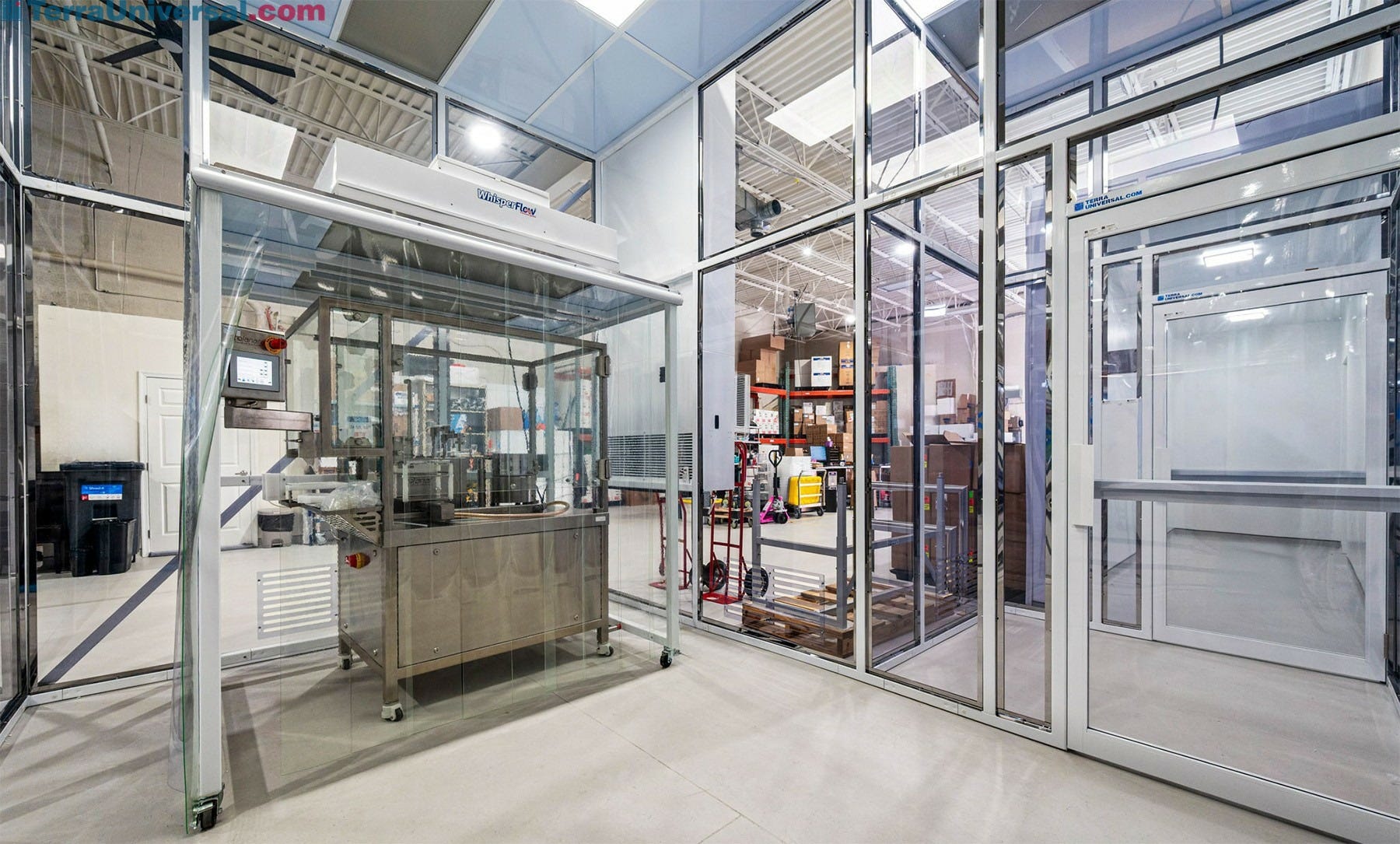
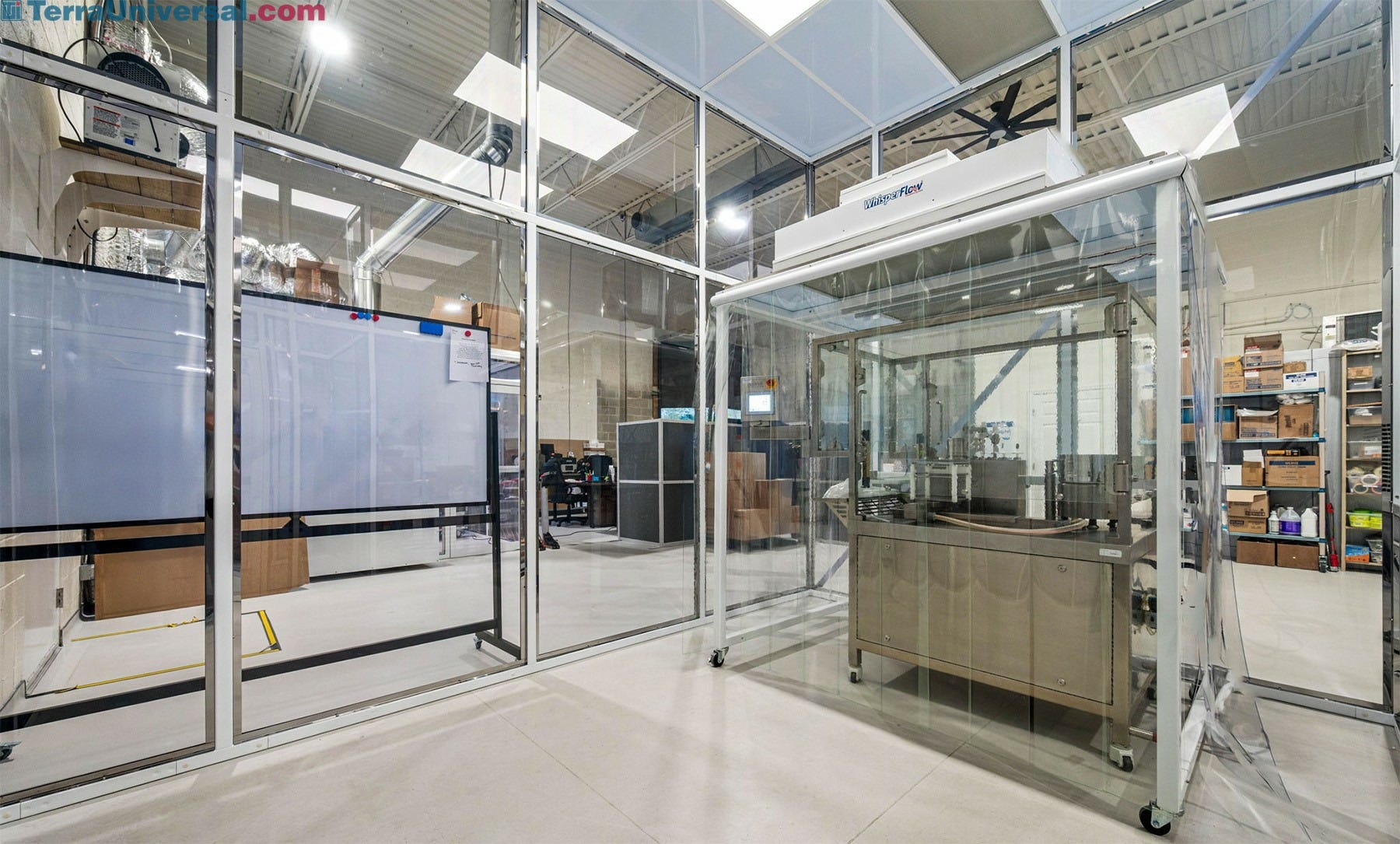
This custom cleanroom insallation allows for safe liquid filling for anaesthetics, which involves the liquid anesthetic being filled into a vaporizer to be converted into a breathable gas for anesthesia delivery.
Hardwall Cleanroom Installation for Pharmaceutical Applications
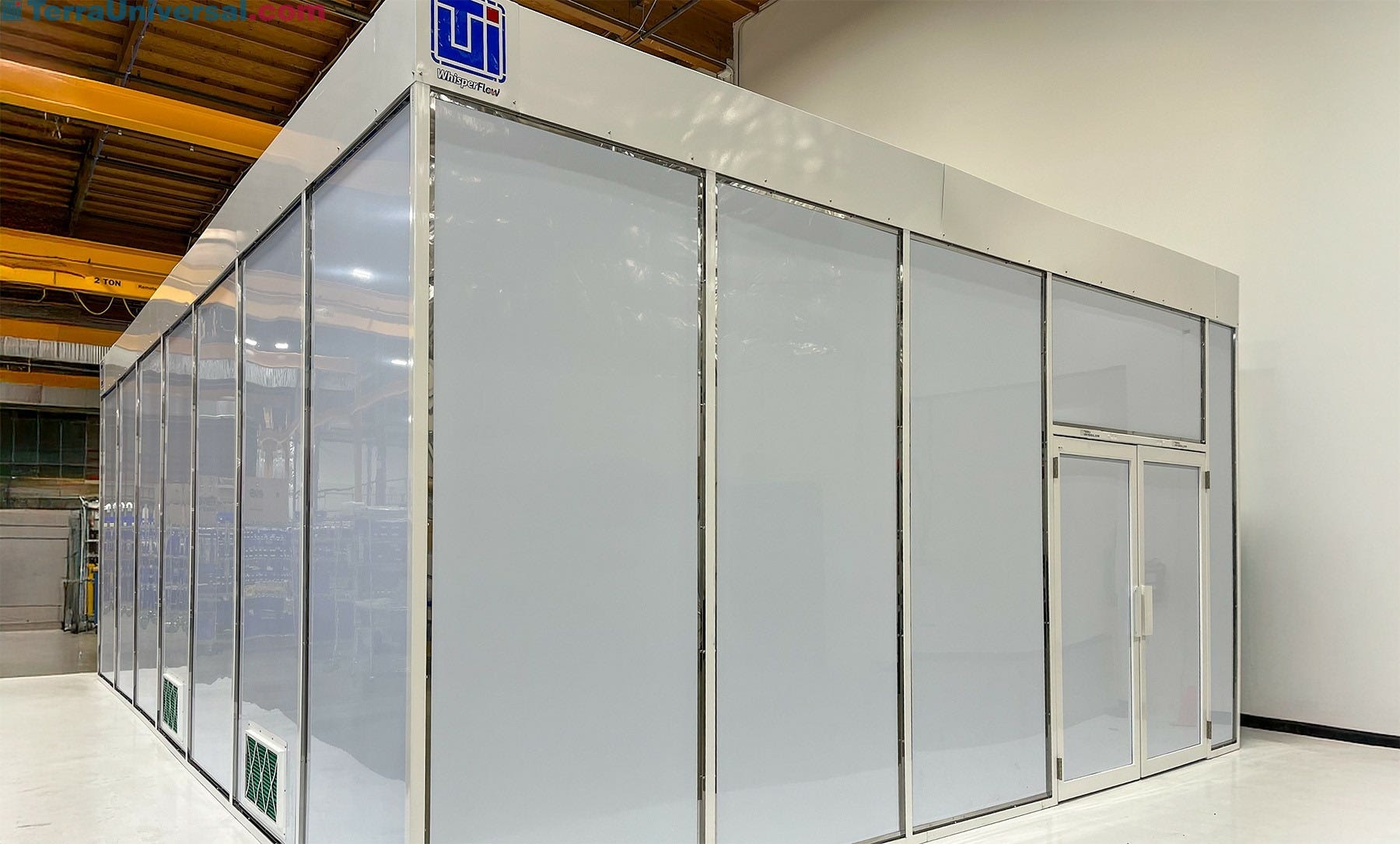
WhisperFlow allows for a quiet operation in cusom cleanrooms by reducing distracting background noise. At 90 ft/min output, units measure under 50 dB from only 1 ft away (roughly 75% quieter than 70dB).
ValuLine® Hardwall Cleanroom for Technological Industry
Terra's ValuLine® static dissipative PVC paneled cleanrooms feature the same cleanliness, strength and durability of powder-coated steel frames, the same stainless steel wall trim and modularity as Terra's Standard cleanrooms.
Custom 36' W x 30' D hardwall cleanroom, equipped with HEPA fan filter units and LED panels. Constructed of SDPVC and polypropylene panels and a powder-coated steel frame.
Custom Cleanroom Install: SDPVC and Polypropylene Panels
Double-door entrance of custom cleanroom, with SDPVC windows and a powder-coated steel frame. Cleanroom walls composed of SDPVC and polypropylene panels.
ISO 7 ValuLine® pre-configured softwall cleanroom for quick, compliant, assembly; Customize ISO rating for cleanroom components to ensure entire cleanroom is up to production cleanliness standards.
Expanded softwall cleanroom formed by combining two 12'W x 12'D cleanrooms. Combine pre-configured standard cleanrooms to create cleanroom work space sizable to any application.
Pre-configured ValuLine® cleanroom for quick assembly;Terra's ValuLine® products offer the same high-quality cleanroom standards without compromising an affordable price.
Softwall modular cleanroom for manufacturing in precision die-cutting industry. Pre-drilled, pre-kitted components for easy and quick industry-ready installation.
Extra Tall Class 1,000 Modular Cleanroom for Electronics Assembly
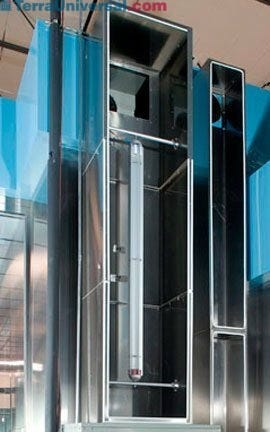
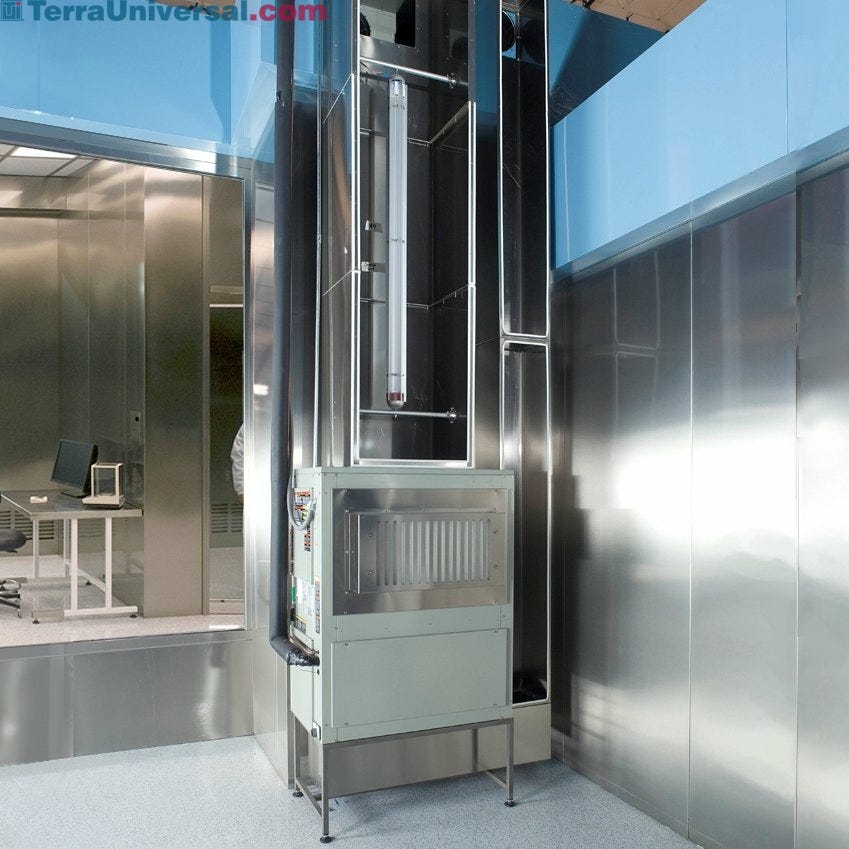
This extra-tall modular cleanroom features cascading cleanliness classifications for each room ranging from Class 100,000 to Class 1,000. The vertical air returns mounted outside the room recirculate air to improve efficiency and lower operating costs.
Large Multi-Suite Modular Hardwall Cleanroom for Precision Coil Manufacturing
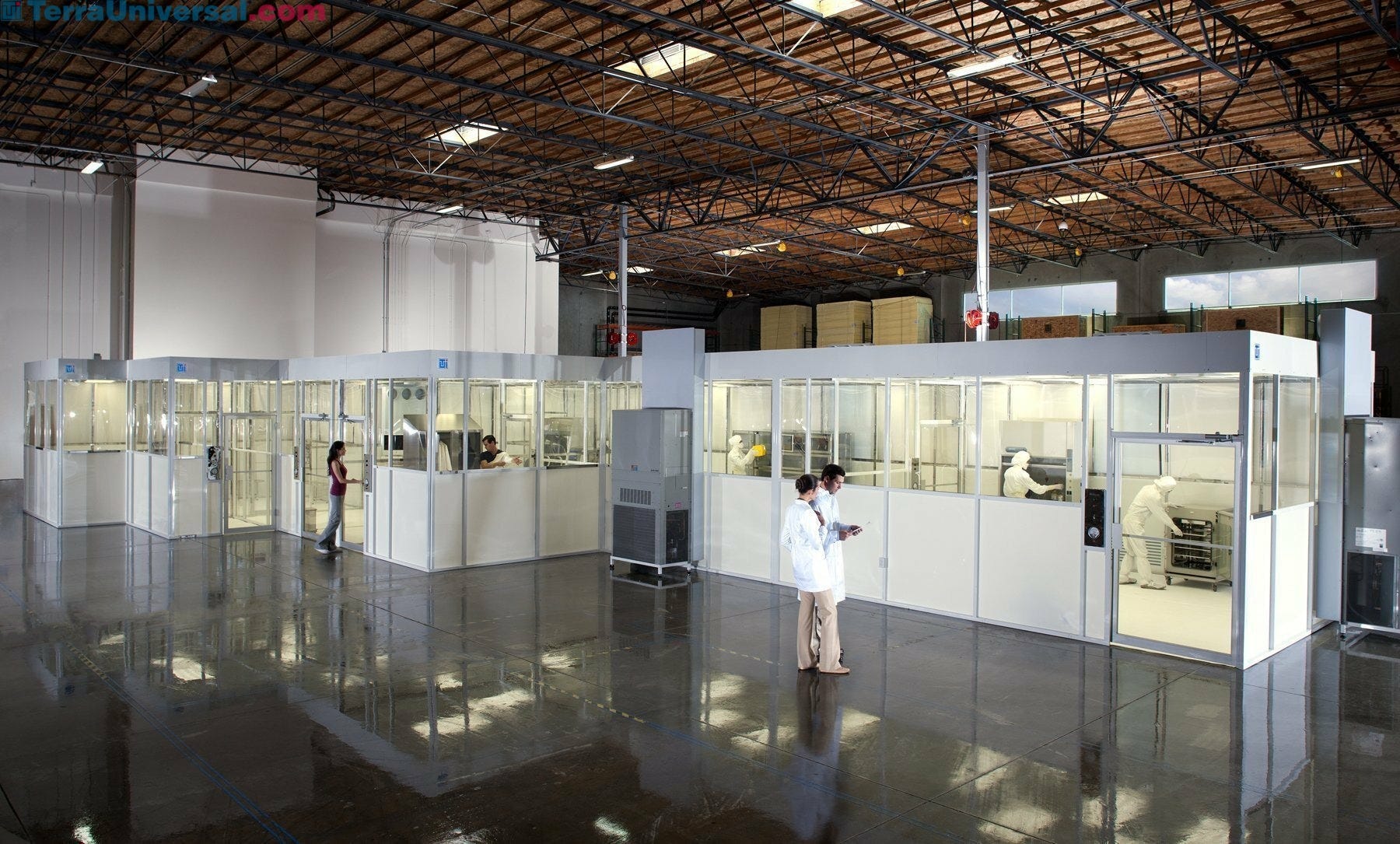
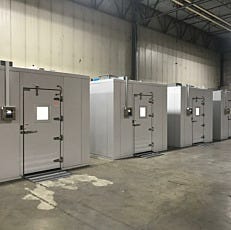
Terra’s modular cleanroom design is ideal for multiple cleanroom suites with cascading pressures and ISO cleanliness levels. The rigid free-standing steel frame allows for tall, spacious interiors to move and position large equipment within the cleanroom.
Over the past 5 years, Terra has manufactured nearly 1,500 UL-approved cleanrooms at industry-leading build times. Terra’s versatile modular cleanroom frame and panel designs adapt to any floor plan requirement. The UL-rated and scalable plug-and-play power distribution system further simplifies installment of FFU's and lights to cleanrooms of any size.
Large modular cleanrooms of this size have many benefits: flexibility for reorientation or expansion, lower cost, and more construction material choices (most brick-and-mortar rooms are composed of dry wall).
Extra Tall Multi-Suite Modular Cleanroom for Electronics Assembly
Terra’s versatile modular cleanroom frame and panel designs adapt to any floor plan requirement. The UL-rated and scalable plug-and-play power distribution system further simplifies installment of FFU's and lights to cleanrooms of any size.
Custom Hardwall Modular Cleanroom for Military Applications
Modular cleanroom offers fully customizable dimensions to meet your facility’s needs. Optional features such as airflow controls, pressure gauges, and raised flooring help optimize environmental conditions for enhanced contamination control.
Custom Hardwall Modular Cleanroom for Military Applications
Designed for critical applications, this cleanroom includes adjustable exhaust vents, allowing precise control over differential room pressure. The modular design supports quick panel installation and seamless scalability for future modifications.
Custom Hardwall Modular Cleanroom for Military Applications
This modular hardwall cleanroom includes mirror-finish stainless steel trim strips, creating a sleek, easy-to-clean exterior. The clear acrylic panels offer full visibility, while the powder-coated steel frame resists corrosion for long-term performance.
Custom Hardwall Modular Cleanroom for Military Applications
Modular hardwall cleanroom features clear acrylic panels and a powder-coated steel frame, providing full visibility and long-lasting durability. Ideal for ISO 5-8 environments, it offers easy customization to meet your specific cleanroom requirements.
Custom Hardwall Modular Cleanroom for Military Applications
Modular cleanroom is available in ISO 5-8 certified designs, ensuring compliance with industry cleanliness standards. The custom-configured layout provides flexibility to accommodate various applications, while the durable steel frame ensures stability and longevity.
ValuLine® Softwall Cleanroom Installation with Gowning Room
ValuLine® softwall cleanroom installation with dedicated gowning room provides effective particulate control. The economical design features a powder-coated steel structure and flexible curtain walls for rapid installation and easy reconfiguration.
ValuLine® Softwall Cleanroom Installation with Gowning Room
ValuLine® softwall cleanroom installation demonstrates cost-effective contamination control with a dedicated gowning area. The modular design with powder-coated steel frame installs rapidly and allows for future reconfiguration while maintaining ISO compliance.
ValuLine® Softwall Cleanroom Installation with Gowning Room
ValuLine® softwall cleanroom installation offers ISO-compliant particle control with an integrated gowning area. The system’s powder-coated steel structure and static-dissipative curtains provide an economical alternative to traditional hardwall construction.
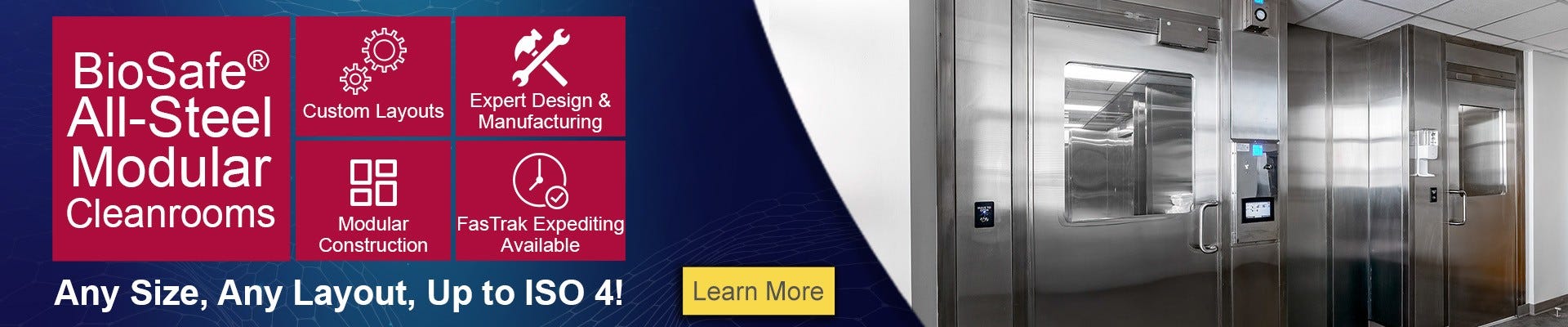
BioSafe steel cleanrooms meet critical ISO 5 and aseptic requirements, featuring coved corners and smooth internal surfaces for easy cleaning and sterilization
Stainless steel BioSafe® cleanrooms feature smooth interior surfaces for easy cleaning and chemical-resistant materials that stand up to harsh biocides; complex floor plans meet your workflow requirements.
Stainless Steel Air Showers: Standard and Custom Designs
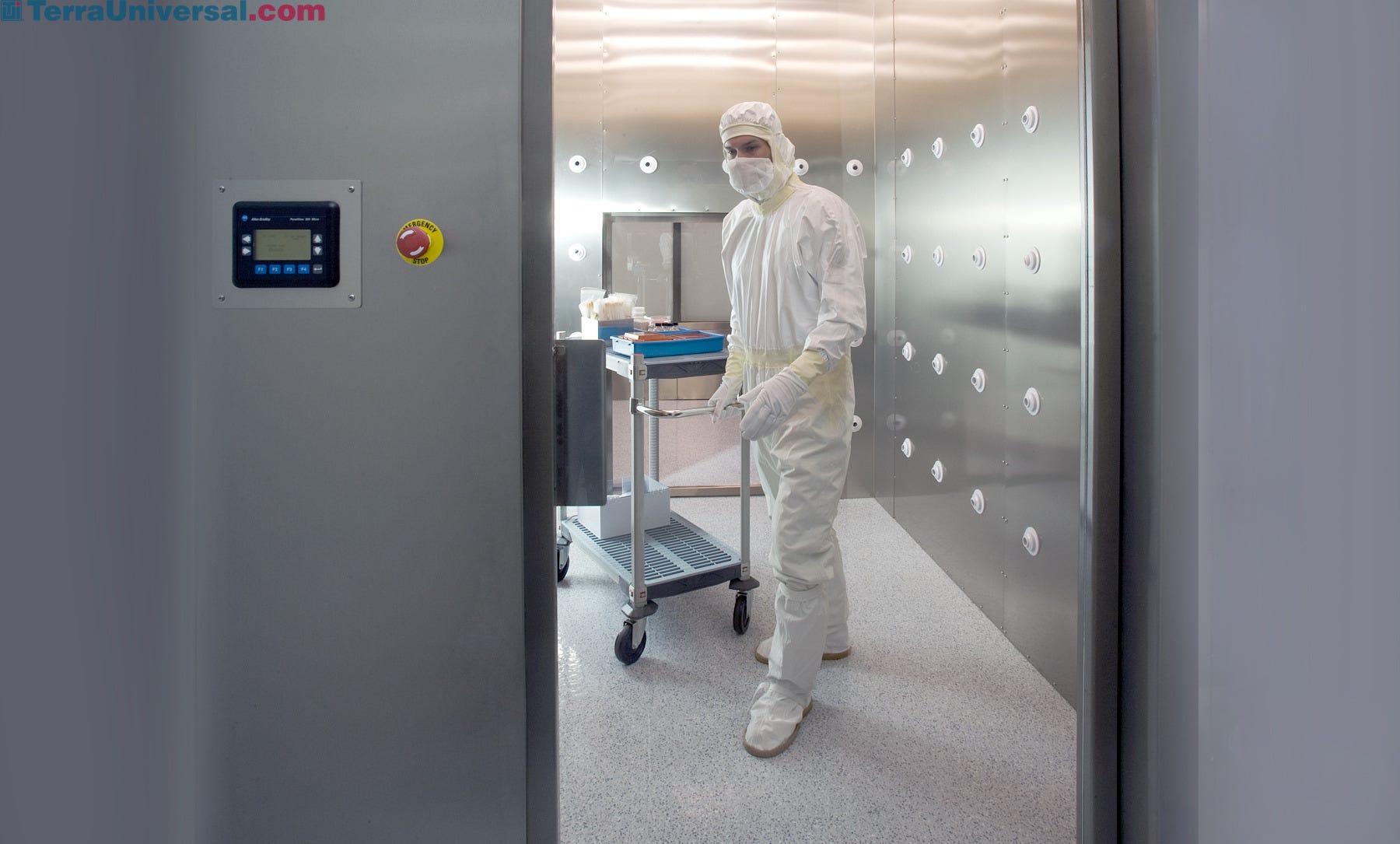
Available in stainless or powder-coated steel, air showers direct a high-velocity flow of HEPA-filtered air from walls to dislodge particles; custom configurations like this T-shaped floor plan accommodate unique requirements.
UV-C sterilization modules can be installed in the ducting of a recirculating air flow configuration to reduce the bio-burden in an aseptic BioSafe cleanroom.
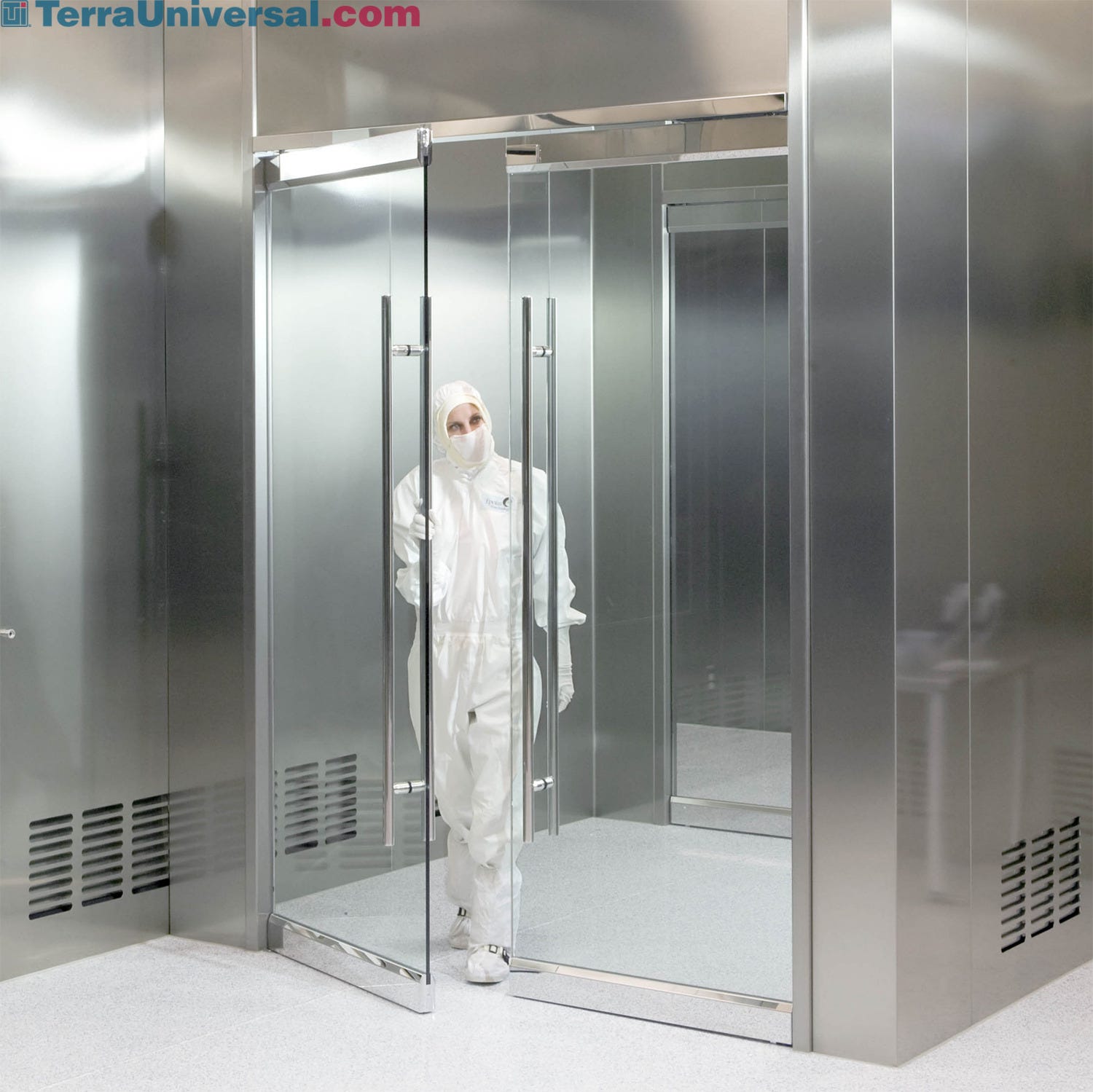
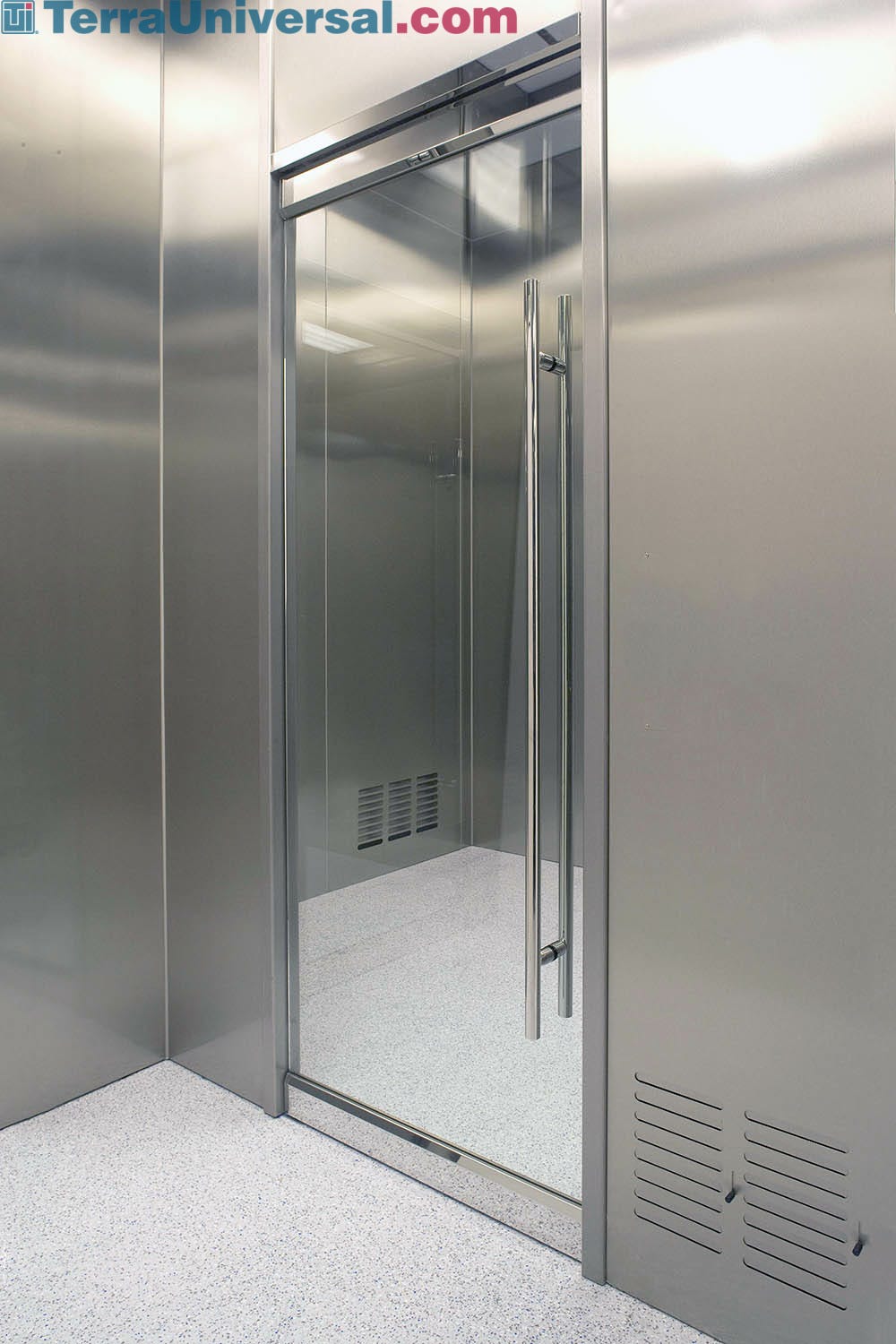
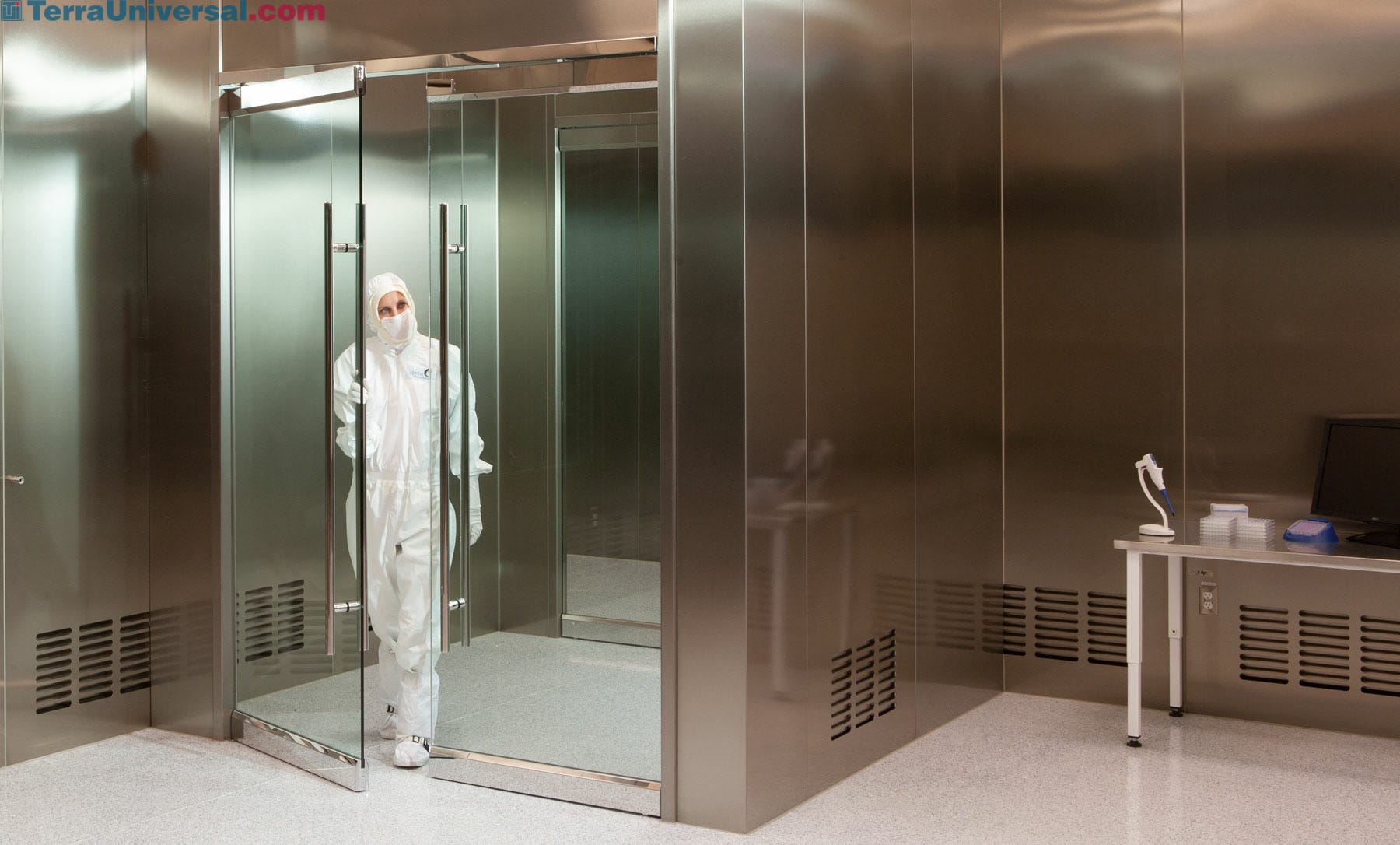
Frameless All-Glass Cleanroom Door System for Bio-Tech Cleanroom
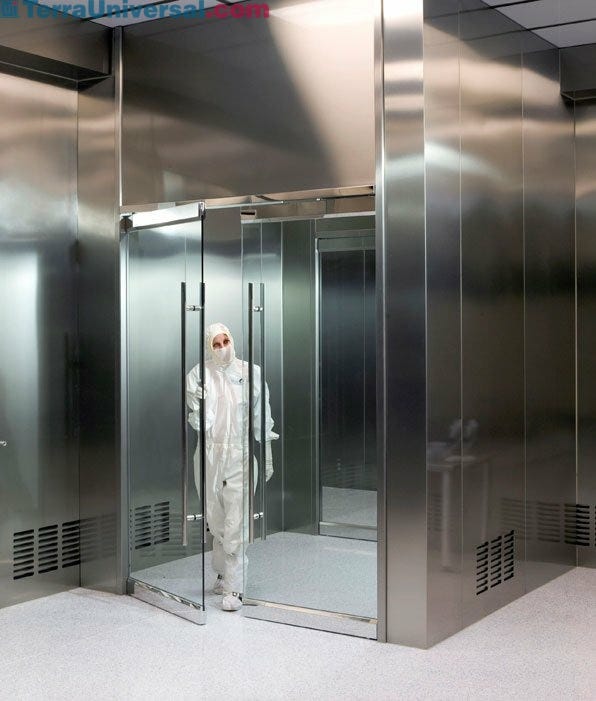
Frameless all-glass cleanroom doors minimize cracks and crevices where particles and germs can collect, making them suitable for labs with strict cleaning protocols, such as bio-tech cleanrooms.
Easily Install to Modular Cleanrooms or Traditional Brick-and-Mortar Rooms
Frameless all-glass cleanroom doors are configured to easily install to either Terra’s modular cleanrooms or traditional brick-and-mortar ("stick built") rooms. The Pre-hung design includes a stainless steel frame to support the door system, plus concealed over-head door closers to minimize cross-contamination. The tempered glass doors include powerful stainless steel door rails and stainless steel ladder pull handles for a sleek finish.
Double-wall steel panels form the smooth interior surfaces of BioSafe clean rooms. Low bio-burden construction material won't produce contaminants during sterilization.
All-steel BioSafe cleanrooms withstand heavy use in high-volume facilities, combining durability with resistance to cleaning agents. Stainless steel construction resists disinfectants, won't produce contaminants during sterilization.
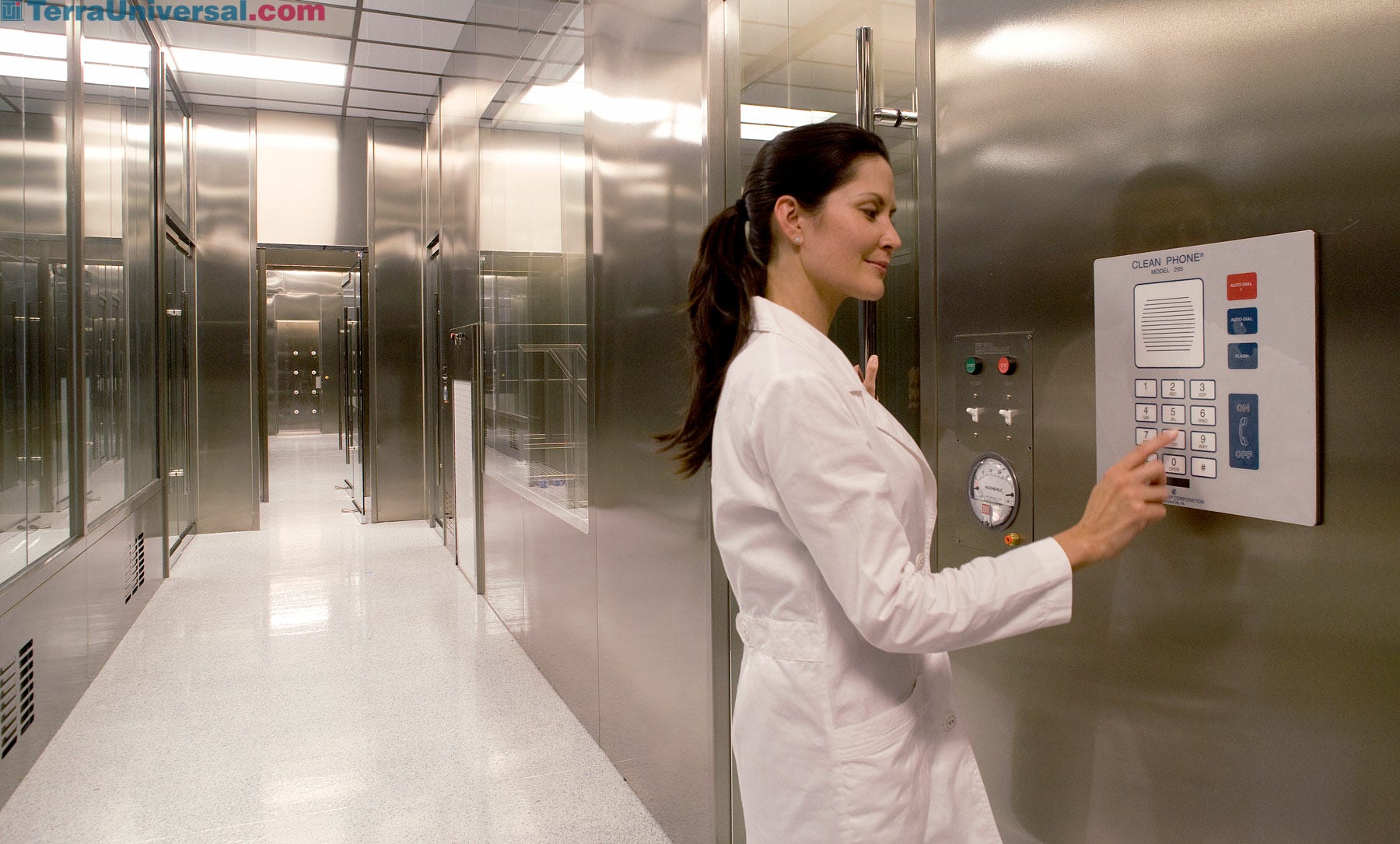
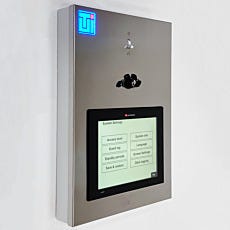
BioSafe Stainless Steel Cleanroom Corridor with Custom Intercom
The double-wall design of the all-steel BioSafe cleanroom allows flush-mounting of optional components (such as control panels) for easy cleaning. Stainless steel wall panels resist corrosion and degradation.
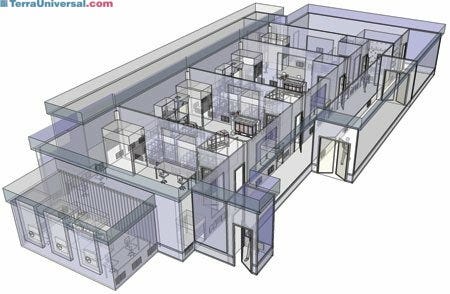
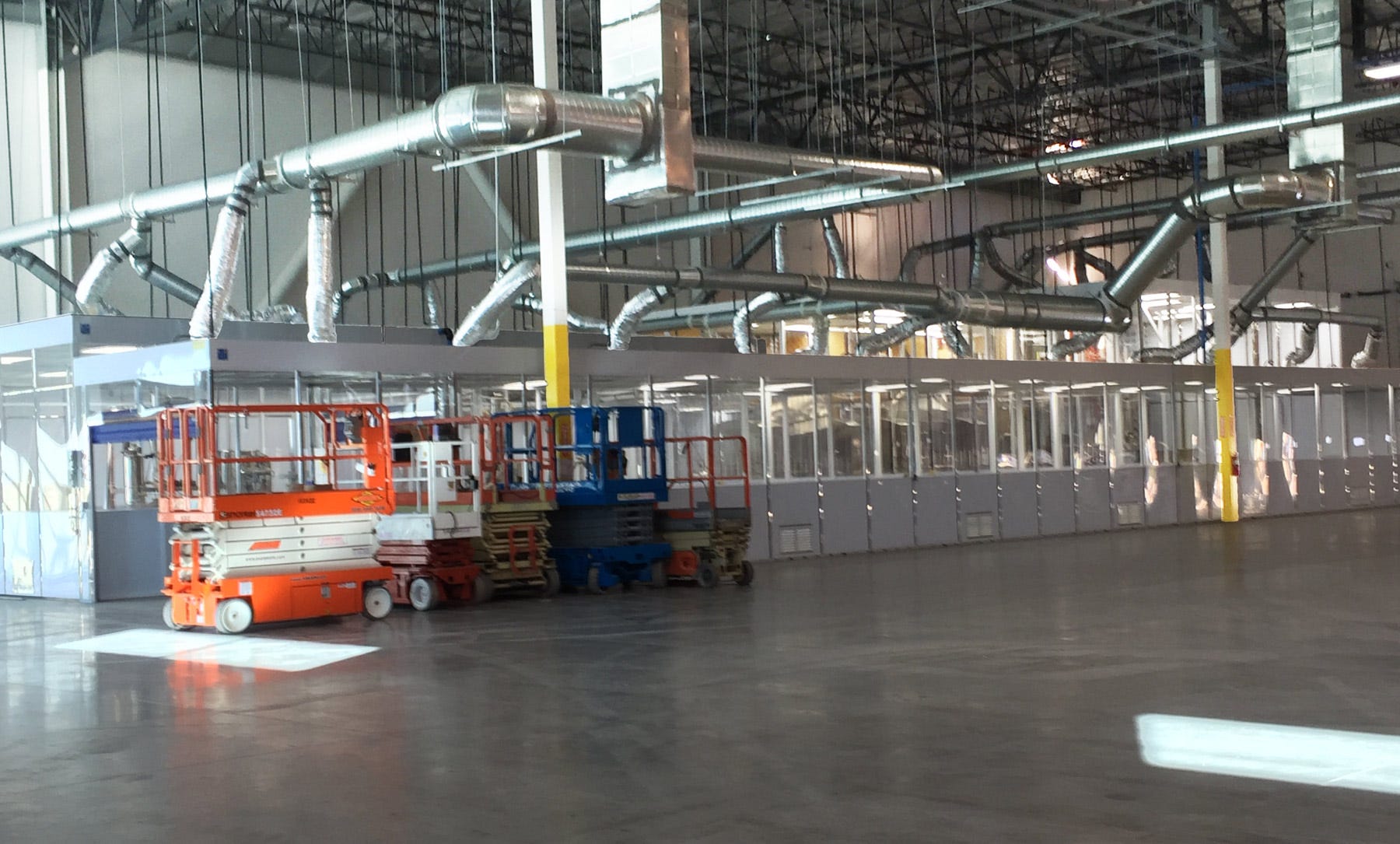
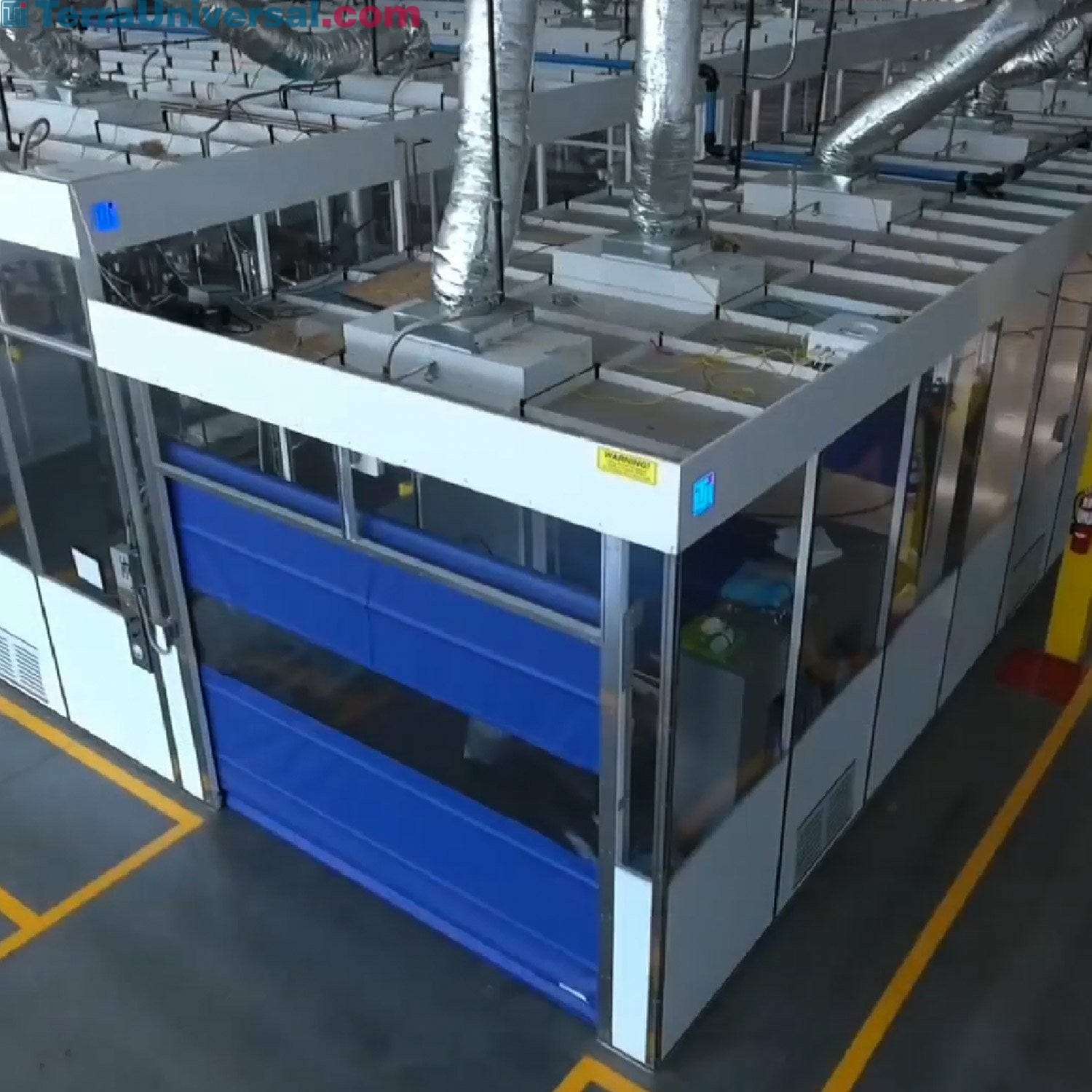
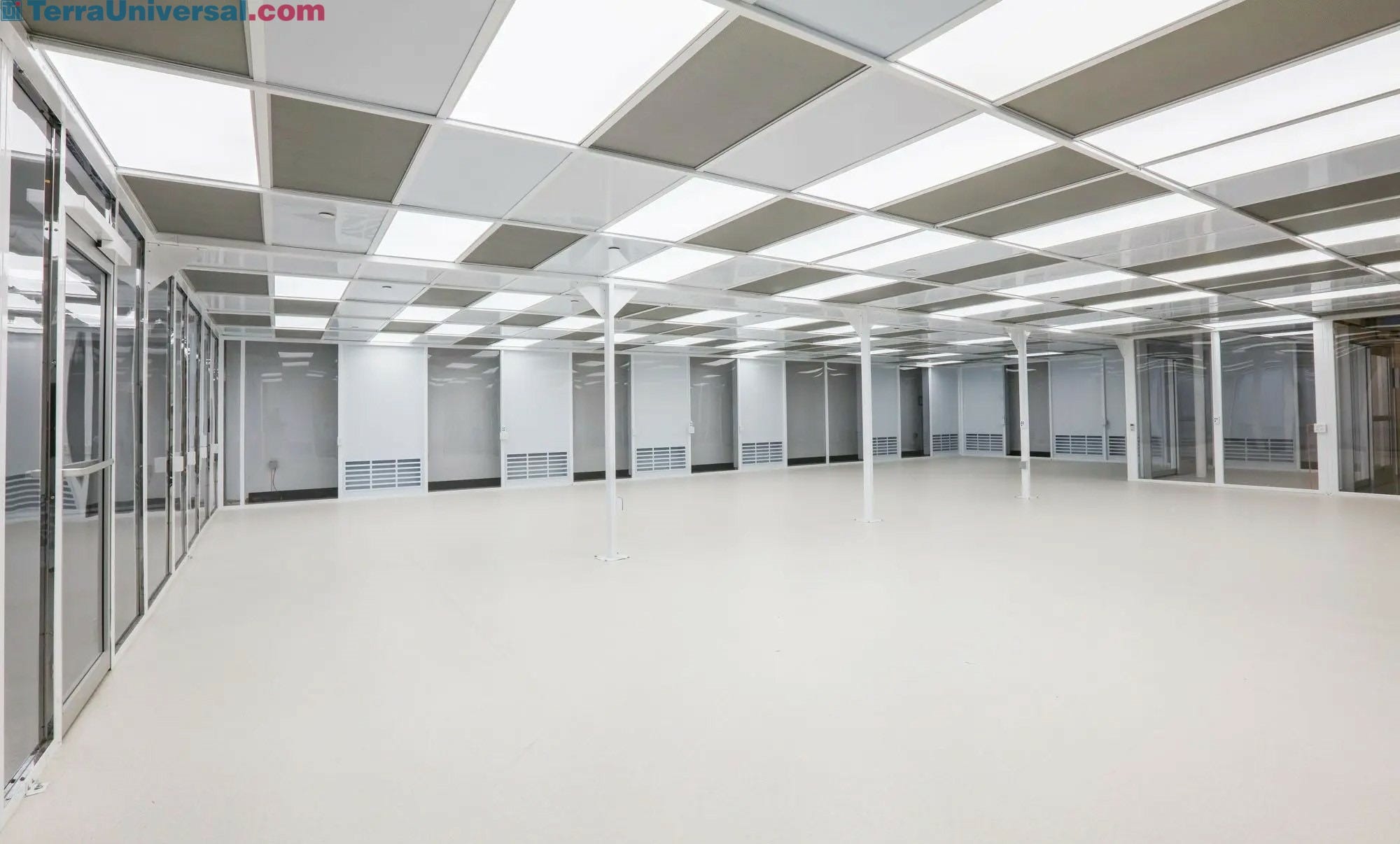
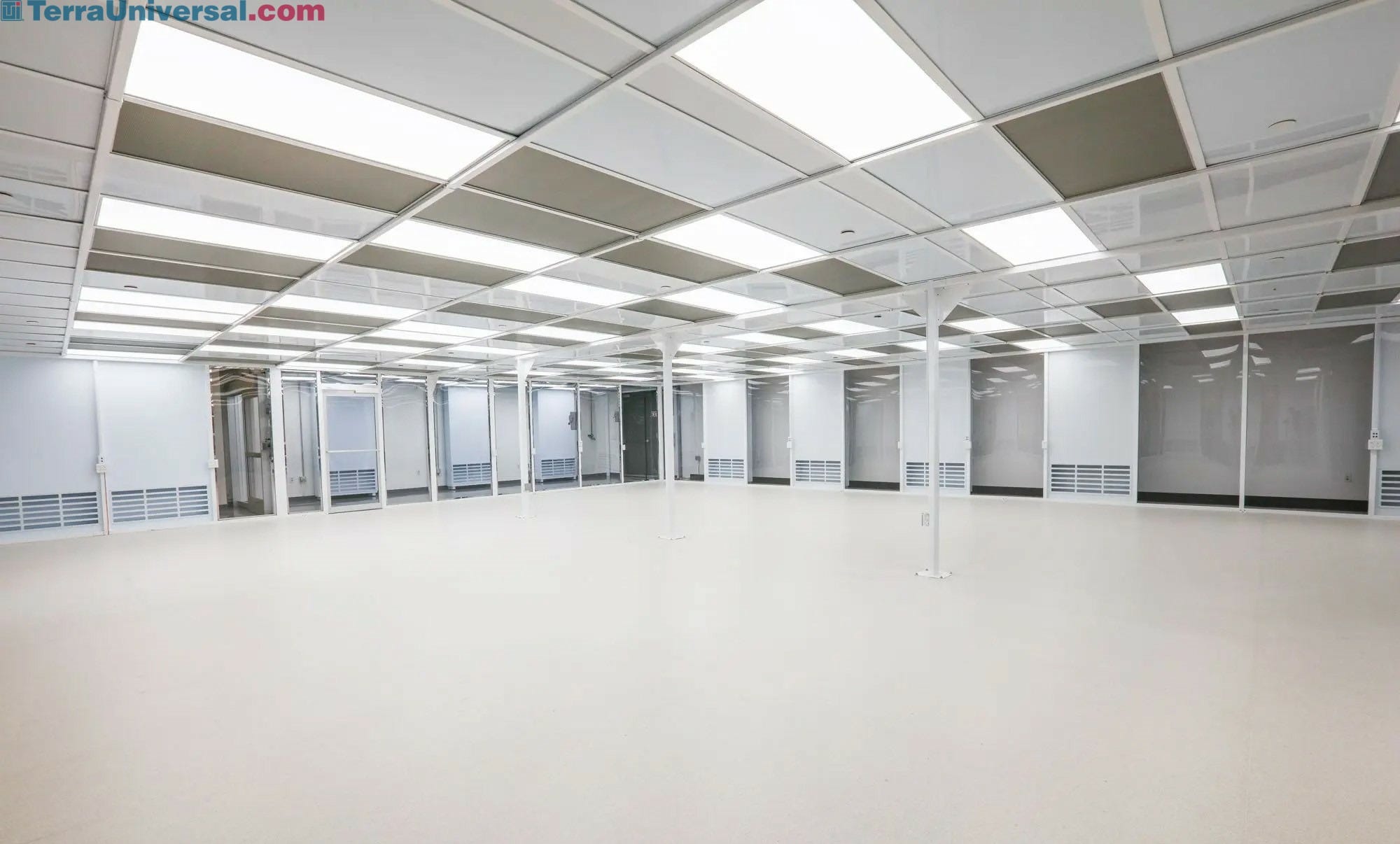
cGMP extended height cleanroom, 122' x 50' x 13'H. For dietary supplement and sports nutrition manufacturing. Includes rooms for gowning, mixing, pill making, mixing, packing, and storage.
cGMP extended height cleanroom, 122' x 50' x 13'H, for dietary supplement manufacturing and packagingExtended Height Nutraceutical Cleanroom SuitecGMP extended height cleanroom, 122' x 50' x 13'H. For dietary supplement and sports nutrition manufacturing. Includes rooms for gowning, mixing, pill making, mixing, packing, and storage.
Custom Hardwall Modular Cleanroom for Medical Applications
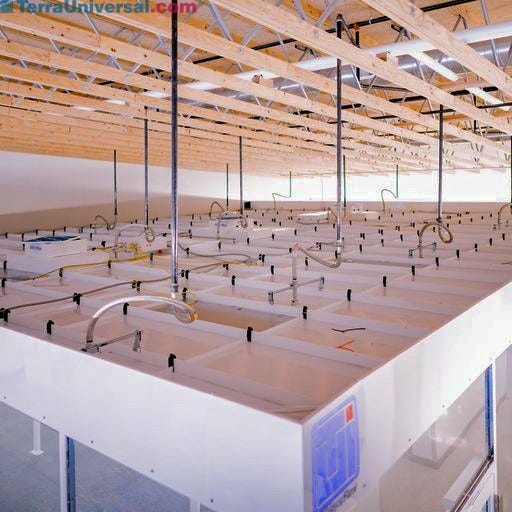
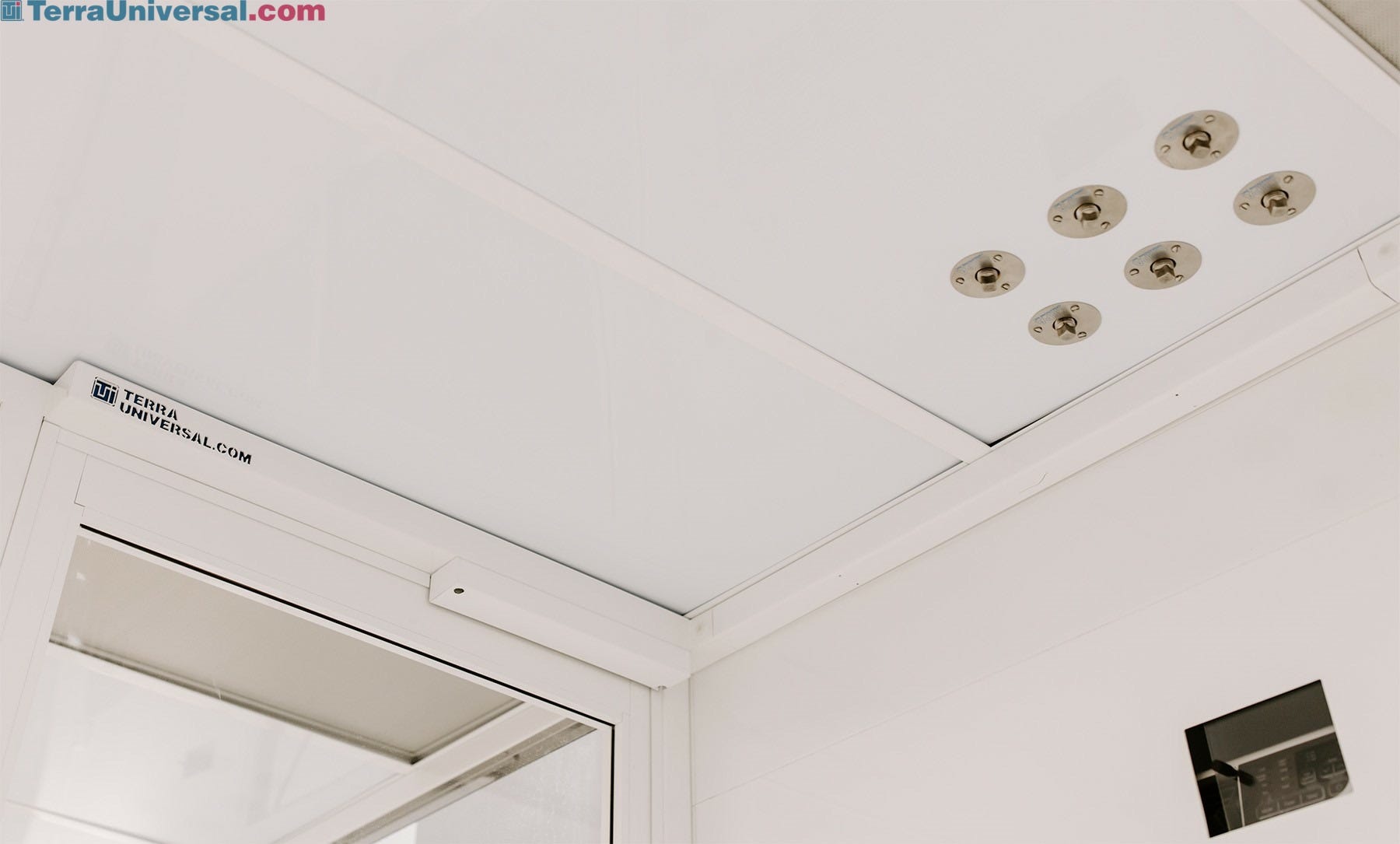
The overhead view reveals the cleanroom's modular ceiling grid with fan filter units, ensuring even airflow distribution. This configuration optimizes particle containment and supports ISO-compliant cleanliness levels.
Custom Hardwall Modular Cleanroom for Medical Applications
The hardwall cleanroom features clear wall panels, offering enhanced visibility for monitoring operations without compromising cleanliness. Its robust aluminum frame ensures long-term structural integrity and stability.
Custom Hardwall Modular Cleanroom for Medical Applications
This hardwall modular cleanroom includes an integrated air filtration system, ensuring consistent particle control and compliance with cleanroom standards. Its scalable design allows for seamless customization to meet specific application requirements.
Custom Hardwall Modular Cleanroom for Medical Applications
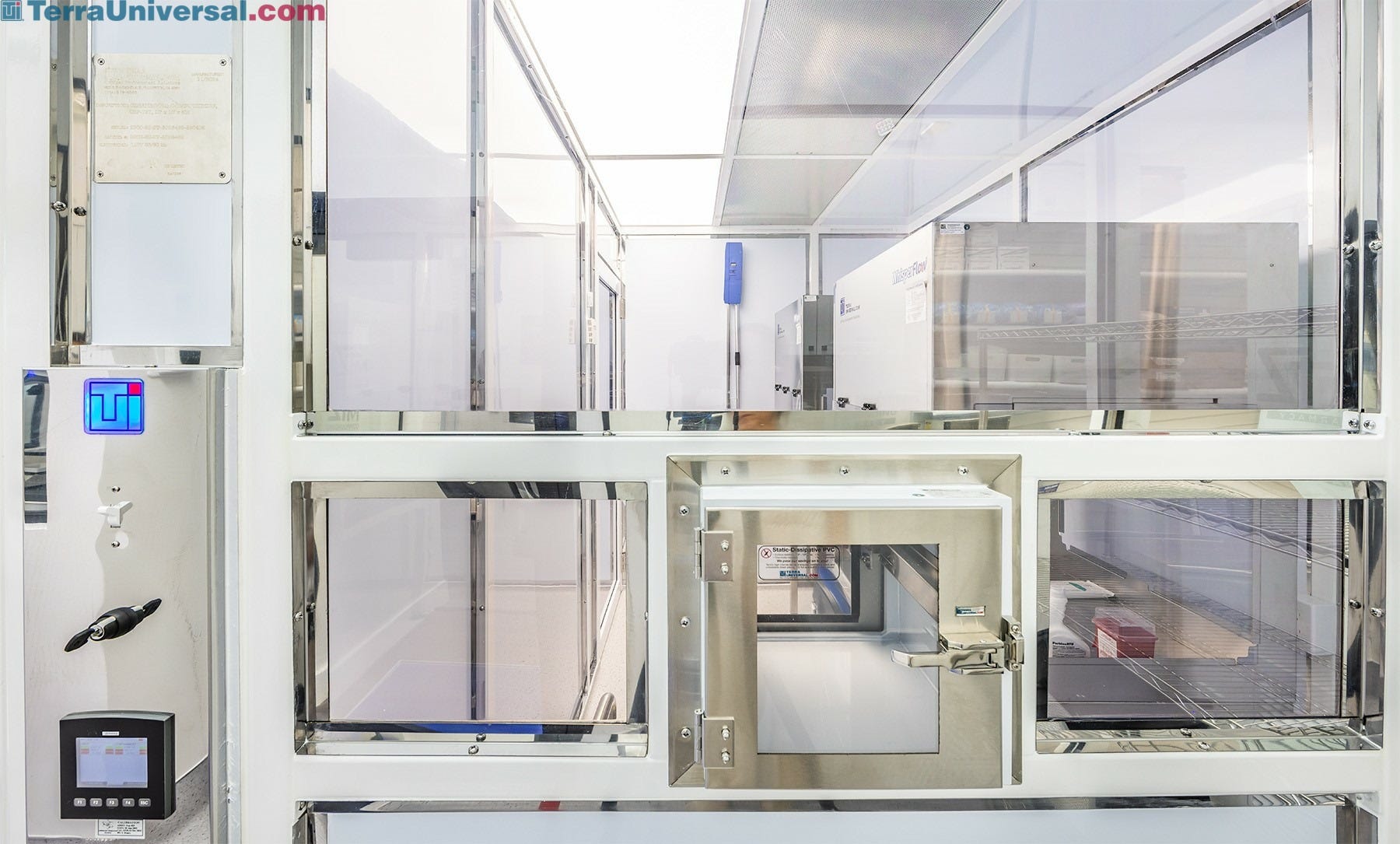
This hardwall modular cleanroom includes customizable pass-through chambers, streamlining material transfer while maintaining cleanliness. Its modular design allows for flexible configuration to suit evolving operational needs.
USP 797 Compounding Cleanroom with ULPA Filtered Passthrough
This central fill compounding cleanroom consists of three staged rooms. ULPA filtered Passthrough chambers allow supplies and materials to be passed from room to room
Ante chambers maintain the integretyy of the cleanroom while allowing users to recive supplies and materials, don further cleanroom attire or conduct prep work
This custom modular hardwall cleanroom contains a suite of ISO 6/Class 1,000 chambers. Class 10,000 gowning room decontaminates personnel prior to entering the inner chambers.
This custom modular hardwall cleanroom contains a suite of ISO 6/Class 1,000 chambers. Class 10,000 gowning room decontaminates personnel prior to entering the inner chambers.
Custom Hardwall Modular Cleanroom for Aerospace Applications
This custom hardwall cleanroom features polypropylene panels and a powder-coated steel frame to ensure robust contamination control. The modular design allows for flexible configuration while maintaining a clean, sterile environment.
Custom Hardwall Modular Cleanroom for Aerospace Applications
Designed with polypropylene panels and a powder-coated steel frame, this cleanroom offers excellent chemical resistance and easy wipe-down cleaning. The modular construction supports adaptable configurations for various applications.
Custom Hardwall Modular Cleanroom for Aerospace Applications
This certified ISO Grade cleanroom features polypropylene panels mounted to 2" powder-coated square steel uprights, providing robust contamination control. The mirror-finish stainless steel L-bracket trim offers an easy-clean, professional appearance.
ISO-Rated Hardwall Cleanroom with Acrylic Wall Panels
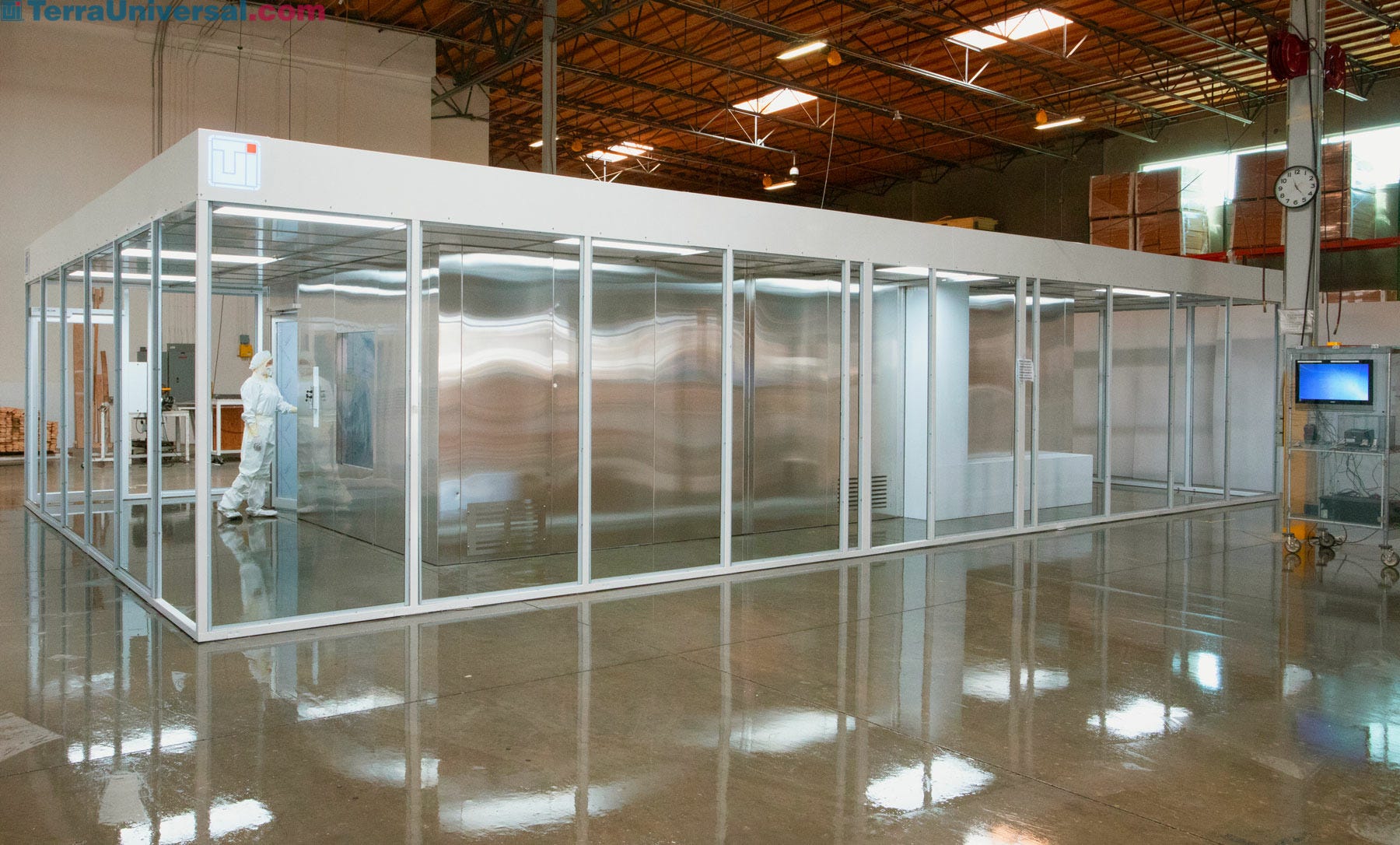
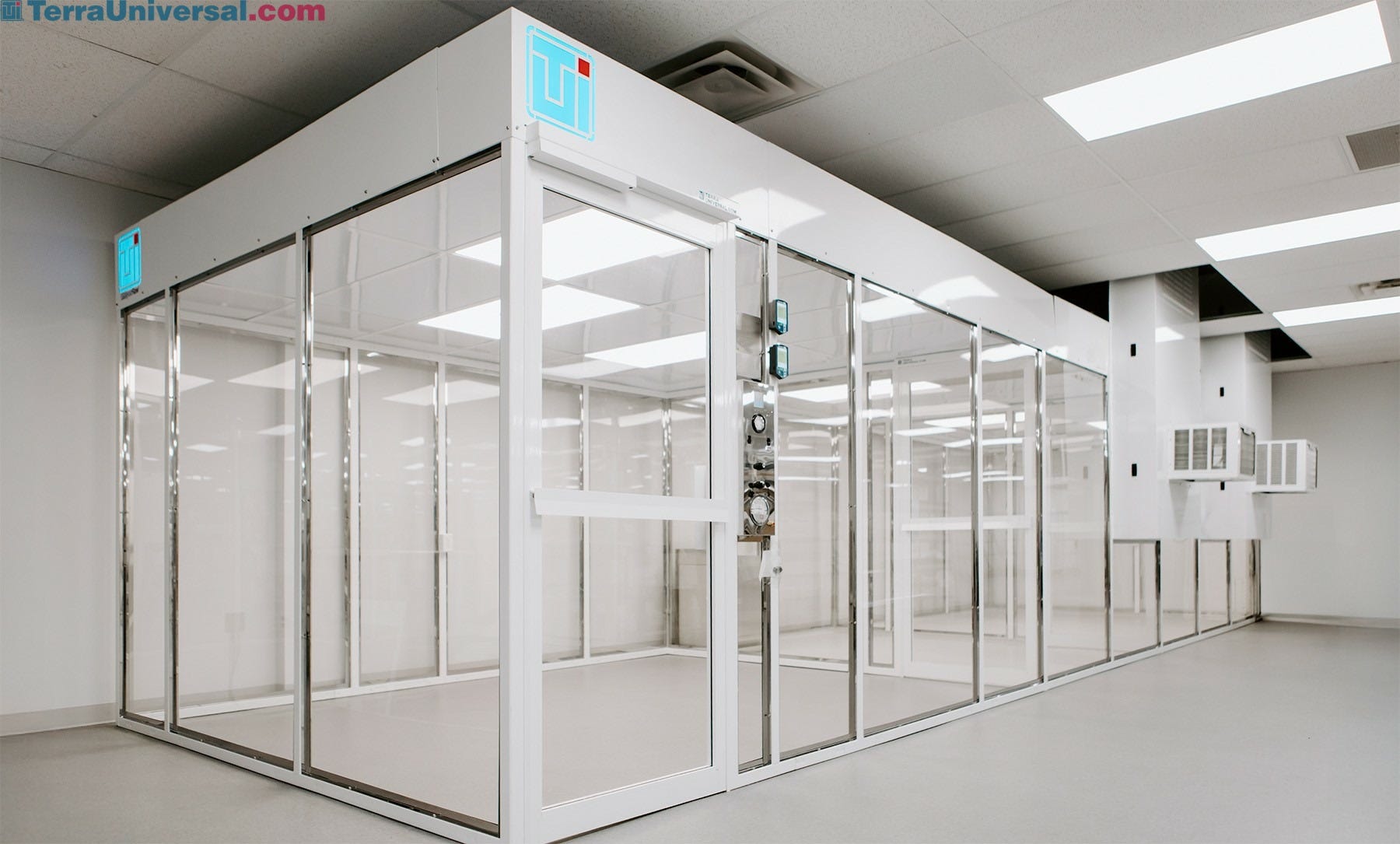
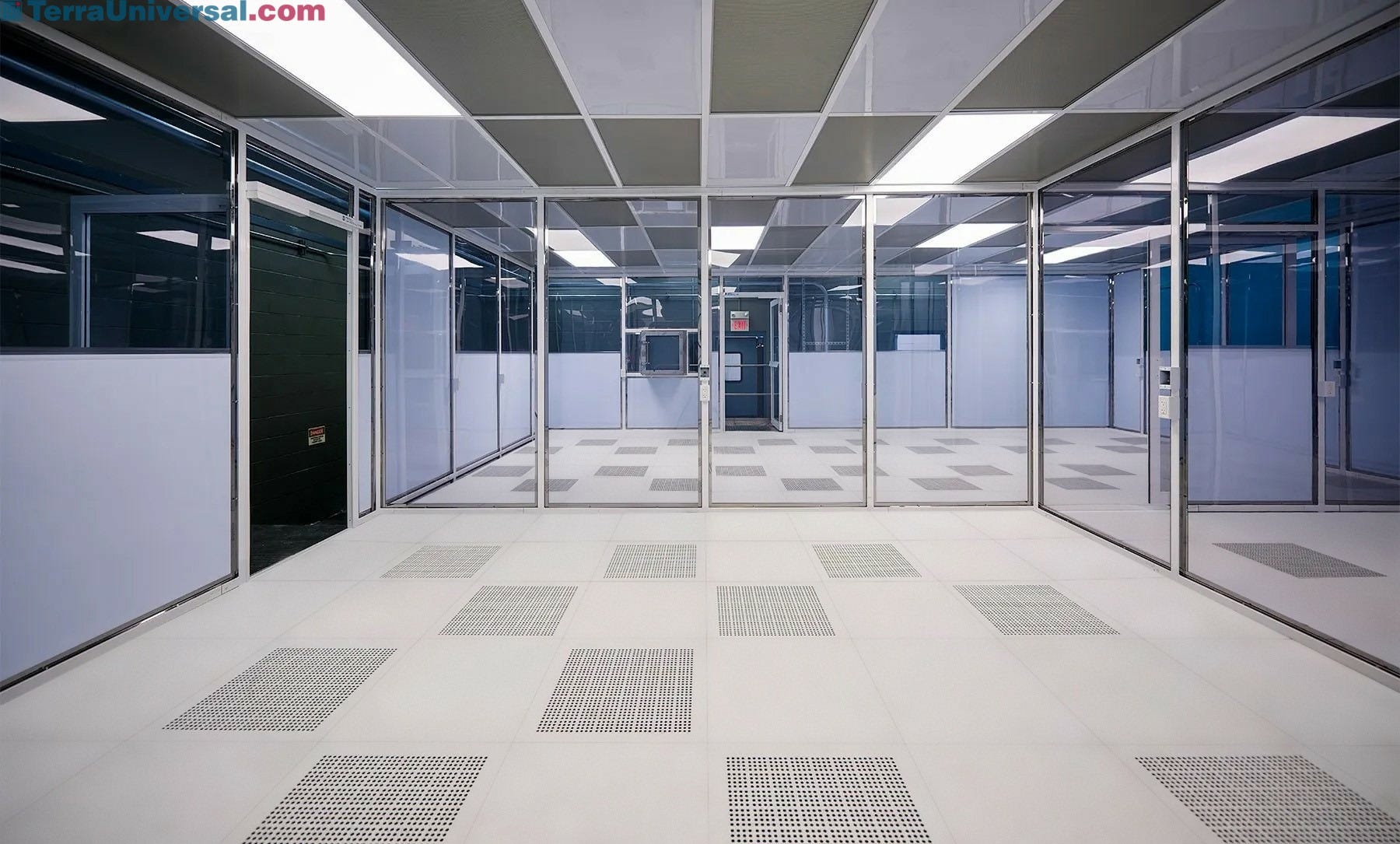
Hardwall modular cleanrooms come in several application-specific materials, including these 10'-high economical acrylic wall panels mounted on a powder-coated steel frame.
Hardwall modular cleanrooms, shown with 10'-high economical acrylic wall panels, meet ISO 5 - 8 requirementsISO-Rated Hardwall Cleanroom with Acrylic Wall PanelsHardwall modular cleanrooms come in several application-specific materials, including these 10'-high economical acrylic wall panels mounted on a powder-coated steel frame.
This stainless steel BioSafe cleanroom features an integrated air shower and pass-through chamber to minimize the inflow | 6600-31 displayedBioSafe Stainless Steel Cleanroom – Integrated Air ShowerThis stainless steel BioSafe cleanroom features an integrated air shower and pass-through chamber to minimize the inflow of contaminants.
2957
Modular Cleanroom Ceiling Grid
Add Terra's modular ceiling grid to an existing room to support lights and HEPA fan/filter units that meet ISO 5-8 requirements for cleanliness
Add Terra's modular ceiling grid to an existing room to support lights and HEPA fan/filter units that meet ISO requirementsModular Cleanroom Ceiling GridAdd Terra's modular ceiling grid to an existing room to support lights and HEPA fan/filter units that meet ISO 5-8 requirements for cleanliness
2958
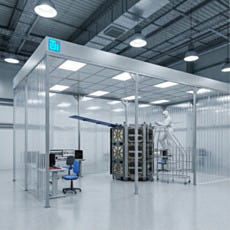
Hardwall Modular Cleanroom Equipment Enclosure
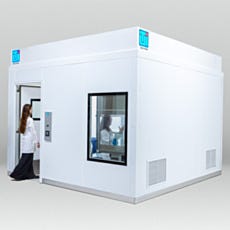
Terra modular cleanrooms accommodate available space and unique equipment interface requirements.
Terra modular cleanrooms accommodate available space and unique equipment interface requirementsHardwall Modular Cleanroom Equipment EnclosureTerra modular cleanrooms accommodate available space and unique equipment interface requirements.
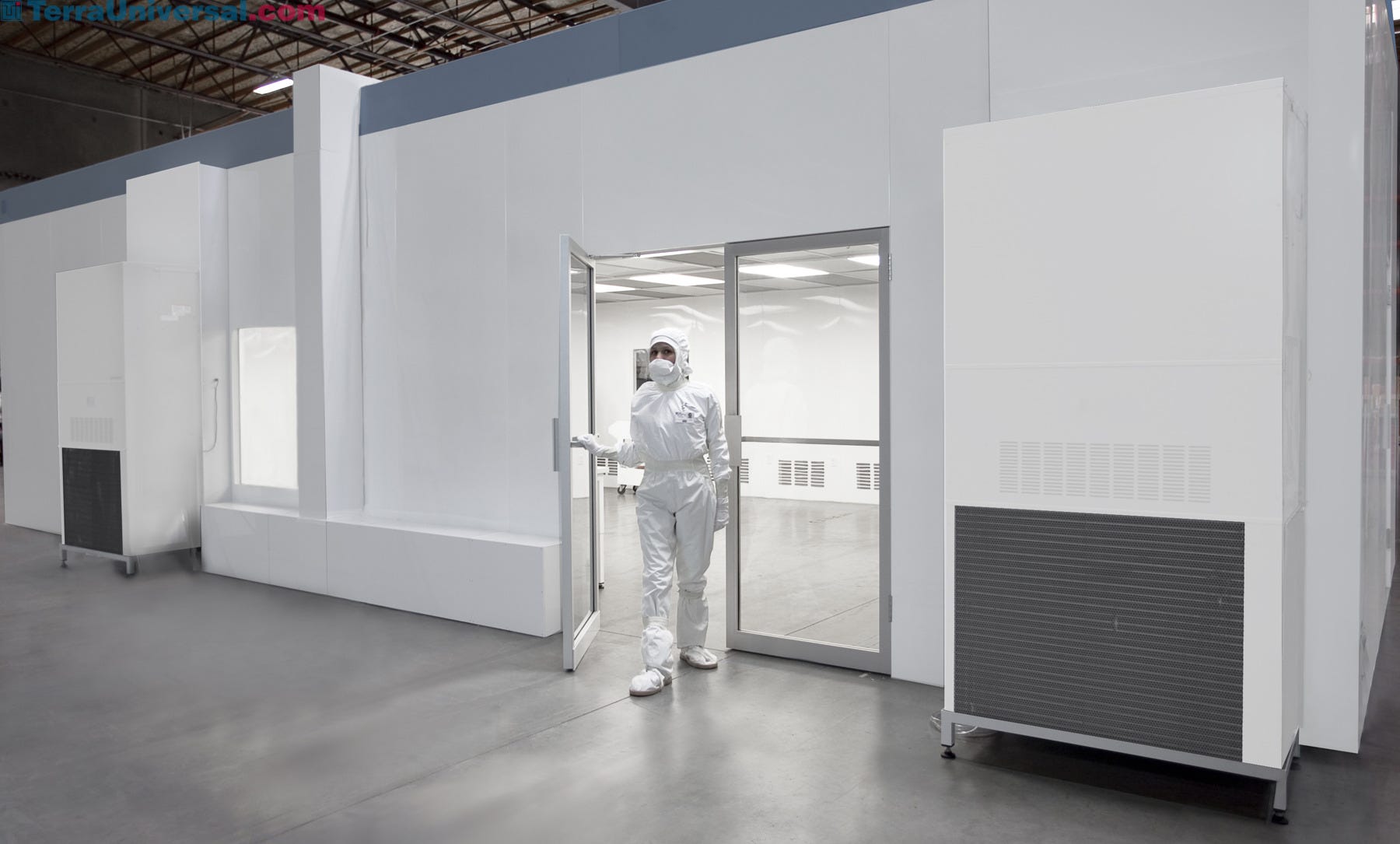
Terra Universal’s modular hardwall cleanrooms convert any space into an ISO-compliant cleanroom; multi-suite configuration shown with polycarbonate panels.
Terra Universal’s modular hardwall cleanrooms convert any space into an ISO-compliant cleanroomHardwall Modular Cleanroom – Polycarbonate Wall PanelsTerra Universal’s modular hardwall cleanrooms convert any space into an ISO-compliant cleanroom; multi-suite configuration shown with polycarbonate panels.
2968
Modular Hardwall Cleanroom
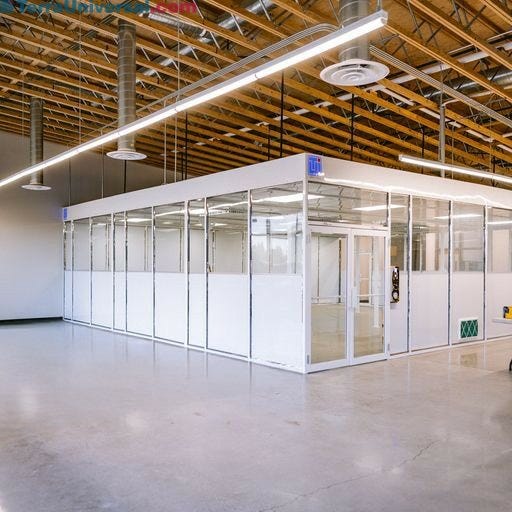
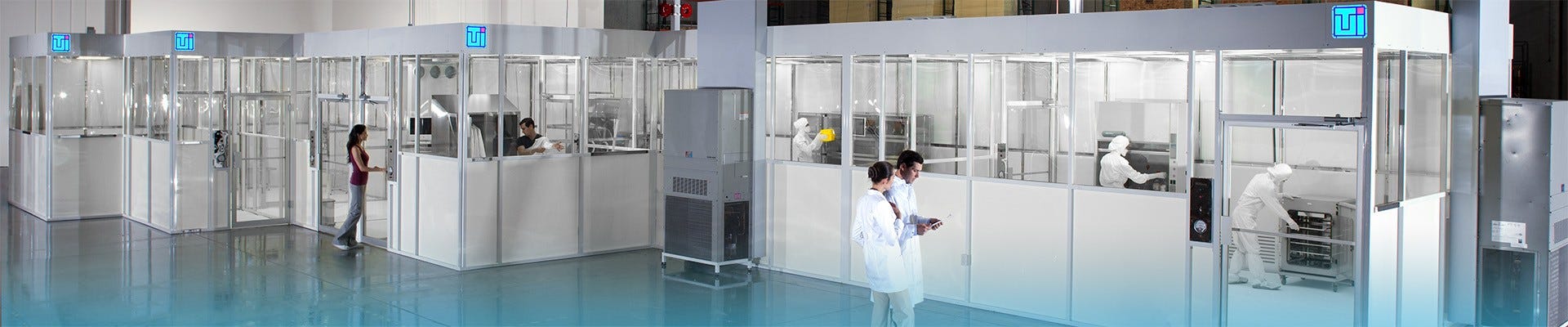
Hardwall modular cleanrooms provide an economical enclosure for ISO 5 - 8 requirements in semiconductor, medical, pharmaceutical, and other critical manufacturing processes.
ISO 7 multi-suite modular hardwall cleanroom with acrylic clear/opaque panels and air conditioning module.Modular Hardwall CleanroomHardwall modular cleanrooms provide an economical enclosure for ISO 5 - 8 requirements in semiconductor, medical, pharmaceutical, and other critical manufacturing processes.
8709
BioSafe Containment Cleanrooms
BioSafe® cleanroom with exhaust plenum and ventilation system creates negative internal pressure for biohazard containment (shown with A/C units).
BioSafe® cleanroom with exhaust plenum and ventilation systemBioSafe Containment CleanroomsBioSafe® cleanroom with exhaust plenum and ventilation system creates negative internal pressure for biohazard containment (shown with A/C units).
10018
USP 800 BioSafe Cleanroom, Stainless Steel
USP 800 BioSafe cleanroom with ISO 8 ante-room, ISO 5 compounding suites and negative-pressure containment suite, surrounded by a standard hardwall cleanroom frame for enhanced biohazard containment
USP 800 BioSafe cleanroom with ISO 8 ante-room, ISO 5 compounding and containment suitesUSP 800 BioSafe Cleanroom, Stainless SteelUSP 800 BioSafe cleanroom with ISO 8 ante-room, ISO 5 compounding suites and negative-pressure containment suite, surrounded by a standard hardwall cleanroom frame for enhanced biohazard containment
Modular Hardwall Cleanroom for Injection and Extrusion Blow Molding
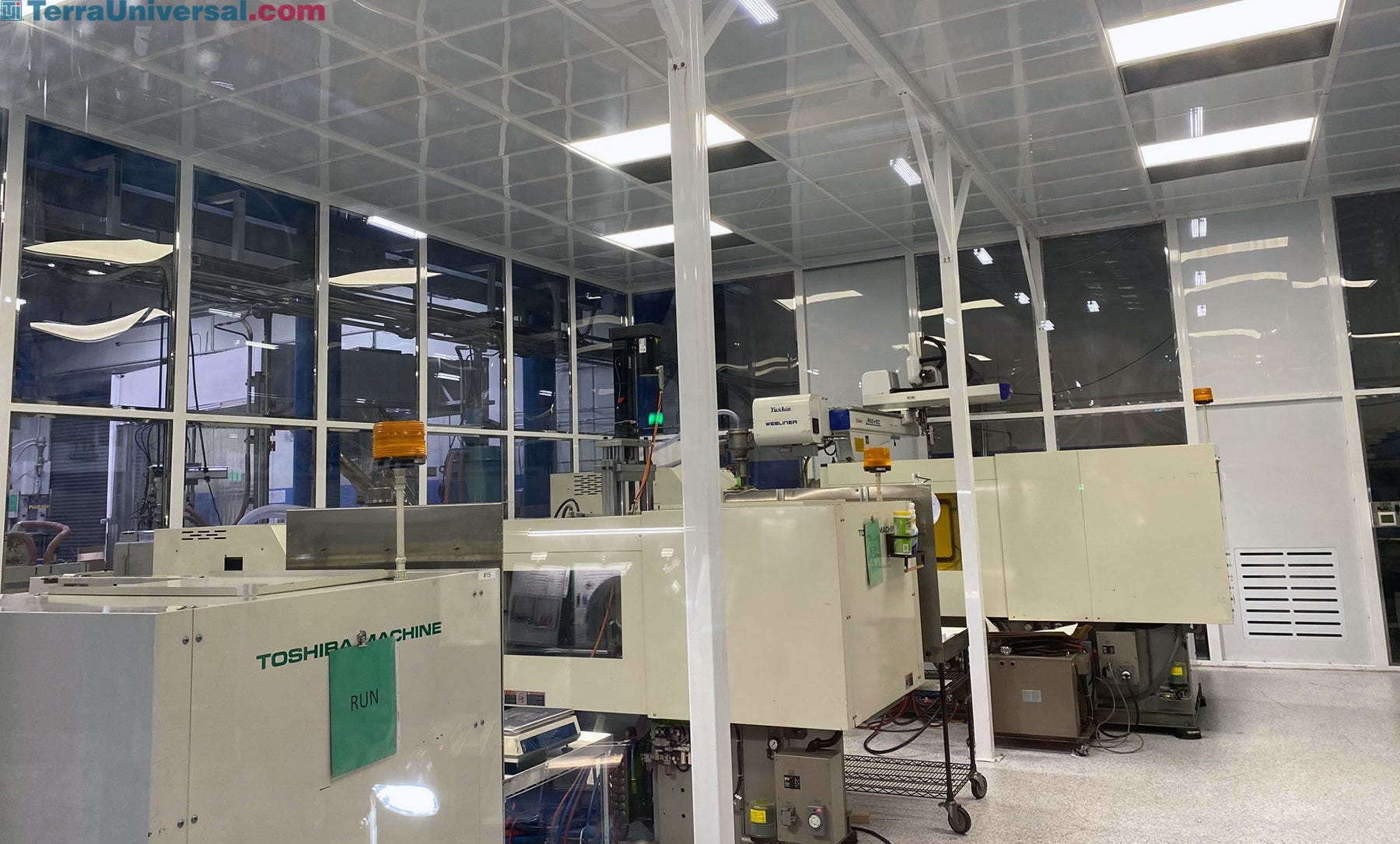
Terra’s rigid free-standing modular cleanroom allows for tall, spacious interiors to fit large equipment for injection and extrusion blow molding. Vertical air returns mounted on back wall recirculate cooled air to increase air conditioning efficiency.
Extra-tall hardwall cleanroom for injection and extrusion blow molding; 36’L x 32’W x 14’H; Class 100,000, air conditioned | 6600-63A displayedModular Hardwall Cleanroom for Injection and Extrusion Blow MoldingTerra’s rigid free-standing modular cleanroom allows for tall, spacious interiors to fit large equipment for injection and extrusion blow molding. Vertical air returns mounted on back wall recirculate cooled air to increase air conditioning efficiency.
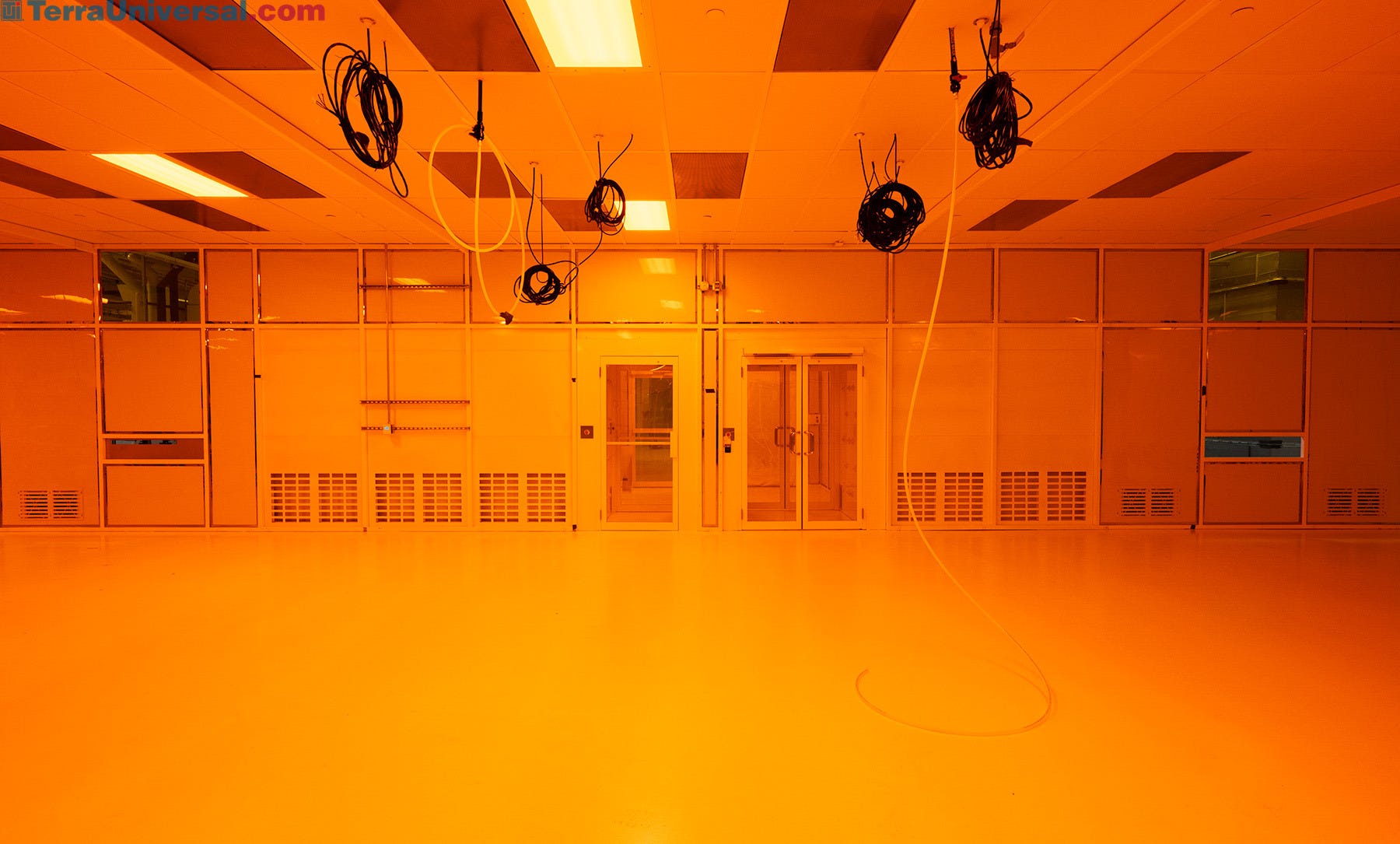
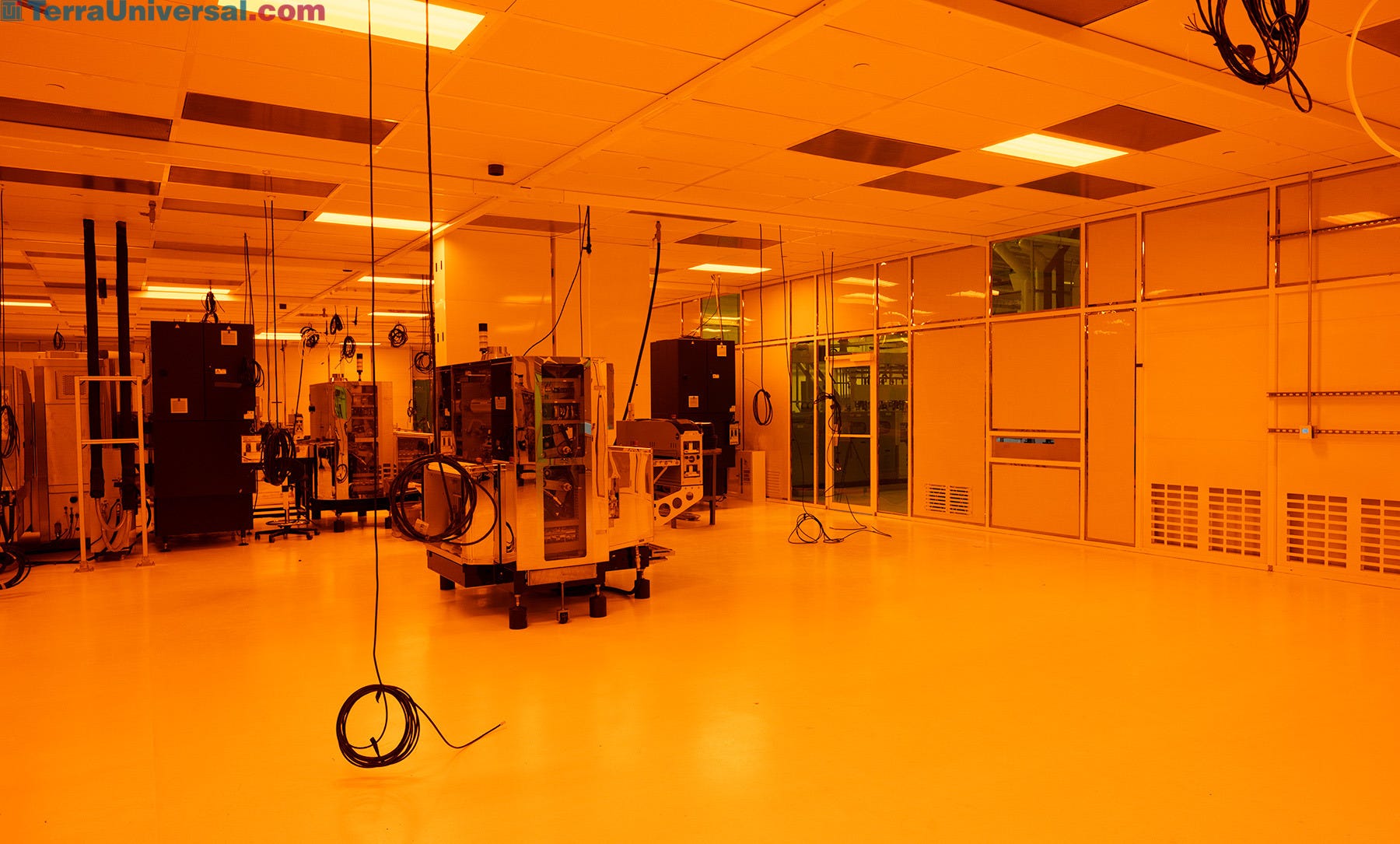
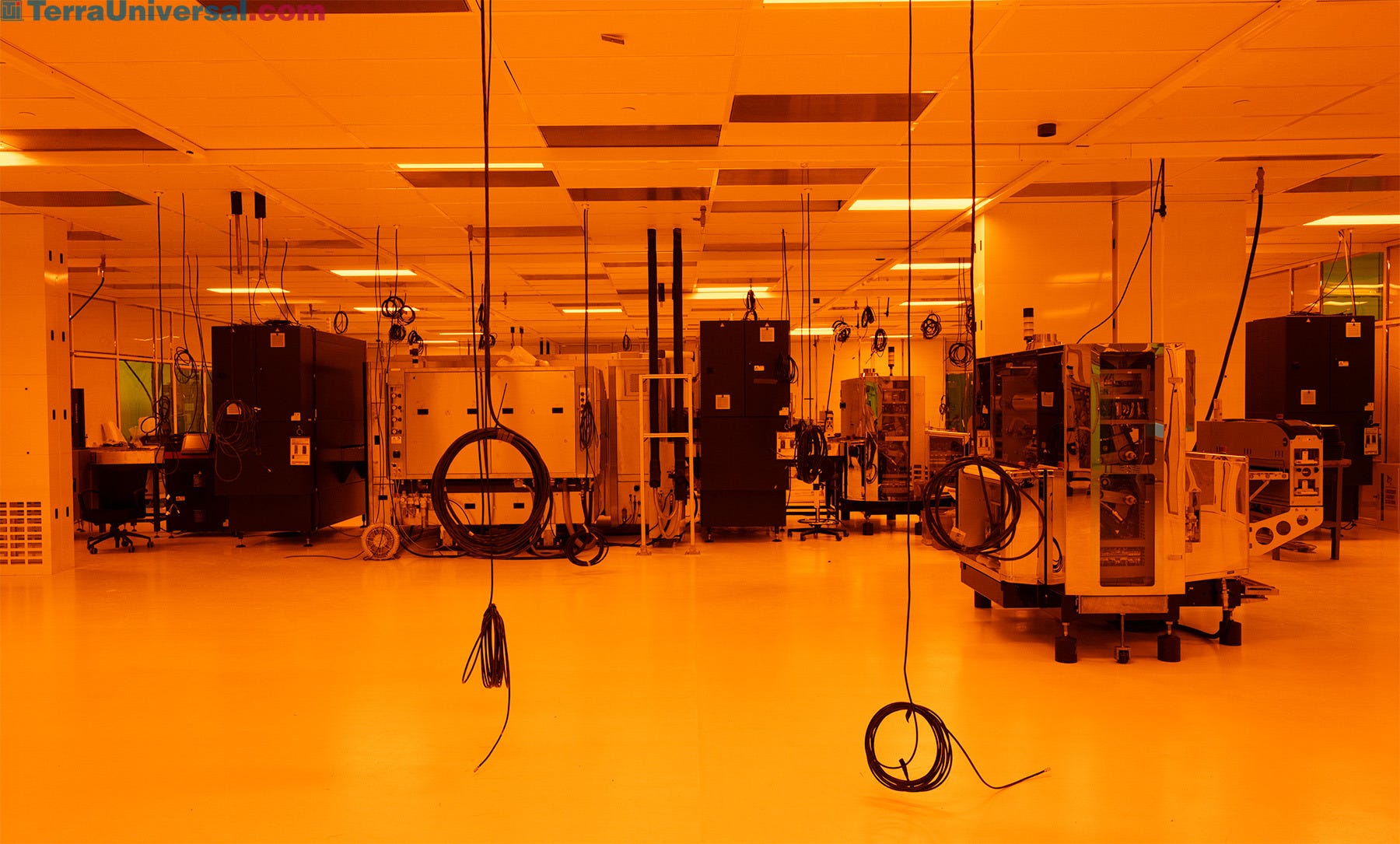
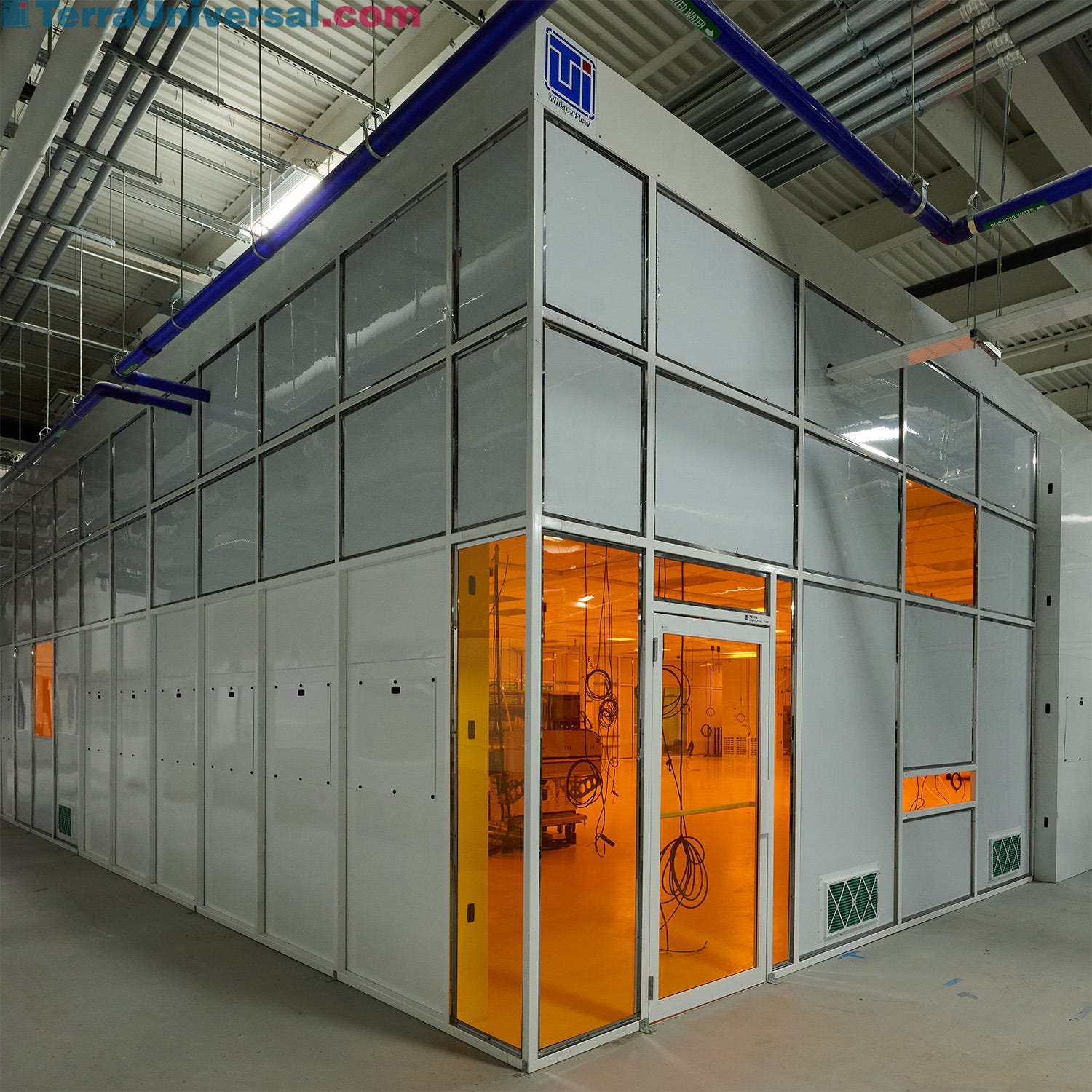
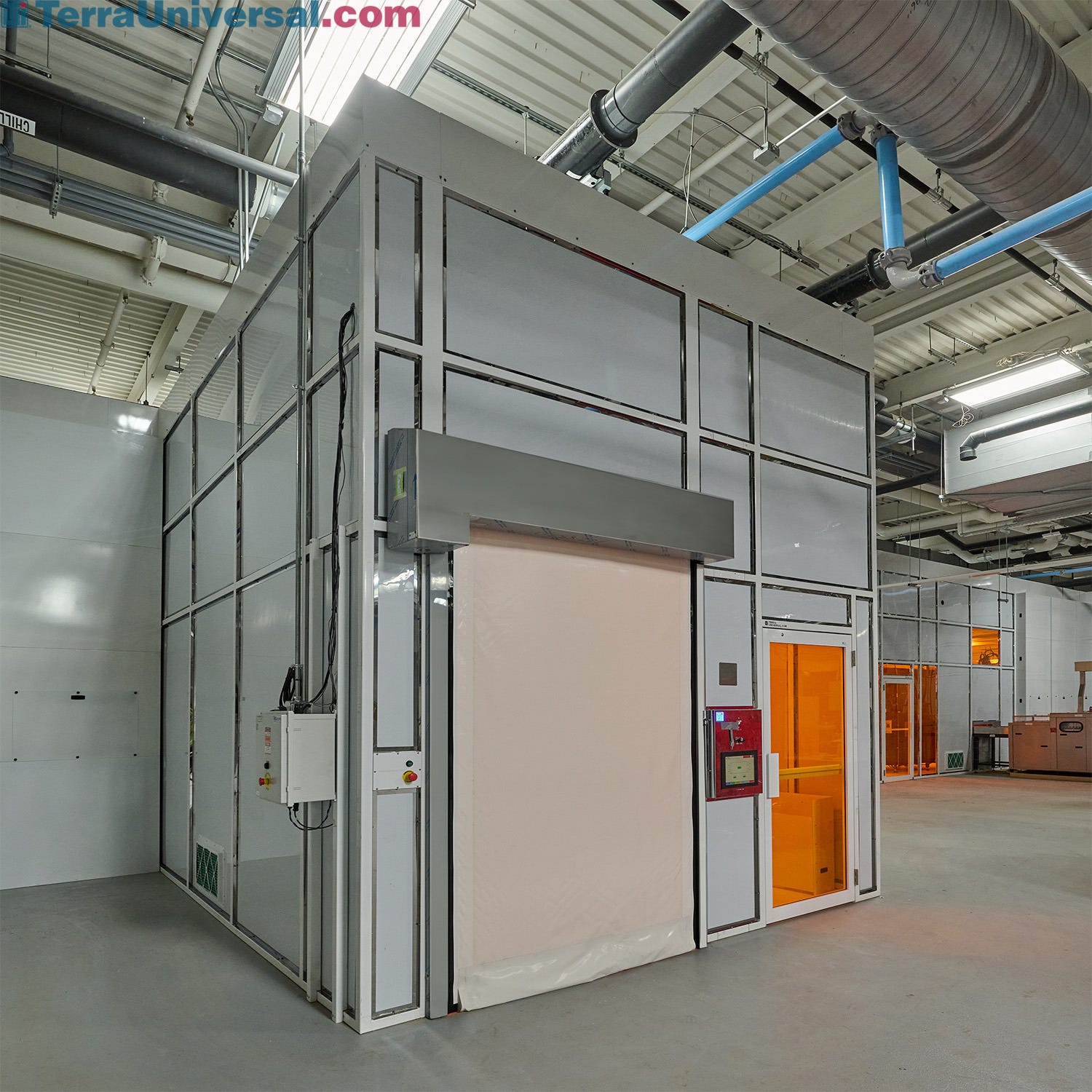
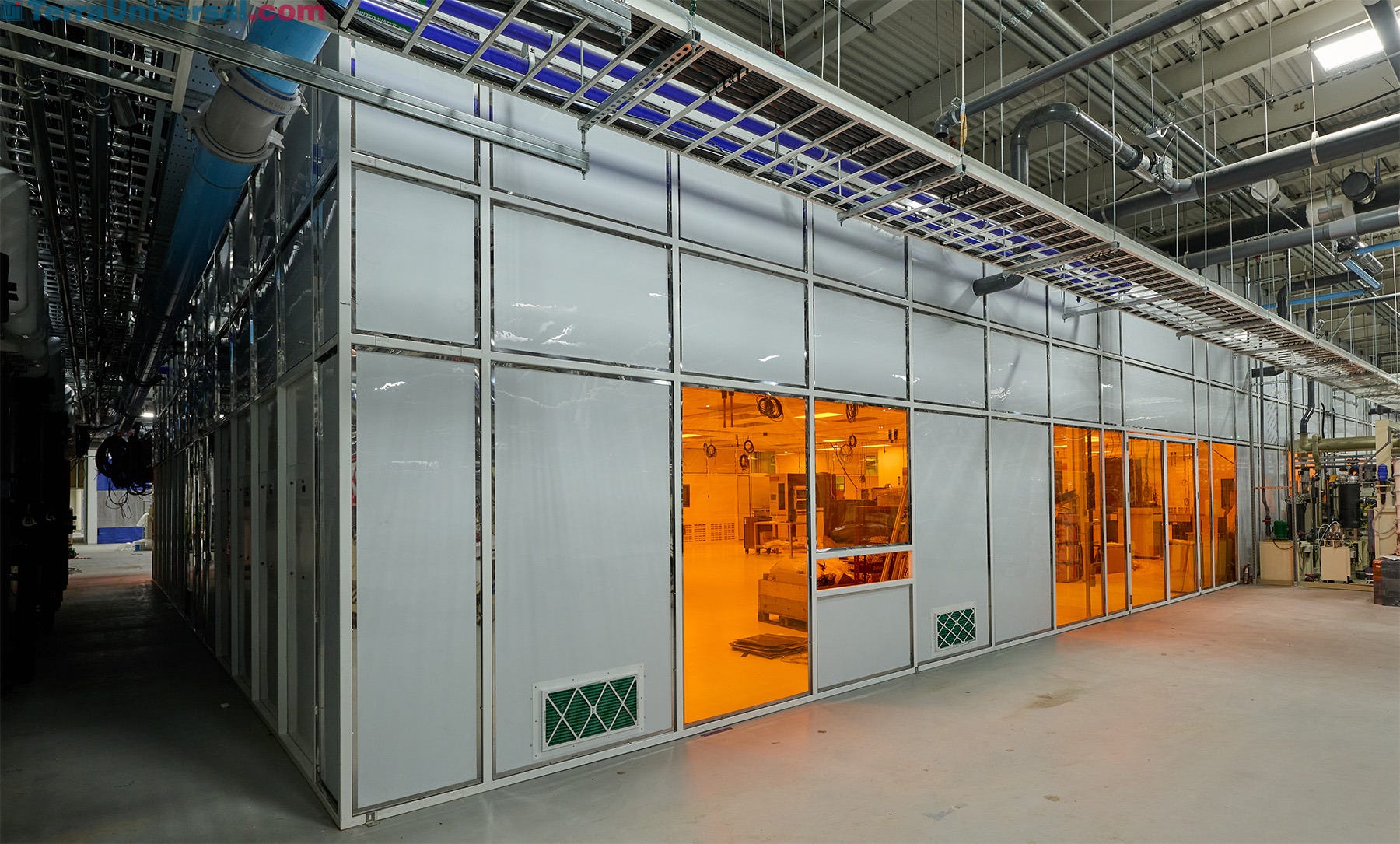
ISO 6 Amber Cleanroom for Laser Testing, 32' x 18' x 10'H
ISO 6 (Class 1,000) 32' x 18' x 10'H amber cleanroom for defence manufacturing. The orange amber panels help block UV light and lasers, while permitting visible light for a safe work environment.
ISO 6 (Class 1,000) 32' x 18' x 10'H amber cleanroom for defence manufacturing. The orange amber panels help block UV light and lasers, while permitting visible | 6600-63A displayedISO 6 Amber Cleanroom for Laser Testing, 32' x 18' x 10'HISO 6 (Class 1,000) 32' x 18' x 10'H amber cleanroom for defence manufacturing. The orange amber panels help block UV light and lasers, while permitting visible light for a safe work environment.
Video showing installation of a hardwall, modular cleanroom at a customer site. The room is tested at the factory, then shipped overseas to be installed. Framing, paneling and utilities are assembled according to the customer specifications.
video
Glass Cleanroom Wash-Down Video
This video demonstrates benefits of a BioSafe cleanroom and the easy-clean feature of a tempered glass, including suitability for wash-down disinfection.
video
Installation Test of a Modular Hardwall Cleanroom
Time-lapse video of a multi-chamber modular hardwall cleanroom being erected and tested prior to shipping. The steps cover preparation, framing, panel placement, and A/C return ducting installation.
video
Modular BioSafe® Cleanroom Installation Test
Time-lapse installation of a modular BioSafe steel cleanroom with windows, an exit swing door, entryway airshower and 50% ceiling coverage of fan/filter units.
video
Modular Cleanrooms for Nutraceutical Outsource Manufacturing
This video shows how Terra's modular cleanrooms can be used to create an economical nutraceutical manufacturing environment inside of your typical industrial facility. The layout features 16 ISO-classified cleanroom spaces that are connected to the building's HVAC system for humidity control and personnel comfort.























.jpg)
.jpg)