Cleanroom Ionizing Blow-Off Gun |
||||||||||||||||||||||||||||||||
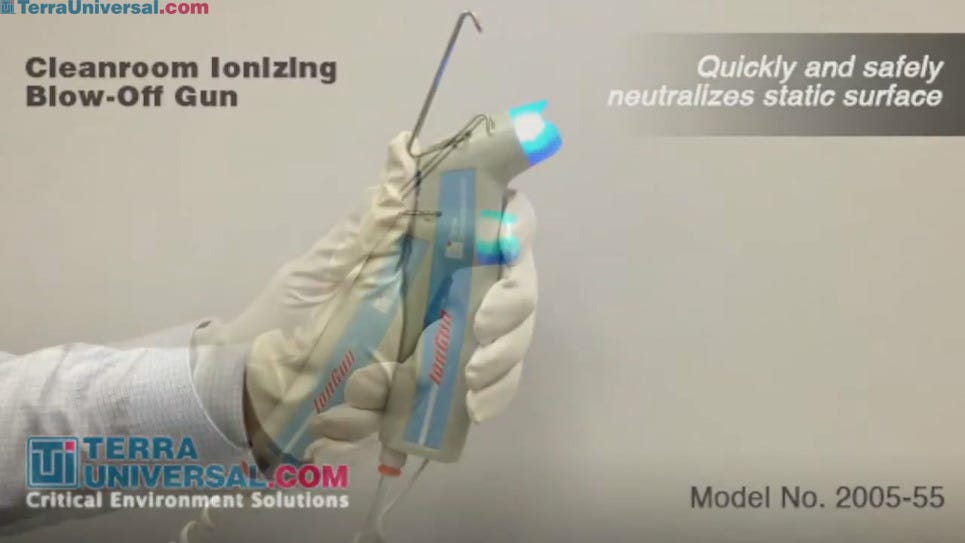
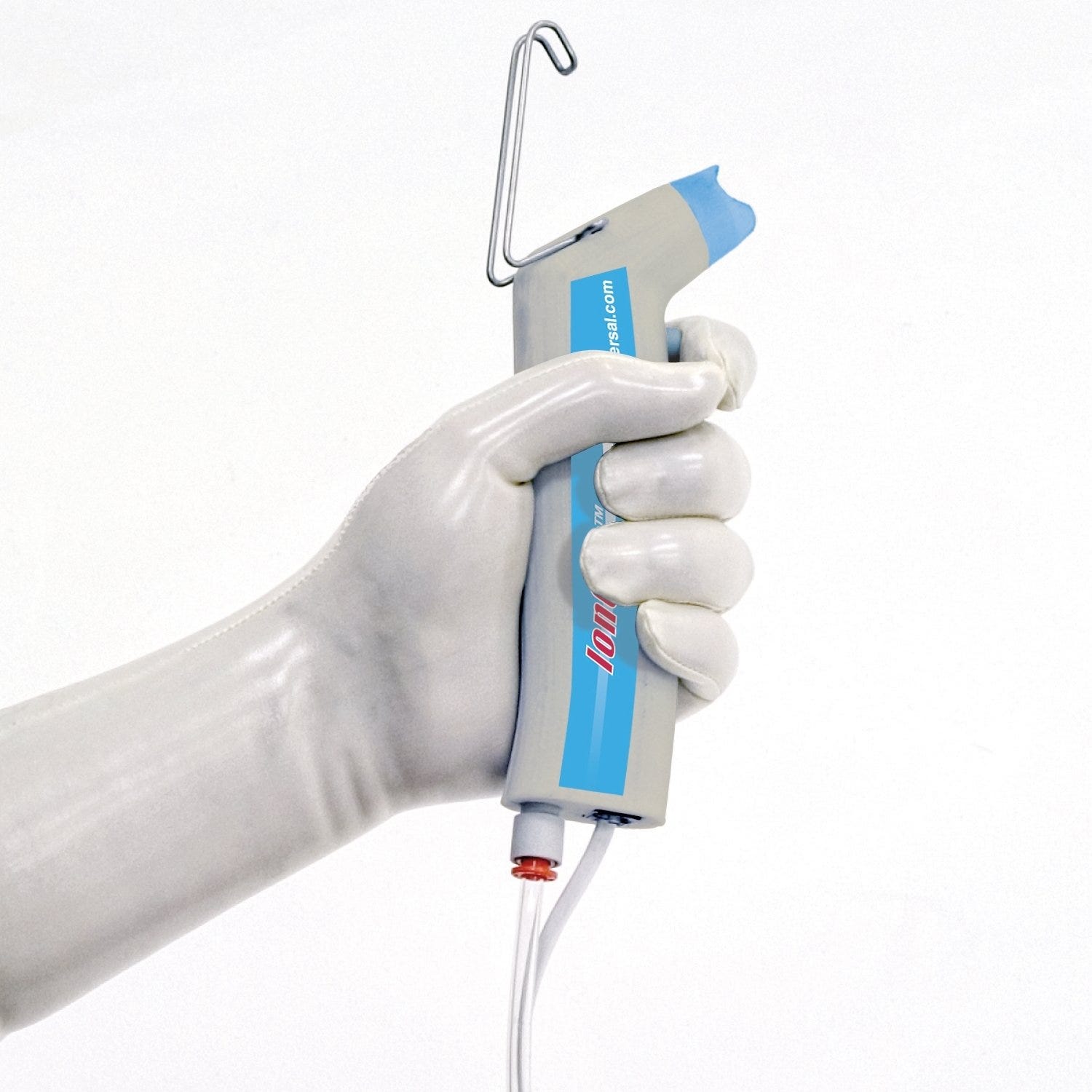
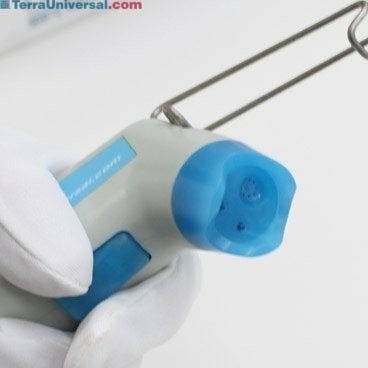
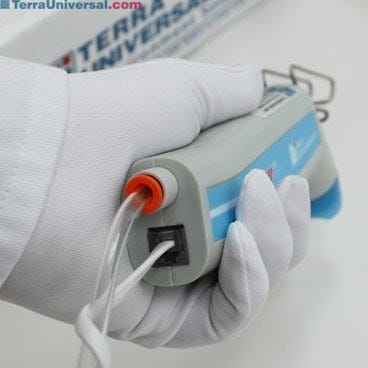
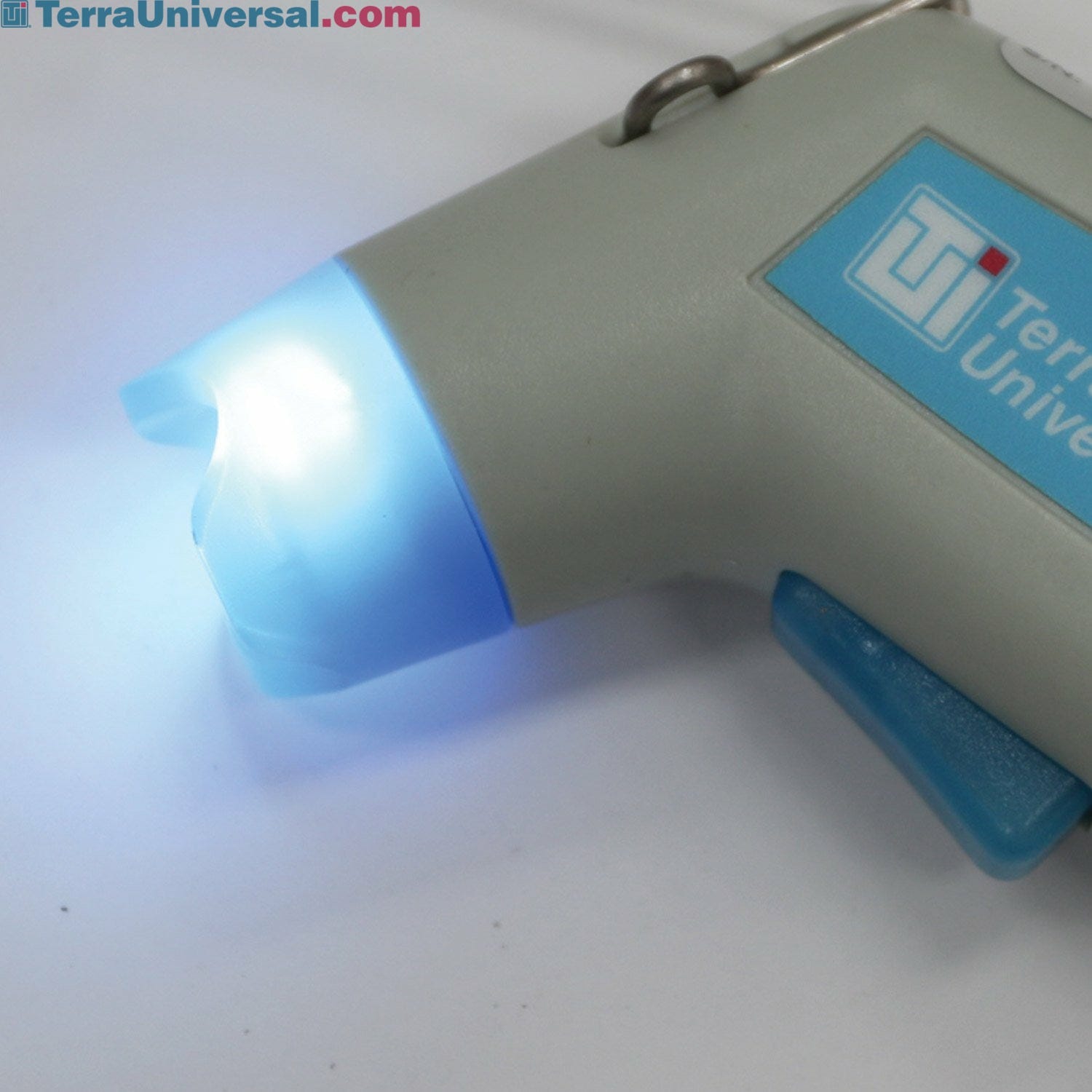
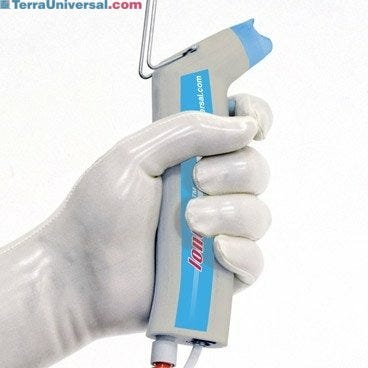
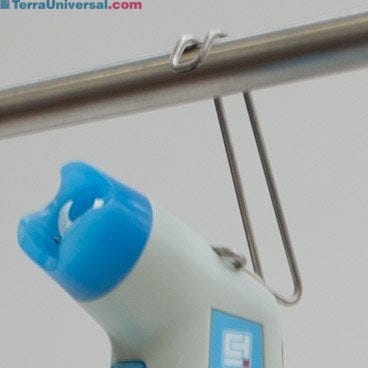
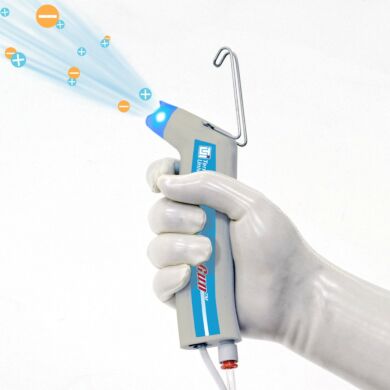
Terra's Ionizing Blow-Off Gun provides a safe, highly effective means of removing small contaminants from sensitive surfaces and minimizing the chance of ESD-related damage. Safe, Trouble-Free Operation All components are designed for cleanliness, durability, and safety. The rugged polymer case is designed to minimize strain to operator wrist and hand. The scalloped nozzle tip safely recesses the ion emitters to guard against contact with operator or parts. The gun uses either filtered air or nitrogen to provide the dispersing force necessary to direct the ions to the target surface. It operates with virtually no particle generation, and the force of the ion burst is easy to modify by adjusting the gas feed pressure (recommended pressure: 15 – 30 psi, depending on distance to target surface). Emitters are made of corrosion-resistant titanium to ensure a long service life—several years when used with filtered gas supply. Tip replacement requires only seconds and entails no disassembly. Specify an optional in-line capsule filter to ensure the purity of the incoming feed gas. Standard kit includes an Ionizing Blow-Off Gun, 8-foot x 0.25" (2438 mm x 6 mm)-diameter polyethylene gas tubing, a coiled low-voltage power cable, 8 feet (2438) when fully extended, transformer and 0.4-micron in-line filter. Cable attaches to the gun and power transformer by means of telephone-type jacks for fast, easy installation.
|
||||||||||||||||||||||||||||||||
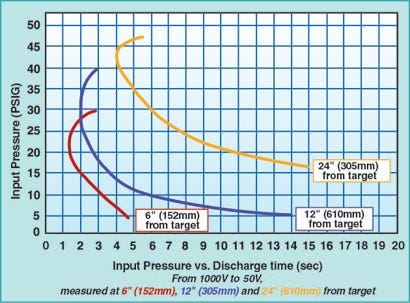
At each of the three test distances, 6", 12" and 24" (152 mm, 305 mm, 610 mm) from the target surface, you can observe an optimal input pressure setting, which corresponds with the lowest discharge time. Raising the pressure higher than this point results in an increase in the discharge time (the curve swings to the right) because higher pressure drives the ions at the target with too much force, causing uneven dispersal and compromising discharge effectiveness. Lowering the pressure below this point results in too little force; the ions require longer to reach the target and many disperse before discharging the surface.
|
||||||||||||||||||||||||||||||||