

- Available Certified ISO Grade Designs: ISO 4, ISO 5, ISO 6, ISO 7, ISO 8
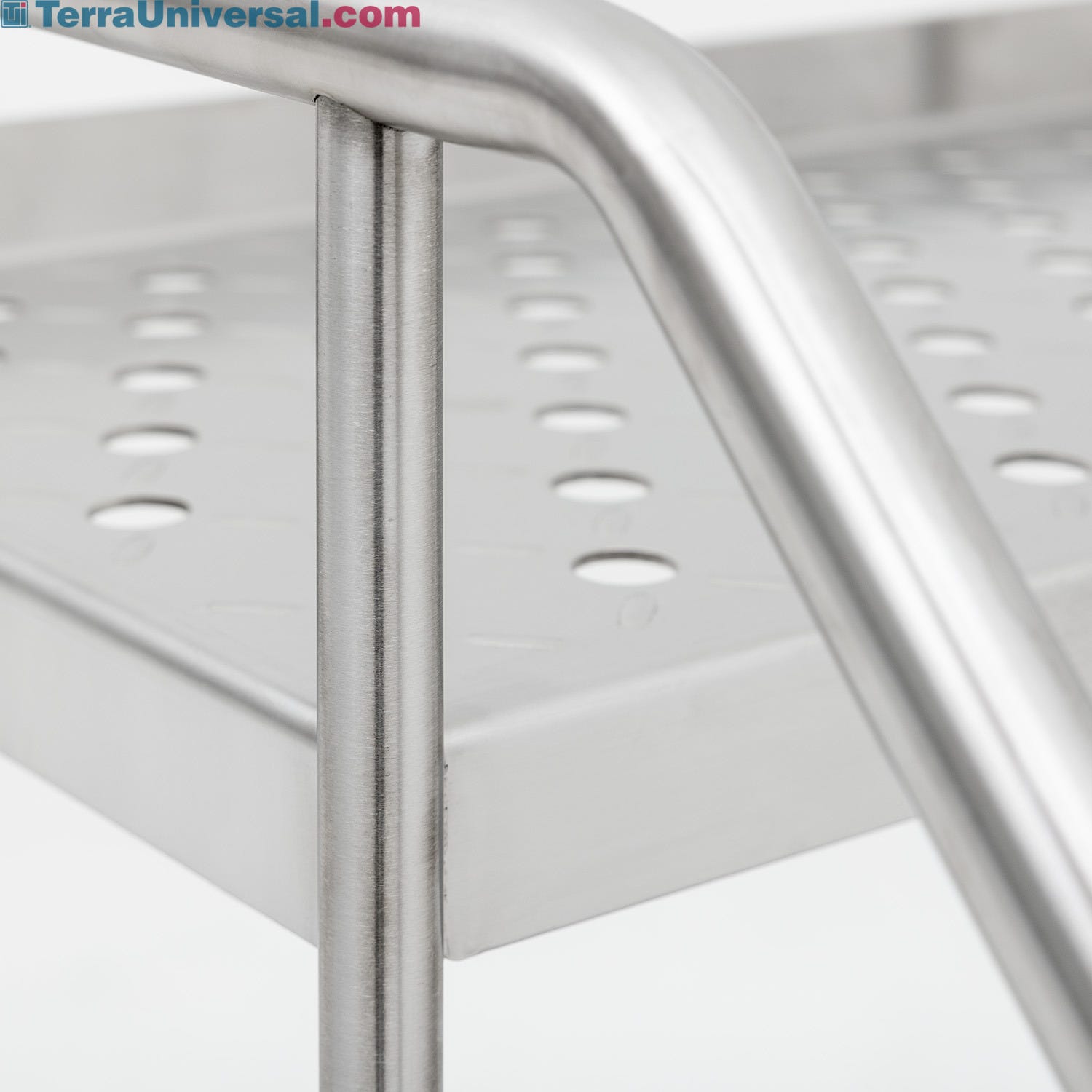
- With fewer crevices which can make them easier to clean thoroughly, Round tubes have a significant advantage over square tubes. In cleanroom environments where maintaining high levels of cleanliness is essential, this is very important.
- Round tubes don't have sharp corners or edges where particles can get trapped in, so they tend to accumulate fewer particles and contaminants
- Better airflow and reduced turbulence within the cleanroom are within the Round Tubes due to smoother surfaces. This can be important in environments where air quality and particulate control are critical.
- Strength and durability compared to Square Tubes, Round tubes can withstand heavy loads and provide stability for equipment placed on the tables.
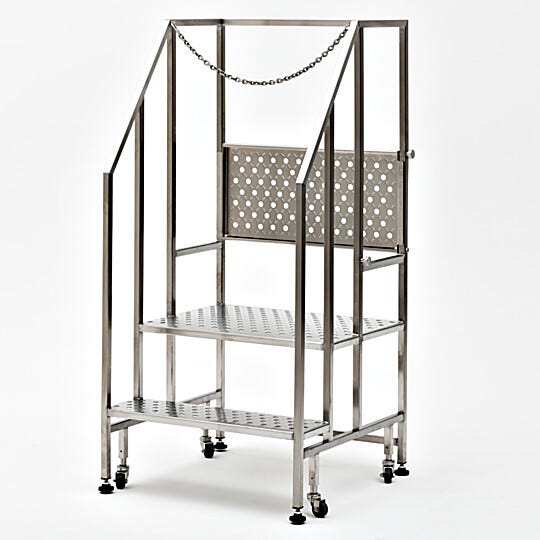
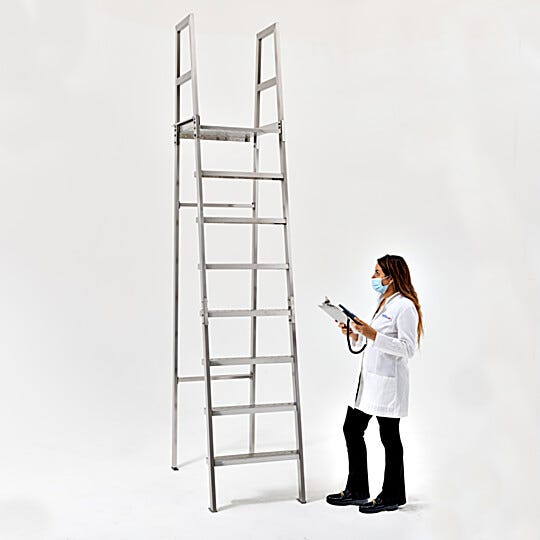
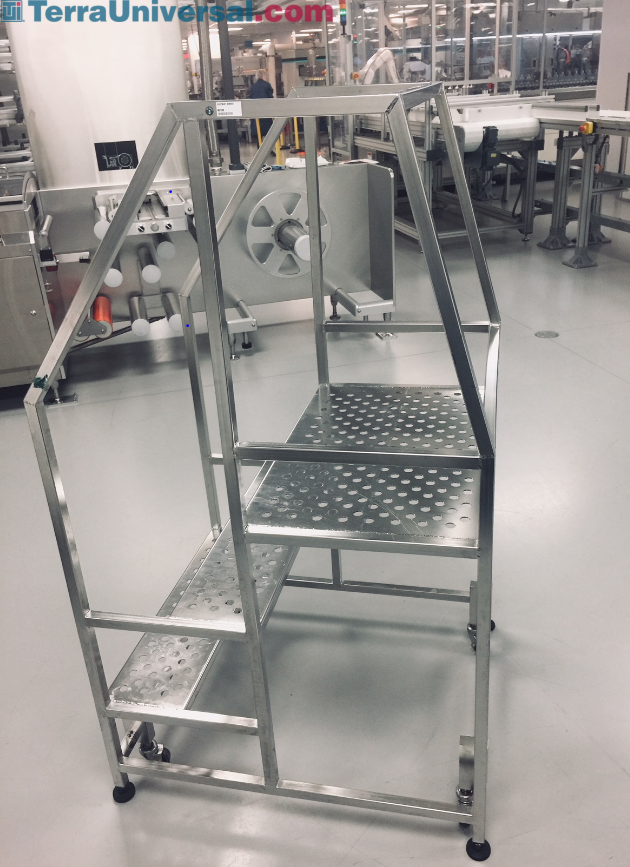
• Safety Rail: Safety Rail
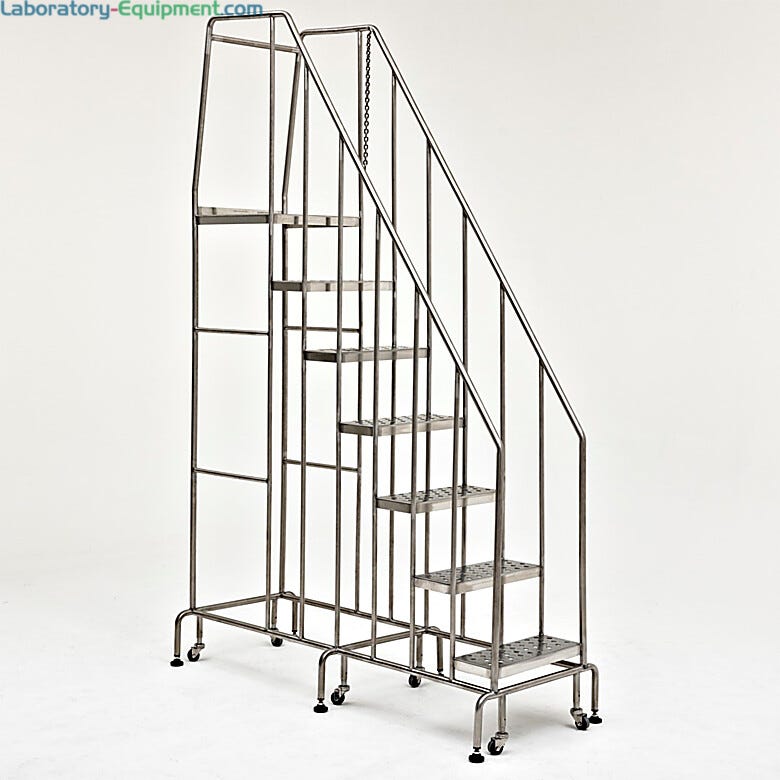
• Type: Step Ladder
• Material: 304 or 316 SS
• Number of Steps: 7 Steps
• Height: 101"
• Top Platform: 18" W x 13" D
• Width: 26"
• Depth: 64"
• Load Capacity: 300 lbs
• Top Step Height: 71"
• Electropolished: Optional
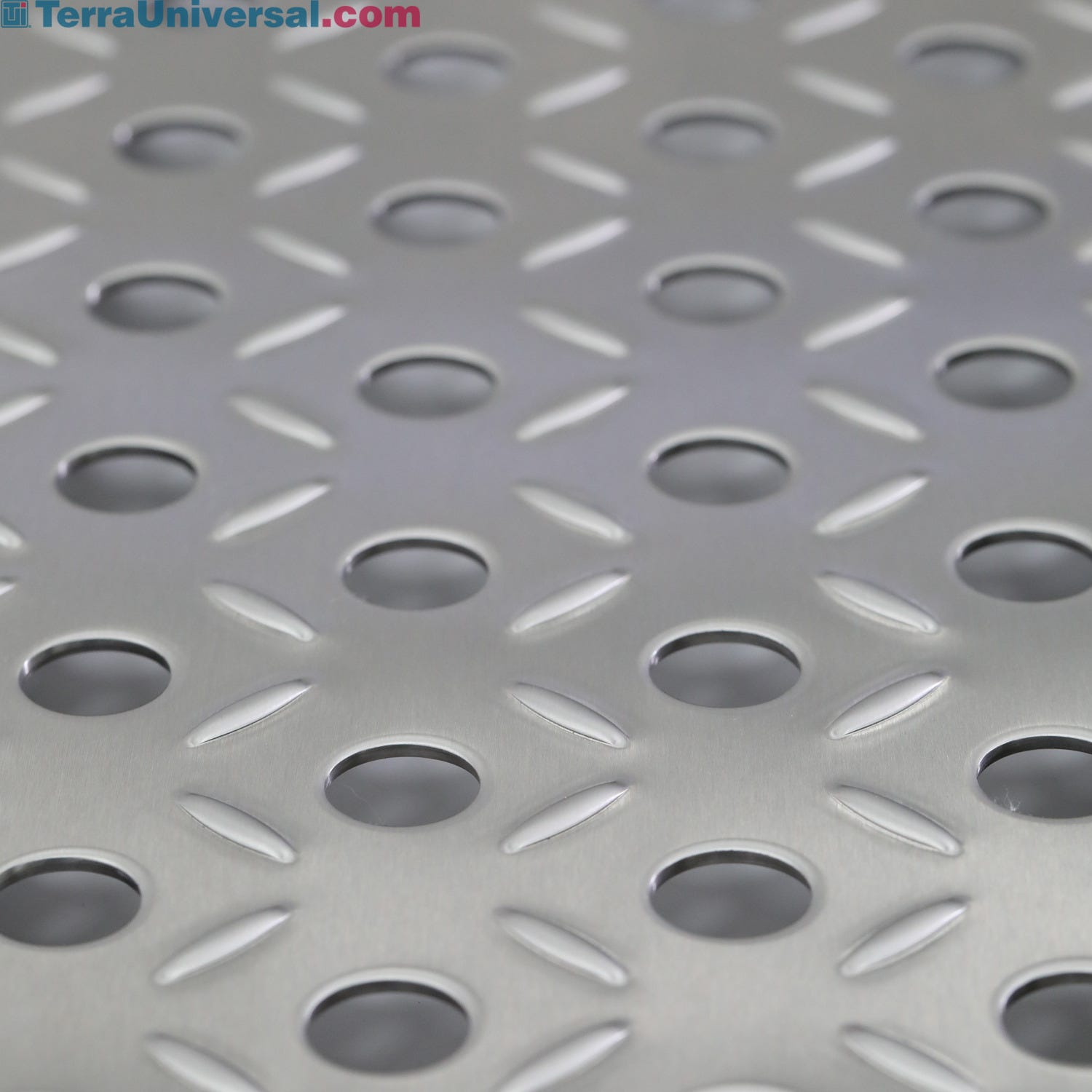
• Diamond Plating: Yes
• Available Certified ISO Grade Designs: ISO 4, ISO 5, ISO 6, ISO 7, ISO 8
• Certified ISO Grade Design: ISO 5
• OSHA Rating: Type 1A
• Design: Round Tube
• Unit of Measure: EA





















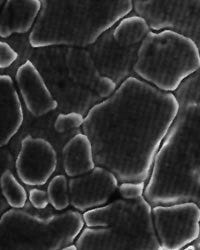 This photomicrograph represents the surface of 304 stainless steel with a No. 2B mill finish before Electropolishing. Note that the etched boundaries between the grains are only partially sealed, resulting in a network of sub-surface crevices. Contaminants that lodge in these crevices are protected from contact with cleaning agents leading to subsequent migration of trapped contaminants onto the cleaned surface.
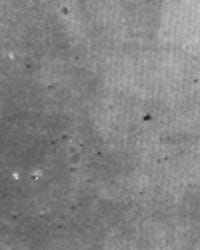 This photomicrograph represents the same No. 2B surface after Electropolishing. Note that the surface is now completely featureless on a microscopic level and has the desired noncontaminating, non-particulating and non-sticking properties.
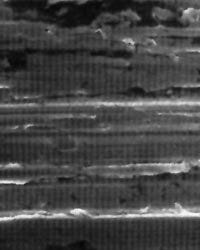 This photomicrograph represents a 304 stainless steel surface with a mechanically polished No. 4 mill finish before Electropolishing. Note the deep grooves, cavities, torn metal and other microscopic imperfections that entrap and retain contaminants.
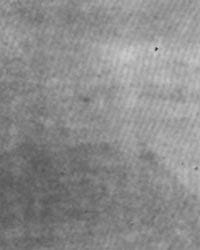 This photomicrograph represents the same No. 4 finish after Electropolishing. The surface may still show some of the abrasiveproduced topography to the naked eye, but will now be microscopically featureless with the desired non-contaminating, non particulating and non-sticking properties.