














Laboratory Glove Box Frequently Asked Questions
What is a glove box and how is it used?
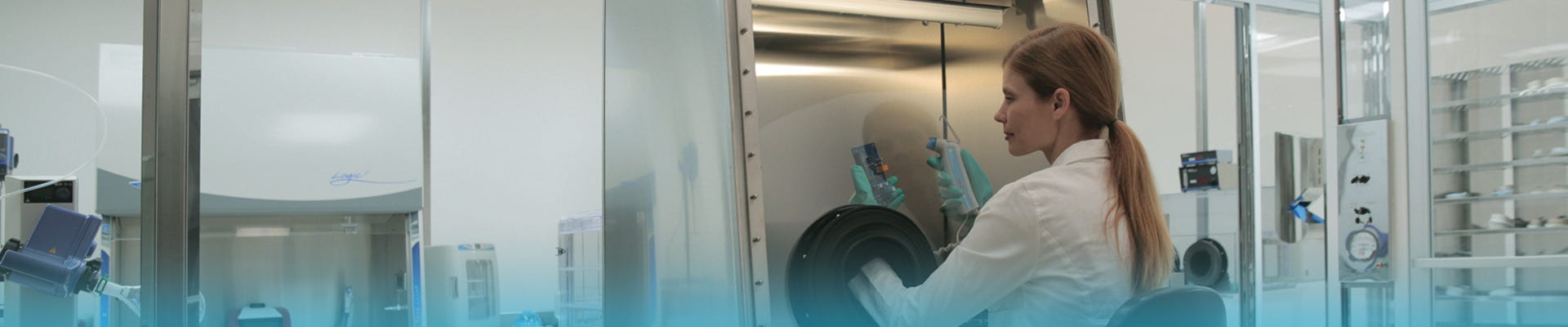
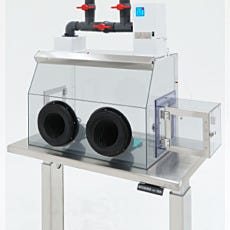
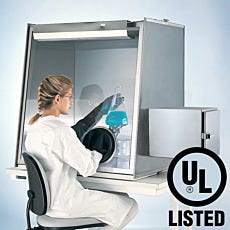
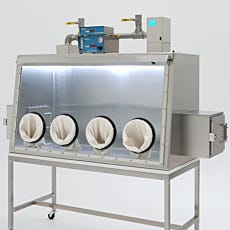
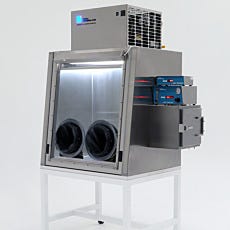
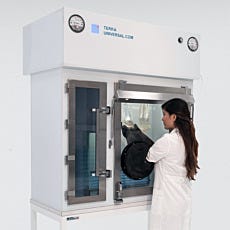
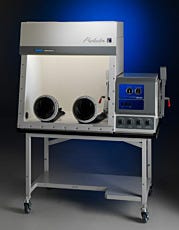
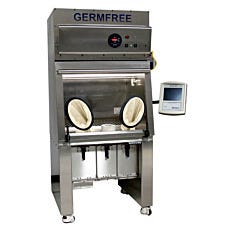
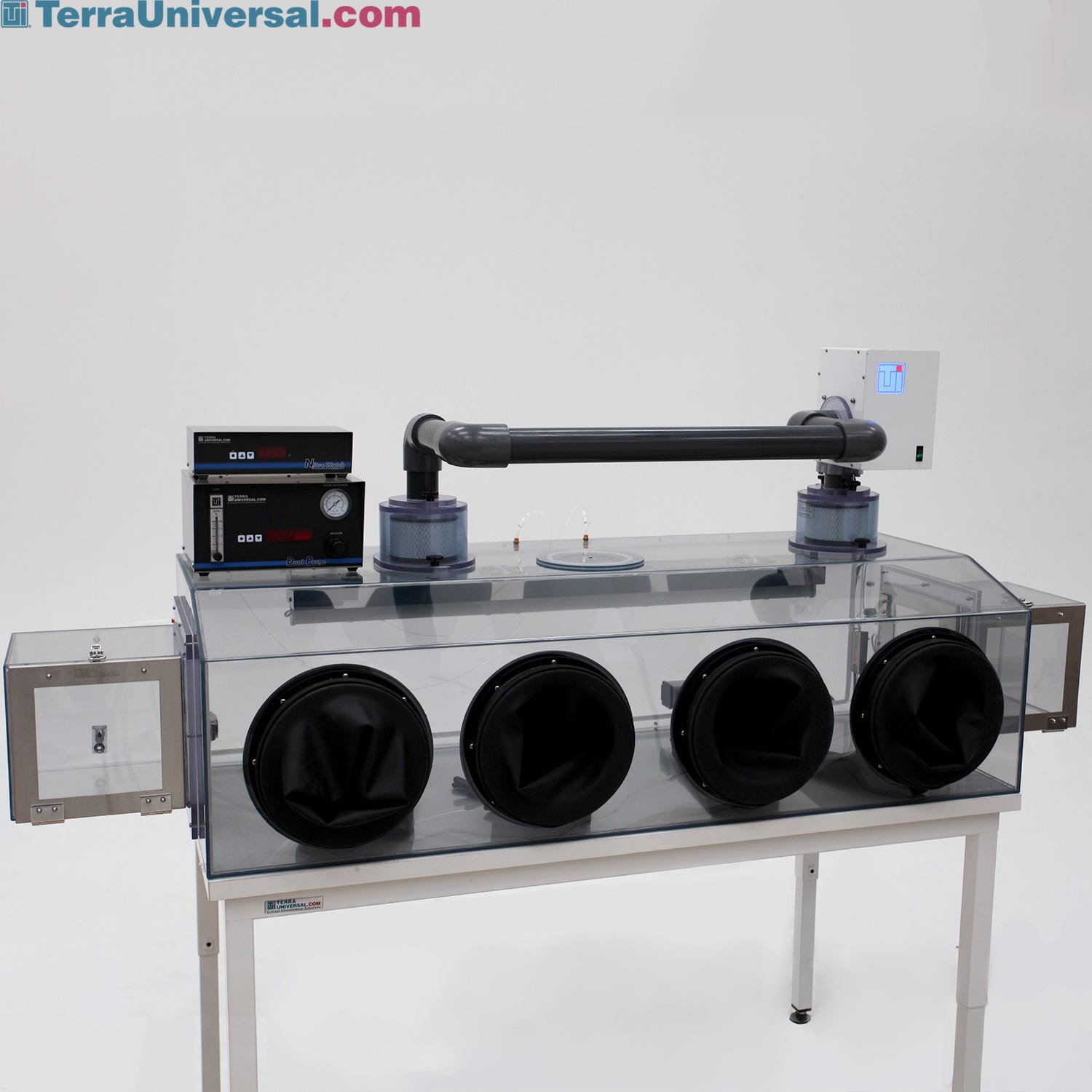
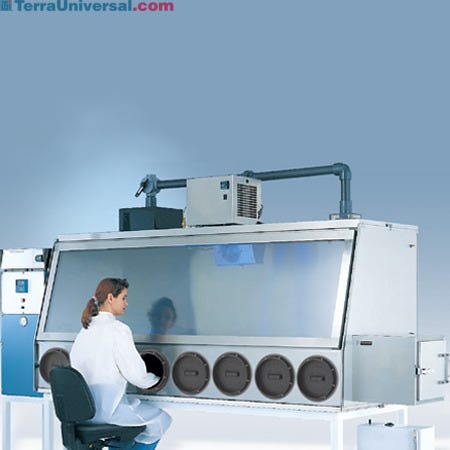
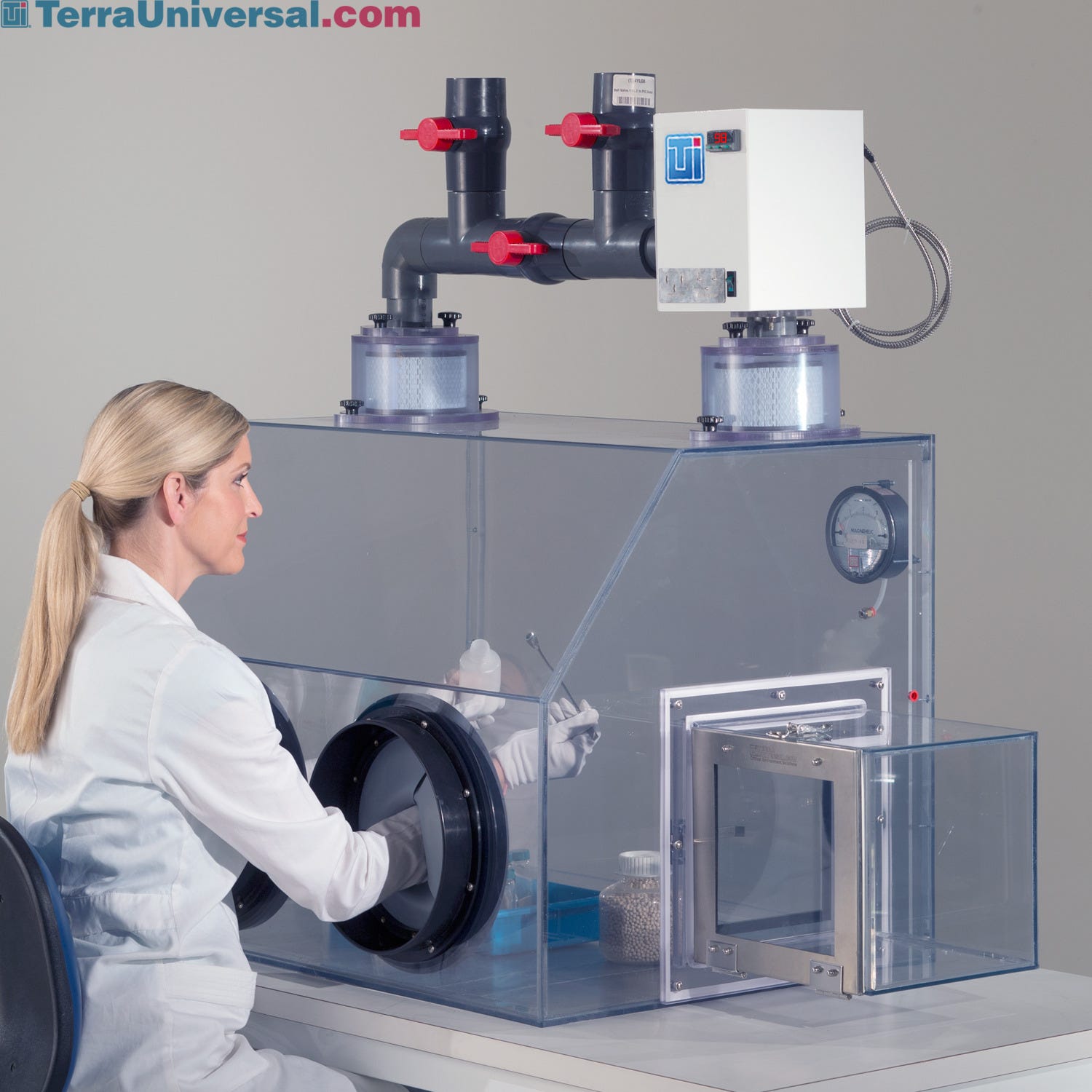
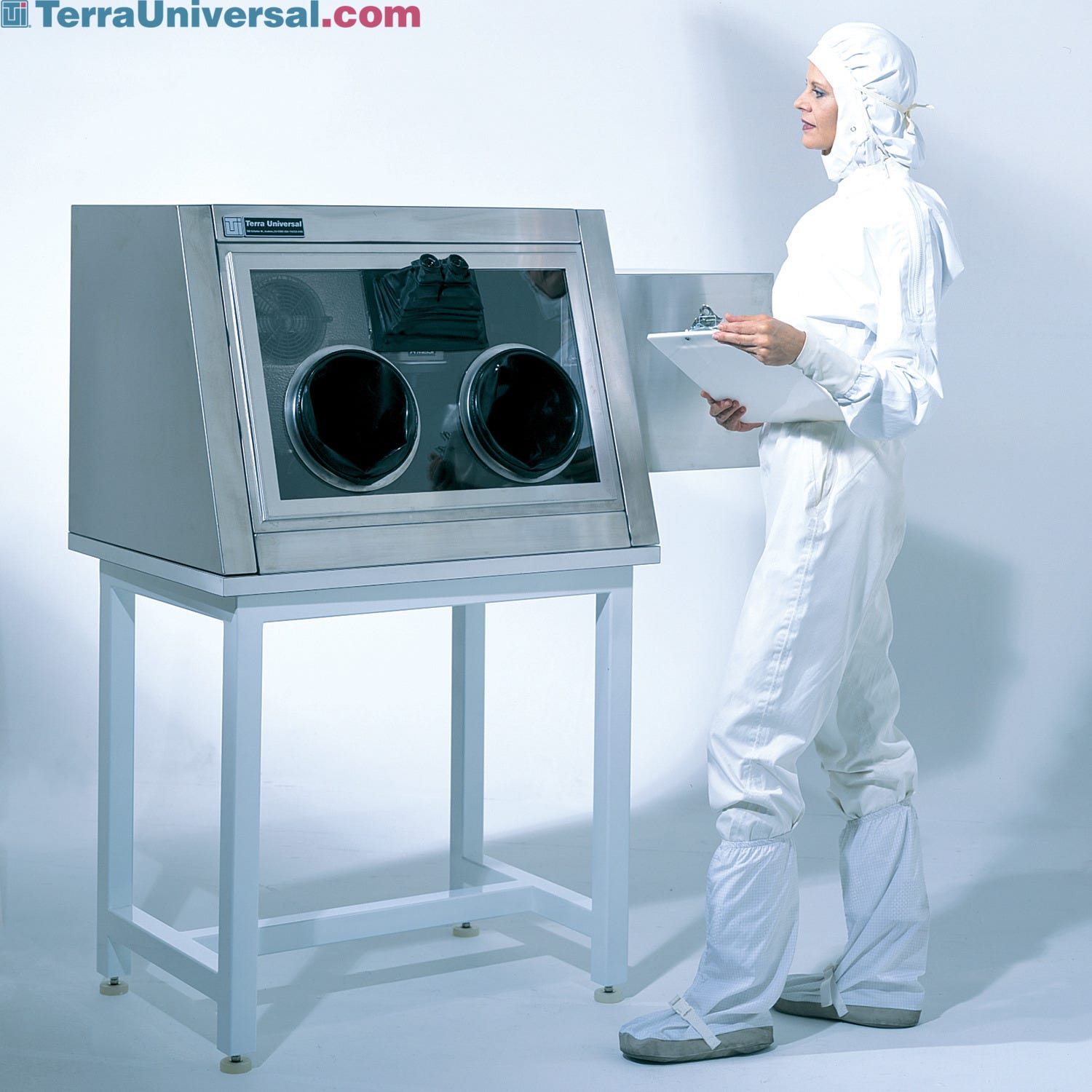
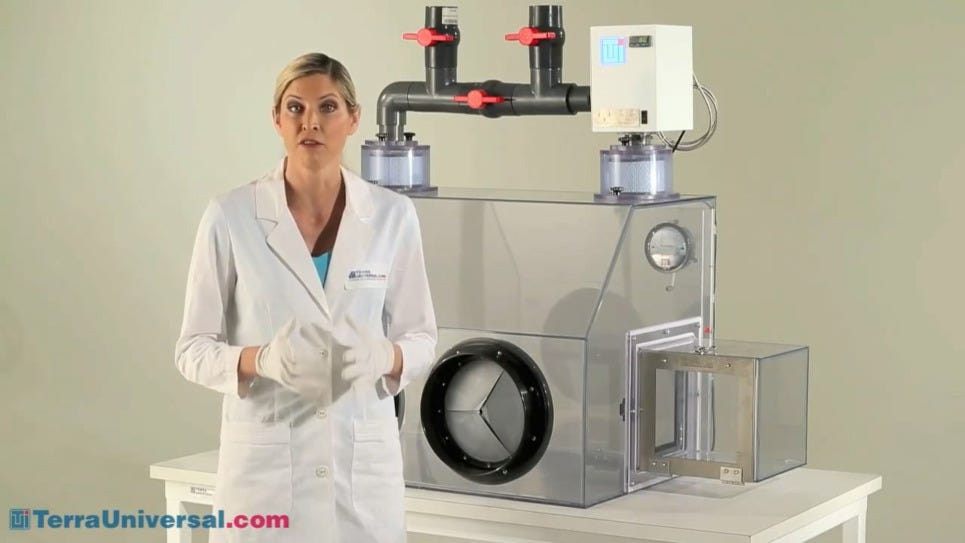
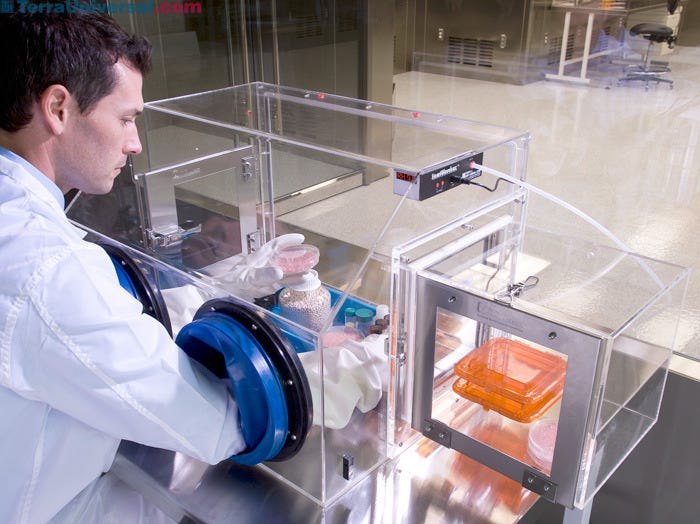
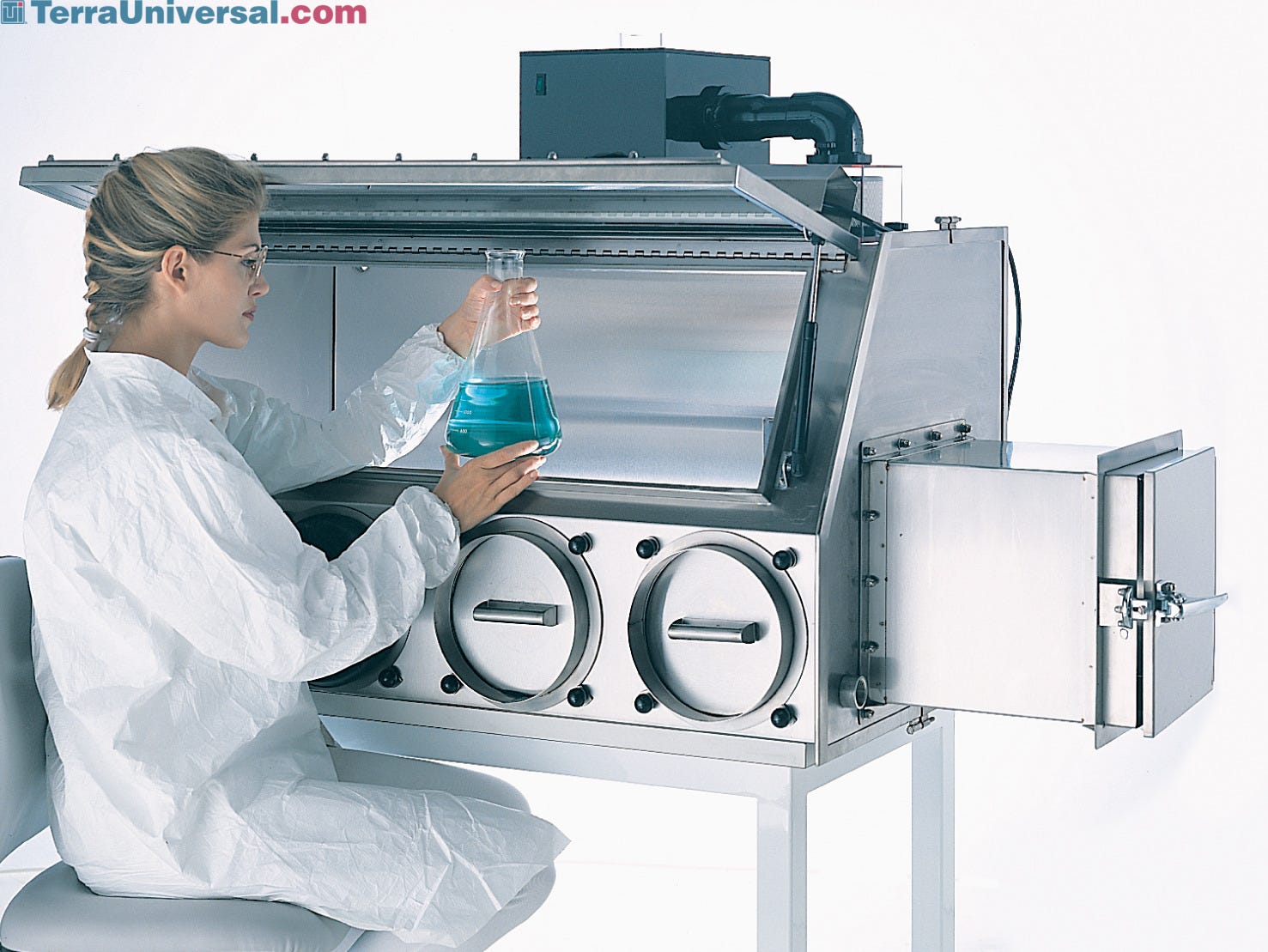
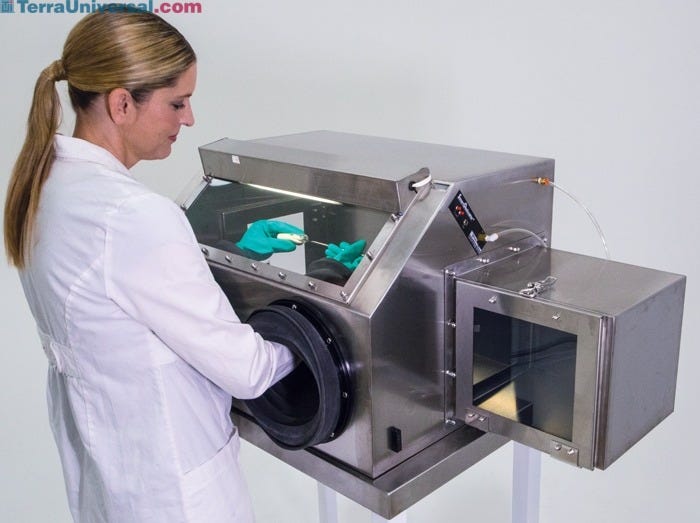
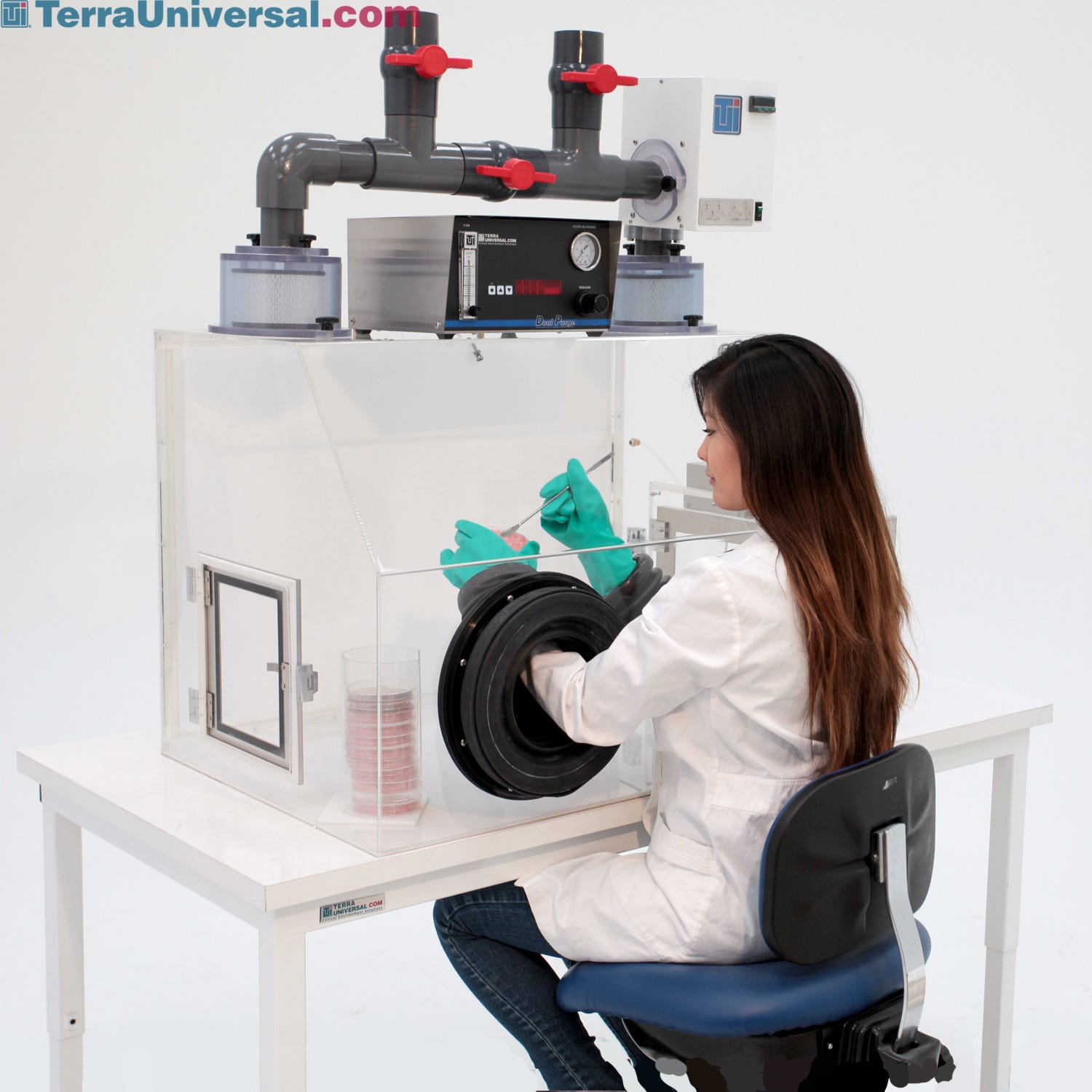
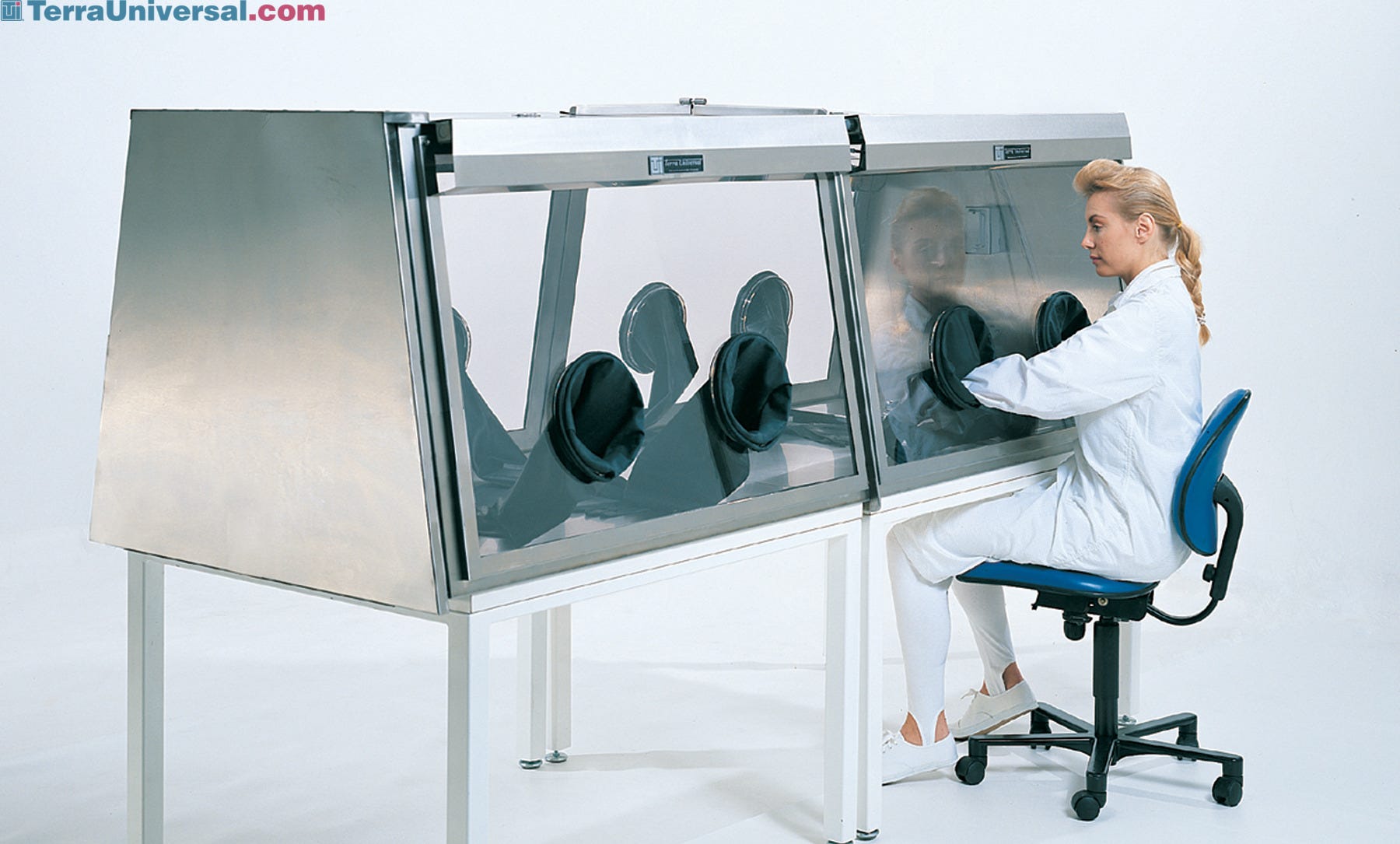
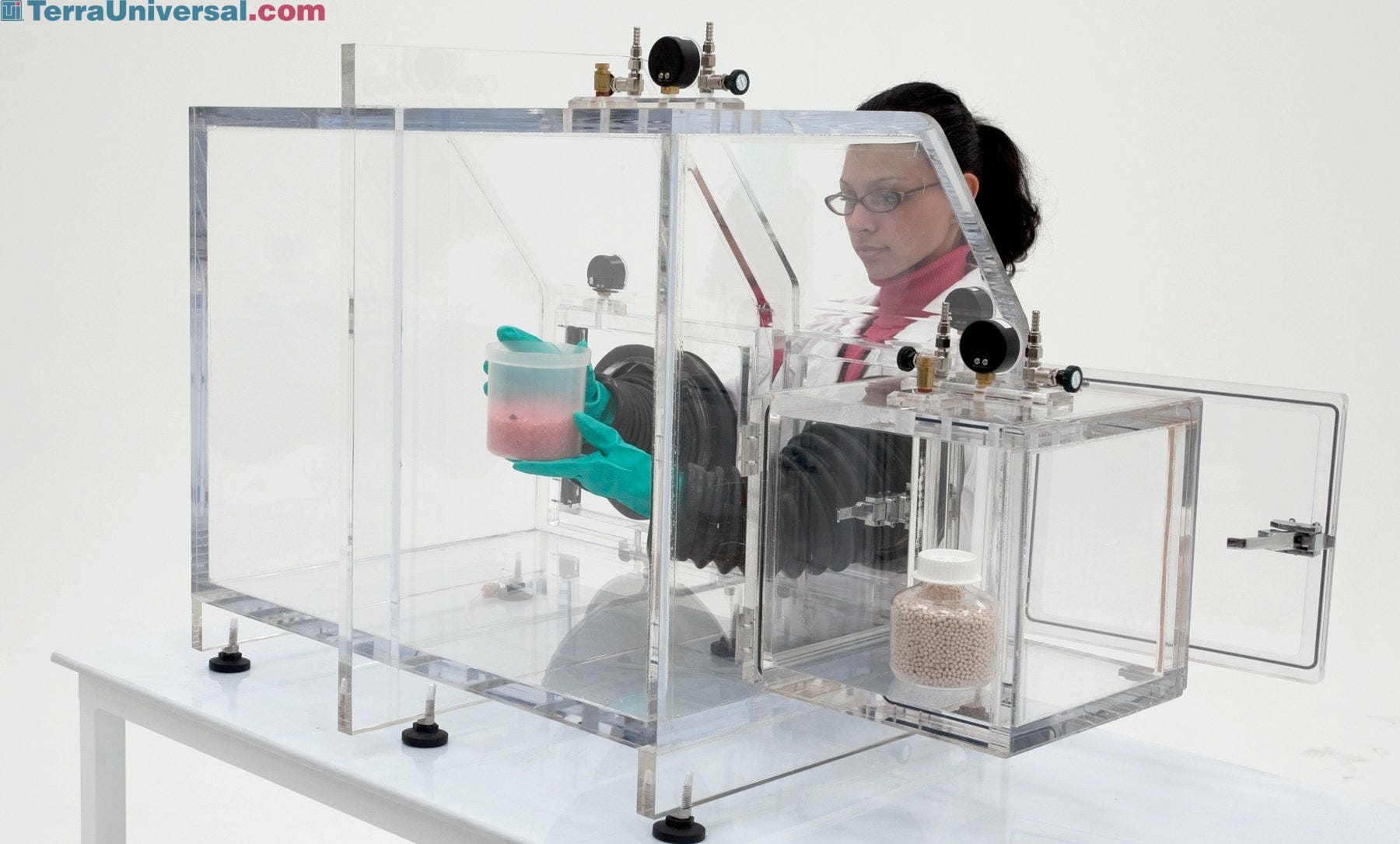
A lab glove box is an enclosure that effectively isolates the interior process environment from the outside or ambient environment to protect the operator outside the glovebox and/or processes inside the glovebox. Gloves installed in the front- or side-panels allow user(s) to safely perform tasks inside the glovebox without breaking containment. Common applications include sensitive operations requiring controlled atmospheres, or handling of hazardous materials.
Glove boxes have as many names as they do shapes and sizes. Terra manufacturers and stocks glove box designs for every application:
- Isolation glovebox systems protect materials or processes from the operator and/or the ambient environment. Isolation glove boxes may be configured to prevent specific kinds of exposure (to humidity, particles, static charges, low or high temperature, etc.).
- Compounding Aseptic Isolator (CAI), or laminar flow glovebox systems feature a sterile ISO 5 positive pressure environment to meet USP 797 regulations for sterile pharmaceutical glove box compounding.
- Compounding Aseptic Containment Isolator (CACI) glovebox, or pharmaceutical containment isolator systems are configurable for positive or negative pressure to meet either USP 797 or USP 800 requirements.
- A mail handling glove box protects personnel by providing an isolated environment to contain potentially hazardous powders or bacteria. This glovebox can also be configured with negative pressure air filtrations systems to capture hazardous powders, vapors or fumes.
- Closed loop or recirculating HEPA filter glove box systems are configured with a HEPA or ULPA filtered blower to filter and recirculate air free of submicron contaminants down to Class 10 particle requirements. Recirculating gloveboxes are useful for applications that also require an inert or low moisture atmosphere.
- Open loop or non-recirculating HEPA filter glove box systems push ambient air through a HEPA or ULPA filter before passing into the glovebox. The air is then exhausted through a second HEPA or ULPA filter to capture submicron powders or contaminants before exiting the glovebox.
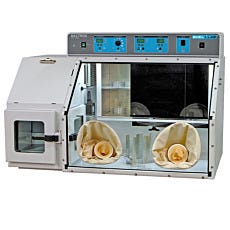
- Anaerobic and hypoxia chamber systems provide low oxygen environments to support microaerophilic bacteriology and hypoxia cell culture processes. An anaerobic chamber is designed to keep oxygen levels as low as possible, while a hypoxia chamber allows researchers to achieve a specific oxygen set point.
- Vacuum glove box and negative pressure glove box systems are designed for applications requiring full vacuum (29.9"Hg) or sub-ambient pressures. Models capable of holding full vacuum can double as an inert atmosphere glove box as they can work in tandem with a vacuum pump to reach full vacuum and then backfill with an inert gas to displace residual impurities such as moisture and oxygen.
- Temperature controlled glove box systems feature insulated double-walled construction for uniform temperature control. An optional temperature control system can be integrated to the glovebox to provide stable heating and cooling cycles. These temperature and humidity controlled glove box designs can also be configured with HEPA or ULPA filtration and gas purge systems for an inert, low particle environment.
- Pharmaceutical isolators are designed to meet USP 797 sterile compounding and/or USP 800 hazardous compounding requirements
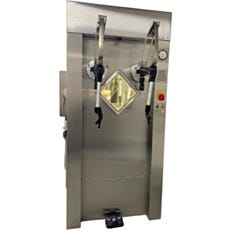
Containment glove box or barrier isolator designs protect the operator and/or ambient environment from the material or process inside the glove box. These glove boxes are commonly used to isolate hazardous or non-hazardous materials in the pharmaceutical, biological, and nuclear industries. Terra offers several designs of containment gloveboxes:
What is the best material for my glove box application?
The material used to build a custom glove box must provide both a durable and effective isolation barrier. The material must also support the required conditions inside the glovebox. Keep the below characteristics in mind to choose a material that best fits your glovebox application:
- Chemical resistance
- Cleanliness or particle control
- Electrostatic discharge safety
- Thermal extremes
- Vacuum or negative pressure
- Visibility
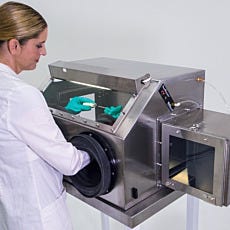
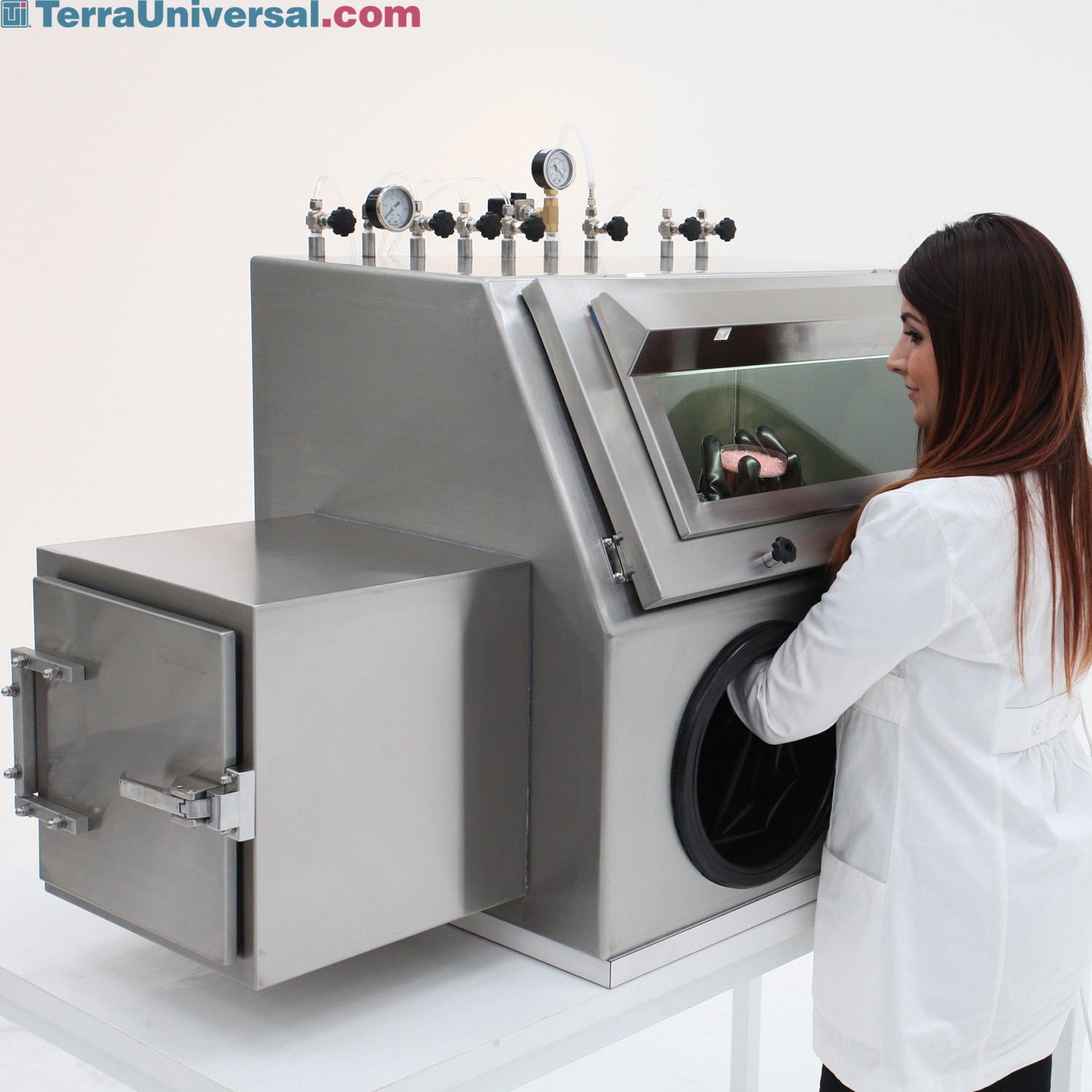
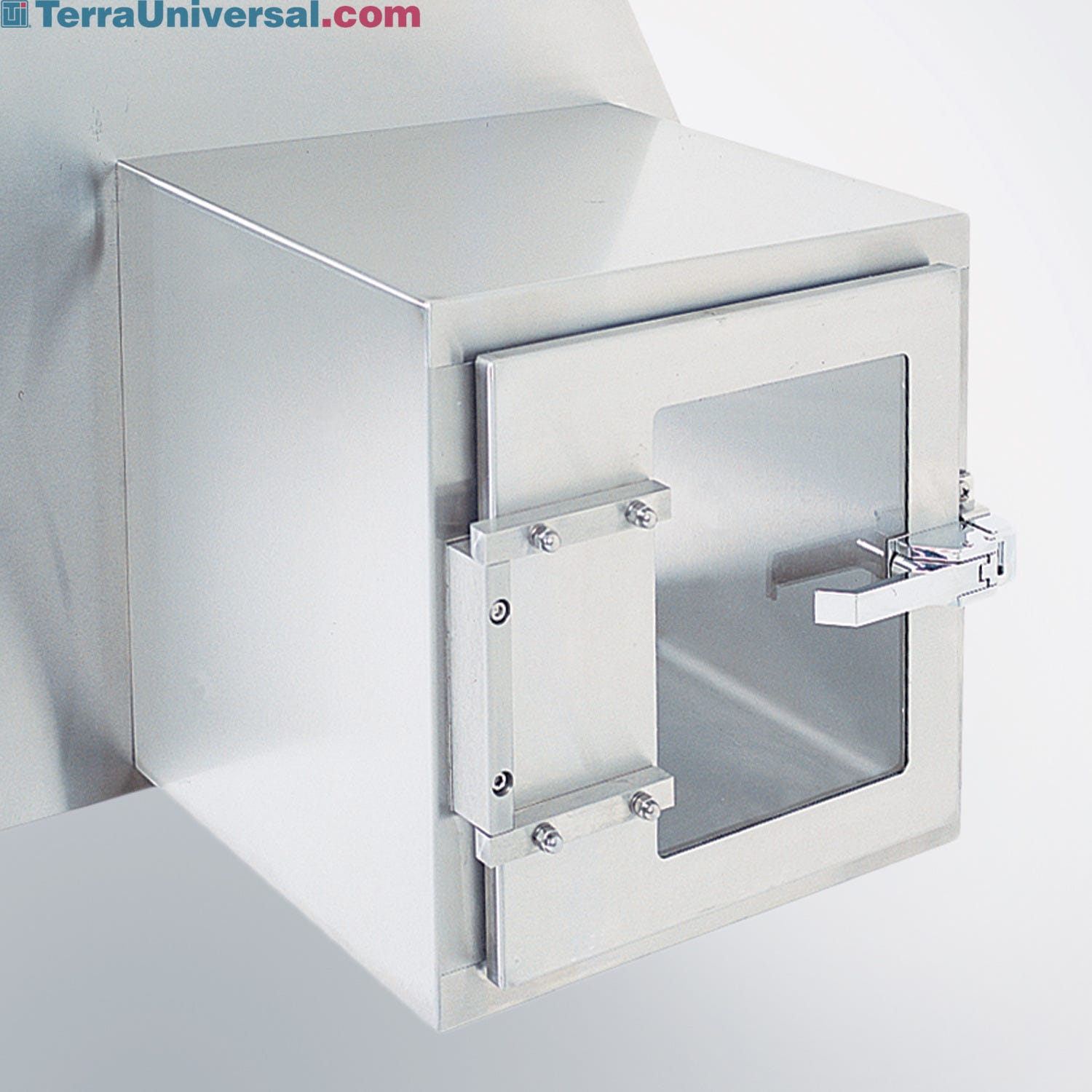
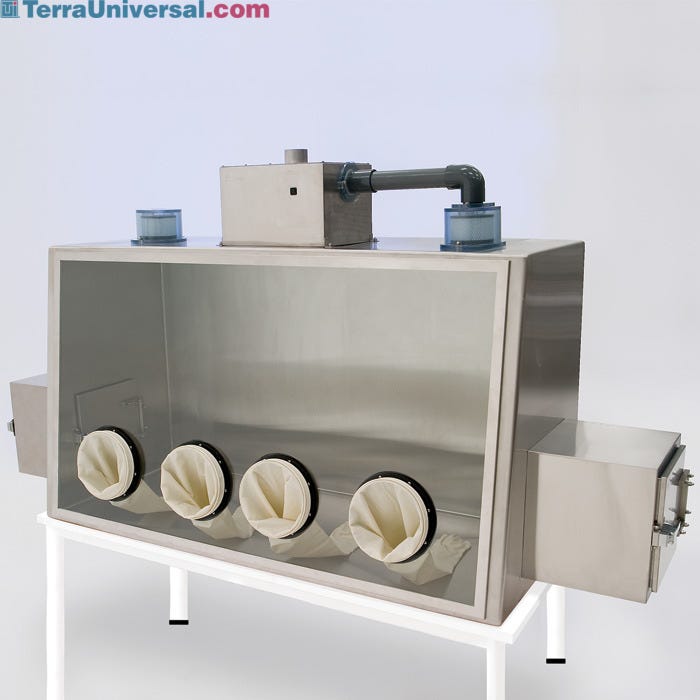
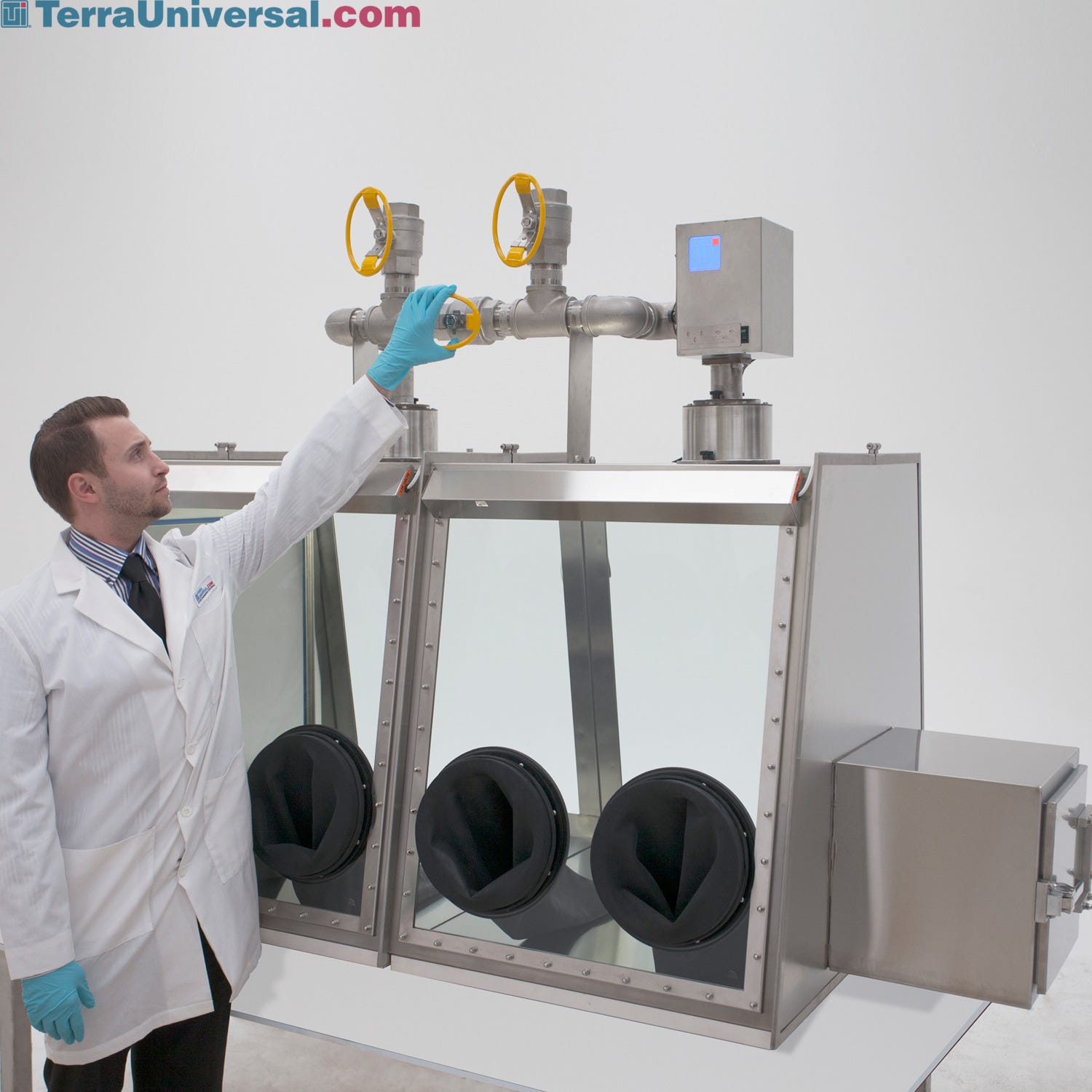
A stainless steel glovebox provides the best combination of durability, chemical resistance, and cleanliness. Terra’s stainless steel glove box designs are available in 316 or 304 stainless steel. Safety glass viewing windows include fluorescent lighting to illuminate the interior work area. Stainless steel gloveboxes can also be designed to hold negative pressure or full vacuum.
Terra’s BioSafe® stainless steel glovebox isolator is designed specifically for bio-pharmaceutical processes. These stainless steel glove boxes feature continuous seam welds, wide radius corners, and sloped bottoms for easy wipe downs and sterilization. The access doors are removable and auto-clave safe. Optional HEPA or ULPA filtration systems can be integrated to the glovebox to remove submicron powders and aerosols.
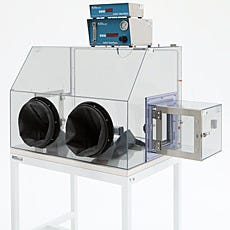
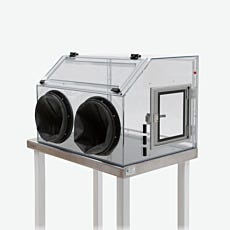
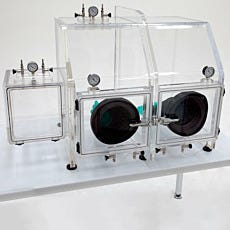
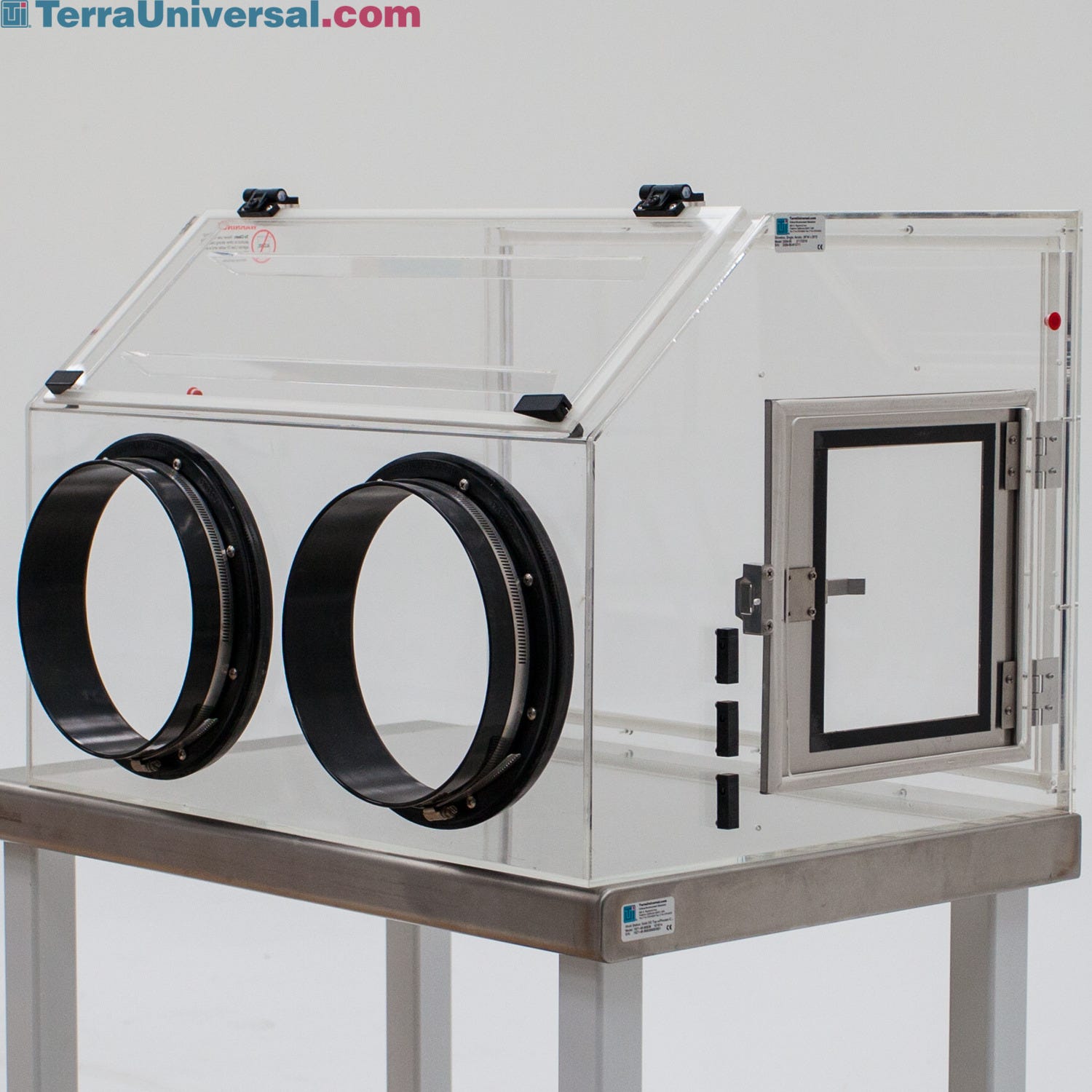
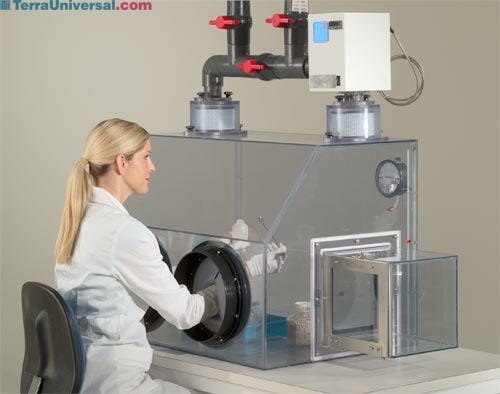
A plastic glove box is usually the lowest cost option, however is not the ideal choice for moisture sensitive applications. Although convenient, these portable glove boxes are hygroscopic and permeable, which allow moisture and oxygen to penetrate the enclosure over an extended time. A continuous internal positive pressure of inert gas helps to compensate for the permeable and hygroscopic characteristics of the plastic panels. Terra manufactures and stocks several types of plastic lab glove box designs:
- Acrylic glove box: lowest cost, lightweight, rigid, and provides full visibility.
- Static-Dissipative PVC glove box: protects materials against electrostatic discharge (ESD) by safely dissipating surface charges. Elimination of attractive forces such as static cling also helps maintain low-particle conditions. Transparent with a slight blue tint, PVC panels support clear viewing of glove box-enclosed processes.
- Polypropylene glove box: provides excellent chemical resistance against acids and solvents. Polypropylene gloveboxes have an opaque white material construction and include a lighting unit mounted to the viewing window.
- Polycarbonate glove box: transparent with a slight gray tint, these units offer broad-spectrum chemical resistance, high impact resistance, and excellent thermal resistance (to 200°F / 93.3°C)
What are the advantages of a nitrogen purged glove box?
A process gas or "purge gas" is used to displace moisture and oxygen-laden ambient air inside the glovebox. Generally, the selection of a process gas is based on its ability to retard chemical reaction, especially oxidation. Nitrogen is the most common process gas because it is inert, nontoxic, noncombustible, and relatively inexpensive.
Thus gloveboxes are often purged with dry Nitrogen gas to maintain an anaerobic and inert atmosphere that prevents unwanted chemical reactions, such as oxidation and hydrolysis.
What is RH recovery time?
RH recovery time is the time required to recover to the desired relative humidity or moisture set point after the glovebox is opened and exposed to ambient air.
The acceptable RH set point depends on your process application and requirements. Many semiconductor and optical sensing devices include electronics that require a storage environment of less than 10% RH as they are degraded by brief exposure to moisture substantially above this level. Unfortunately, depending on the size of the glove box, some isolator glove boxes can require up to an hour to retain a 10% RH set point, particularly if ambient humidity is high. If a door is opened again before set point is attained, parts may be exposed to unacceptable moisture levels for hours!
More critical applications may require moisture concentration levels below 1% RH, which can be measured in parts per million (PPM) by volume.
Terra offers a number of accessories to improve the efficiency and effectiveness of nitrogen purged gloveboxes:
- Oxygen analyzers ensure oxygen levels in a glovebox remain below acceptable concentrations, often < 1 PPM, making them suitable for applications requiring extremely low oxygen concentration levels.
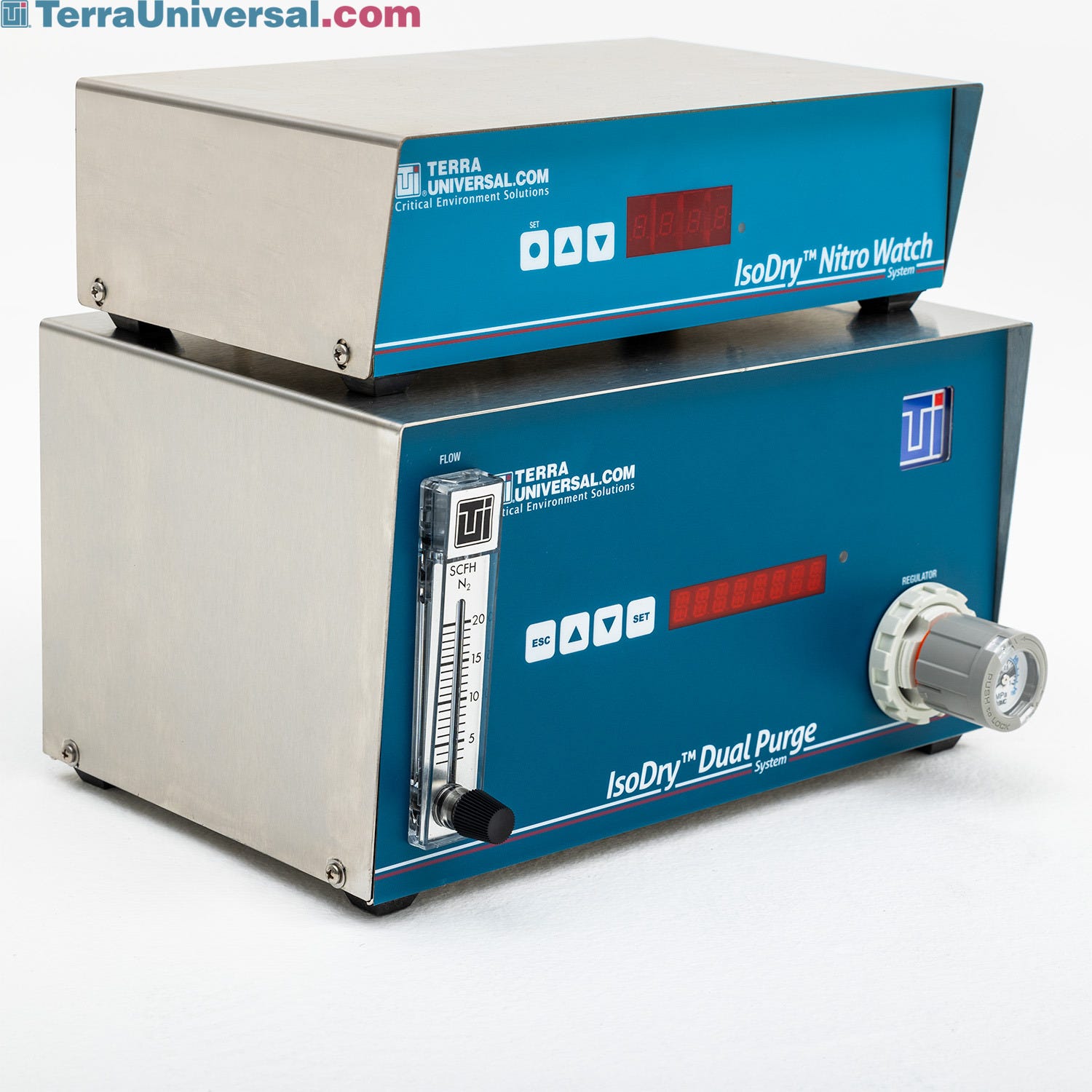
- Terra’s Dual Purge™ and NitroWatch® automatic RH control systems efficiently and automatically control the flow of Nitrogen gas to reach the required RH setpoint.
- Terra’s Smart® glovebox features an integrated automatic RH control module suitable for low humidity processing as low as 1%RH.
- Terra’s DewWatch™ dew point meter is ideal for ultra-low moisture applications, measuring and controlling moisture volumes inside the glovebox down to 0.5 PPM.
- Trace gas mixers are designed for applications requiring more than one process gas inside the glovebox.
Does the exhaust gas of a glovebox require collection through an extraction network?
Glove box exhaust gas collection is optional since the glove box usually functions independently from the exhaust network. However, operations involving hazardous materials may require connecting the glove box to an external facility exhaust system.
How much gas is required to purge a glove box?
A standard single-operator glove box can consume up to one cylinder of inert gas to achieve an initial set point of 5-10% relative humidity. It can take as much as two cylinders of inert gas to purge the system to achieve lower levels for more critical applications. As an approximate rule, the amount of purge gas required is easy to calculate: first you must calculate the volume of your glovebox in cubic feet - a typical single operator glovebox is approximately 20 cubic feet. Then, multiply the volume by 10 for applications requiring 5-10% RH and by 15 for more critical environments. There is 300 cubic feet of gas in a standard gas cylinder so you will need about 2 cylinders of gas.
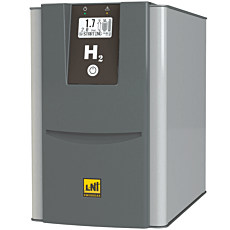
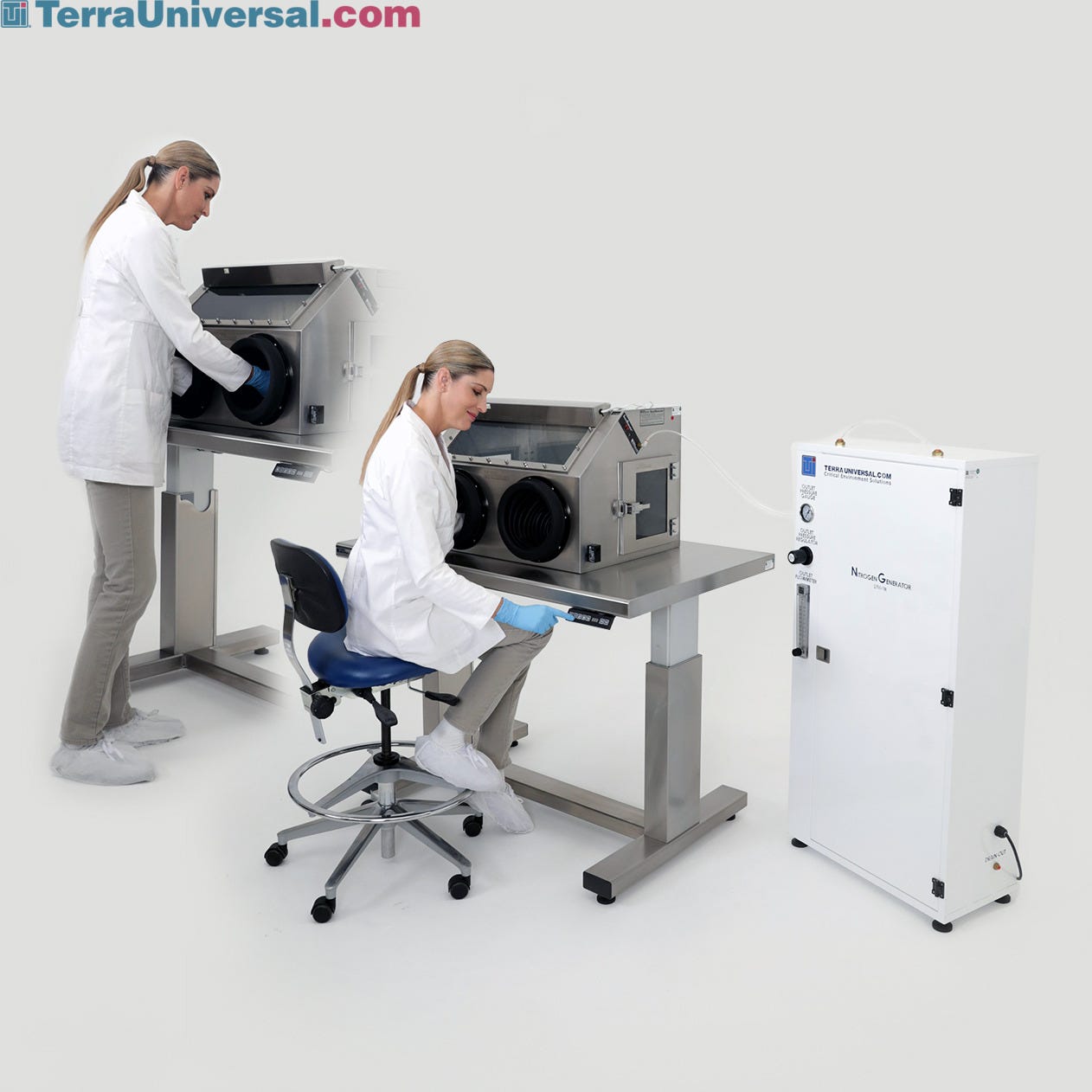
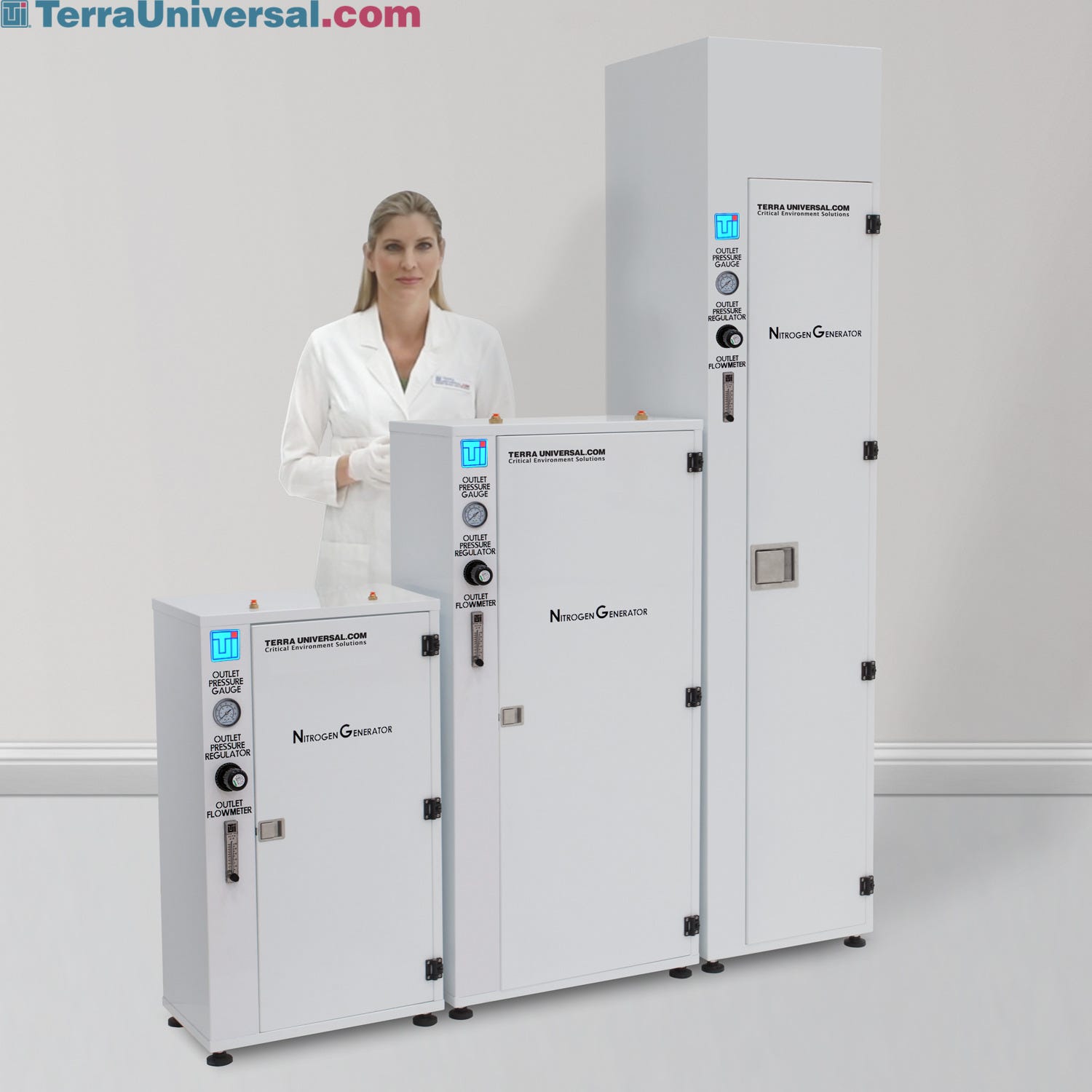
An on-site Nitrogen generator can eliminate supply constraints and other problems caused by bulky pre-filled Nitrogen cylinders. The system uses a nitrogen membrane to filter ambient air and produce a constant supply of up to 99%+ pure dry Nitrogen gas.
What glove box gloves should I use?
Terra offers isolator gloves and sleeves with designs and materials for every application:
- Seamless one-piece gloves and sleeves: provide maximum strength and integrity. This design is ideal for handling hazardous substances and protecting sensitive materials.
- Two-piece gloves and sleeves: a good choice for applications that require frequent glove changes. The sleeves remain attached to the glove port while the gloves are replaced. This design include a sleeve-to-glove connecting clamp to support easy glove changes.
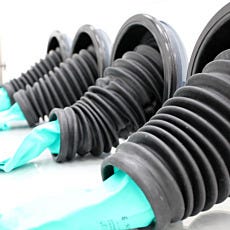
- Accordion two-piece gloves and sleeves: prevent the sleeve from collapsing and allow for more air circulation through the gloves. The durable accordion sleeves support frequent glove changes and carry a longer shelf-life than one-piece glove and sleeve designs.
Design:
- Neoprene: offers high tensile strength, dexterity, and flexibility. Neoprene gloves can be strengthened with an outer film of Hypalon to withstand autoclaving and disinfection cycles.
- Butyl: features the highest impermeability to water vapor, gases, and toxic chemicals, including most acids and bases. It also resists swelling and attack by many solvents and oxidizing chemicals, and it remains flexible at temperatures as low as -40°C.
- Hypalon: offers outstanding resistance to abrasion, oxidizing chemicals, and ozone (a common source of glove failure in a dry box).
- Latex: is naturally more flexible than other glove materials and has moderate chemical resistance. It also offers excellent dexterity but may cause hypoallergenic reactions.
- Nitrile: gloves have good resistance to punctures, solvents, oils, and greases.
Material:
Can't find what you're looking for?Tell us what you need and we'll build it!
